Directly exported to Swedish industrial manufacturing hubs (Stockholm, Gothenburg, Malmö). Engineered for rigorous CE-compliant continuous duty.
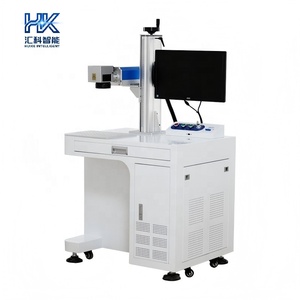
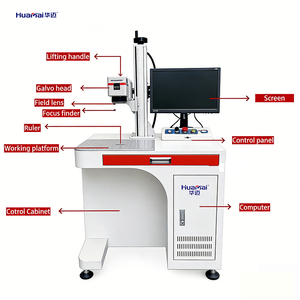
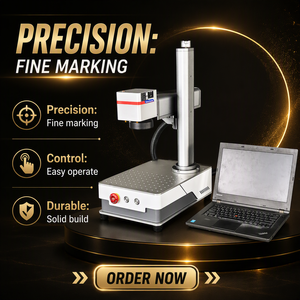
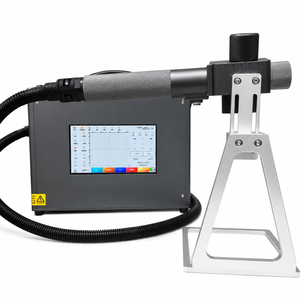
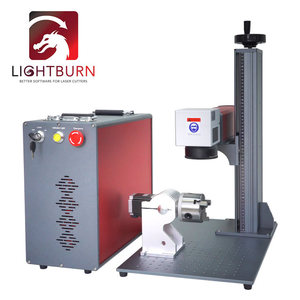
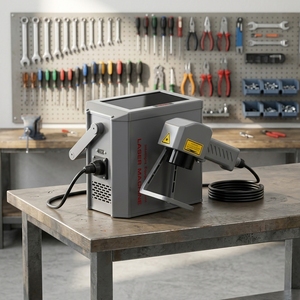
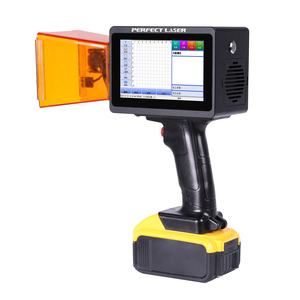
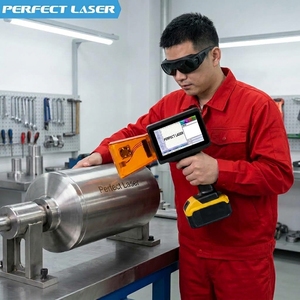
In the high-precision industrial sectors of Sweden—spanning medical technology in Stockholm-Uppsala, automotive engineering in Gothenburg, and advanced electronics in Lund—the demand for micro-marking without micro-fractures is paramount. Traditional thermal processing lasers, such as standard 1064nm Fiber lasers or 10.6µm CO2 lasers, rely on localized photothermal destruction. This process melts and vaporizes material, leaving a distinct Heat-Affected Zone (HAZ) that undermines structural integrity and causes thermal deformation on delicate polymers, silicon wafers, and ultra-thin glass.
As a leading global UV Laser Exporter serving exporters and factory integrators in Sweden, our industrial systems leverage third-harmonic generation (THG) to emit at an ultraviolet wavelength of 355nm. Unlike infrared photons, 355nm UV photons carry high quantum energy (approximately 3.49 eV). This allows the laser to perform photochemical ablation—directly breaking the molecular bonds within the substrate without generating excessive kinetic heat.
The result is what photonic engineers define as "cold processing." Cold UV processing guarantees zero micro-cracking, zero surface melting, and zero toxic outgassing when marking medical-grade HDPE, PEEK, silicon chips, glass substrates, and bio-compatible polymers required by stringent Nordic manufacturing standards.
Swedish manufacturers operate under some of the world's strictest quality standards. Below are the core localized operational environments where our exported 355nm UV laser systems excel.
Under EU Medical Device Regulation (MDR 2017/745) enforced rigorously in Sweden by Läkemedelsverket, all surgical instruments, catheters, and implants require permanent Unique Device Identification (UDI) 2D DataMatrix codes. Our UV laser exporters supply systems capable of non-corrosive, smooth-surface marking on medical-grade stainless steel (316L) and implantable polymers (PEEK, PTFE) that withstand repeated autoclave sterilization without harboring bacteria.
Sweden's automotive supply chain (supporting heavy vehicle and passenger EV manufacturing) demands high-speed marking on flame-retardant polyamides (PA66-GF30) and sensitive printed circuit boards (PCBs). Our UV laser systems engrave micro QR codes onto circuit boards and battery management enclosures without generating conductive soot or causing thermal stress to nearby micro-capacitors.
In alignment with Nordic environmental policies restricting ink chemicals, Swedish FMCG producers are moving away from thermal inkjets (TIJ). Our air-cooled UV laser markers allow direct, ink-free date and batch coding onto thin bio-based plastics, barrier films, and recycled cosmetic containers, achieving crisp contrast without puncturing thin-walled packaging.
Navigating the machinery export ecosystem in Sweden requires strict compliance with both local national bodies (such as Arbetsmiljöverket - Swedish Work Environment Authority) and European Union directives. Exporters and Swedish factory buyers must align equipment with:
Our exported UV laser systems come fully certified with complete EU Declarations of Conformity, English/Swedish technical documentation, and plug-and-play fieldbus interfaces ready for automated assembly lines.
Every unit shipped to Swedish importers includes high-grade optical isolators to protect against retro-reflections, dual-channel safety relay interlocks, and low-noise air-cooling modules engineered for ultra-quiet operating environments in cleanroom facilities.
Selecting the correct photonic source for your export destination ensures high production yields and prevents expensive material scrap.
| Laser Feature / Parameter | 355nm UV Laser (Our Spec) | 1064nm Fiber Laser | 10.6µm CO2 Laser |
|---|---|---|---|
| Primary Processing Physics | Photochemical (Cold Process) | Photothermal (Thermal Melt) | Photothermal (Vaporization) |
| Heat-Affected Zone (HAZ) | Negligible / Zero | Moderate to High | High Thermal Dispersion |
| Beam Quality (M²) | < 1.2 ( diffraction limited ) | < 1.5 - 1.8 | < 1.4 |
| Glass & Crystal Marking | Flawless (No Micro-cracks) | Not Suitable (Requires Absorption Coating) | Surface Micro-Fracturing |
| Delicate Polymer Contrast (PEEK/HDPE) | High Contrast Foaming/Char-free | Melts Surface / Poor Contrast | Burns Material / Outgassing |
| Power Consumption | Low (< 600W system draw) | Moderate (< 800W draw) | High (> 1500W draw) |
| Ideal Swedish Industry | Medical Devices, Electronics, Pharma | Heavy Automotive Metals, Sheet Fabrication | Wood Packaging, Thick Organic Acrylics |
With decades of collective machine-building experience, our industrial manufacturing facilities operate under strict ISO 9001 quality management systems. Unlike simple trading assemblers, every UV laser marking system undergoing export to Sweden experiences rigorous continuous 72-hour burn-in stress testing, optical power stability verification via Coherent PowerMax sensors, and high-frequency galvo calibration.
Our dedicated export division manages full logistics chains directly to major Swedish freight hubs including Gothenburg Port, Stockholm Arlanda Airport cargo centers, and Malmö distribution lines—handling custom DDP/DAP terms, EUR.1 movement certificates, and localized power adaptation (230V 50Hz EU standard).
We maintain inventory reserves for standard desktop air-cooled UV laser markers and high-power bench-top MOPA platforms. Standard dispatch timelines to Sweden range from 5 to 9 business days via express air freight.
Comprehensive technical answers regarding importation, operation, maintenance, and compliance in Sweden.
Fiber lasers operate at 1064nm infrared wavelength, which relies on intense heat to melt plastic surfaces. This often causes foaming, burning, or compromised mechanical strength on sensitive polymers. A 355nm UV laser uses short-wavelength cold processing to break molecular bonds directly. This generates crisp, high-contrast marks without melting, burning, or thermal deformation—making it essential for medical and electronics applications in Sweden.
Industrial machinery in Sweden must operate on standard 230V / 50Hz single-phase or 400V three-phase electrical connections and conform to CE directives (2006/42/EC). For laser safety, systems must comply with EN 60825-1. When integrating our UV lasers into manual workplaces, a Class 1 fully enclosed safety cabinet with interlocked doors and protective windows tuned to 355nm OD6+ filtering is recommended to comply with Arbetsmiljöverket standards.
Low-wattage UV lasers (3W to 5W) are available with compact, low-noise air cooling modules suitable for office or bench-top setups. Higher wattage systems (10W to 15W+) utilized for high-speed industrial lines require dedicated water chillers to maintain strict temperature stability (±0.1°C) across the THG crystal head. We supply quiet, closed-loop industrial chillers engineered for low decibel operation.
Express air freight to Stockholm Arlanda or Landvetter Airport (Gothenburg) typically takes 5–8 business days after factory testing. Sea freight to Gothenburg Port takes approximately 28–35 days. Under EU TARIC codes (typically 84561100 for laser processing machines), import tariffs into Sweden are generally low, subject to standard Swedish VAT (Moms) of 25%, which registered business entities re-claim through standard tax filings.
Yes. Our exported systems are powered by industry-standard controllers fully compatible with EzCad, LightBurn, and specialized KCAM/CAD suites. They support vector formats (DXF, AI, PLT) and raster graphics, as well as dynamic barcode generation (DataMatrix, QR, Code128). Automatic serialization, TCP/IP network triggering, and I/O port integration allow direct control from PLC units on automated assembly lines.
Request a customized technical proposal, material sample test report, or export quotation tailored to your plant in Sweden today. Our application engineers respond within 12 hours.