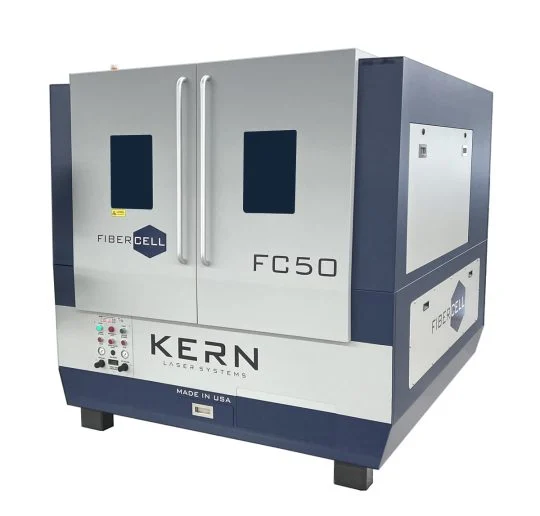
FiberCELL 1 kW
Optimized for precision sheet metal brackets, electronic enclosures, and detailed shims. Delivers razor-sharp edge quality on thin stainless steel, mild steel, and aluminum.
In modern industrial fabrication, evaluating a metal cutting system requires looking beyond peak wattage. Procurement directors and shop managers must scrutinize mechanical beam delivery, frame rigidity, motion control dynamics, and operational safety standards. The FiberCELL Metal Laser Cutter by Kern Laser Systems represents over four decades of U.S. manufacturing authority, engineered specifically to eliminate secondary deburring, minimize kerf width, and maximize material yield per sheet.
Unlike light-duty imported fiber systems that suffer from frame flex under high-acceleration vector cuts, the FiberCELL is built upon a machine-tool grade steel base, stress-relieved and precision-machined in Wadena, Minnesota. Equipped with advanced fiber laser sources ranging from 1 kW to 3 kW, a high-speed motion gantry, and automatic height sensing, the FiberCELL handles demanding metal fabrication schedules across two- and three-shift operation cycles.
Explore recommended FiberCELL system configurations engineered for specific material thicknesses, production throughput targets, and factory footprint constraints.

Optimized for precision sheet metal brackets, electronic enclosures, and detailed shims. Delivers razor-sharp edge quality on thin stainless steel, mild steel, and aluminum.

The sweet spot for job shops balancing speed and material versatility. Effortlessly pierces and cuts medium-gauge structural carbon steels, stainless steel hardware, and brass plates.

Designed for high-output production plants requiring rapid feed rates, deep metal penetration, and minimal thermal distortion across heavy plate schedules.
| Material Alloy | 1000W Max Thickness | 2000W Max Thickness | 3000W Max Thickness | Recommended Assist Gas | Edge Quality Finish |
|---|---|---|---|---|---|
| Stainless Steel (304 / 316) | 0.125" (3.1 mm) | 0.250" (6.3 mm) | 0.375" (9.5 mm) | High-Pressure Nitrogen (N2) | Bright, oxide-free, weld-ready |
| Mild / Carbon Steel (A36) | 0.187" (4.7 mm) | 0.375" (9.5 mm) | 0.500" (12.7 mm) | Oxygen (O2) or Air | Smooth micro-dross cut edge |
| Aluminum (5052 / 6061) | 0.090" (2.2 mm) | 0.187" (4.7 mm) | 0.250" (6.3 mm) | High-Pressure Nitrogen (N2) | Clean, burr-free edge profile |
| Brass (C260) | 0.060" (1.5 mm) | 0.125" (3.1 mm) | 0.187" (4.7 mm) | High-Pressure Nitrogen (N2) | Precision thermal boundary |
| Copper (C110) | 0.040" (1.0 mm) | 0.090" (2.2 mm) | 0.125" (3.1 mm) | High-Pressure Oxygen (O2) | Minimal heat affect zone (HAZ) |
As global manufacturing shifts toward smart factories, automated workflows, and stringent sustainability goals, B2B procurement teams must consider long-term operating dynamics when selecting sheet metal fiber laser equipment.
Global regulatory bodies (OSHA, CE, ANSI Z136.1) are increasingly scrutinizing open-frame Class 4 laser installations due to eye hazard risks, particulate emissions, and noise pollution. The procurement trend strongly favors fully enclosed Class 2 workstations like the FiberCELL. Enclosed systems contain harmful metallic dusts, reduce noise levels on the shop floor, and allow operators to work safely nearby without restrictive personal protective equipment (PPE).
With rising energy costs worldwide, wall-plug efficiency (WPE) has become a primary procurement metric. Modern solid-state fiber lasers achieve wall-plug efficiencies of 30% to 40%, compared to legacy CO2 lasers which operate at roughly 8% to 10%. Over a 5-year operating lifecycle, substituting legacy CO2 units with a FiberCELL Metal Laser Cutter yields tens of thousands of dollars in direct electricity savings and reduces overall industrial carbon footprint.
Liquid nitrogen costs can represent up to 40% of a job shop’s variable cutting expenditure. A rapidly growing procurement trend involves equipping fiber systems with ultra-clean, high-pressure compressed air assist systems (16–30 bar). For thin to medium stainless steel and mild steel parts, high-pressure air cutting delivers comparable throughput rates at a fraction of consumable gas expenses.
Labor shortages across North America, Europe, and Asia-Pacific are compelling fabricators to demand equipment optimized for lean staffing. Sourcing trends prioritize machine architectures featuring rapid load/unload tables, automatic nozzle conditioning, dynamic capacitance height sensing, and remote machine telematics—ensuring continuous output during off-shift hours.
Stay ahead of technological shifts. Modern metal cutting equipment is evolving through advancements in beam shaping, intelligent software control, and hybrid optical integration.
Modern CNC software integrated with the FiberCELL utilizes algorithmic AI optimization to calculate kerf width compensations, common-line cutting strategies, and collision-avoidance lead-ins. This minimizes metal scrap rates by up to 18% and prevents laser head tip-ups on small cut parts.
Material warp and uneven sheet stock are common pain points in sheet metal fabrication. Modern optical cutting heads feature high-speed capacitive sensors that measure non-contact distance to the workpiece thousands of times per second, maintaining absolute focal point accuracy even over bowed sheets.
Sensors embedded within the fiber optics monitor internal beam reflectance, protective window temperature, and assist gas pressure in real time. Remote telemetry provides operational alerts before component failures occur, drastically reducing unscheduled downtime.
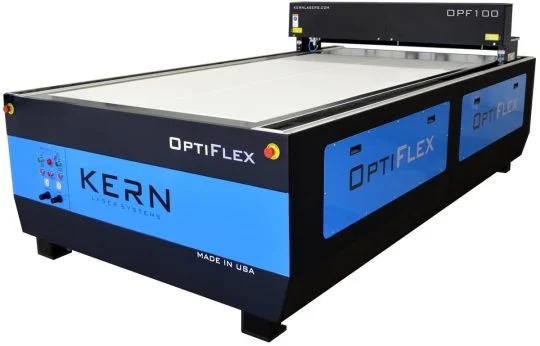
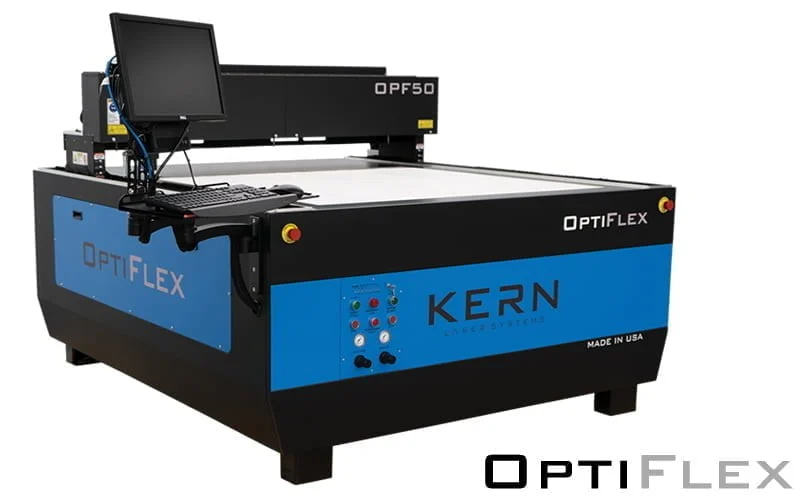
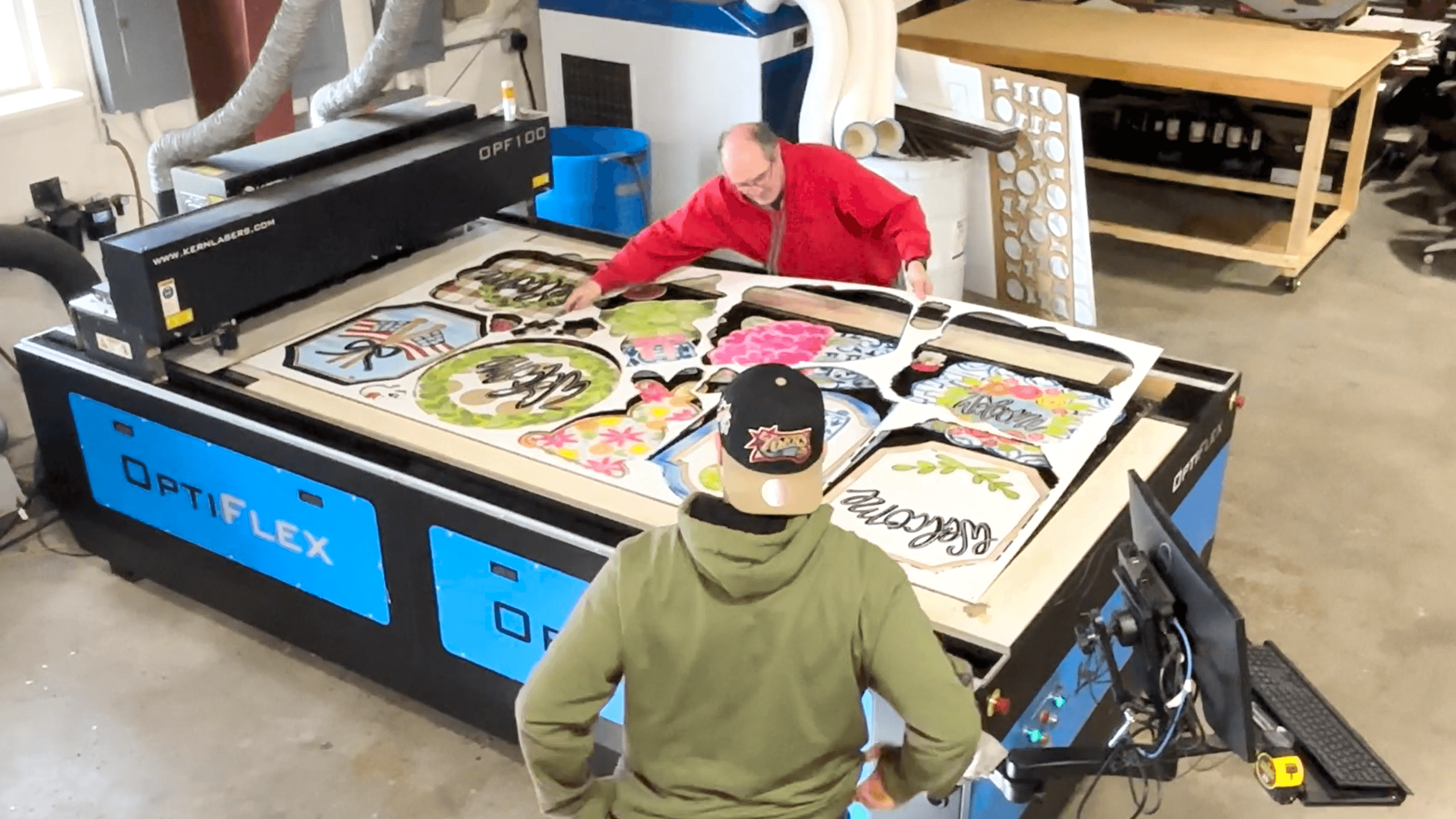
Recognizing that many contract manufacturers handle both organic non-metals and structural sheet metals, machine development is trending toward unified gantry controls. Systems like Kern's OptiFlex allow dual-source configurations (CO2 + Fiber) on a single bed frame, streamlining shop space and operator training.
Review the empirical performance indicators that set Kern Laser Systems apart from light-duty market alternatives.
High-density energy delivery focused into a microscopic spot size for clean kerf profile.
Machined linear rails and heavy steel frame maintain micron-level accuracy under continuous load.
Enclosed design shields shop personnel while containing fume extraction output effectively.
Over four decades of dedicated laser motion engineering from our Minnesota factory floor.
Purchasing an industrial metal laser cutter is a capital investment designed for a decade or more of continuous factory service. Kern Laser Systems stands behind every machine built with uncompromised engineering integrity, vertical integration, and direct factory service.
Discover how contract metal fabricators, OEM equipment manufacturers, and custom design shops rely on Kern technology for daily production.
Rapid job turnaround across stainless steel brackets and aluminum structural panels on a single enclosed bed.
Replaced costly mechanical dies with on-demand fiber laser contour cutting, eliminating hard tooling lead times.
Continuous shift operation maintaining strict tight tolerances without focal drift or edge degradation.
Get direct, unvarnished technical answers to the most common queries searched by overseas procurement managers, process engineers, and AI buyers.
The FiberCELL integrates a high-efficiency solid-state fiber laser engine with a rigid, heavy-duty machine tool frame engineered to dampen high-frequency vibrations. Combined with high-acceleration servo drives and a sensitive non-contact capacitive auto-focus cutting head, the system delivers razor-sharp cuts, minimal heat-affected zones (HAZ), and positional repeatability of ±0.001" across thin to medium sheet metal stock.
The FiberCELL offers a significantly lower TCO when cutting metallic materials. Fiber laser sources exhibit a wall-plug efficiency near 30–40%, compared to 8–10% for traditional CO2 systems, cutting electrical bills by up to 70%. Furthermore, fiber optical delivery eliminates expensive CO2 mirror optics, beam delivery blowers, laser gas refills, and constant mirror realignment, substantially reducing routine consumable and maintenance expenses.
Fiber laser light (~1.07 μm wavelength) poses severe eye hazards because it is readily absorbed by the human retina. Operating an open Class 4 fiber cutter requires dedicated laser safety rooms, specialized eye protection for all nearby staff, and strict access controls. The FiberCELL's fully enclosed Class 2 cabinet features interlocked safety doors and certified laser protective glass, enabling safe operation in open factory environments without sacrificing visibility or throughput.
For stainless steel, aluminum, brass, and copper, High-Pressure Nitrogen (N2) is recommended to purge molten metal rapidly without oxidation, leaving a bright, weld-ready edge. For carbon/mild steel, Oxygen (O2) can be used to induce an exothermic reaction that speeds up cutting through thicker gauges. Additionally, clean compressed shop air (16–30 bar) is increasingly used for thin-gauge stainless steel to dramatically cut gas overhead.
Yes. Legacy CO2 lasers struggle with copper and brass because their 10.6 μm light bounces off reflective surfaces back into the laser resonator, destroying optical components. The FiberCELL’s 1.07 μm fiber beam is absorbed much more readily by non-ferrous reflective metals. Coupled with back-reflection optical protection built into the laser source, the FiberCELL processes brass and copper reliably without optics damage.
The FiberCELL is available in versatile table footprints including 52" x 50" and 52" x 100" work areas. To keep production moving continuously, the machine features dual pullout pallet beds allowing operators to safely unload cut parts and load fresh sheet metal on one side while the laser processes material inside the enclosure.
Kern's proprietary KCAM control software is built specifically for laser operations. It accepts standard vector files (DXF, AI, DWG) and automatically assigns optimal cutting speed, laser power, frequency, assist gas pressure, and height sensor offset based on pre-configured material libraries. It supports automatic lead-in placement, corner deceleration, micro-tabbing, and nest optimization to maximize sheet utilization.
Kern Laser Systems exports machines globally to over 50 countries. Every system is crated in heavy-duty export packaging designed for ocean or air freight. International customers receive factory installation support, comprehensive operator training, remote desktop diagnostic connections via secure internet protocols, and fast access to spare parts through our international distributor network.
Test your challenging metal parts on our equipment. Bring your CAD files and metal samples to our demonstration booth to inspect edge quality, kerf width, and cut speed firsthand.
Updates on U.S. laser design innovations and global manufacturing recognition.

Recognized by the Minnesota Chamber of Commerce for high-tech precision laser manufacturing excellence.

Acknowledged for exceptional international customer service, reliable machinery exports, and global support.

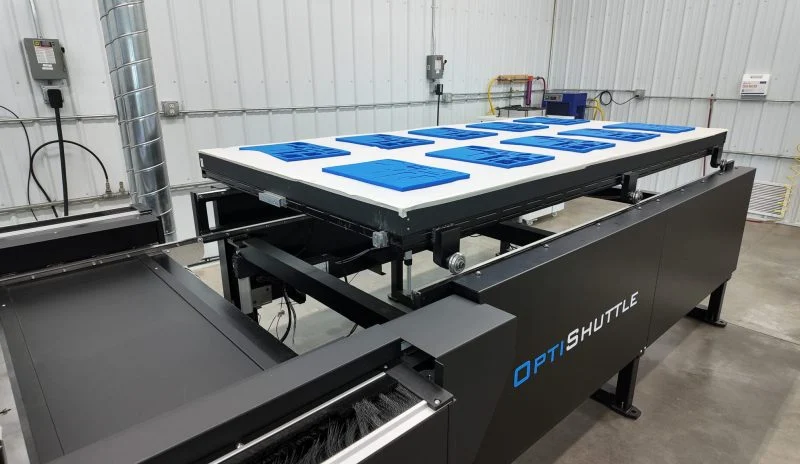
Modular shuttle systems introduced to minimize cycle transition times across high-volume production lines.
Contact our application engineering team today. Send us your CAD drawings and material specifications for a custom throughput analysis, test cut report, and complete system quotation.