Safety & Compliance Engineering

Laser Safety Standards & Safety Features

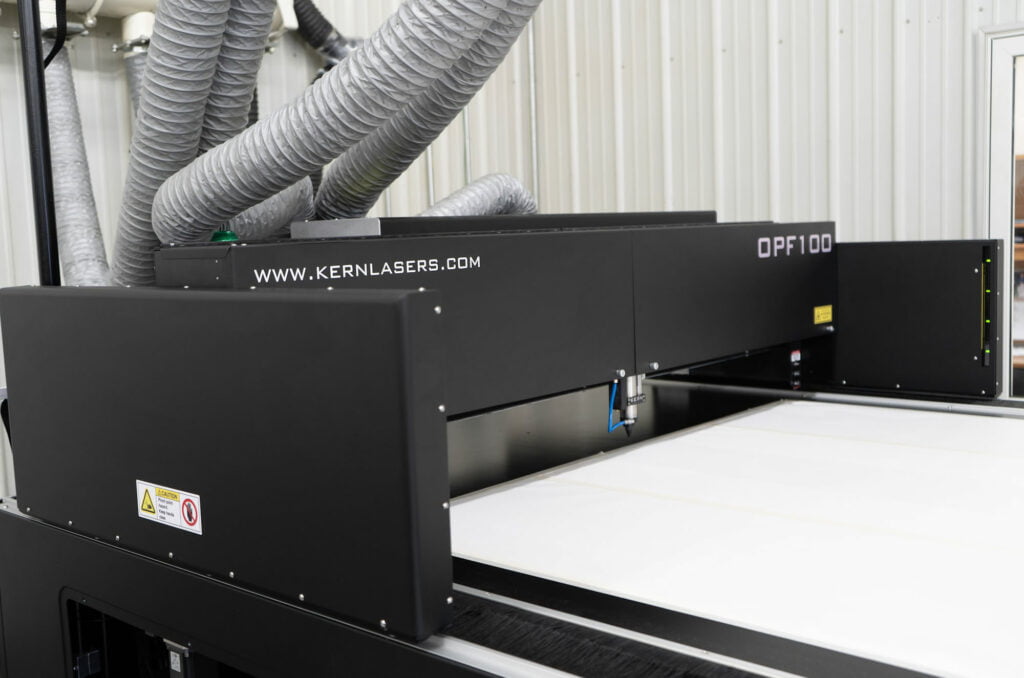
Kern Laser Systems safety bumper and optical protection assembly
Engineered Protection

Safe CNC Laser Cutting Solutions Built to Global Industrial Standards

Creating a safe, compliant, and healthy operating environment is a non-negotiable priority when integrating high-power industrial laser cutters into factory floors. Since 1982, Kern Laser Systems has engineered heavy-duty CO2 and fiber laser equipment designed to meet or exceed rigorous international safety regulations.

Our US factory design team spends thousands of engineering hours evaluating hazard mitigation across mechanical, electrical, and optical domains. Kern machines are certified to satisfy CDRH, UL, CE, and ANSI compliance frameworks, protecting operators while maintaining peak 24/7 manufacturing productivity.

Laser safety is divided into two core pillars: Factory-Integrated Hardware Safety Features and Operational Management Protocols. Explore how Kern protects your workforce and assets below.

Laser Hazard Classification

Understanding Class 2 Enclosed vs. Class 4 Open-Bed Systems

Industrial lasers receive international classification ratings based on beam wavelength, peak output power (watts), and potential human exposure risks. Kern manufactures equipment tailored to both Class 2 and Class 4 workplace requirements.

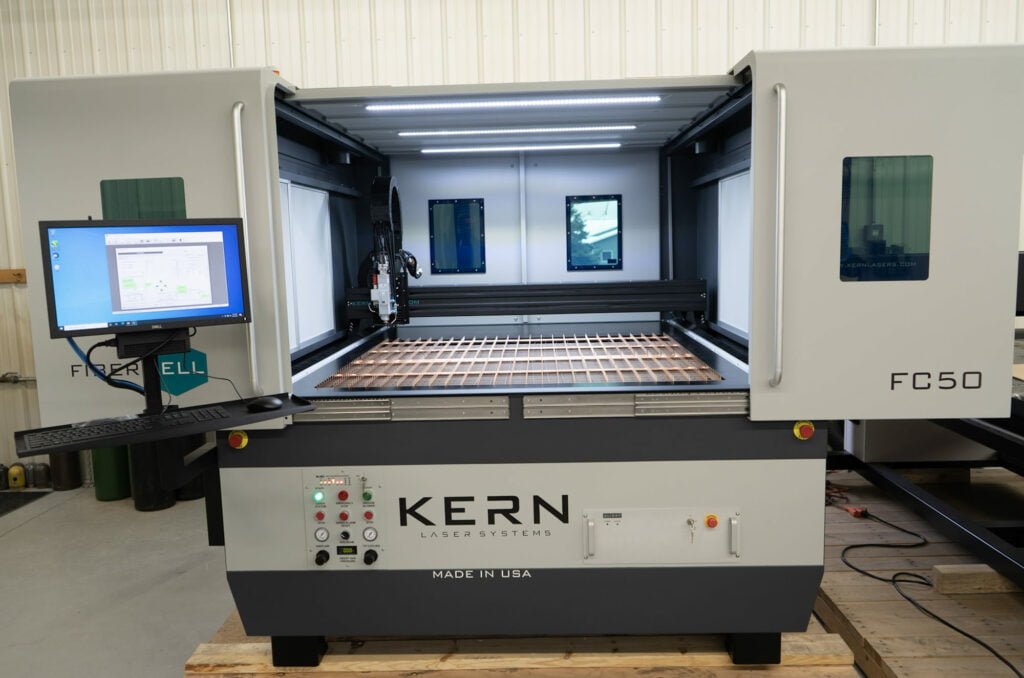
FiberCELL Class 2 Enclosed Laser Machine
Class 2 Safety Enclosure

Fully Enclosed Laser Systems (LaserCELL & FiberCELL)

Class 2 laser platforms interlock the high-power processing beam within a fully protective Class 2 safety housing. Operators view working operations through certified laser-safe viewing glass without requiring optical safety glasses.

Why Class 2 instead of Class 1? Kern incorporates a visible red diode pointer (<1mW at 635-650nm) to display real-time beam positioning on stock material. Under ANSI Z136 guidelines, visible alignment beams mandate a Class 2 designation, ensuring total operator safety with zero optical hazard.
OptiFlex Open Bed Class 4 Laser Machine
Class 4 Open-Bed Platform

Open-Bed Processing Systems (OptiFlex, EcoFlex, Micro, OptiDual)

Large-format open-bed systems deliver maximum loading access for full 4x8 ft or 5x10 ft sheet goods. Because the processing gantry moves openly across large work envelopes, these systems are categorized as Class 4 equipment.

Class 4 operation requires established administrative safety controls, including designated Laser Controlled Areas (LCA), certified OD6+ optical eyewear, and an active Laser Safety Officer (LSO) on site.

Standard Safety Hardware

CDRH Compliant Safety Hardware Engineered into Every Machine

Every laser system built at our Minnesota facility integrates six core hardware safety systems designed to prevent accidental radiation discharge, mechanical impact, and electrical risk.

1. Key Switch & Manual Reset

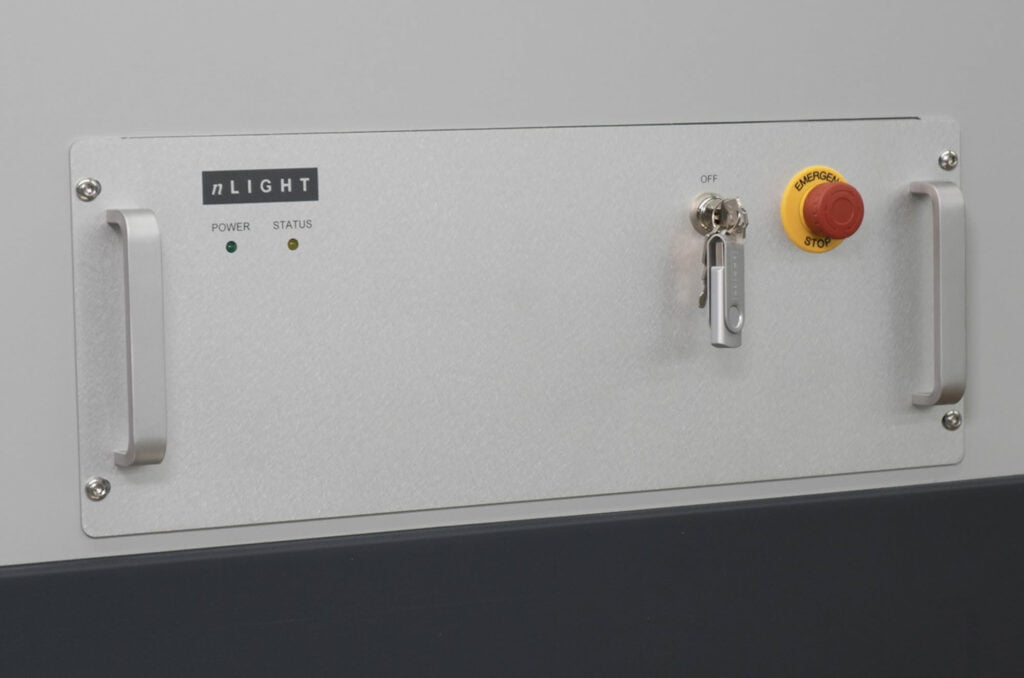
Master key-switch interlocks prevent unauthorized machine powering. The five-second delay circuit requires explicit operator cycling upon power-up or interlock clearing before emission can occur.

2. Sealed Beam Delivery System

Optical delivery paths are fully encased inside rigid metal tubing and heavy-duty protective bellows. The high-power cutting beam is invisible and completely shielded until exiting the focal nozzle.

3. High-Speed Mechanical Shutter

A fast-acting physical beam attenuator blocks the optical path internally while electronically disabling the laser source during material loading, setup, or manual pause commands.

4. Safety Interlock Circuitry

Dual-channel safety interlocks on maintenance doors and gantry lids automatically kill laser power instantly if panels are opened during active laser processing routines.

5. Visual Active-Status Light

High-visibility multi-color indicator towers mounted atop the gantry display real-time machine operational states (Ready, Active Laser Emission, E-Stop Fault) across busy shop floors.

6. Immediate Emergency Stop Buttons

Industrial mushroom-head E-stop buttons positioned at key operator stations immediately remove main AC power from motion drives and discharge laser power supplies upon actuation.

Advanced Risk Reduction

Advanced Optional Safety Systems: Gantry Bumpers & Light Curtains

For high-traffic industrial manufacturing plants or collaborative floor plans, Kern offers automated active sensor arrays to prevent machine collision and human intrusion.

Pressure-Sensing Gantry Bumpers

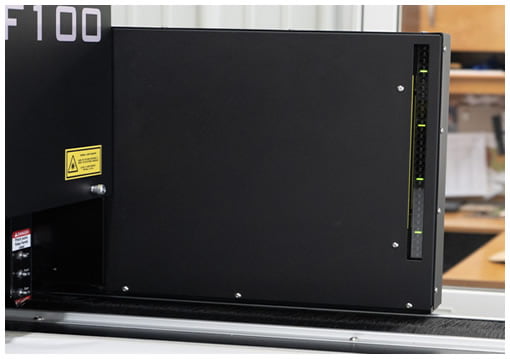
OptiFlex and large-format platforms can be outfitted with continuous pressure-sensitive bumpers along both sides of the X-axis motion gantry. If a bumper makes mechanical contact with an obstacle, material stack, or operator, the motion control package and laser generator immediately deactivate.

Infrared Optical Light Curtains

Safety light curtains project an invisible wall of dense infrared beams around open machine perimeters. If an operator's hand, arm, or object breaks the optical curtain plane during high-speed cutting routines, the safety controller halts gantry movement in milliseconds and closes the internal laser safety shutter.

OptiFlex laser gantry with safety bumper array
Environmental Protection

Industrial Fume Removal & Exhaust Engineering

Thermal processing of industrial substrates generates airborne dust, off-gases, and vaporized particles. Effective vacuum extraction protects worker respiratory health, preserves optical lenses, and keeps motion components free of debris.

Exhaust System Type Primary Application Technical Mechanism & Protection Level
Standard Vacuum Blower Package External Building Ducting Included standard with every Kern system. High-capacity downdraft blower evacuators draw vaporized material beneath the slats and exhaust airborne particulates outside the facility.
Closed-Loop Fume Extractors (BOFA / Purex) Indoor Recirculation / Cleanrooms Multi-stage filtration utilizing deep-pleat pre-filters, HEPA particulate filters, and heavy activated carbon beds to neutralize odors and toxic off-gases before returning purified air back to the room.
Inline Spark Arrestor Units Sheet Metal & Alloy Cutting Installs directly between metal-cutting laser beds and fume extractors. Extinguishes hot sparks against internal metal baffles, dropping embers into a sealed metal collection tray to prevent filter ignition.
Activated Carbon Filter Box Organic Substrate Odor Reduction Compact auxiliary carbon filter housing using 100% activated coconut shell charcoal to absorb unpleasant organic smells generated when laser cutting acrylic, wood, and leather.
Global Trade Compliance

European Union CE Certification & International Directives

Kern Laser Systems exports production equipment to over 50 countries worldwide. Our internal R&D team and accredited third-party testing laboratories ensure full compliance with international safety and electromagnetic directives.

EN ISO 12100:2010

Safety of machinery — General principles for design, risk assessment, and technical risk reduction.

EN 60204-1:2006+A1:2009

Safety of machinery — Electrical equipment of machines, power supply, and control requirements.

EN ISO 13849-1:2015

Safety-related parts of control systems — Performance level design and functional safety validation.

Machinery Directive 2006/42/EC

Full European essential health and safety requirements for industrial machinery manufacturing.

EMC Directive 2014/30/EU

Electromagnetic compatibility standards (EN 61000-6-4 Emission & EN 61000-6-2 Immunity).

RoHS Directive 2011/65/EU

Restriction of hazardous substances in electrical and electronic components utilized in machine builds.

Workplace Compliance

Laser Safety Officer (LSO) Governance & Operational Protocols

Under ANSI Z136.1 guidelines, organizations deploying Class 4 industrial laser machinery must designate a trained Laser Safety Officer (LSO). The LSO oversees workplace hazard evaluations, establishes standard operating procedures (SOPs), and enforces proper safety protocols.

Key LSO Responsibilities Include:

  • Verifying optical density (OD 6+ at 10.6µm for CO2 / 1070nm for Fiber) on operator protective eyewear.
  • Reviewing Safety Data Sheets (SDS) for substrate materials to verify non-toxic gas generation during thermal cutting.
  • Establishing a designated Laser Controlled Area (LCA) with proper warning placarding and warning lights.
  • Conducting routine audits of interlock safety switches, emergency stops, and exhaust system filter life.
Laser Institute of America training compliance
Safety FAQ

Frequently Asked Questions on Laser Machine Safety

Direct technical answers from Kern engineers regarding laser hazard control, optical eyewear, and workplace safety.

Class 2 machines (such as LaserCELL and FiberCELL) feature fully enclosed safety cabinets with interlocked access doors, eliminating direct or scattered beam hazards. Class 4 machines (like OptiFlex, EcoFlex, Micro, and OptiDual) have open-bed tables for handling full 4x8 ft or 5x10 ft sheet goods, requiring active safety protocols including certified optical eyewear and a designated Laser Safety Officer (LSO).

Kern enclosed systems feature a low-power red diode beam pointer (<1mW at 635-650nm) to assist operators in visualizing nozzle origin positioning on raw stock. Under ANSI Z136 and CDRH rules, visible alignment beams under 1mW dictate a Class 2 designation, even though the high-power processing beam is completely enclosed.

Yes. When operating Class 4 open-bed CO2 or fiber laser systems, all personnel inside the designated Laser Controlled Area must wear certified protective eyewear with matching optical density (OD 6+ or higher) rated for the specific laser wavelength (10,600 nm for CO2 lasers, 1,070 nm for fiber lasers).

Kern laser systems are CE-marked and compliant with international standards including EN ISO 12100:2010 (Safety of Machinery Risk Assessment), EN 60204-1:2006 (Electrical Equipment), EN ISO 13849-1:2015 (Safety-Related Control Systems), Machinery Directive 2006/42/EC, EMC Directive 2014/30/EU, and RoHS Directive 2011/65/EU.

No. Materials containing chlorine (such as PVC, vinyl, or chlorinated rubber) should never be thermally cut or engraved with a laser. Vaporizing PVC releases corrosive toxic hydrogen chloride gas, which poses severe health hazards to personnel and rapidly destroys optical optics, linear rails, and electronic wiring.

Consult Our Application Engineers

Ensure Complete Safety Compliance for Your Production Floor

Have specific questions about laser facility planning, fume extraction sizing, or optical safety standards? Speak directly with our Minnesota engineering team.