Engineered for rigorous maritime, aerospace, semiconductor, and heavy manufacturing surface treatment across Northern California.
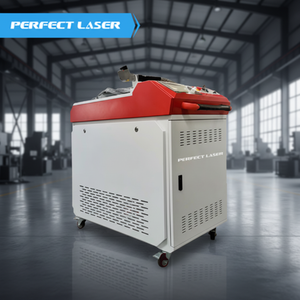
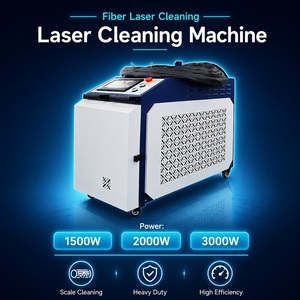
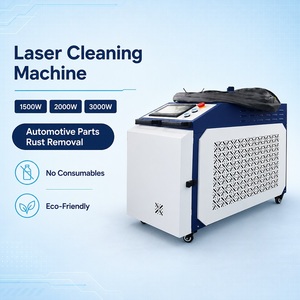
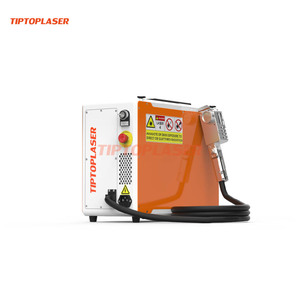
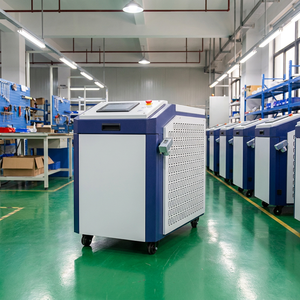
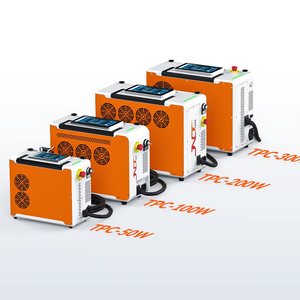
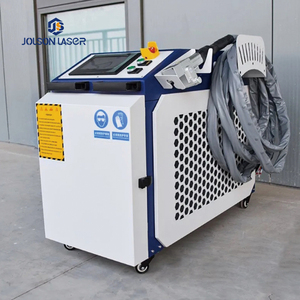
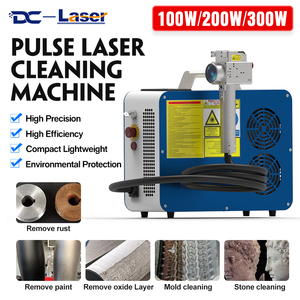
The industrial landscape of the San Francisco Bay Area—spanning Silicon Valley manufacturing hubs, Oakland maritime repair facilities, and Peninsula aerospace innovation facilities—is undergoing an unprecedented shift toward sustainable environmental compliance. Driven by strict mandates from the California Air Resources Board (CARB) and the Bay Area Air Quality Management District (BAAQMD), traditional abrasive grit blasting, chemical solvent baths, and manual wire-brushing are being systematically phased out due to hazardous waste disposal, high volatile organic compound (VOC) emissions, and worker exposure risks.
In this highly regulated ecosystem, handheld continuous wave (CW) and high-frequency MOPA pulsed laser cleaning technologies have emerged as the premier non-contact surface treatment standard. By deploying concentrated laser ablation, industrial operators achieve precise rust elimination, oxide layer removal, thermal coating stripping, and oil residue decontamination without generating secondary solid waste streams.
100% dry, solvent-free operation ensures zero airborne grit dust, completely eliminating secondary containment costs and hazardous waste handling fees in the SF Bay watershed.
Pulsed MOPA fiber lasers remove contaminants at the micron level without altering underlying mechanical properties, tensile strength, or grain boundaries of aircraft aluminum or stainless alloys.
With zero consumables beyond electricity and an optical diode lifecycle exceeding 100,000 operational hours, capital equipment investment pays off within 6 to 12 months.
Achieving optimum information gain in surface cleaning requires a rigorous understanding of the interaction between photon energy and contaminant absorption coefficients. Laser cleaning functions via selective thermo-optical ablation. When short-duration laser pulses strike an oxide layer, paint film, or rust deposit, the contaminant absorbs the optical energy, inducing instantaneous thermal expansion and vaporization.
| Parameter / Technology | Pulsed MOPA Fiber Laser (100W - 300W) | Continuous Wave (CW) Fiber Laser (1500W - 6000W) |
|---|---|---|
| Ablation Mechanism | High Peak Power Photo-Ablation (Non-Thermal) | High Average Power Thermo-Ablation (Thermal Vaporization) |
| Substrate Heat Input | Near-Zero (Ideal for Thin Sheet Metal & Composites) | Moderate to High (Ideal for Heavy Steel & Castings) |
| Cleaning Speed | 2.5 to 8.0 sq.m / hr (Precision Focus) | 15.0 to 45.0 sq.m / hr (Bulk Production) |
| Target Applications | Aircraft skins, semiconductor molds, historical monuments | Shipyard hull maintenance, structural steel, pipe de-scaling |
| Consumables Cost | Zero (Electrical requirement only) | Zero (Electrical requirement only) |
| Optics Integration | JPT MOPA / High Peak Energy Optics | SUP22C Wobble Head / Heavy Duty Water Cooled |
For precision applications in Silicon Valley cleanrooms or aerospace maintenance near San Francisco International Airport (SFO), pulsed lasers prevent microscopic micro-cracking and substrate deformation. Conversely, for maritime retrofits along the Port of Oakland, our high-power CW fiber lasers (ranging up to 6000W) provide rapid material removal rates for millimeter-thick rust scale.
Tailored laser cleaning deployments addressing specific industrial challenges across the San Francisco Bay Area.
Marine environments accelerate severe saltwater corrosion on vessel hulls, ballast tanks, and dock gantry cranes. Our 3000W and 6000W CW fiber laser cleaners strip heavy marine coatings and thick rust deposits without damaging underlying steel plates or releasing microplastics into fragile marine ecosystems.
De-coating primer and topcoats from aluminum alloy aircraft skins demands absolute thermal containment. Our Bluetimes Aerospace Pulsed Laser Cleaning systems remove paint layer-by-layer (down to sub-micron accuracy) while preserving anti-corrosion anodized undercoats.
Micro-injection molding and wafer-packaging tooling build up burnt polymer residue over high-volume production runs. Backpack 100W and 300W pulsed MOPA lasers eliminate mold residues online within minutes, eliminating offline chemical ultrasonic soaking cycles.
Combining four decades of industrial optics heritage, American assembly standards, and factory-direct global support.
Tracing roots to established American industrial laser engineering standards since 1982, every machine frame is structural-steel welded, precision-machined, and field-tested prior to dispatch.
Our super-pulsed CO2 and fiber laser sources undergo 72-hour burn-in validation tests, supported by an industry-leading 3-year factory warranty and guaranteed replacement part availability.
Equipped with intelligent dual-axis wobble cleaning heads, variable beam width controls (10mm to 300mm), and real-time thermal monitoring to prevent optical lens burn-out.
From robotic arm integration for automated assembly lines to custom gantry enclosures, our engineering team designs bespoke motion packages for specific production requirements.
San Francisco clients benefit from dedicated remote desktop optical diagnostics, local technician dispatch capabilities, and factory-direct phone support without third-party delay.
Eliminate ongoing operational expenses associated with grit media purchasing, disposal permits, protective respirator maintenance, and chemical solvent handling.
Clear, engineering-backed responses addressing technical compliance, operation safety, and local logistics.
Yes. Laser cleaning is a 100% dry, chemical-free process that creates no volatile organic compound (VOC) emissions or hazardous chemical runoff. When paired with an HEPA fume extraction unit, it satisfies all Bay Area Air Quality Management District (BAAQMD) regulations for industrial surface preparation.
When properly configured with high scan speeds (up to 20,000 mm/s) and a SUP22C wobble head, thermal input is localized strictly to the contaminant layer. However, for ultra-thin alloy sheets (<1.5mm), we recommend our pulsed MOPA series to guarantee zero micro-thermal distortion.
Pulsed systems (100W-300W) operate on standard single-phase 110V/220V AC wall power. Heavy-duty continuous wave units (1500W-6000W) require 220V/380V three-phase power. All systems feature industrial NEMA-rated electrical enclosures and emergency shutoff safety interlocks.
Our machinery operates under Class 4 laser guidelines in open handheld configurations and Class 2 when fully enclosed. Operators must wear included OD6+ wavelength-specific optical safety eyewear. We provide complete ANSI Z136.1 safety compliance protocols with every delivered machine.
We maintain comprehensive spare part inventories—including protective focus windows, focal lenses, and optic cleaning kits—with overnight shipping options available directly to San Francisco, San Jose, and Oakland industrial zones.
Absolutely. You can ship your specific corroded substrate, painted alloy panel, or dirty industrial mold to our applications laboratory. Our optical engineers will conduct testing, record video documentation, calculate cycle times, and return the cleaned sample for metallurgical inspection.
Schedule a live optical cleaning demonstration, submit your material sample for laboratory testing, or consult directly with our senior optical application engineers today.