Pre-tested and factory-calibrated machines for seamless deployment in Johannesburg, Cape Town, Durban, Gqeberha, and regional mining hubs.
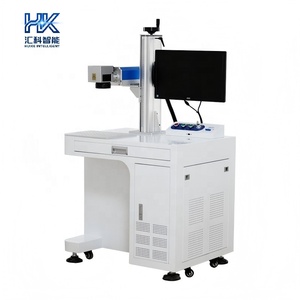
Heavy-duty industrial workstation engineered for continuous serial barcode, VIN code, and component marking on stainless steel, aluminum, and brass.
Send an Inquiry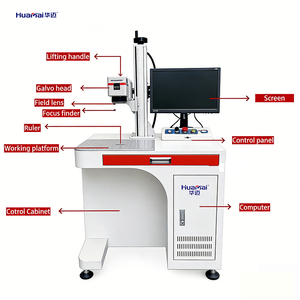
Features adjustable pulse frequency for deep black anodized aluminum etching and vibrant color spectrum engraving on stainless steel hardware.
Send an Inquiry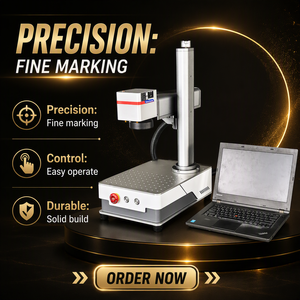
Space-saving desktop architecture designed for small workshops, custom engravers, and tool manufacturers requiring high-precision vector etching.
Send an Inquiry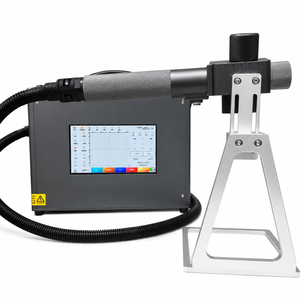
Direct-contact handheld optical head allowing operators to bring the laser beam to massive structural beams, pipe flanges, and static mining assets.
Send an Inquiry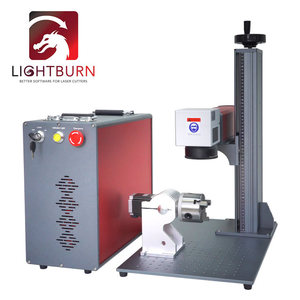
Engineered for deep metal carving, mold etching, and 360-degree cylindrical marking on drill bits, shafts, and hydraulic fittings.
Send an Inquiry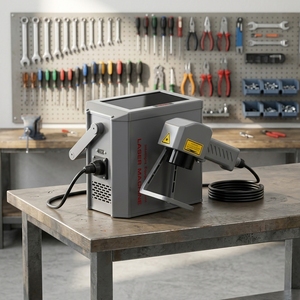
Utilizes 355nm ultraviolet wavelength for ultra-delicate marking on glass bottles, medical plastics, cables, and cosmetic container packaging.
Send an Inquiry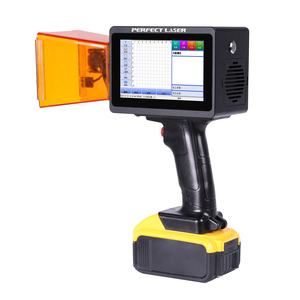
Built-in high-capacity lithium battery allows up to 6 hours of continuous field operation during load-shedding power outages or remote yard marking.
Send an Inquiry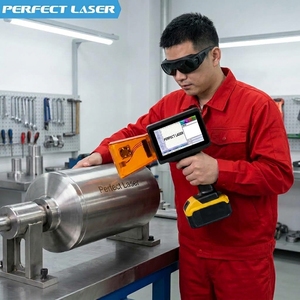
Ruggedized briefcase laser system optimized for outdoor industrial environments, inventory tagging, and timber/leather component batch coding.
Send an InquiryQuantifiable quality control standards verified across more than 1,200 international factory dispatches.
South Africa’s industrial landscape—ranging from the heavy mining operations in Mpumalanga and the North West, to the automotive clusters in Gqeberha (Port Elizabeth) and Rosslyn (Gauteng), and the agricultural packaging houses of the Western Cape—demands high-end manufacturing machinery capable of relentless operation under rigorous local conditions. As global product traceability standards (such as ISO 9001, IATF 16949, and GS1 DataMatrix compliance) become mandatory for South African exporters, direct laser marking and cutting technologies have replaced legacy inkjet, pin-stamp, and chemical etching methods.
Selecting a fiber laser factory partner requires evaluating optical beam performance, long-term power stability, sub-system resilience against voltage fluctuations, and direct OEM technical backup. This document outlines the technical criteria, local integration factors, and operational economics governing the deployment of imported fiber laser machinery across South African industrial facilities.
Traditional Q-switched fiber lasers operate with a fixed pulse duration (typically 100ns to 120ns), limiting their operational flexibility when processing heat-sensitive materials. Master Oscillator Power Amplifier (MOPA) systems, such as the JPT M7 series featured in our export lineup, allow operators to independently adjust pulse width from 2ns to 500ns and pulse repetition rates up to 4000 kHz. This capability prevents thermal degradation on delicate electronics while enabling high-contrast black marking on anodized aluminum and vivid oxide color layer formation on stainless steel grade 304 and 316—critical for South African medical device and architectural hardware manufacturers.
A. Automotive & Transportation OEM Supply Chains (Gauteng & Eastern Cape):
Tier-1 suppliers servicing original equipment manufacturers rely on 30W and 50W JPT MOPA fiber laser markers for permanent, non-removable Part Identification (VIN numbers, 2D DataMatrix codes, dynamic serializing). Fiber laser beams deliver fine spot diameters (≤30 microns), ensuring codes remain scannable even after post-process shot-blasting, electro-coating, or harsh environmental exposure in coastal ports like Durban and East London.
B. Mining Equipment, Mineral Processing & Heavy Fabrication (North West & Witbank):
Underground mining tools, drill bits, conveyor assemblies, and structural steel flanges require deep metal engraving (≥0.3mm depth) to withstand abrasive abrasive wear. High-power 100W to 300W Raycus and MAX fiber laser sources utilize high-peak-power pulses to vaporize hardened steel alloys without compromising structural integrity. Portable handheld fiber units allow engineers to mark massive 10-ton casting components directly on the factory floor without overhead crane repositioning.
C. Beverage, Wine & Agricultural Packaging (Western Cape & Kwazulu-Natal):
The Western Cape viniculture and fruit packaging sectors demand high-speed date-coding and batch identification on glass bottles, shrink films, and HDPE containers. Ultraviolet (UV) cold-laser systems (355nm wavelength) provide non-thermal photochemical surface breakdown, achieving crisp white or black contrast marks without thermal micro-cracking on glass or pinholes on thin polymer packaging films.
To assist procurement managers in choosing the right fiber engine, the table below breaks down performance parameters across leading laser source suppliers integrated into our systems:
| Technical Parameter | Raycus Fiber Engine | MAX Photonics Engine | JPT M7 MOPA Fiber Engine |
|---|---|---|---|
| Pulse Duration Control | Fixed (100ns – 120ns) | Fixed (100ns – 130ns) | Adjustable (2ns – 500ns) |
| Frequency Range | 20 kHz – 80 kHz | 20 kHz – 100 kHz | 1 kHz – 4000 kHz |
| Plastic Marking Contrast | Moderate (Thermal sensitive) | Moderate | Superior (Zero burn / High contrast) |
| Stainless Steel Color Etching | Not Supported | Not Supported | Full Color Spectrum Support |
| Deep Metal Engraving Speed | High Efficiency / Cost-Effective | High Efficiency / Fast Cut | Ultra-Precise Layered Vaporization |
| Diode Lifespan Expectancy | > 100,000 Hours | > 100,000 Hours | > 100,000 Hours |
A primary consideration for South African industrial operators is maintaining machinery reliability during localized load-shedding and power grid fluctuations. Our factory specifically configures exported laser machinery with localized electrical protections:
Why South African industrial buyers source directly from our specialized manufacturing facility.
Every machine frame is stress-relieved, precision CNC-machined, and assembled in-house. Optical path alignment is verified using red-light laser autocollimators to guarantee uniform focus across the entire scanning field.
Prior to export packing, all laser sources undergo a 72-hour continuous thermal stress cycle. Power stability curves are measured using FieldMax power meters to ensure zero drop off over extended production runs.
We provide complete documentation for South African Revenue Service (SARS) customs clearance, including Certificate of Origin (Form A), HS Code classification (8456.11), and wooden crate fumigation certificates (ISPM 15 standard).
Answers to common questions regarding customs duties, voltage compatibility, freight, and aftermarket support.
Fiber laser machines fall under HS Code 8456.11.00 (Machine tools operated by laser or other light or photon beam processes). Under the Southern African Customs Union (SACU) tariff schedule, the standard import duty rate for laser marking machinery is generally 0% (duty-free), though standard South African Value Added Tax (15% VAT) applies upon customs entry through SARS at ports like Durban, Cape Town, or OR Tambo Airport.
Yes. All machines exported to South Africa are manufactured with 230V ±10% single-phase 50Hz switching power systems. They plug directly into standard 3-pin South African wall sockets (Type M, 15A). For regions experiencing severe voltage fluctuations, internal MeanWell industrial power supplies act as first-line regulation, preventing damage to optical components.
We offer a 2-year to 3-year factory warranty on laser sources (Raycus, MAX, JPT) and modular components. In the event of a technical issue, our English-speaking optical engineers conduct remote diagnostic sessions via TeamViewer or video call. If a component fails within the warranty period, a replacement module is dispatched via express air courier (DHL/FedEx) directly to your facility in South Africa within 3 to 5 business days.
Systems are shipped with genuine EZCAD control software (or Linux-based touchscreen software for portable handheld units) pre-installed with full software license. EZCAD natively supports vector formats including DXF, PLT, AI, SVG, and raster image formats like BMP, JPG, and PNG. It includes built-in barcode generation, 2D DataMatrix code creation, and automated serial number incrementing.
Air freight dispatches via OR Tambo (Johannesburg) or Cape Town International take approximately 5 to 7 business days from factory dispatch. Sea freight shipments to Durban Container Terminal (DCT) or Port of Cape Town typically take 22 to 28 days transit time. All equipment is packed in heavy-duty export plywood crates with moisture barrier lining and rust-inhibiting VCI film.
Send us your material specifications (metal, plastic, glass, or packaging) or CAD drawings. Our application engineers will perform free sample marking test runs and provide a detailed factory quote with CIF shipping terms to your destination port.