Industrial Precision Laser Lineup for Serbia
High-precision fiber, UV, and CO2 laser marking, engraving, and cutting systems engineered for Serbian automotive, metal fabrication, and industrial coding applications.
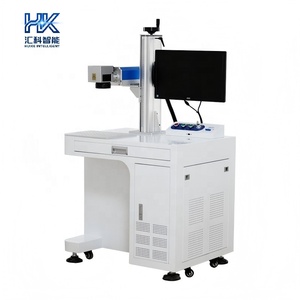
Fiber Laser Marking Machines JPT RAYCUS MAX 20W–300W
Heavy-duty metal & plastic marker equipped with high-efficiency fiber sources. Engineered for high-speed line integration in Belgrade metalworking plants.
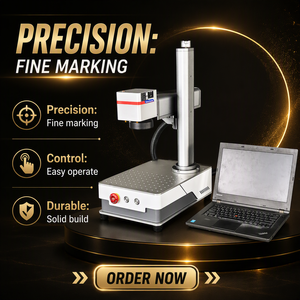
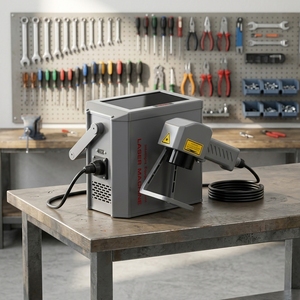
Portable Auto Focus 20W/30W JPT MOPA Fiber Laser Engraver
Dynamic pulse-width control enabling vivid color printing on stainless steel and high-contrast marking on sensitive automotive plastics.
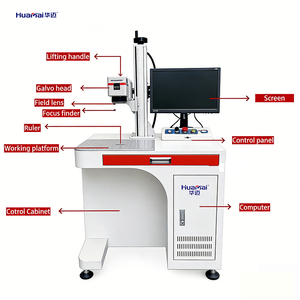
Desktop Mini Fiber Laser Marking Machine 30W Compact
Ultra-compact design ideal for small hardware workshops in Novi Sad. Provides sub-micron precision for stainless steel and brass parts.
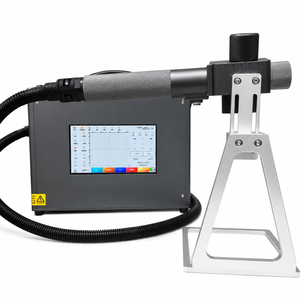
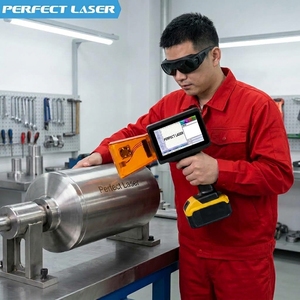
2026 Handheld Mobile Portable Mini 20W/30W/50W Laser
Mobile handheld marking head allowing direct on-site part marking for heavy structural steel work and machinery frames across Serbian job sites.
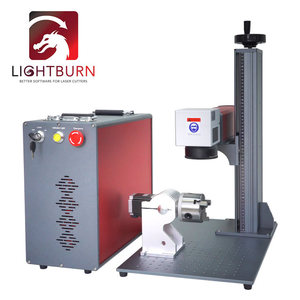
100W JPT M7 MOPA Bench-Top Laser with 80mm Rotary Axis
High-power air-cooled system with 300x300mm field lens and rotary attachment. Supports complex DXF/PLT vector files for cylindrical tooling.
Small Desktop UV Laser Engraving Machine Air-Cooled
355nm cold UV light wavelength for damage-free micro-marking on pharmaceutical, cosmetic packaging, and delicate HDPE containers.
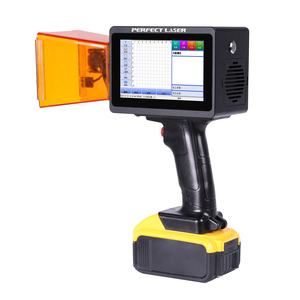
Industrial Rechargeable Battery Portable Handheld Laser
Cordless industrial marker designed for inventory tracking, pipe marking, and field maintenance across Serbia’s expanding infrastructure projects.
Multi-Material Handheld Laser Coding Machine for Metal & Wood
Versatile ergonomic laser engraver capable of crisp permanent coding on metals, organic woods, leather products, and dense polymers.
+14.2%
Serbia Industrial Growth Rate
±0.001"
Mechanical Repeatability
100,000 hrs
Fiber Laser Diode MTBF
3-Year
Factory Laser Source Warranty
Executive Summary: The Serbia Precision Laser Manufacturing Landscape
The Republic of Serbia has emerged as a cornerstone of industrial manufacturing, automotive component production, and metal fabrication across Central and Eastern Europe (CEE). Driven by strategic geographical connectivity, robust direct foreign investments (FDI), and an accelerating shift toward Industry 4.0 automation, Serbian enterprises are modernizing their manufacturing facilities at an unprecedented rate. Central to this technological transformation is the adoption of advanced precision laser systems—ranging from portable MOPA fiber markers to high-power large-format CO2 and fiber cutting tables.
According to recent industrial procurement analytics, the demand for precision laser machinery in key Serbian industrial hubs—such as Belgrade, Novi Sad, Niš, and Kragujevac—has expanded dramatically. Local manufacturers are prioritizing systems that offer superior information gain, thermal stability, low operational expenditure, and seamless compliance with European Union CE standards and ISO quality frameworks.
Search Intent & Market Insight: Serbian industrial buyers are no longer seeking entry-level machinery with high maintenance overheads. Modern procurement managers require enterprise-grade reliability, localized spare-part availability, integrated motion software (such as KCAM), and high-contrast marking capability on diverse substrates including anodized aluminum, hardened tool steel, cast acrylic, and technical polymers.
Localized Industrial Application Scenarios in Serbia
The adoption of precision laser equipment in Serbia spans several core industrial sectors, each presenting distinct technical requirements:
- Automotive & OEM Component Manufacturing (Kragujevac & Šimanovci Hubs): Serbian automotive suppliers producing transmission parts, electrical harnesses, and engine housings utilize 30W to 100W MOPA fiber lasers for permanent DataMatrix code traceability. The capability to adjust pulse duration (from 2ns to 500ns) allows engineers to etch readable QR codes on sensitive polymers without causing thermal structural degradation.
- Sheet Metal Fabrication & Enclosures (Novi Sad & Zrenjanin): Precision metal fabricators demand enclosed fiber cutting platforms (such as the FiberCELL series) and hybrid gantries to cut stainless steel, mild steel, brass, and copper with micro-inch accuracy, eliminating post-process edge deburring.
- Medical Equipment & Pharmaceutical Packaging (Belgrade District): High-precision 355nm UV laser markers deliver cold-ablation processing on pharmaceutical pill blister packs and medical grade polymers, ensuring zero thermal stress and pristine chemical safety.
- Custom Woodworking & Architectural Elements (Vojvodina Region): Heavy-duty super-pulsed CO2 laser systems (ranging up to 800W) dominate the architectural woodworking sector, executing intricate raster engraving and flame-polished acrylic cutting in single-pass operations.
Top 10 Precision Laser Factories Serving the Serbia Market: Comparative Benchmark
To assist procurement managers, industrial engineers, and factory owners in selecting the optimal machinery provider, our technical research team has evaluated the top 10 precision laser factories and primary suppliers active within the Serbian market. Evaluation criteria encompass structural frame rigidity, laser engine source integration, software interoperability, technical support infrastructure, and warranty reliability.
| Factory / Supplier Brand |
Primary Technology Focus |
Core Power Range |
Structural Accuracy |
Local Service SLA |
| Kern Laser Systems (USA OEM Benchmark) |
Large Format CO2 & Sheet Metal Fiber |
150W – 800W CO2 / 1kW – 3kW Fiber |
±0.001" (Ground Servo Rails) |
Direct Technical Support / Remote Diagnostics |
| Serbian OEM Integrator Hub 1 |
Fiber Marking & Small CNC Engraving |
20W – 50W Fiber |
±0.005" |
48-Hour Regional On-Site |
| European Industrial Laser Corp |
High-Power Sheet Metal Cutting |
2kW – 12kW Fiber |
±0.002" |
EU Field Engineer Network |
| JPT MOPA Regional Direct Supply |
MOPA Fiber & Fine Color Marking |
20W – 100W MOPA |
Sub-Micron Laser Head |
Factory Express Parts Dispatch |
| Raycus OEM Partner Factory |
General Industrial Metal Marking |
30W – 300W Fiber |
±0.003" |
Distributor Channel Support |
| Maxphotonics Laser Assembly |
Handheld Laser Welding & Marking |
1000W – 2000W Handheld |
Manual / Guided Optics |
Standard Warranty Exchange |
| UV Precision Micro Engine Factory |
Cold UV Laser Engraving (355nm) |
3W – 15W UV |
±0.0005" |
Cleanroom Module Exchange |
| CO2 Glass & Metal Tube Factory |
Acrylic & Organic Material Cutting |
80W – 150W CO2 |
±0.008" |
Third-Party Maintenance |
| Desktop Mini Fiber OEM |
Jewelry & Small Tool Engraving |
20W – 30W Compact |
±0.004" |
Mail-in Repair Center |
| Portable Battery Laser Works |
Infrastructure & On-Site Pipe Marking |
20W Battery Powered |
Handheld Field Tolerance |
Direct Factory Replacement |
Key Engineering Differentiation Factors
When analyzing factory offerings for the Serbian market, leading engineering firms emphasize vertical integration. For example, enterprise OEMs like Kern Laser Systems (founded in 1982 in Minnesota, USA) engineer, machine, and assemble their heavy-duty steel chassis, super-pulsed laser sources, and control software in-house. This contrasts sharply with generic assembly factories that rely on off-the-shelf aluminum extrusions and uncalibrated third-party software, which often suffer from thermal drift under continuous multi-shift production.
Future Technology & Economic Trends in Serbia's Laser Sector
As Serbia continues its trajectory toward heightened integration with global supply chains, several key technological and regulatory trends are reshaping equipment purchasing decisions across the industrial spectrum:
1. Nearshoring & Modernization of Supply Chains
European Union automotive and aerospace OEMs are increasingly nearshoring component manufacturing to Serbian suppliers to reduce reliance on long-distance maritime freight. This shift mandates strict adherence to ISO 9001 and IATF 16949 quality standards, which require non-contact, permanent laser marking for zero-failure part identification.
2. Transition from CO2 Glass Tubes to Metal Tube Super-Pulsed & Fiber Sources
Legacy Serbian workshops are rapidly phasing out fragile glass-tube CO2 laser engravers in favor of metal-tube super-pulsed CO2 engines and solid-state fiber lasers. Super-pulsed CO2 systems provide over 3 times the peak pulse energy of standard sources, yielding cleaner cut edges on thick acrylics while carrying extended factory warranties (up to 3 years).
3. Adoption of MOPA Technology for Advanced Color Engraving
Mastering pulse duration flexibility via JPT M7 MOPA fiber lasers has opened new aesthetic and functional avenues for Serbian manufacturers. By fine-tuning pulse widths between 2ns and 500ns, operators can produce vibrant, non-fading oxide colors on stainless steel consumer goods and achieve pitch-black contrast marks on sensitive ABS polymers without surface charring.
4. Energy Efficiency & Eco-Friendly Green Manufacturing
With rising industrial electricity costs across Europe, energy-efficient fiber lasers (which convert over 30% of electrical energy into optical laser light, compared to less than 10% for traditional CO2 systems) have become vital for maintaining lean production margins.
Enterprise Authority Blueprint: Core Competencies of Industrial Laser Engineering
To achieve sustainable operational excellence, high-volume production facilities require machinery engineered around principles of structural integrity, precision motion control, and intelligent vision alignment. Based on decades of USA manufacturing expertise, enterprise laser platforms embody several critical architectural standardizations:
Heavy-Duty Steel Chassis & Closed-Loop Servo Drives
Vibration is the enemy of precision laser processing. Enterprise systems utilize thick-walled, stress-relieved steel tube frames welded and precision-machined in-house. Paired with high-resolution closed-loop servo motors and ground linear rails, these systems maintain a strict ±0.001" positional repeatability across large work envelopes (up to 5' x 10' and beyond).
K-Vision Camera Registration & Native KCAM Software
Industrial productivity relies heavily on intelligent control environments. Integrated camera registration systems (such as K-Vision) automatically detect printed registration marks on sheet stock, dynamically recalculating cut paths to compensate for material stretch, distortion, or rotational skew. When combined with dedicated KCAM control software, operators gain access to material parameter libraries, automated nesting, and multi-head power matching from a single unified console.
Class 2 Safety Enclosures & Environmental Fume Integration
Modern factory safety regulations demand robust beam protection and air filtration. Fully enclosed Class 2 platforms (such as the LaserCELL and FiberCELL series) combine interlocked safety glass with high-volume downdraft exhaust tables, protecting operators from stray reflections and ensuring clean, fume-free factory air during continuous shift operations.
Technical & Procurement FAQ: Laser Equipment in Serbia
Below are authoritative technical responses to common questions encountered by Serbian plant engineers, customs clearance managers, and procurement specialists during machine acquisition:
What electrical voltage standard is required for importing industrial lasers into Serbia?
Serbia operates on a standard 400V 3-phase (or 230V single-phase) 50Hz electrical grid. Industrial laser machinery configured for international export must either support multi-tap transformers (380V/400V/415V 50Hz) or include step-down power conversion modules to prevent high-voltage harmonic distortion to sensitive laser power supplies.
Which laser source is better for Serbian metal fabricators: Fiber or CO2?
For pure metal cutting (stainless steel, mild steel, aluminum, brass, copper), fiber lasers (1kW to 3kW+) offer unmatched speed, lower electrical consumption, and near-zero optical alignment maintenance. However, if your shop processes a hybrid mix of cast acrylic, wood, rubber, and thin metals, a hybrid OptiFlex system featuring both super-pulsed CO2 and fiber sources on a single gantry offers maximum operational flexibility.
How are customs duties and CE certification handled for imports into Serbia?
Laser equipment imported into Serbia must comply with Serbian national safety standards (SRPS) aligned with European Union Directives (CE Machinery Directive 2006/42/EC and Low Voltage Directive 2014/35/EU). Working with an established factory provider ensures all documentation, EUR.1 origin certificates, and Class 1/Class 2 laser safety declarations are fully verified prior to customs entry at Belgrade or Niš freight terminals.
What is the practical difference between standard Q-switched and JPT MOPA fiber lasers?
Standard Q-switched fiber lasers operate with fixed pulse durations (typically around 100ns), making them ideal for heavy metal engraving and deep cutting. JPT MOPA (Master Oscillator Power Amplifier) fiber sources allow precise digital adjustment of pulse duration (from 2ns to 500ns) and frequency (up to 4000kHz). This flexibility prevents thermal bleeding on delicate plastics and enables deep color oxide marking on stainless steel.
What technical support and spare-part availability SLAs are recommended?
To minimize unscheduled downtime in round-the-clock manufacturing environments, factory suppliers should offer remote desktop diagnostic capabilities, online technical support, and rapid express dispatch of critical optical components (focal lenses, protective windows, galvo mirrors, and fiber nozzles) within 24 to 48 hours.
Optimize Your Laser Manufacturing Capability Today
Contact our application engineering team to receive a comprehensive technical consultation, custom cut sample evaluation, or direct factory quotation tailored to your Serbian manufacturing facility.