Direct factory export configurations ready for deployment in Danish industrial hubs including Copenhagen, Aarhus, Odense, Aalborg, and Esbjerg.
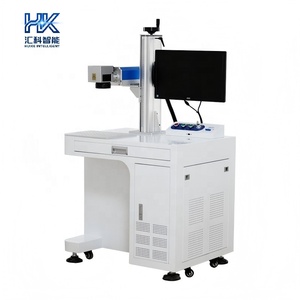
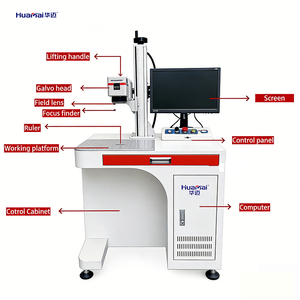
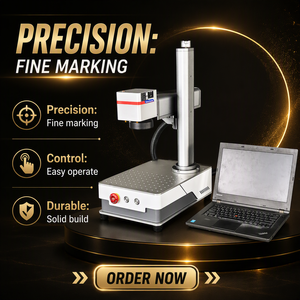
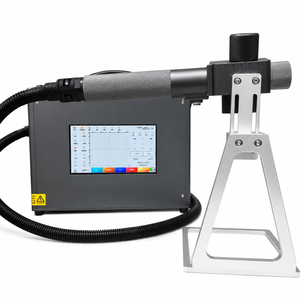
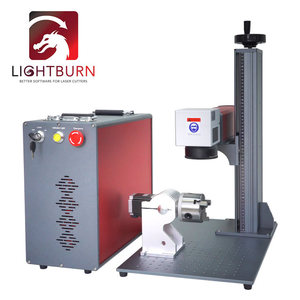
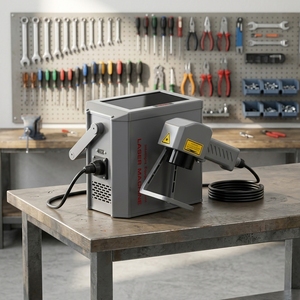
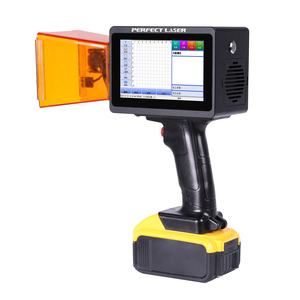
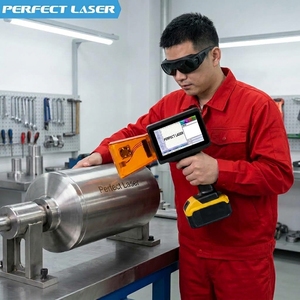
A comprehensive technical analysis of Master Oscillator Power Amplifier (MOPA) architecture versus traditional Q-switched laser sources for Nordic high-precision manufacturing.
Traditional Q-switched fiber lasers operate with a fixed pulse width (typically 90ns to 120ns), restricting control over peak energy density and thermal deposition. In contrast, our JPT M7 MOPA fiber laser architecture grants independent control over pulse duration (adjustable from 1ns to 500ns) and repetition rate (up to 4000 kHz).
This allows Danish manufacturing engineers to fine-tune the heat input per pulse. Ultra-short pulses (<10ns) minimize heat-affected zones (HAZ), preventing micro-cracking and material deformation on delicate components like medical instruments, sensors, and thin foils.
The consumer audio, electronics, and design sectors in Denmark demand immaculate cosmetic finishes. MOPA lasers excel at marking high-contrast black characters and logos on anodized aluminum without stripping or damaging the outer protective oxide surface layer.
Furthermore, by manipulating pulse frequency and energy density on stainless steel (AISI 304 / 316L), MOPA lasers create controlled oxide layers that yield vibrant, repeatable spectral annealing colors without chemical reagents or post-processing wash steps.
| Performance Parameter | Standard Q-Switched Fiber Laser | JPT M7 MOPA Laser System (Our Supply) | Industrial Value for Danish Engineers |
|---|---|---|---|
| Pulse Duration Control | Fixed (Approx. 100 ns) | Variable (1 ns to 500 ns) | Zero thermal distortion on delicate components |
| Frequency Range | 20 kHz – 80 kHz | 1 kHz – 4000 kHz | Extremely high-speed fine marking & smooth shading |
| Anodized Aluminum Blackening | Poor / Destructive (Burns coating) | Deep Black / Non-destructive | Premium finish for electronics & consumer goods |
| Stainless Steel Color Marking | Inconsistent / Low resolution | Rich Spectrum Color Annealing | No chemical consumables; permanent oxide layer |
| Plastic & Polymer Marking | High thermal scorching risk | Clean, high-contrast & foaming-free | Ideal for medical ABS, PEEK, and Nylon coding |
From Denmark's thriving Medicon Valley life-science cluster to North Sea offshore clean-tech hubs, our MOPA lasers provide tailored material processing solutions.
Medical Device Traceability & ISO 13485 UDI Marking: Denmark is a world leader in medical technology and pharmaceuticals. Our MOPA systems produce corrosion-resistant, passivation-proof Direct Part Marking (DPM) for 2D DataMatrix codes, GS1 barcodes, and UDI serials on surgical grade 316L stainless steel and titanium implants.
Marine & Offshore Wind Component Identification: Facing harsh saline environments in the North Sea, offshore hydraulic fittings, heavy turbine castings, and subsea connectors require deep, non-fading structural serial numbers. Our 50W to 300W high-power laser markers burn crisp serials into severe-duty alloys.
Consumer Audio & Precision Enclosures: Iconic Danish acoustic and industrial design studios rely on perfect surface aesthetics. Our JPT MOPA lasers execute pinpoint logo engraving, tactile keycap marking, and non-reflective dark logos on brushed aluminum panels and specialized polycarbonate housings.
Hygienic Stainless Steel Food Processing Equipment: Danish dairy and food machinery suppliers require ultra-smooth, crevice-free laser marking. MOPA color annealing marks stainless steel surfaces without creating microscopic pits or rough cavities where bacteria can accumulate during CIP (Clean-in-Place) washdowns.
Polymer Engraving & Robot Cell Integration: Working closely with Danish automation solutions (such as Universal Robots integration), our lasers feature open software APIs, digital I/O communication, and high-speed scan heads for inline automated marking on PEEK, ABS, and engineering polymers.
Hardened Tool Steel Engraving: Carving clear alphanumeric serials, carbide die inserts, and injection mold plates up to HRC 65 hardness without mechanical tool wear, cutting fluids, or post-process deburring requirements.
Aligning laser marking technology with Nordic regulatory standards, sustainability directives, and Industry 4.0 smart factory ecosystems.
With Denmark enforcing strict EU circular economy regulations, manufacturers must implement lifetime component traceability. MOPA lasers create permanent 2D DataMatrix and QR codes that survive extreme wear, chemical cleaning, and thermal cycles—ensuring compliance with DPP guidelines across supply chains.
Danish industry places high value on energy-efficient processing. Our solid-state fiber laser sources achieve over 30% photoelectric conversion efficiency with zero consumable inks, solvent chemicals, or hazardous waste disposal costs, drastically cutting operational carbon footprints compared to traditional CIJ inkjet systems.
As Odense continues to expand as a global hub for collaborative robotics (Cobots), industrial lasers must seamlessly communicate with automated picking and assembly stations. Our hardware supports TCP/IP, RS232, and digital I/O handshakes to interface effortlessly with UR, ABB, and KUKA robotic arms.
Nordic occupational health and safety regulations (Arbejdstilsynet) enforce stringent optical protection rules. We export complete Class 1 interlocked safety cabinets with optical glass observation windows and integrated HEPA fume extraction ports, protecting workshop technicians from laser radiation and airborne micro-particulates.
Backed by decades of laser engineering expertise, international ISO certifications, and dedicated European export logistical channels.
Every laser unit undergoes 72 hours of continuous laser power stability testing, optical alignment verification, and insulation voltage testing prior to crate packing. Certified under ISO 9001 and CE directives.
We manage complete export customs clearances, ocean container shipping, and express air delivery (DDP/DAP terms) directly to your factory door in Copenhagen, Aarhus, Odense, or rural industrial parks.
Our dedicated technical support team offers remote desktop diagnostics, parameter tuning guidance, EZCAD/LightBurn software walkthroughs, and prompt spare part dispatch tailored for European operational hours.
Addressing key technical, regulatory, shipping, and operational considerations when importing MOPA lasers to Denmark.
When purchasing from us, we can ship via DDP (Delivered Duty Paid) terms directly to your Danish facility. We take care of export customs, sea or air freight, EU import customs handling, and local transport. Danish VAT (Moms at 25%) can be processed through your company's standard CVR/EORI number.
Yes. All exported fiber and MOPA laser marking systems carry full CE certification, complying with Low Voltage Directive 2014/35/EU and Electromagnetic Compatibility Directive 2014/30/EU. We offer Class 1 fully enclosed configurations with interlocked doors and safety glass meeting EN 60825-1 optical safety guidelines.
Absolutely. By configuring pulse durations down to short nanosecond ranges (typically 4ns - 20ns) at high repetition frequencies (>200 kHz), energy is delivered so quickly that it creates a localized dark oxide layer inside the micro-pores of the anodic film without physically vaporizing or breaching the protective surface.
Our machines are powered by standard industrial control systems compatible with Windows 10/11. They support EZCAD2, EZCAD3, and LightBurn software platforms. Vector and raster files including DXF, PLT, AI, SVG, PNG, JPG, BMP, and STEP files can be imported directly.
MOPA fiber lasers are virtually maintenance-free. Because there are no lamps, gas mirrors, or water chillers required for standard air-cooled 20W - 100W models, routine care only involves keeping the F-Theta field lens clean using optical isopropyl alcohol wipes and inspecting fume extractor filter cartridges.
Standard unit configurations are assembled and tested within 3 to 5 business days. Express air freight to Copenhagen Airport (CPH) or Billund Airport (BLL) takes 5 to 7 days, while ocean freight to Aarhus Port typically takes 25 to 35 days.
Send us your technical engineering drawings, sample material specifications (metals, plastics, medical grade alloys), or target throughput requirements. Our laser application team will provide a comprehensive feasibility report and factory-direct pricing quote.