Export-ready fiber, MOPA, UV, and CO2 laser machinery certified for high-precision manufacturing, micro-engineering, and direct part marking in Singapore.
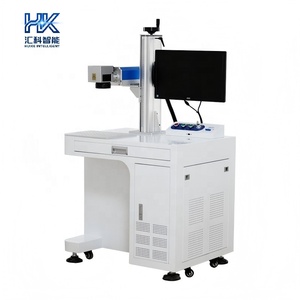
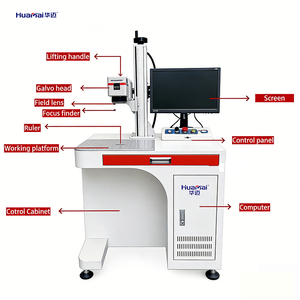
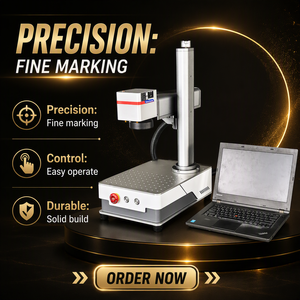
Singapore stands as one of the world's most advanced manufacturing hubs, driven by the economic blueprint of the Research, Innovation and Enterprise (RIE) 2025 Plan and the Industry 4.0 Transformation Scheme. As high-tech industrial nodes like Jurong Innovation District, Tampines Industrial Park, and Seletar Aerospace Park scale their automated production capabilities, the demand for precision laser cutting, micro-machining, and Direct Part Marking (DPM) laser equipment has surged dramatically.
As a leading international designer, manufacturer, and exporter of industrial metal laser systems, our organization delivers heavy-duty Fiber, MOPA, UV, and CO2 laser machinery designed to fulfill Singapore's strict manufacturing criteria: ultra-tight engineering tolerances, zero structural distortion, high energy efficiency, and total compliance with local safety standards enforced by the National Environment Agency (NEA) and the Infocomm Media Development Authority (IMDA).
Technical Insight for Singapore Engineers: Modern precision fabrication requires laser systems capable of sub-micron pulse management. Our MOPA (Master Oscillator Power Amplifier) fiber lasers offer adjustable pulse widths from 2ns to 500ns, enabling Singaporean manufacturers to perform non-destructive color marking on stainless steel and carbon-free dark marking on anodized aluminum without compromising anti-corrosion oxide layers.
From micro-component marking in semiconductor fab lines in Woodlands to structural sheet metal fiber laser cutting for marine vessels in the Jurong Shipyard, our laser platforms provide superior operational longevity, low total cost of ownership (TCO), and plug-and-play integration into automated manufacturing environments.
To meet the distinct manufacturing needs of Singapore's localized industry clusters, laser machinery must be tailored to specific material science profiles and operational environments. Below are the primary industrial application sectors where our laser systems add measurable engineering value:
Deployed in Tampines & Woodlands Tech Parks. Utilizing 355nm UV Cold Laser and low-power MOPA fiber systems for stress-free micro-marking on silicon wafers, IC packages, lead frames, and ceramic substrates with zero thermal damage (Heat Affected Zone - HAZ).
Engineered for Seletar Aerospace Park turbine blade overhaul and component tracking. High-power 50W-100W fiber systems create high-contrast 2D DataMatrix codes on titanium alloys, Inconel, and 7075-T6 aerospace aluminum compliant with AS9100 standards.
Applied in Tuas Biomedical Park. Laser annealing technology applies corrosion-resistant black markings onto 316L medical-grade stainless steel instruments and nitinol stents, passing passivation and autoclave cycle requirements under ISO 13485.
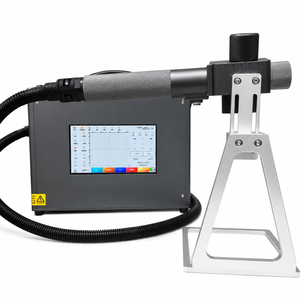
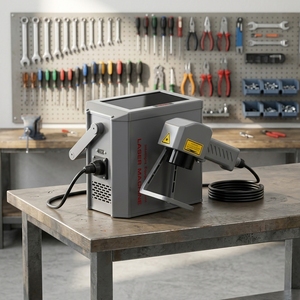
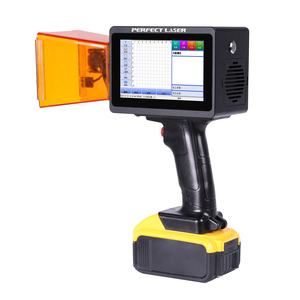
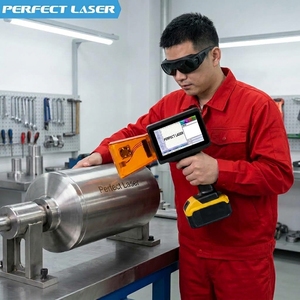
Optimized for Jurong Island & Pioneer Shipyards. Battery-powered handheld fiber laser coders allow technicians to perform permanent direct part marking on structural steel plates, pipes, and marine valves outdoors under high ambient humidity.
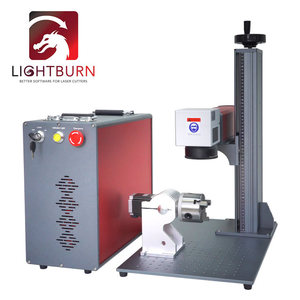
Serving Ang Mo Kio & Ubi Industrial Estates job shops. Enclosed Class 2 fiber and CO2 laser workstations integrated with rotary attachments execute rapid cutting and engraving of electronic enclosures, front panels, and custom jigs.
Designed for specialized Singapore craft and luxury manufacturing. Desktop mini fiber systems execute micron-precise vector engraving on precious metals (Gold, 925 Silver, Platinum) and localized branding on high-end hardware fixtures.
Singapore’s industrial landscape is undergoing a structural shift driven by automation, environmental governance, and space optimization. Manufacturers sourcing metal laser equipment must align their capital expenditure with these four core localized trends:
Singaporean factories are rapidly adopting fully automated production cells. Modern metal laser systems must feature standard industrial communication protocols (EtherCAT, Modbus, TCP/IP) and vision-guided positioning systems like K-Vision Camera Alignment. This allows automated loading robots to place components onto the laser bed without manual alignment, feeding real-time quality metric data directly into factory MES systems.
Under the revised Singapore Carbon Tax Scheme, energy consumption per manufacturing unit is a critical operational KPI. Legacy solid-state or CO2 systems with low electrical efficiency are being replaced by solid-state Ytterbium fiber lasers. Featuring a wall-plug efficiency exceeding 30-35% (compared to 5-10% for traditional CO2), our exported fiber laser machines significantly reduce carbon footprints and lower electrical utility costs for Singapore facilities.
Real estate in Singapore industrial buildings commands a premium rental rate per square meter. Manufacturing engineering teams favor high-power-density desktop and compact bench-top laser workstations (such as our 30W Mini Desktop and 100W Portable MOPA units) that provide full industrial performance within a minimal physical footprint.
Driven by global supply chain transparency mandates, Singaporean exporters in aerospace, medical device, and defense industries must implement permanent barcode identification. Fiber laser direct part marking delivers high-contrast, indestructible 2D codes resistant to chemical cleaning, salt spray, and physical abrasion.
With decades of dedicated laser application engineering, heavy machinery manufacturing heritage, and international export expertise, our organization provides Singaporean clients with an unbeatable technical and operational edge:
Every laser system undergoes rigorous alignment testing, beam profiling ($M^2 < 1.3$), and 72-hour continuous burn-in before export packaging.
We equip our machines with top-tier laser sources (JPT, Raycus, Maxphotonics) backed by a 3-year warranty and a rated operational lifespan of 100,000 hours.
Heavy-duty welded frame construction combined with linear guides and closed-loop servo drives achieves positional repeatability of ±0.001" (±0.02mm).
From Class 1 fully enclosed safety workstations to portable air-cooled handheld markers, we customize systems to fit strict workspace requirements.
Compare key technical parameters across our primary laser processing lines exported to Singapore:
| Laser Platform | Laser Wavelength | Power Spectrum | Cooling Method | Best Suited Materials | Primary Industry Application |
|---|---|---|---|---|---|
| Standard Fiber Laser | 1064nm | 20W - 300W | Air-Cooled (20W-100W) / Chiller | Metals, Alloys, Hard Plastics | Automotive, Hardware, Tooling DPM |
| MOPA Fiber Laser | 1064nm (Variable Pulse) | 20W, 30W, 60W, 100W | Air-Cooled | Stainless, Aluminum, Brass, ABS | Color Marking, MedTech, Consumer Tech |
| UV Cold Laser | 355nm | 3W, 5W, 10W, 15W | Water Chiller / Air-Cooled | Glass, Polymers, PCB, Ceramics | Semiconductor Fabs, Cosmetic Packaging |
| CO2 Laser System | 10.6μm / 9.3μm | 150W - 800W Super-Pulsed | Closed-Loop Water Chiller | Acrylic, Wood, Rubber, Thin Metals | Signage, Packaging, Architectural Models |
Essential technical, regulatory, and logistics answers for procurement managers and production engineers in Singapore:
Connect with our senior laser application engineers to request a custom material test cut, optical feasibility report, or formal export quotation for your Singapore facility.
Contact Us