Engineered for high-duty cycle applications across US industrial manufacturing floors. Explore our comprehensive lineup of enclosed, portable, and automated laser systems.
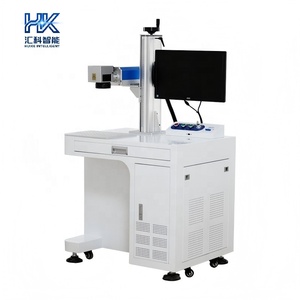
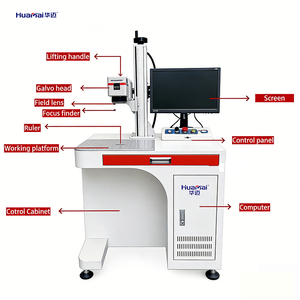
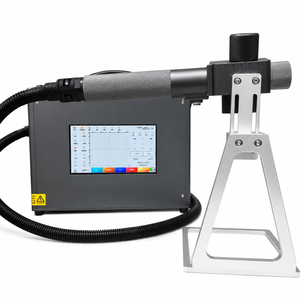
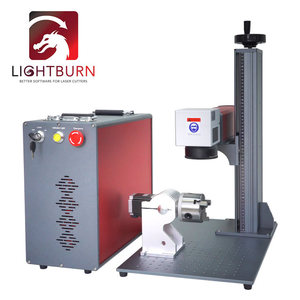
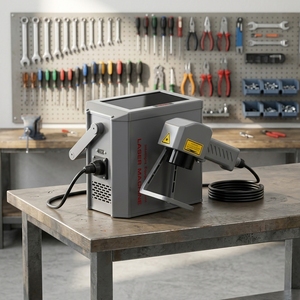
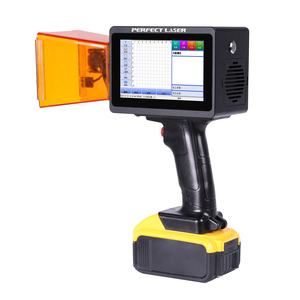
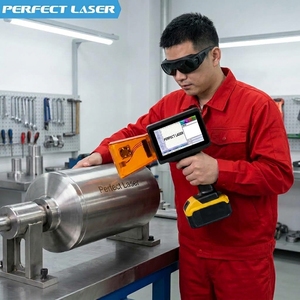
The North American manufacturing sector is experiencing a monumental shift toward automated, high-precision processing paired with stringent worker safety standards. As industrial regulations enforced by OSHA (Occupational Safety and Health Administration) and ANSI Z136.1 Safe Use of Lasers become more rigorous, American manufacturing plants are rapidly transitioning away from open-bed processing equipment. In their place, the demand for LaserCELL Enclosed Laser Machine systems has surged exponentially across midwestern manufacturing hubs, aerospace corridors, and medical device fabrication clusters.
The term LaserCELL represents an integrated manufacturing standard: a fully enclosed, Class 2 (or Class 1 with internal high-power beam optics) laser machining unit that combines multi-kW laser capabilities, advanced CNC linear positioning, automated gantry movements, and multi-stage particulate extraction inside a heavy-duty, interlocked enclosure. Built upon decades of American manufacturing heritage—exemplified by pioneers engineering systems in Minnesota since 1982—modern LaserCELL platforms guarantee high dynamic speed without compromising spatial floor safety or environmental air quality.
Fully interlocked safety enclosures eliminate the need for costly personal protective eyewear on factory floors, maintaining full OSHA compliance and lowering facility insurance overhead.
Hybrid gantry architectures allow simultaneous mounting of super-pulsed CO2 laser tubes (up to 800W) and Fiber optical heads (up to 3kW) on a unified linear rack system.
Ground linear guide rails paired with high-resolution closed-loop AC servo motors provide ±0.001" positional accuracy across massive work envelopes (up to 5' x 10').
Purchasing decisions within the United States market are heavily driven by total cost of ownership (TCO), edge-finish requirements, and versatility across diverse substrate materials. LaserCELL systems engineered for North American exporters deliver unmatched efficiency in several key sector-specific scenarios:
Under the FDA Unique Device Identification (UDI) mandate, medical device manufacturers in states like Minnesota, Massachusetts, and California require permanent, corrosion-resistant serial marks on surgical-grade 316L stainless steel and titanium implants. LaserCELL platforms utilizing MOPA (Master Oscillator Power Amplifier) fiber sources allow fine tuning of pulse durations (from 2ns to 500ns). This enables "black annealing" surface marks that alter the oxide layer without vaporizing metal, retaining complete surface passivation and preventing bacterial trap points.
Defending strict MIL-STD-130 UID barcode marking requirements mandates ultra-high spatial repeatability. LaserCELL units feature integrated vision camera registration systems (K-Vision technology) that scan optical fiducials on jet engine turbine blades, structural brackets, and avionics housings. The machine automatically compensates for rotational skew and material warpage prior to firing the beam, holding zero scrap rates during multi-shift defense production runs.
Commercial sign builders throughout the US demand optically clear, flame-polished edges directly off the laser table to avoid labor-intensive manual routing and flame-buffing. Super-pulsed CO2 sources integrated into LaserCELL cabinets provide rapid power pulsing that melts and seals 1-inch thick cast acrylic edges seamlessly in a single pass. For multi-layer substrate jobs involving aluminum trim and acrylic faces, hybrid-equipped LaserCELL systems switch laser heads automatically within the same CAD toolpath file.
Below is a comparative engineering benchmark contrasting fully enclosed Class 2 LaserCELL machinery against standard open-frame industrial cutters operating within US industrial facilities.
| Engineering Attribute | LaserCELL Enclosed Platform | Traditional Open-Bed Cutter | Operational Impact in US Plants |
|---|---|---|---|
| Laser Safety Class | Class 2 Safety Enclosure (Interlocked) | Class 4 Open Beam Area | Eliminates specialized PPE; reduces liability insurance costs. |
| Fume & Debris Containment | 100% Sealed Negative Pressure Plenum | Ambient Ambient Air Dispersion | Meets EPA/OSHA indoor air quality standards effortlessly. |
| Thermal Stability | Climate-Controlled Internal Micro-climate | Exposed to Plant Ambient Fluctuations | Prevents gantry thermal expansion; keeps ±0.001" accuracy. |
| Footprint Efficiency | Integrated Electronics & Access Drawers | Separate Control Console & Cable Chains | Saves up to 35% valuable floor space in high-density plants. |
| Noise Reduction | Sound-Dampening Double-Wall Panels (<65 dB) | High Ambient Cutting Noise (>85 dB) | Improves facility floor ergonomics and worker safety compliance. |
As domestic manufacturing experiences a historic reshoring surge—catalyzed by the CHIPS Act, domestic supply chain security policies, and high international freight volatility—American industrial procurement directors are re-evaluating capital equipment standards. Three dominant industry trends define the US market landscape today:
A. Automation & Robotic Cell Integration: Modern factories rarely operate machinery as standalone islands. LaserCELL systems are increasingly equipped with pneumatic auto-doors, automated shuttle tables (like the OptiShuttle system), and standardized I/O interface buses for seamless integration with 6-axis robotic loading arms. This allows US contract manufacturers to run automated "lights-out" third shifts profitably.
B. Shift Toward Ultra-Pulsed & Short-Wavelength Sources: While traditional 10.6µm CO2 lasers remain dominant for organics and acrylics, the market is aggressively adopting 355nm Cold UV lasers and 1064nm MOPA fiber lasers. Cold UV processing eliminates heat-affected zones (HAZ) on delicate cosmetic tubes, pharmaceutical packaging, and micro-electronics, satisfying the strict quality standards of top US consumer brands.
C. Standardized Factory Technical Support & Source Longevity: Overseas buyers and domestic operators alike prioritize machine builders offering transparent component access and long warranty coverage. High-performance American factories back their CO2 laser sources with 3-year factory warranties—substantially longer than the industry standard 1-year coverage—drastically lowering lifetime operation risk.
Engineering robust laser equipment requires decades of practical floor testing, refined motion dynamics, and uncompromising structural assembly. Our manufacturing framework stands out through the following core competencies:
Super-pulsed CO2 LaserCELL configurations (up to 800W) can cut cast acrylics up to 1.5" thick, dense hardwoods up to 1", and structural foams up to 3". Fiber-equipped LaserCELL systems (1kW to 3kW) specialize in reflective metals: mild steel up to 5/8", stainless steel up to 3/8", and aluminum alloys up to 5/16". Hybrid setups allow switching between both source types instantly.
A fully enclosed Class 2 machine contains all optical radiation during processing. When doors are closed, interlocks prevent beam generation if compromised. Consequently, OSHA does not mandate designated laser safety officers (LSOs), beam hazard zones, or eye-wear barriers for adjacent workers on the shop floor, making facility safety compliance straightforward.
Standard installations require 208–240V 3-phase electrical service (or 480V depending on laser source specs), dry compressed air (90–120 PSI for assist gas), and a dedicated 4" to 6" exhaust duct connection capable of 600–1200 CFM extraction. Closed-loop industrial chillers are integrated directly into the cabinet architecture.
Yes. Custom LaserCELL builds can be specified with rear and front pass-through slot options equipped with light-curtain safety barriers. This design enables continuous feeding of rolled textiles, thin gaskets, or 4' x 8' sheet goods without breaking overall laser safety compliance.
Standard LaserCELL platforms are maintained in stock or assembly queues with lead times of 4 to 6 weeks. Customized multi-head systems, automated shuttle tables, or specialized UV optics typically ship within 8 to 12 weeks. International export units undergo rigorous 72-hour burn-in testing prior to barrier wrapping and ISPM-15 export crating.
Send your drawings and material stock directly to our Minnesota application laboratory. Our engineers will perform live cut testing, provide detailed cycle-time analytics, and return high-precision samples directly to your desk.
Contact Us