Industrial Laser Systems Export Whitepaper

Laser Welder Manufacturers & Exporters for Seattle

Delivering high-precision fiber, UV, and MOPA laser welding, marking, and engraving architectures tailored for the Pacific Northwest aerospace, maritime, medical, and technology manufacturing corridors.

High-Performance Industrial Laser Systems

Engineered for high repeatability, minimal heat-affected zones (HAZ), and round-the-clock integration across Seattle production lines.
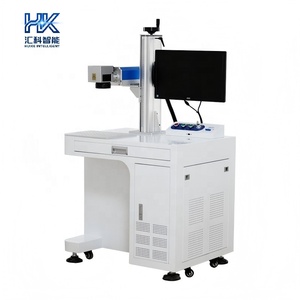
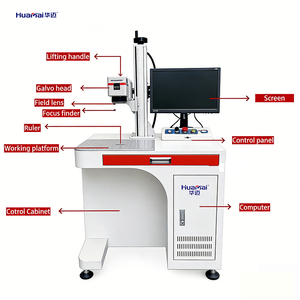
Fiber Laser Marking and Welding Machine JPT Raycus Max
Fiber Laser Marking Machines JPT RAYCUS MAX 100W–300W
Heavy-duty industrial fiber laser power source configuration for ultra-fast metal marking, deep engraving, and micro-welding on alloy steels and polymers.
Portable Auto Focus JPT MOPA Fiber Color Laser
Portable Auto Focus 20W 30W JPT MOPA Fiber Color Laser
Dynamic pulse width adjustment enabling high-contrast color marking, titanium laser annealing, and delicate foil welding without structural warping.
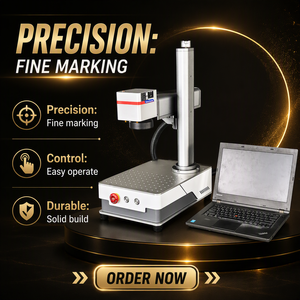
Desktop Mini Fiber Laser Marking Machine
Desktop Mini Fiber Laser System Compact 30W
Enclosed lightweight desktop architecture optimized for small-footprint machine shops, biomedical part identification, and stainless hardware engraving.
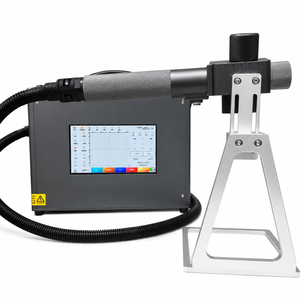
Handheld Mobile Portable Mini Fiber Laser Machine
Handheld Mobile Portable Mini 20W 30W 50W Fiber Laser
Ergonomic portable gun head for on-site field maintenance, vessel component marking, and quick structural repair jobs across Puget Sound shipyards.
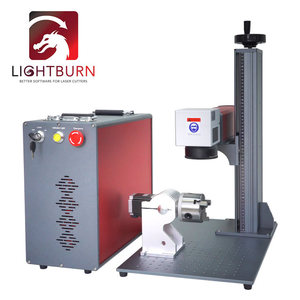
100W JPT M7 MOPA Bench-top Air-Cooled Laser
100W JPT M7 MOPA Bench-Top Air-Cooled Station with 80mm Rotary
High-power air-cooled system with 300x300mm field and motorized rotary axis for circumferential welding seams and cylindrical component tracking.
Desktop UV Laser Engraving Machine Air Cooling
Small Desktop UV Laser Engraving & Cold Processing Machine
355nm UV cold-laser wavelength avoiding micro-cracks on heat-sensitive medical polymers, aerospace composites, and glass packaging.
Portable Battery Operated Handheld Laser Marker
Battery-Powered Handheld Industrial Laser Coding System
Cordless industrial mobility powered by lithium battery packs for permanent tracking codes on heavy machinery, marine structural beams, and out-of-shop assets.
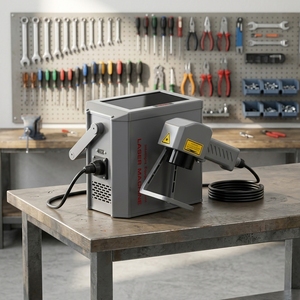
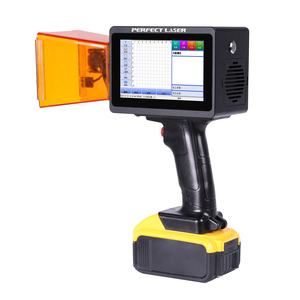
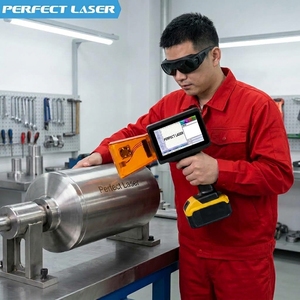
Perfect Laser Portable Handheld Laser Marking Machine
Industrial Handheld Laser Coding & Spot Welding Workstation
Ruggedized field laser tool designed for high-precision tactile deep engraving, metal seam jointing, and multi-substrate industrial coding.

The Industrial Laser Evolution in the Greater Seattle Ecosystem

The Pacific Northwest industrial corridor—stretching from Seattle and Renton to Everett, Bellevue, and Kent—represents one of North America's most demanding advanced manufacturing ecosystems. With deep roots in aerospace assembly, commercial maritime fleet engineering, clean tech research, and precision medical devices, regional operations demand manufacturing equipment engineered to stringent tolerances.

Traditional joining methods such as Gas Tungsten Arc Welding (GTAW/TIG) and Gas Metal Arc Welding (GMAW/MIG) often introduce excess linear heat input. In high-tensile alloys (titanium grade 5, 316L stainless steel, 6061-T6 aluminum), this thermal intensity causes micro-structural phase shifts, severe part distortion, and expansive Heat-Affected Zones (HAZ). Modern continuous-wave (CW) and quasi-continuous-wave (QCW) fiber laser welders solve these issues by delivering targeted thermal densities up to $10^6 \text{ W/cm}^2$.

As international direct manufacturers and exporters serving Seattle, our systems are built with structural rigidity, closed-loop optical feedback, and high-purity assist gas controls designed to comply fully with US factory electrical and safety standards.

Key Metrics: Fiber Laser vs Traditional Joining

Data compiled from aerospace and marine fabricators transitioning to fiber laser welding architectures:

4.8×
Faster Processing Speed
-85%
HAZ Thermal Reduction
±0.001"
Optical Repeatability
Zero
Post-Process Grinding Needed

Tailored Laser Solutions for Seattle Sector Demands

Examining how customized laser welding, marking, and laser material-processing units resolve engineering bottlenecks across key Pacific Northwest manufacturing verticals.

Aerospace Tier-1 & Tier-2 Subassembly

Locations: Everett, Renton, Kent Valley Industrial Park.

Aerospace components require airtight seal joints and high-strength, low-weight structural integrity. Our handheld and automated fiber laser welders join Inconel, Titanium, and thin-gauge 2024/7075 aluminum alloys without post-weld micro-fissuring. Coupled with 2D barcode direct part marking (DPM), systems fulfill strict AS9100 tracking protocols.

Maritime & Naval Architecture

Locations: Puget Sound Shipyards, Ballard, Harbor Island.

Marine environments require superior corrosion resistance. TIG-welded 316L stainless steel often depletes chromium reserves along weld lines. Laser welding minimizes heat input, preserving local anti-corrosion properties on marine exhaust manifolds, hydraulic lines, and custom vessel hardware exposed to saltwater environment.

Biomedical & Precision Instrumentation

Locations: Bothell, Woodinville, Eastside Tech Hubs.

Hermetic sealing of titanium medical implants and surgical tools requires zero filler metal contamination. Our UV cold lasers and fine-spot MOPA fiber systems provide non-contact microscopic welds and UDI-compliant high-contrast surface marking resistant to repeated autoclave sterilization cycles.

Comparative Analysis: Industrial Joining Technologies

Evaluating total operational expenditure (OPEX), thermal deformation metrics, and skill-level requirements for Pacific Northwest manufacturers.

Performance Parameter Continuous Fiber Laser Welder Traditional TIG (GTAW) Traditional MIG (GMAW)
Heat input & HAZ Distortion Extremely Low (< 0.5mm HAZ) High (Wide deformation zone) Very High (Significant thermal warp)
Welding Speed (1.5mm Stainless) 35 – 60 mm/sec 4 – 8 mm/sec 10 – 15 mm/sec
Operator Skill Dependency Low (1-Day Training) High (Requires Certified Welder) Moderate to High
Consumable & Wire Costs Minimal (Optional Autowire) High (Tungsten, filler rods) High (Spool wire, heavy gas)
Dissimilar Metal Joining Excellent (Cu to Al, Stainless to Steel) Extremely Difficult / Limited Not Feasible
Post-Weld Processing None Required Grinding, Polishing, Pickling Heavy Slag/Spatter Removal
Consult Our Engineering Team for Benchmarking

Why Seattle Enterprise Buyers Direct-Source From Our Plant

Navigating global supply chains requires partnering with manufacturers who deliver consistent beam quality, transparent engineering documentation, and reliable long-term support.

  • US Standards & Electrical Compliance: Configured for 208V, 230V, and 480V 3-phase industrial power grids, featuring Schneider/Siemens electrical interlocks.
  • Optical Source Rigor: Powered by premium JPT, Raycus, or MAX fiber generators boasting a 100,000-hour Mean Time Between Failures (MTBF).
  • Integrated Wobble Welding Heads: Dual-axis optical wobble heads expand weld width up to 5mm, compensating for seam gap variances on sheet metal parts.
  • End-to-End Export Logistics: Direct shipping routes to the Port of Seattle (Terminal 18/46) with complete DDP customs clearance and air-freight options to Sea-Tac (SEA).

Standard Factory Inspection Protocol

Every laser system dispatched to Washington State undergoes rigorous pre-shipment validation:

  1. 72-Hour Continuous Power Burn-in: Thermal stability testing under maximum rated output.
  2. Beam Profiler Calibration: Verification of $M^2 < 1.3$ spatial mode output.
  3. Helium Leak Testing: Pressure integrity check on internal water cooling circuits.
  4. Optical Power Metering: NIST-traceable power measurement logging.

"Our strict factory testing protocols ensure that when your system arrives in Seattle, it transitions to active production with zero optical alignment delays."

Emerging Manufacturing Drivers in Washington State

Strategic technology developments reshaping shop floors across the Puget Sound region.

1. Shift to Clean Energy & EV Battery Packs

Pacific Northwest clean-tech startups are scaling localized battery assembly. Laser welding copper busbars to aluminum battery terminals provides lower contact resistance than traditional mechanical fasteners, ensuring high current carrying capacity.

2. Automation & Cobot Integration

With regional skilled labor shortages, Seattle machine shops are coupling compact fiber laser welding heads onto 6-axis articulated robot arms and cobots, automating batch welding workflows.

3. Full Traceability & Dark-Store Manufacturing

From aerospace brackets to medical tools, regulatory bodies demand permanent QR code laser marking linked to cloud ERPs, driving adoption of dual-purpose marking-welding work cells.

Seattle Procurement & Import FAQs

Clear responses to technical, shipping, and regulatory inquiries from Washington State buyers.

What is the typical transit lead time for laser welders exported to Seattle?
For standard air freight (Sea-Tac International Airport), transit times typically range between 5 and 8 business days following factory dispatch. For ocean freight to the Port of Seattle (Terminal 18 or Terminal 46), door-to-door lead times are generally 18 to 25 calendar days, including customs clearance and drayage to regional facilities in Renton, Kent, or Everett.
How do you ensure laser electrical compatibility with US commercial grid standards?
Our export laser systems are tailored for US electrical specs. Single-phase portable units operate on standard 110V/220V 60Hz inputs, while high-power air-cooled continuous-wave (CW) laser welders are built to match 208V, 230V, or 480V 3-phase industrial power grids. UL-compliant circuit breakers, EMI filters, and heavy-duty grounding terminals come standard.
Are these laser machines compliant with US OSHA and FDA CDRH safety standards?
Yes. Our laser systems feature dual-channel safety interlocks, optical protection shielding, emergency stop controls, and warning lights compliant with US FDA CDRH Class 4 (open system) and Class 1 (enclosed desk/cabinet) regulations. We provide OD6+ laser protective eyewear tuned precisely to 1064nm or 355nm wavelengths.
How are technical service, consumables, and replacement parts handled post-purchase?
We provide remote diagnostic support via encrypted video links and TeamViewer connection to troubleshoot software or parameter tuning. Critical consumables (protective lenses, focus nozzles, wire feed tips) ship directly from our inventory via express air carriers (DHL/FedEx) to Seattle within 48 to 72 hours.
Can your laser systems process highly reflective materials like Copper and Brass?
Yes. By employing high-peak-power JPT MOPA sources or optimized 1064nm fiber laser configurations with back-reflection protection isolators, our machines safely weld and mark reflective metals—such as C11000 copper and cartridge brass—without damaging the internal laser diode module.

Upgrade Your Seattle Manufacturing Capabilities Today

Submit your material specifications, sheet thicknesses, or part CAD drawings. Our application engineers will run a complimentary material test cut/weld and supply a comprehensive feasibility report.