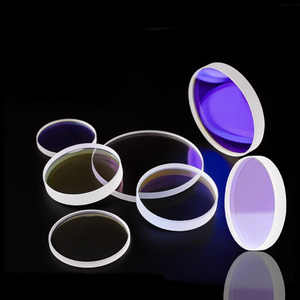
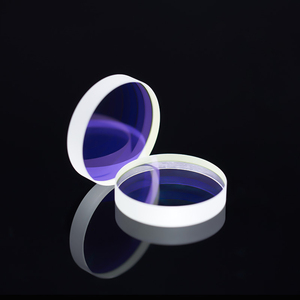
Quartz Optical Laser Protective Lens Windows 20*2 20*3 20*4
- Substrate: JGS1 / Synthetic Fused Silica
- Wavelength: 1064nm Dual AR Coated
- LIDT: >15 J/cm² @ 10ns, 1064nm
- Surface Quality: 10-5 Scratch-Dig (JIS B 7090)
Fully compliant with JIS B 7090 and ISO 10110 standards. Inspection certificates (spectrophotometer & interferometry data) provided with every shipment to Japanese ports.
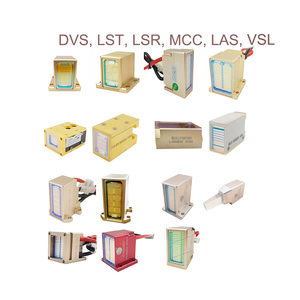
Japan's industrial manufacturing ecosystem, historically guided by the philosophy of Monozukuri (匠の技 / Master Craftsmanship), imposes some of the most rigorous optical tolerance and quality standards in the world. As Japanese original equipment manufacturers (OEMs) in Toyota City (Aichi Prefecture), Hamamatsu (Shizuoka), and Kanagawa transition toward ultra-fast sub-picosecond fiber lasers and high-power kilowatt processing heads, the optical components deployed within these systems must exhibit near-zero thermal distortion, exceptional resistance to Laser-Induced Damage (LIDT), and immaculate surface purity.
When operating high-brightness 1064nm fiber lasers or 10.6μm CO2 optical trains at power levels exceeding 6 kW, traditional optical elements experience localized absorption. This phenomenon, known as thermal lensing, alters the refractive index ($dn/dT$) of the optical substrate, inducing focus shift, beam degradation, and premature optical failure. For Japanese automated assembly lines where zero-defect production is non-negotiable, sourcing custom-coated Fused Silica, Zinc Selenide (ZnSe), and Silicon optics with verified absorption rates below 0.0005 cm⁻¹ is a critical baseline requirement.
Leveraging over four decades of laser system engineering originating from our core machinery platforms (including the OptiFlex, LaserCELL, and FiberCELL series developed in Minnesota, USA), our optics export division applies strict vertically integrated testing protocols. Every optical shipment dispatched to Japanese industrial hubs undergoes 100% spectrophotometric transmission testing, laser-interferometric surface profiling, and cleanroom packaging certified to ISO Class 5 standards.
| Substrate Material | Operational Wavelength | Refractive Index (n) | Absorption Coeff. (cm⁻¹) | Damage Threshold (LIDT) | Primary Japanese Industry Use |
|---|---|---|---|---|---|
| Synthetic Fused Silica (JGS1) | 193 nm – 2.1 µm | 1.449 @ 1064 nm | < 0.0001 | > 15.0 J/cm² @ 10ns | Semiconductor Steppers, Fiber Welding |
| CVD Zinc Selenide (ZnSe) | 600 nm – 16 µm | 2.403 @ 10.6 µm | < 0.0005 | > 6.5 J/cm² @ CW | CO2 Metal Cutting, FLIR Imaging |
| Single Crystal Sapphire (Al₂O₃) | 150 nm – 5.5 µm | 1.754 @ 1064 nm | < 0.0003 | > 22.0 J/cm² @ 10ns | High-Pressure Inspection Windows |
| Optical Grade Silicon (Si) | 1.2 µm – 6.0 µm | 3.430 @ 3.4 µm | < 0.0010 | > 10.0 J/cm² @ CW | Total Reflectors, CO2 Beam Steering |
Exporting optical components to Japan requires a deep contextual understanding of localized manufacturing workflows. Below are four key industrial sectors in Japan where our custom-engineered optics deliver measurable performance gains:
In the Chubu automotive cluster, the transition to Electric Vehicle (EV) battery packs and hairpin copper motor windings demands direct blue (450nm) and green (532nm) laser optics. Our specialized anti-reflective dielectric coatings handle high-power direct-diode reflection without coating degradation, ensuring zero spatter and clean electrical joints.
Japan’s semiconductor equipment manufacturers require UV and DUV (355nm and 266nm) optical windows and beam expanders for stealth dicing of silicon and silicon-carbide (SiC) wafers. Our synthetic fused silica optics exhibit zero fluorescence under UV exposure and maintain wavefront distortion under λ/10.
Machinery builders in Osaka and Kobe utilizing high-power sheet metal laser cutters rely on our Quartz Protective Windows (20x2, 20x3, 20x4). Engineered to withstand heavy back-reflection during pierce cycles on thick stainless steel and mild steel, these lenses extend protective window lifespan by up to 40%.
The Japanese optics and photonics market is undergoing rapid evolution driven by three primary technological catalysts:
Building on decades of world-class laser machine design (exemplified by high-speed CO2 and fiber gantries like the OptiFlex, EcoFlex, and FiberCELL), our optics manufacturing division bridges the gap between raw optical science and rugged field reliability.
Every optical coating run is verified using PerkinElmer spectrophotometers and Zygo interferometers. Test curves for reflectivity ($R\%$), transmission ($T\%$), and surface flatness are included with every export lot shipped to Japan.
We support Japanese R&D centers with fast-turnaround optical prototyping. From custom focal lengths and non-standard clear apertures to specific substrate dimensions, our engineers deliver prototype optics within short lead times.
Direct air-freight corridors into Narita (NRT), Haneda (HND), and Kansai (KIX) airports, backed by pre-cleared customs documentation (HS Code 9001.90), ensure prompt delivery without supply chain friction.
Below are responses to technical and commercial inquiries frequently raised by procurement officers and optical engineers in Japan:
Our optical elements are polished and inspected to meet or exceed JIS B 7090 / ISO 10110-7 scratch-dig specifications. Standard protective windows are certified to 10-5 Scratch-Dig, guaranteeing zero micro-vices or surface inclusions that could cause laser beam scattering or optical hotspotting.
We utilize high-purity JGS1 Synthetic Fused Silica substrates combined with Ion-Beam Sputtered (IBS) anti-reflective coatings. This achieves a total coating absorption rate of less than 5 ppm, holding focal point shift under 0.05 mm under continuous 10 kW optical power loads.
Yes. Every export parcel bound for Japan includes an official Certificate of Analysis (CoA), spectral measurement data sheets, and full RoHS 3 / REACH compliance declarations necessary for Japanese corporate quality audits.
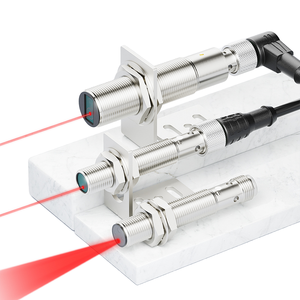
Standard optical inventory (such as Quartz protective windows, ZnSe focusing lenses, and M12/M18 sensor switches) dispatches within 24–48 hours via express air cargo (FedEx/DHL/UPS), arriving at Japanese facilities within 3 to 5 business days. Custom OEM runs typical require 2 to 3 weeks.
Optics are cleaned in an automated ultrasonic bath, sealed in individual vacuum pet-dish containers under cleanroom conditions, and wrapped in static-dissipative shock-absorbing packaging to eliminate ambient humidity exposure and transport vibration damage.
Yes. We design and deposit custom thin-film coatings for dual-band applications (e.g., 1064nm structural laser + 635nm red alignment laser), as well as broad-band AR coatings covering 400nm–1100nm for machine vision alignment systems.
Connect directly with our senior optics application engineers. We provide technical consultation, optical drawings, and competitive bulk export pricing tailored for the Japanese manufacturing market.