Engineered for high-precision thermal coding, permanent part identification, and field durability across Kazakhstan’s manufacturing, mining, and energy sectors.
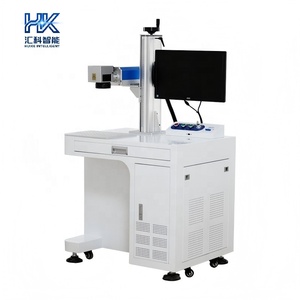
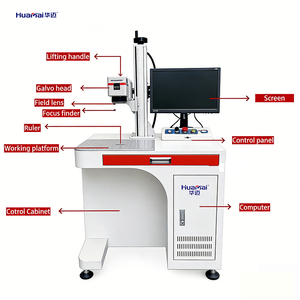
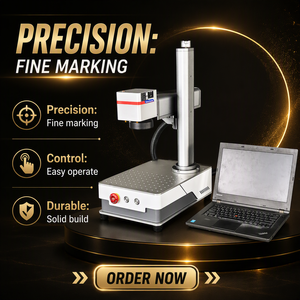
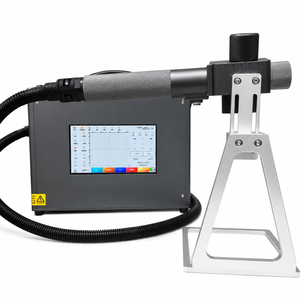
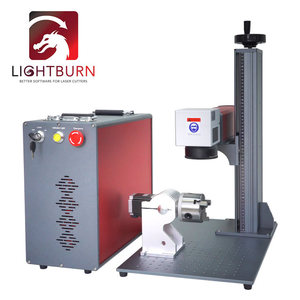
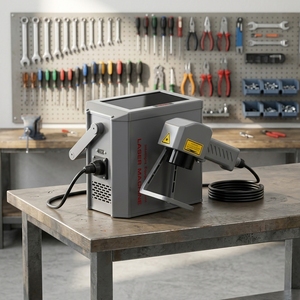
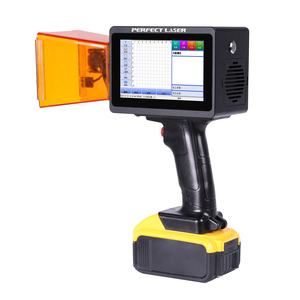
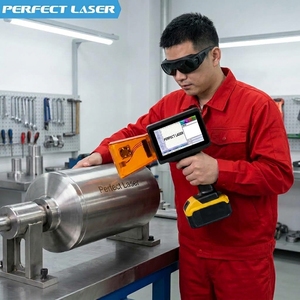
A technical reference guide for procurement managers, structural engineers, and plant operators across Central Asia’s evolving industrial landscape.
As the economic engine of Central Asia, the Republic of Kazakhstan is undergoing a structural industrial shift. Under the National Development Plan of Kazakhstan and expanding trans-continental logistics networks such as the Middle Corridor (Trans-Caspian International Transport Route), industrial facilities in hubs like Almaty, Astana, Karaganda, Shymkent, and Atyrau are moving away from temporary ink-jet printing and manual dot-peen stamping toward permanent optical laser marking.
Regulatory requirements across the Eurasian Economic Union (EAEU / EAC) now strictly mandate permanent part serialization, barcode traceability, and direct part marking (DPM) for machinery components, oilfield equipment, rail rolling stock, and structural metalwork. Handheld laser marking machines represent a disruptive breakthrough in this market: they provide factory-grade fiber optic laser energy directly to heavy, immovable structural steel parts, assembled mining rigs, and installed oil pipelines without requiring cumbersome gantry fixtures or secondary transport.
Information Gain Insight: Unlike standard desktop markers requiring components to be loaded into an enclosure, open-architecture handheld lasers utilize specialized field lenses with focal spacer frames, allowing operators to mark structural steel beams, casting molds, and valve bodies of unlimited weight and volume on site.
Procuring industrial machinery for deployment in Kazakhstan requires rigid engineering adaptations for localized environmental realities. Operating in Northern Kazakhstan (e.g., Kostanay, Petropavl, Astana) presents harsh sub-zero temperatures reaching -40°C during winter, whereas Western region oilfields (e.g., Tengiz, Kashagan, Mangystau) experience high dust concentrations and summer heat exceeding +40°C.
Standard commercial fiber markers frequently experience thermal shutdown, laser diode degradation, or optical lens fogging under these conditions. Our specialized handheld laser platforms exported to the Kazakhstani market incorporate key ruggedization upgrades:
Selecting the appropriate laser source architecture is critical for maximizing Return on Investment (ROI). Suppliers serving Kazakhstan must offer transparent technical guidance based on material metallurgy and application requirements:
| Laser Architecture | Pulse Duration | Frequency Range | Primary Applications in KZ Market | Metallurgical Capability |
|---|---|---|---|---|
| Q-Switched Raycus / Max | Fixed (~100 ns) | 20 kHz – 80 kHz | Structural steel, heavy machinery, valve bodies, cast iron casting marks. | High-speed deep engraving on carbon steel and structural alloys. |
| JPT MOPA M7 (Master Oscillator Power Amplifier) | Tunable (2 ns – 500 ns) | 1 kHz – 4000 kHz | Stainless steel color marking, delicate electronic shielding, black marking on anodized aluminum. | Zero-burn annealing on thin stainless steel, high-contrast plastic coding. |
| Air-Cooled UV (355 nm Cold Laser) | Ultra-short (<15 ns) | 30 kHz – 100 kHz | Cosmetic containers, medical packaging, glass bottles, multi-layer HDPE pipes. | Photochemical non-thermal surface marking without thermal deformation. |
For general heavy industry in Kazakhstan—such as rail wagon construction at Ekibastuz or pipe manufacturing at Karaganda—standard Q-switched 30W or 50W Raycus/Max fiber lasers deliver exceptional speed and etch depth. However, for specialized manufacturing, medical device tagging, and electrical cabinet labeling, JPT MOPA fiber technology provides complete control over thermal input, preventing surface corrosion on stainless steel grade 316L.
Our handheld laser marking platforms are deployed across a wide range of industrial operations throughout Kazakhstan:
On-site high-contrast marking of flange serial numbers, heat numbers, and API specification codes directly on high-pressure transport pipes, valves, and drilling rigs. Battery-powered units permit freedom of movement along field lines without generator tethering.
Deep ablation marking on heavy cast iron molds, crusher jaw liners, and underground haul truck engine parts. Marks withstand extreme abrasion, mud exposure, and acid washing without fading.
Direct part marking of wheelsets, axle bearings, and rail coupler mechanisms using high-density 2D DataMatrix codes according to Eurasian Railway Safety standards.
High-speed laser coding of production dates, batch numbers, and digital tax stamps onto PET bottles, aluminum cans, and cardboard outer cartons. Replaces consumable inks completely.
Direct OEM sourcing guarantees technical transparency, factory-direct spare parts pricing, and tailored configuration. As an established global manufacturer, our operational advantages for Kazakh buyers include:
All our desktop and handheld laser marking machines are engineered with auto-sensing wide-voltage power supplies (110V-240V 50/60Hz), matching Kazakhstan’s standard 220V 50Hz single-phase electrical grid with CEE 7/4 (Schuko) industrial plugs. Low total power draw (350W to 800W) allows operation via standard portable diesel generators or lithium battery packs in field locations.
We provide a full commercial document package including Commercial Invoice, Packing List, Certificate of Origin (Form A / Form E), and EAC declaration compliance under EAEU TR CU. Products can be delivered under CIP Almaty/Astana terms or DDP direct to your facility through our experienced regional logistics partners.
The solid-state fiber laser source has an operational lifespan rating of up to 100,000 hours without requiring optical gas refilling or mirror alignment. Routine maintenance is limited to keeping the protective lens cover clean using optical alcohol wipes and periodically inspecting cooling fan air intake filters.
Yes. The system natively supports TrueType fonts, SHX single-line fonts, 2D QR codes, DataMatrix, and barcode formats. You can directly input Cyrillic text, GOST-standard engineering lettering, serial numbers, and custom vector logo graphics without external conversion tools.
Consult with our optoelectronic application engineers to select the optimal laser source power, field lens configuration, and handheld setup tailored to your production site in Kazakhstan.