Explore our top-tier industrial fiber, MOPA, UV, and super-pulsed CO2 laser marking and cutting systems, fully certified and ready for deployment in Baku, Sumgait, Ganja, and regional industrial hubs.
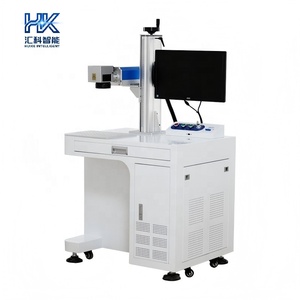
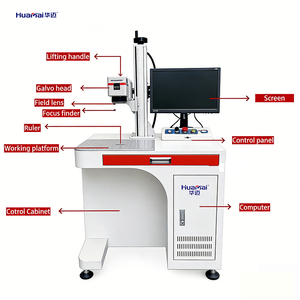
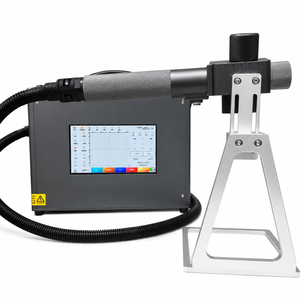
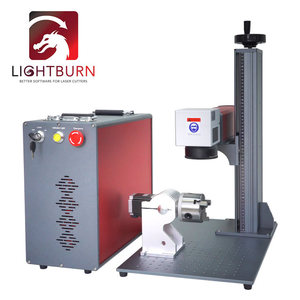
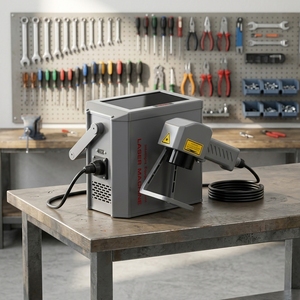
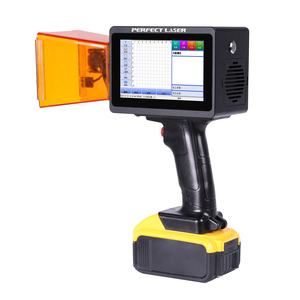
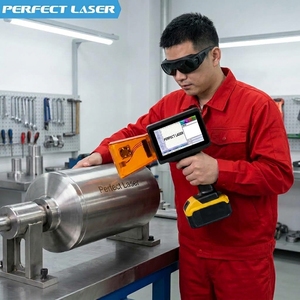
In the modern manufacturing landscape, carbon dioxide (CO2) laser sources remain the fundamental workhorse for material processing of organic substrates, polymers, glass, textiles, and composite materials. Emitting a laser beam in the far-infrared spectrum (predominantly at 10.6 µm, with secondary emission lines at 9.3 µm and 10.2 µm), CO2 laser technology offers unmatched absorption dynamics for non-metallic substances compared to shorter 1-micron fiber or 355nm ultraviolet laser sources.
For industrial enterprises operating within the Republic of Azerbaijan, procurement of robust CO2 laser equipment requires evaluating key photothermal parameters: RF discharge efficiency, gas mixture degradation rates, resonator optical stability, peak pulse power vs. continuous wave (CW) thermal loading, and localized climate durability. As Azerbaijan accelerates its non-oil economic initiatives under the "Azerbaijan 2030: National Priorities for Socio-Economic Development" framework, regional manufacturers in Baku, Sumgait, Ganja, and Mingachevir are increasingly deploying high-power CO2 laser source equipment to drive high-speed digital manufacturing, custom architectural fabrication, food packaging coding, and heavy machinery component marking.
When selecting a CO2 laser source manufacturer or supplier for Azerbaijani industrial projects, procurement directors must evaluate the core resonator design. The structural architecture directly dictates edge quality, pulse control, maintenance downtime, and total operational cost over a 10-year machine cycle.
Engineered for high-volume 24/7 manufacturing environments, RF-excited CO2 laser sources utilize external radio-frequency power supplies (typically operating at 81.36 MHz or 40.68 MHz) to excite the active gas mixture (CO2-N2-He). The optical cavity consists of integrated metal slabs arranged in a folded waveguide or free-space slab geometry, paired with internal ZnSe (Zinc Selenide) output couplers and high-reflectivity silicon mirrors.
DC glass laser tubes rely on high-voltage electrical discharges across a glass envelope containing catalyst-enhanced gas. While offering lower upfront capital expenses, DC sources display slower rise times (often exceeding 1 millisecond), leading to wider heat-affected zones during intricate vector engraving. Additionally, the glass envelope is vulnerable to micro-fracturing under thermal fluctuations—a critical consideration for facilities in Azerbaijan subjected to seasonal temperature swings between winter cold and intense summer heat.
| Technical Parameter | RF All-Metal CO2 Laser Source | DC Glass Tube CO2 Source | Industrial Impact / Advantage |
|---|---|---|---|
| Excitation Source | RF Electrodes (40.68 / 81.36 MHz) | High-Voltage DC Current (15–40 kV) | RF offers enhanced electrical safety & noise immunity |
| Operating Lifespan | 45,000 – 100,000 Hours | 2,000 – 10,000 Hours | RF drastically reduces long-term machine downtime |
| Beam Quality (M²) | M² < 1.1 to 1.3 (Near Gaussian TEM00) | M² 1.4 to 2.0 (Higher Order Modes) | RF yields smaller focal spot size & cleaner cuts |
| Frequency Response | 0 to 100+ kHz Pulse Modulation | 0 to 1–5 kHz Modulation | RF supports ultra-high-speed raster graphics |
| Thermal Stability | Active Water/Air Compensated Chassis | External Water Jacket Only | RF prevents optical drift during long continuous jobs |
| Re-gassable / Service | Yes (100% Serviceable Metal Design) | No (Fully Disposable Component) | RF lowers total lifetime cost of ownership (TCO) |
The industrial landscape in Azerbaijan is experiencing rapid modernization. The strategic push to grow non-oil industrial output, combined with ongoing infrastructure developments along the Caspian Sea and Trans-Caspian International Transport Route (Middle Corridor), creates specific operational requirements for CO2 laser source equipment.
High-power CO2 and hybrid fiber markers generate permanent 2D DataMatrix codes, serial numbers, and spec logos on anti-corrosive coated equipment, composite pipe wraps, valve gaskets, and rubber seals used in Caspian offshore rigs and refinery infrastructure.
High-speed 9.3 µm and 10.6 µm CO2 laser sources integrate seamlessly into high-throughput bottling, chemical container, and flexible film packaging lines for indelible lot coding, expiration dating, and micro-perforations without breaching barrier integrity.
Super-pulsed CO2 systems cut thick acrylic panels (up to 25mm+) with crystal-clear flame-polished edges in a single pass. Eliminates labor-intensive flame polishing, edge scraping, or chemical buffing for architectural fixtures and retail displays.
Azerbaijan has a deep historical heritage in carpet weaving, garment manufacturing, and leather processing. Modern factories in Ganja and surrounding districts utilize industrial large-format CO2 laser cutters equipped with multi-head gantries (such as dual-head systems) to achieve non-contact pattern cutting. The 10.6 µm laser beam instantaneously melts synthetic textile edges (polyester, nylon, cordura), sealing threads against fraying. For genuine leather and synthetic polyurethane (PU) materials, precise pulse modulation prevents edge discoloration while enabling detailed filigree vector engraving.
With Azerbaijan exporting significant quantities of agricultural products, wine, and mineral water to regional international markets, compliance with international traceability standards (GS1 DataMatrix, ISO/IEC 15415) is mandatory. CO2 laser coders remove the need for ink jets, liquid solvents, and printheads. Operating on high-speed conveyor belts, air-cooled 20W to 50W CO2 sources apply indelible marks onto glass bottles, coated cardboard boxes, wooden wine crates, and PET bottles, thriving in humid or dust-prone factory environments.
Deploying advanced laser technology aligns directly with the macroeconomic restructuring taking place across the Azerbaijani economy. Key growth drivers include:
1. Industrial Park Tax and Customs Incentives: Residents of Azerbaijan's registered industrial parks benefit from exemptions on import tariffs and property taxes. Importing high-value, durable capital assets like RF CO2 laser sources and high-precision laser cutting machinery maximizes tax efficiency, delivering rapid payback through long operational lifespans.
2. Supply Chain Resilience via the Middle Corridor: As Baku consolidates its position as a primary logistics node along the Trans-Caspian transport route, local equipment builders and repair facilities require standardized, modular laser sources with immediate spare-parts support. Equipment engineered with global standard components (e.g., standard power inputs, universal DB25/Ethernet interfaces) ensures long-term operational continuity.
3. Automation and Industrial Digitalization (Industry 4.0): Modern production lines in Baku are moving away from manual tool-changing systems toward digital laser processing. Kern-inspired optical designs, combined with advanced galvo scanning or CNC gantry motion controllers, allow operators to switch cutting profiles instantly via software (DXF/AI/PLT), eliminating physical die tooling costs.
When selecting a supplier, evaluating engineering heritage and vertical manufacturing capabilities is paramount. Leveraging technology standards refined over four decades of U.S. manufacturing (such as those pioneered by Kern Laser Systems in Wadena, Minnesota since 1982), industrial-grade CO2 laser systems offer distinct competitive advantages:
To assist procurement managers, optical technicians, and factory directors in choosing the correct CO2 laser source wattage and system class, review the matrix below:
| Target Material | Recommended Source Power | Optimal Wavelength | Expected Cutting / Marking Speed | Key Process Benefit |
|---|---|---|---|---|
| Cast Acrylic (3mm – 10mm) | 150W – 250W RF CO2 | 10.6 µm | 15 – 45 mm/s Vector Cut | Flame-polished clear edge, zero post-buffing |
| Cast Acrylic (12mm – 25mm+) | 400W – 800W Super-Pulsed | 10.6 µm | 8 – 25 mm/s Vector Cut | Straight wall geometry, zero draft angle cut |
| Hardwood & MDF (6mm – 18mm) | 200W – 400W RF CO2 | 10.6 µm | 10 – 35 mm/s Vector Cut | Minimal edge charring, rapid penetration |
| Polyester & Technical Fabrics | 100W – 200W Air/Water Cooled | 10.6 µm / 9.3 µm | 100 – 500 mm/s High Speed | Instant sealed edges, prevents thread fraying |
| PET & Polymer Packaging Coding | 30W – 60W Galvo CO2 | 9.3 µm / 10.2 µm | Up to 1,200 chars/sec | High-contrast surface mark without pinholes |
| Thin Sheet Metal (Stainless/Mild) | 500W – 800W Hybrid CO2 w/ O2 | 10.6 µm (Assist Gas) | 12 – 40 mm/s Metal Cut | Dual-use flexibility (cut metal & non-metal) |
Navigating the import, installation, and operation of industrial laser machinery in Azerbaijan requires understanding local regulatory and operational requirements. Below are practical answers to common procurement questions:
Industrial laser equipment and laser sources typically enter Azerbaijan under HS Code 8456.11.00 (Machine tools for working any material by removal of material, operated by laser) or HS Code 9013.20.00 (Lasers, other than laser diodes). Importers in Baku should consult with a licensed customs broker to confirm current tariff schedules and verify eligibility for VAT exemptions under specific industrial park programs.
Standard industrial power across Azerbaijan operates at 380V 3-Phase 50Hz for heavy machinery, or 220V Single-Phase 50Hz for lower-power benchtop markers. Our high-power CO2 laser systems can be configured with internal isolation transformers and industrial voltage stabilizers to protect delicate RF power supplies against voltage fluctuations in regional industrial zones.
Baku’s coastal environment presents ambient humidity, saline atmospheric air, and summer temperature spikes. RF CO2 sources require precise water temperature control (typically maintained at 20°C ± 0.5°C using closed-loop dual-channel chillers with deionized water). Closed-loop air conditioning modules inside the electrical enclosure prevent internal condensation and protect optics from dust accumulation.
Routine maintenance involves inspecting and cleaning the ZnSe focus lenses and front-surface silicon mirrors using optical-grade lens wipes and pure isopropyl alcohol. Closed-loop chiller water should be refreshed every 3 to 6 months with distilled or deionized water, and air filters on fume extraction systems checked regularly to maintain clean optical pathways.
Technical support combines remote desktop diagnostic telemetry (via Ethernet/KCAM integration), direct video assistance with factory-certified optical engineers, and international spare-parts dispatch. Standardized modular components allow local maintenance technicians to replace wear items without extensive factory downtime.
Yes. Factory application laboratories offer complimentary sample testing for Azerbaijani manufacturers. Companies can send material samples (acrylics, stone, wood, rubber, composites, metal) to receive detailed processing reports, kerf analysis, edge roughness metrics, and precise cycle-time calculations prior to committing capital.
Selecting the ideal CO2 laser source equipment manufacturer or supplier for Azerbaijan requires balancing initial capital investment against long-term optical reliability, beam quality, and localized support. RF all-metal super-pulsed CO2 technology offers the optical precision, high pulse frequencies, and long gas lifespans required for modern, high-throughput manufacturing.
Whether configuring a standalone marking station in Sumgait, expanding a commercial acrylic sign shop in Baku, or integrating heavy-duty automated production lines in Ganja, partnering with an experienced manufacturer ensures your facility achieves optimal cost-per-part efficiency, backed by rigorous technical engineering standards.
Request a customized technical proposal, schedule a live virtual optical demonstration, or submit your material for sample laboratory testing today.