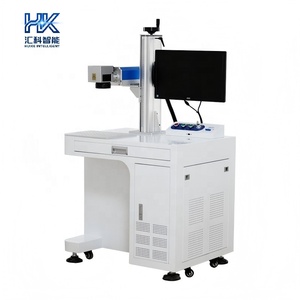
Fiber Laser Marking Machines JPT RAYCUS MAX 20W-300W
- High-Power 100W-300W Options
- Multi-Material: Metal & Plastics
- Heavy Industrial Duty Cycle
Engineered for high-duty cycles, precision cold marking, and seamless integration into automated production lines across Saudi Arabia's industrial hubs.
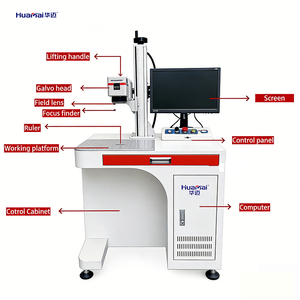
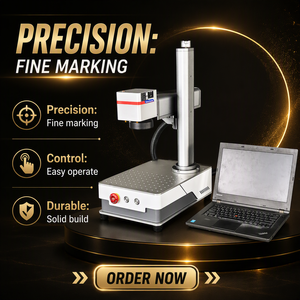
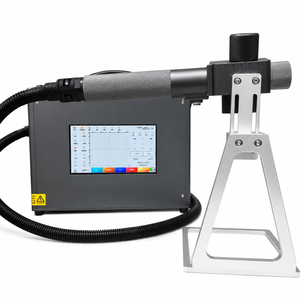
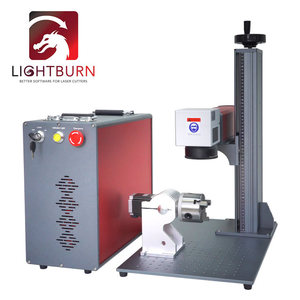
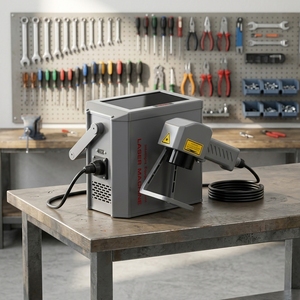
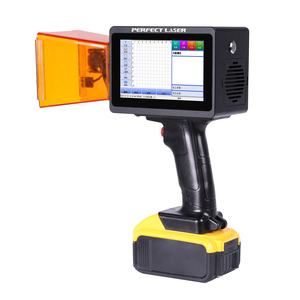
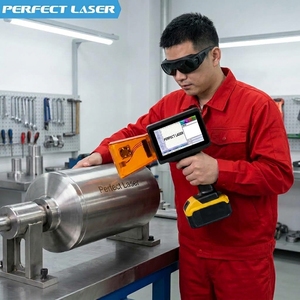
Understanding the photochemical dynamics, SASO compliance, and operational reliability of 355nm UV laser systems in high-ambient Middle Eastern manufacturing facilities.
In modern high-precision manufacturing, traditional thermal processing methods—such as 1064nm Fiber lasers or 10.6μm CO2 lasers—rely on extreme thermal energy to melt, boil, or vaporize target materials. While effective for structural metals and heavy timber, thermal ablation creates significant Heat-Affected Zones (HAZ), leading to thermal distortion, micro-cracking, micro-burn marks, and structural degradation in sensitive substrates.
Our factory’s 355nm Ultraviolet (UV) Laser Marking Systems utilize a third-harmonic generation (THG) DPSS technology. Because the ultraviolet photon energy (3.49 eV) exceeds the molecular bond energy of most organic polymers, glasses, and delicate electronics, the UV laser directly ruptures the chemical bonds of the material through a process known as Photochemical Reaction (Cold Processing). The result is micro-scale precision marking with virtually zero thermal diffusion into surrounding areas.
| Performance Metrics | 355nm UV Cold Laser | 1064nm Fiber Laser | 10.6μm CO2 Laser |
|---|---|---|---|
| Primary Processing Mode | Photochemical Bond Rupture (Cold) | Photothermal Ablation (Thermal) | Thermal Vaporization (Heat) |
| Heat Affected Zone (HAZ) | Negligible (< 2 μm) | Moderate to High (20-100 μm) | Extremely High (> 150 μm) |
| Beam Spot Size | Ultra-Fine (< 15 μm) | Standard (30-50 μm) | Large (80-120 μm) |
| Substrate Compatibility | Glass, HDPE, PE, HDPE, Gold, PCB, Silicon | Stainless Steel, Carbon Steel, Aluminum | Wood, Acrylic, Leather, Organic Cardboard |
| Saudi FDA Packaging Suitability | Optimal (100% Non-Disruptive) | Poor (Melts Thin Plastics) | Limited (Causes Surface Charring) |
Tailored laser engineering engineered to fulfill exact operational requirements in Riyadh, Jeddah, Dammam, Jubail, and Yanbu industrial zones.
Compliance with Saudi Food and Drug Authority (SFDA) GS1 DataMatrix coding standards. Our 355nm UV laser directly marks high-density 2D barcodes onto blister packs, HDPE bottles, and glass vials without puncturing or altering chemical barrier integrity.
Serving precision goldsmiths in the historic gold centers of Riyadh and Jeddah. Micro-engraving 24K, 22K, and 18K gold and silver with high-resolution hallmarks without weight loss, slag, or micro-melting associated with fiber lasers.
Saudi Arabia’s emerging EV manufacturing ecosystem demands zero-defect electronic component marking. Our UV cold laser engraves circuit boards, micro-chips, PCB substrates, and flame-retardant automotive connectors cleanly.
Provides luxury permanent batch codes, anti-counterfeiting micro-text, and logo marking on high-end cosmetic perfume bottles and glass containers manufactured for GCC and regional export markets.
Specially customized high-speed online UV marking systems engineered to interface directly with extrusion lines in Jubail and Yanbu for permanent non-contact sequence marking on polyethylene pipes and cabling.
Delivers high contrast black and white markings on flame-retardant polymers, ABS switches, and solar panels without toxic ink consumables or surface degradation.
As the Kingdom of Saudi Arabia accelerates its economic diversification under Vision 2030—led by the National Industrial Development and Logistics Program (NIDLP)—manufacturing plants are modernizing operations away from legacy chemical inkjet printing (CIJ) toward sustainable, non-contact laser coding solutions.
Saudi ESG directives and environmental goals are forcing factories to phase out hazardous solvent-based inks, zeroing out VOC emissions while slashing recurring consumable costs.
Saudi Standards, Metrology and Quality Organization (SASO) requires verified product registration via the SABER platform. Our factory supplies fully compliant IECEE/CE/SASO certified systems.
Integrating TCP/IP communication protocols and RS232 interfaces into our galvo systems allows automated line-side integration with MES & ERP systems across Saudi industrial corridors.
Combining rigorous precision gantry engineering with direct B2B manufacturer pricing and Middle-East export experience.
By eliminating middle-party export agencies, our factory provides Middle Eastern distributors and end-user plants direct access to wholesale tier pricing, guaranteeing high ROI within 6-8 months.
Specifically engineered dual-refrigerant industrial water chillers and sealed optical paths ensure stable 355nm UV crystal laser output even in Middle Eastern ambient factory temperatures up to 50°C.
Every UV and Fiber laser system undergoes strict 72-hour continuous beam stability testing, optical power attenuation measurement, and galvo alignment checks before packing into reinforced export crates.
Our experienced export trade compliance team manages complete HS Code documentation, COC certificates, and SABER platform registrations for expedited clearance at Dammam, Jeddah, and Riyadh dry ports.
Control systems (EzCad/KCAM compatibility) feature native English and Arabic user interface options, supporting vector DXF, PLT, and automated barcode batch generation out of the box.
We maintain dedicated stock reserves of DPSS UV laser sources, galvo mirrors, beam expanders, and F-Theta field lenses for rapid DHL/FedEx door-to-door delivery across KSA.
Addressing core technical, regulatory, and logistics queries for industrial buyers in the Kingdom of Saudi Arabia.
Standard production time for standard UV and Fiber laser marking systems is 5-7 working days from order confirmation. Air freight to King Khalid International Airport (Riyadh) or King Abdulaziz International Airport (Jeddah) takes approximately 5-8 days. Sea freight shipping to King Abdul Aziz Port (Dammam) or Jeddah Islamic Port takes 18-25 days depending on the shipping line.
Our UV laser systems feature fully sealed laser cavity housings coupled with high-efficiency, closed-loop industrial water chillers utilizing eco-friendly R410A refrigerant. This keeps the 355nm DPSS crystal at its optimal operating temperature (22°C ± 0.5°C) even when surrounding workshop temperatures reach up to 45°C–50°C.
Yes. As an established direct exporter to the Kingdom of Saudi Arabia, all our equipment meets relevant International Electrotechnical Commission (IEC) standards, CE safety regulations, and possesses necessary test reports for fast issuance of SABER Certificate of Conformity (CoC) for smooth customs clearance.
Unlike Continuous Inkjet (CIJ) printers which require daily solvent top-ups, nozzle cleaning, printhead replacements, and toxic waste disposal, our UV laser markers require zero consumables. Regular maintenance is limited to keeping the protective optical window clean and checking chiller fluid levels every 3 to 6 months.
Yes. We provide complete video training libraries, detailed English/Arabic user manuals, and 24/7 direct engineer support via TeamViewer, WhatsApp, and video conference. In addition, localized field engineering assistance can be coordinated through regional partner technicians in Riyadh and Dammam.
Absolutely. We supply specialized "Flying UV Laser Marking" series (Online Coding Systems) equipped with external rotary encoders and fiber-optic sensor triggers capable of marking up to 120-180 meters per minute on fast-moving bottling and packaging lines.
Connect directly with our senior laser application engineers. Receive a factory-direct wholesale quote, customized ROI evaluation, and free sample testing for your specific material within 24 hours.