Engineered for high-repeatability direct part marking (DPM), trace-code integration, and precision material processing in modern London production facilities.
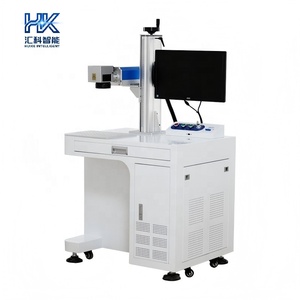
Heavy-duty industrial fiber laser system tailored for deep engraving, rapid tool marking, and high-speed metal ablation across stainless steel and engineered alloys.
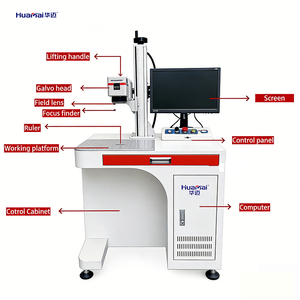
Advanced MOPA pulse duration control enabling vibrant oxide color marking on titanium, high-contrast anodized aluminum engraving, and delicate plastic etching.
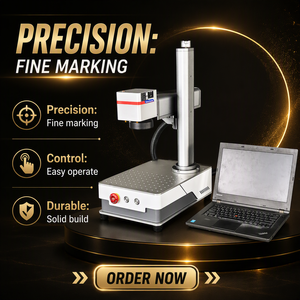
Space-saving benchtop laser system engineered for London urban workshops, boutique jewelry studios, and precision hardware tool coding.
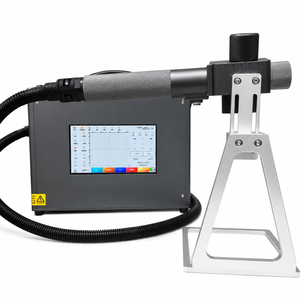
Ergonomic, lightweight handheld laser gun designed for direct marking on immovable structural steel, bulky machinery components, and warehouse stock.
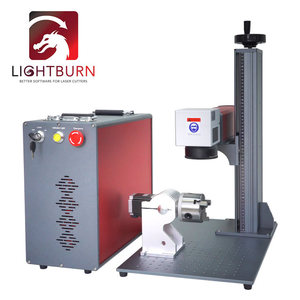
High-power 100W MOPA laser workstation complete with an 80mm rotary attachment for 360-degree cylindrical marking on pipes, tumblers, and fittings.
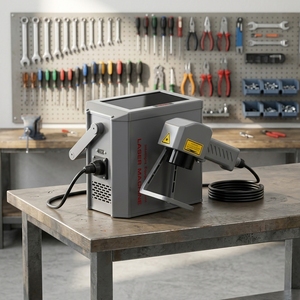
Cold-laser processing at 355nm UV wavelength, specifically developed for zero-thermal damage marking on luxury cosmetic packaging, glass, and medical plastics.
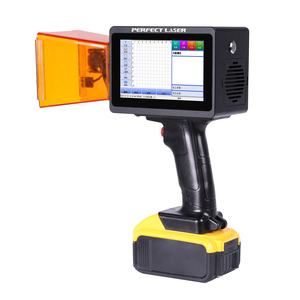
Lithium battery-integrated laser system providing true wireless mobility for permanent asset tagging, structural steel coding, and infrastructure inspection marking.
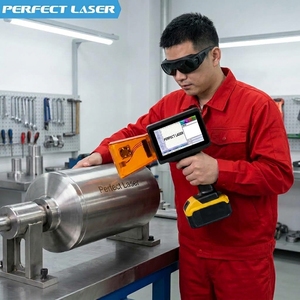
Versatile multi-material handheld marker engineered for high-contrast barcode, 2D Data Matrix, and vector logo engraving across metals, polymers, and leather.
London’s industrial structure has evolved dramatically. Beyond traditional manufacturing hubs, the region encompasses high-value advanced technology corridors, automotive design studios in South-East London, biomedical engineering centers around King's Health Partners, and bespoke architectural fabrication units in Park Royal and Silvertown. Importing industrial laser machinery from qualified Chinese manufacturing partners allows UK enterprises to achieve tier-one optical performance at optimized capital expenditure (CapEx).
Information Gain Metric: UK manufacturers utilizing high-frequency fiber laser marking systems report a 64% reduction in direct part marking (DPM) operational costs compared to legacy continuous ink-jet (CIJ) systems, eliminating solvent consumables while guaranteeing permanent traceability under BS EN ISO 9001 quality audits.
London's MedTech sector relies heavily on 355nm UV cold-laser and MOPA fiber markers to generate corrosion-resistant Unique Device Identification (UDI) 2D Data Matrix codes on surgical stainless steel, titanium implants, and biocompatible polymers without causing micro-cracks or surface oxidation.
Custom signage agencies and architectural design practices in West London leverage high-power CO2 laser cutters and UV markers for ultra-clean acrylic edge polishing, timber scale-model engraving, and intricate brass inlay processing with zero mechanical tool deflection.
Supporting the Thames Gateway engineering belt, 100W–300W fiber laser systems perform rapid part numbering, deep VIN etching, and heat-treat identification on alloy components, gears, and structural brackets destined for high-performance motorsport validation.
The UK manufacturing landscape is governed by stringent operational standards. As British companies align with the national Net-Zero 2050 mandate, energy efficiency in machine tool procurement has become a core decision parameter. Modern solid-state fiber lasers operate at electrical efficiency rates exceeding 30%—compared to less than 10% for traditional CO2 gas tube systems—drastically reducing power consumption across shift work.
Procuring industrial laser machinery for London facilities requires absolute adherence to British standards. Importers must verify that their manufacturing partner provides full compliance documentation prior to customs clearance at Port of Felixstowe or London Gateway:
Selecting the optimal optical source ensures maximal material absorption, zero thermal distortion, and peak throughput for your specific manufacturing requirement.
| Laser Source Type | Wavelength | Primary Suitable Materials | Typical UK Application | Thermal Impact Zone |
|---|---|---|---|---|
| CW / Q-Switched Fiber | 1064 nm | Stainless Steel, Mild Steel, Aluminum, Brass, Hard Plastics | Direct Part Marking (DPM), Tooling Code, Barcode Etching | Moderate (Localized) |
| JPT MOPA Fiber | 1064 nm (Adjustable Pulse) | Titanium, Anodized Aluminum, ABS, Polycarbonate, Thin Foils | Titanium Color Marking, Black Anodized Print, Plastic Etching | Very Low (Tunable Pulse Width) |
| UV Cold Laser | 355 nm | Glass, Silicon, HDPE, Cosmetic Packaging, Flame-Retardant Polymers | Medical Packaging, Micro-Electronics, Luxury Glass Branding | Zero (Photochemical Cold Ablation) |
| CO2 Sealed Tube | 10600 nm | Cast Acrylic, Wood, MDF, Leather, Rubber, Cardboard Packaging | Architectural Signage, Leather Craft, Acrylic Polished Cuts | High Thermal Absorption (Clean Melting) |
Combining decades of industrial machine tool building experience with rigorous quality assurance protocols, our factory delivers production-grade laser platforms designed for round-the-clock operation. Drawing upon engineering heritage that prioritizes structural frame rigidity, closed-loop servo feedback, and high-precision optical path alignment, every unit undergo rigorous testing before shipment.
Every machine frame is stress-relieved and precision-milled to prevent structural deformation. We partner with world-class laser source builders (JPT, Raycus, Maxphotonics) and integrate high-speed Sino-Galvo scanheads equipped with premium F-theta field lenses for minimal beam distortion across the full work envelope.
Our control architecture supports intuitive job queueing, native nesting, material-specific parameter libraries, and optional K-Vision automatic camera alignment. K-Vision instantly compensates for material skew and stretch, enabling high-precision contour cutting on preprinted graphics without manual fixturing.
Factory Warranty Commitment: All CO2 laser sources engineered under our premium production series carry a comprehensive 3-year factory warranty. We maintain a dedicated spare parts pipeline and provide remote desktop diagnostic support directly from senior factory technicians to eliminate machine downtime for London clients.
Direct answers covering electrical requirements, shipping logistics, UK customs clearance, and long-term technical support.
Yes. All machines exported to London and the wider UK market are factory-configured for standard UK power supply (230V Single Phase 50Hz or 400V Three Phase 50Hz). Equipment includes standard UK BS 1363 plugs or industrial CEEform connectors, complete with internal grounding, EMI filters, and protective circuit breakers.
Standard sea freight shipping to major UK ports (London Gateway, Port of Felixstowe, Southampton) typically takes 28 to 35 days. For urgent project deployments, air freight delivery to London Heathrow (LHR) can be arranged within 7 to 10 days. We provide complete DDP (Delivered Duty Paid) or CIF ocean freight quotes including fumigated wooden crate packaging.
Industrial laser machinery imported into the UK typically falls under HS Code 84561100 (Laser Processing Machine Tools). Under DDP terms, our logistics partners manage all customs import entries, HMRC duty calculations (typically 0% to 2% depending on machine specification), and UK VAT reporting, delivering the unit straight to your London warehouse.
For city-center London workshops, university labs, or multi-tenant industrial estates, we strongly recommend fully enclosed Class 1 safety laser platforms (such as the LaserCELL or FiberCELL series). These are paired with multi-stage dual-pump fume extractors featuring HEPA H14 filters and thick activated carbon beds to safely eliminate toxic particulate and odor in compliance with UK HSE guidelines.
We provide comprehensive video training modules, step-by-step English user manuals, and direct live video commissioning support with our senior optical and software engineers. Furthermore, remote desktop diagnostics enable our factory team to assist with parameter optimization, software setup, and hardware troubleshooting in real time.
Send us your material stock (metal sheet, plastic polymer, glass, or timber). Our factory application engineers will process the sample, optimize speed and pulse settings, and provide a full technical inspection report along with video verification.