CE Industrial
Compliant with European Directive 2006/42/EC and ISO 11553 standards. Pre-configured for Morocco’s 220V/380V 50Hz grid requirements.
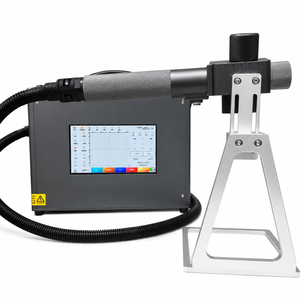
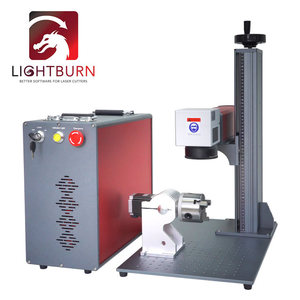
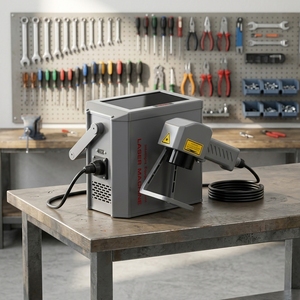
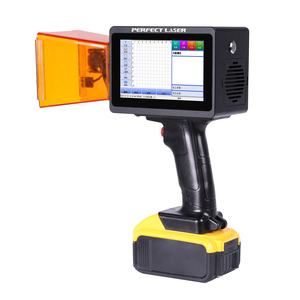
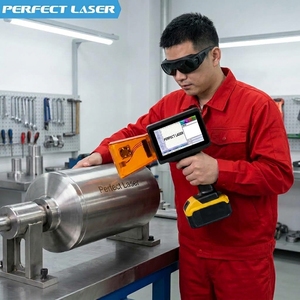
As Morocco accelerates its status as North Africa’s primary industrial exporter to the European Union and West Africa, international regulatory compliance has shifted from an operational option to an absolute mandatory benchmark. Driven by the national agenda of the Plan d’Accélération Industrielle (PAI), key manufacturing zones in Casablanca, Tangier Automotive City, Kenitra, and Fez require rigorous direct part marking (DPM) to satisfy European ISO 9001, IATF 16949 (Automotive), and EN 9100 (Aerospace) quality management frameworks.
Securing CE Certification is the foundational gateway for importing industrial laser machinery into the Kingdom of Morocco. Under Morocco's customs regulation framework governed by the Administration des Douanes et Impôts Indirects (ADII) and the Ministry of Industry, Trade, Green and Digital Economy (MCINET), industrial laser systems must adhere strictly to low-voltage electrical safety, electromagnetic compatibility (EMC), and laser radiation protective shielding (EN 60825-1).
Our suite of portable fiber, UV, and MOPA laser marking machinery is explicitly engineered and factory-certified to meet European CE standards, offering Moroccan enterprise buyers seamless customs clearance through Tanger-Med and Casablanca ports, immediate grid integration, and zero operational downtime.
Our direct-export lasers undergo rigorous third-party auditing to verify compliance across critical European directives enforced by Moroccan customs regulators:
Matching the correct optical physics to material thermal thresholds ensures zero structural deformation, high contrast ratios, and maximum throughput. Review our technical engine comparison tailored for Moroccan industrial operations.
1064nm Q-switched optical engine. Highly economic, heavy-duty workhorse designed for deep engraving, barcode etching, and part marking on carbon steel, stainless steel, brass, copper, and hard aluminum alloys.
Variable pulse duration (2ns to 500ns). Allows precise thermal modulation, enabling high-contrast black marking on anodized aluminum, brilliant color marking on stainless steel, and zero-burn marking on delicate plastics.
Ultraviolet cold-laser technology. The 355nm wavelength utilizes photochemical ablation rather than thermal melting, making it indispensable for heat-sensitive polymers, cosmetics packaging, glass, and pharmaceutical containers.
| Parameter / Specification | Standard Fiber (20W-300W) | JPT MOPA M7 (30W-100W) | UV Laser (3W-15W) |
|---|---|---|---|
| Central Wavelength | 1064 nm | 1064 nm | 355 nm (Ultraviolet) |
| Pulse Frequency Range | 20 kHz – 80 kHz | 1 kHz – 4000 kHz | 20 kHz – 200 kHz |
| Pulse Width Control | Fixed (~100-120 ns) | Adjustable (2 – 500 ns) | Ultra-Short (<15 ns) |
| Heat Affected Zone (HAZ) | Moderate Thermal Impact | Ultra-Low / Controlled | Zero Thermal Damage (Cold Cut) |
| Cooling Method | Air Cooled | Air Cooled / Water Cooled | Air / Water Cooled Chiller |
| Software Interface | EZCAD2 / EZCAD3 / LightBurn | EZCAD3 Professional (3D Ready) | EZCAD UV Dedicated Suite |
Our portable laser marking systems are deployed across key economic corridors in Morocco, providing localized solutions engineered for specific regional industrial applications.
With OEMs like Stellantis and Renault driving massive production in Tangier Automotive City and Atlantic Free Zone Kenitra, tier-1 and tier-2 suppliers require permanent 2D DataMatrix coding on brake calipers, engine blocks, wire harnesses, and structural stampings. Our handheld battery-powered and portable desktop units allow operators to execute high-speed VIN marking directly on the assembly floor without moving heavy assemblies.
Morocco’s aerospace cluster in Midparc Casablanca demands strict trace-back compliance for high-grade titanium, aluminum 7075, and composite components. Utilizing our JPT MOPA M7 laser markers, aerospace technicians perform non-destructive, micro-scale direct part marking that resists thermal stress, fluid exposure, and atmospheric oxidation, meeting stringent Safran and Boeing export standards.
Moroccan olive oil, cosmetic Argan oil exporters, and seafood processing plants in Agadir and Casablanca require tamper-proof batch coding, expiry dates, and anti-counterfeiting QR codes. Our air-cooled UV laser markers print razor-sharp logos and tracking codes directly onto glass bottles, caps, PET containers, and flexible foils without solvent inks or thermal degradation.
Morocco’s renowned artisanal heritage in Fez and Marrakech, alongside modern textile exporters in Casablanca, relies on our compact CO2 and UV laser units for high-detail vector engraving on genuine leather goods, footwear, denim, and brass metalwork. Traditional artisans achieve sub-millimeter precision while preserving material authenticity for European luxury markets.
With massive solar projects like the Noor Ouarzazate Solar Complex and expanding electrical grid infrastructure managed by ONEE, local contractors require durable outdoor-grade component labeling. Our high-power 50W-100W fiber systems create deep-etched stainless steel nameplates and anodized tags built to survive desert abrasion, UV exposure, and extreme thermal cycling.
Moroccan electronics manufacturers supplying European household appliance and industrial power industries utilize our compact desktop MOPA lasers for marking micro-QR codes, serial numbers, and polarity indicators directly onto PCBs, IC chips, relay housings, and flame-retardant ABS components.
Morocco is experiencing an unprecedented industrial modernization wave. Three major economic trends are currently accelerating the adoption of portable CE-certified laser marking systems across the nation:
EU manufacturers are actively shifting supply chains closer to home to mitigate geopolitical disruption. Morocco’s proximity—offering 48-hour ocean freight to mainland Europe via Tanger-Med—means Moroccan factories must match EU industrial automation levels. Fiber lasers replace slow mechanical stamping, delivering instant digital job setup and full traceability.
In alignment with Morocco’s National Sustainable Development Strategy (SNDD), industrial zones are phasing out ink-jet printing and chemical etching due to VOC emissions and hazardous waste disposal rules. Laser marking is a 100% dry, consumable-free process that requires zero ink cartridges, solvents, or toxic fluids.
Upcoming European regulations require a Digital Product Passport for industrial goods entering the single market. Moroccan exporters must etch permanent, unalterable GS1-compliant DataMatrix code on components. Our high-precision Galvo lasers guarantee 100% scannability across the product lifecycle.
Combining state-of-the-art optical laser innovation with rigorous manufacturing control to deliver unmatched field reliability for export customers.
We integrate genuine Raycus, MAX, and JPT MOPA fiber laser engines paired with premium Sino-Galvo high-speed scanning heads and imported F-Theta scan lenses (Opex/WaveLength), ensuring uniform energy density across the entire marking field.
Eliminate bulky water chillers. Our portable systems feature high-efficiency heat-pipe air cooling modules capable of reliable operation in ambient shop-floor temperatures up to +45°C, perfectly suited for Moroccan summer climates.
Backing our build quality with a full 3-year warranty on fiber laser sources and 2 years on system electronics. Spare parts, power supplies, and control boards are stocked for fast DHL/FedEx dispatch to Morocco within 72 hours.
Essential technical and regulatory answers for Moroccan procurement managers, importers, and plant engineers.
Yes. All of our laser marking systems carry full CE certification (Machinery Directive 2006/42/EC, Low Voltage Directive 2014/35/EU, and EMC Directive 2014/30/EU). We supply original Certificates of Conformity (DoC), test reports, and English/French safety manuals required by Moroccan Customs (ADII) and MCINET for smooth port clearance at Tanger-Med or Casablanca.
Our portable and desktop systems are standardly built to operate on single-phase 220V AC (±10%), 50Hz electrical supply, which matches Morocco’s commercial power grid perfectly. Power consumption is extremely efficient, ranging from 350W for portable fiber markers up to 1200W for high-power 100W MOPA units. No specialized high-voltage infrastructure is required.
We provide comprehensive remote onboarding support via TeamViewer, WhatsApp, and Zoom in French and English. Our machines come pre-calibrated with plug-and-play EZCAD software installed. We supply complete video tutorial libraries, pre-configured material parameter settings (for stainless steel, aluminum, brass, plastics), and step-by-step operating instructions.
Standard inventory units are tested, packaged in reinforced export wooden cases (ISPM 15 fumigated), and dispatched within 3 to 5 business days. Express air freight via DHL/FedEx arrives in Morocco within 5 to 7 days. Ocean container shipments to Casablanca Port or Tanger-Med Port typically take 18 to 25 days depending on the shipping line selected.
Fiber lasers (Raycus/MAX) excel on all metals (stainless steel, carbon steel, brass, copper, anodized aluminum) and some hard opaque plastics (ABS). JPT MOPA lasers expand capability to high-contrast plastic marking and stainless steel color marking. For non-metals like glass, organic leather, wood, acrylic, or cosmetic containers, our UV laser or CO2 laser series is recommended.
Send us your material specifications or drawing files. Our application engineering team will process your test samples, record video demonstrations, and send a comprehensive FOB/CIF Casablanca quotation tailored to your business needs.