Direct factory distribution for Netherlands enterprise clients, fully compatible with automated inline production systems, CE regulatory standards, and ISO 11553 safety guidelines.
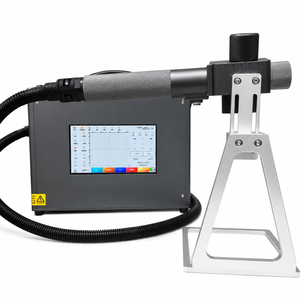
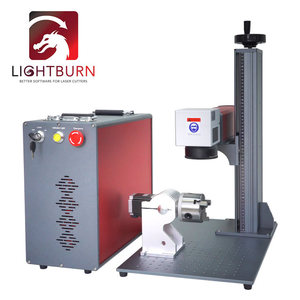
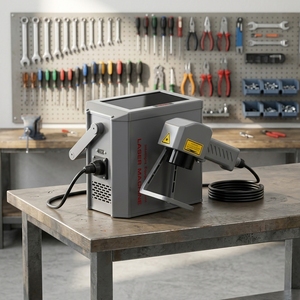
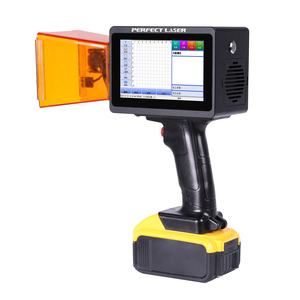
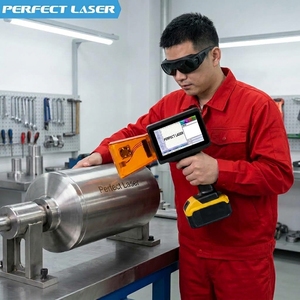
The Dutch manufacturing ecosystem—characterized by high-tech mechatronics in the Brainport Eindhoven region, advanced semiconductor tooling, automotive engineering, and world-class agrifood packaging—demands unprecedented micro-precision. Standard galvo laser systems, relying solely on manual jigs or static physical stops, no longer satisfy the strict zero-defect tolerance thresholds required by modern European Supply Chain Directives and ISO 9001/13485 quality protocols.
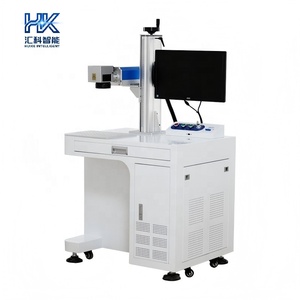
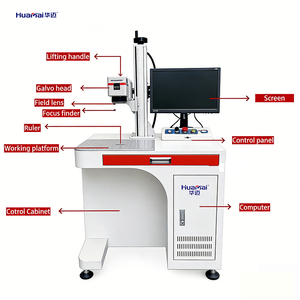
As a premier Camera Laser Manufacturer & Supplier serving the Netherlands market, our engineering architecture addresses the root cause of throughput bottlenecks: mechanical positioning drift, part thermal expansion, and complex geometric alignment errors. By integrating high-resolution CCD coaxial vision systems directly into the optical galvo path, our machine lineup introduces real-time visual recognition, automated part orientation tracking, and instantaneous coordinate calibration (dynamic offset calculation within <5 milliseconds).
Optical cameras aligned along the exact beam axis capture real-time part geometries prior to laser firing. Eliminates mechanical fixture costs while managing unpredictable part placement on high-speed conveyor belts.
JPT M7 MOPA fiber technology permits independent pulse width control (2ns to 500ns). Enables black-annealing on medical-grade stainless steel without violating passive oxide protective surface layers.
Engineered for European Class 1 enclosures or Class 4 inline interlocked cells, incorporating dual-channel safety loops, certified OD6+ laser safety glass, and active safety interlocks standard across Dutch plants.
| Performance Metrics | Conventional Industrial Laser | Vision-Guided Camera Laser (Our Series) | Impact on Dutch Manufacturing Operations |
|---|---|---|---|
| Fixturing Setup Time | 15–45 mins per batch switch | 0 mins (Software Auto-Registration) | 85% reduction in changeover downtime for low-volume high-mix lines. |
| Positioning Accuracy | ±0.1 mm to ±0.3 mm | ≤ ±0.005 mm (Coaxial Vision) | Enables micro-traceability codes on semiconductor trays & micro-medical parts. |
| Defect Rate (Part Misalignment) | 1.5% - 3.2% average | < 0.01% (Reject Trigger Active) | Prevents costly scrap rates on expensive alloy machining in aerospace hubs. |
| Marking Alignment Speed | Manual optical alignment | < 15 ms automatic recognition | Supports continuous production speeds up to 120 units per minute. |
| Traceability Standard Compliance | Basic 1D/2D barcodes | UID, GS1, ISO/IEC 16022 DataMatrix | Meets mandatory EU Medical Device Regulation (MDR) direct part marking requirements. |
Understanding regional industrial clusters in the Netherlands is essential for choosing the correct optical configuration, laser wavelength (1064nm Fiber, 355nm UV, or 10.6μm CO2), and vision camera software suite.
Within the Eindhoven micro-electronics supply chain, precision micro-machining and non-thermal ablation are non-negotiable. Our 3W/5W Air-Cooled UV Camera Laser systems project cold UV light (355nm) to mark wafer carriers, PEEK connectors, and PCB boards without micro-cracking or thermal deformation. Integrated cameras locate micro-fiducials to position 2D DataMatrix codes on parts under 2mm in total width.
Naval engine builders, offshore equipment fabrication, and valve manufacturers around Rotterdam Port require deep, permanent vector engraving on hardened alloys, titanium, and duplex steel. Deploying our 100W to 300W High-Power Fiber Laser systems guarantees deep-char engraving capable of enduring aggressive anti-corrosion marine coatings, salt spray, and extreme pressure testing.
With Dutch environmental legislation pushing manufacturers away from ink-jet consumables (reducing VOC emissions under EU Green Deal directives), our CO2 & UV Laser Markers enable direct-on-packaging laser coding for bio-based plastics, coated cardboards, and direct food product branding. The camera system automatically detects pouch distortion or conveyor drift to ensure pristine expiry date application.
Surgical instruments, orthopedic implants, and endoscopes fabricated in Dutch medical innovation centers demand corrosion-free direct part marking (DPM). Using our JPT MOPA Color & Annealing Laser Markers, operators achieve high-contrast dark passivation marks on Grade 316L stainless steel and titanium without altering biocompatibility profile standards.
Purchasing decision-makers in Amsterdam, Rotterdam, Utrecht, and Eindhoven weigh technical specs alongside long-term total cost of ownership (TCO), energy efficiency, and operational safety. Key regulatory and market trends shaping Dutch laser equipment purchases include:
Dutch enterprises actively phase out continuous inkjet (CIJ) printers due to chemical ink disposal costs, hazardous solvent VOC emissions, and continuous filter replacement cycles. Vision-equipped laser markers present a zero-consumable alternative that aligns directly with Netherlands corporate sustainability mandates and carbon footprint reductions.
European Union regulations increasingly require a Digital Product Passport for raw material traceability, battery manufacturing, and consumer electronics sold in the Benelux region. Camera-assisted lasers ensure every serial code, QR code, or DataMatrix mark maintains high optical contrast (Grade A/B under ISO/IEC 15415 standards) to guarantee scanning accuracy across global recycling and supply networks.
Energy-efficient, low-emission machinery imported into or installed within the Netherlands may qualify Dutch business operators for favorable tax relief under environmental investment frameworks like MIA (Milieu-investeringsaftrek) or VAMIL (Willekeurige afschrijving milieu-investeringen). Our energy-optimized air-cooled lasers deliver up to 92% optical-to-electrical conversion efficiency, minimizing factory power consumption.
Combining state-of-the-art optic engineering, robust US/European supply chain components, and direct technical backing, we deliver turnkey laser machinery tailored to strict Dutch manufacturing standards.
No middleman markups. Direct collaboration with machine design teams for custom bed sizes, automated loading gates, and customized lens optical setups.
Equipped with top-tier laser sources (JPT MOPA, Raycus, Maxphotonics), Sino-Galvo high-speed scanners, and industrial Schneider/Omron electrical systems.
Up to 3-year factory warranties supported by fast express module dispatch to Benelux regional centers, minimizing unexpected plant stoppage.
Our proprietary CCD camera software scans the laser bed area in milliseconds. Once an incoming component is detected, the vision system automatically maps target fiducials or edge shapes, calculates rotational (X/Y/Theta) angle offset, and rotates the laser vector marking file automatically. This guarantees perfect marking alignment even if parts are placed randomly on a moving belt or manual tray.
Yes. All machines exported to the Netherlands carry CE certification, comply with Machinery Directive 2006/42/EC, and strictly follow EN 60825-1 / ISO 11553-1 laser equipment safety guidelines. Enclosed models incorporate safety interlock circuits, emergency shutdown switches, and certified laser filtering view windows suitable for Class 1 factory floor integration.
For standard metals (stainless steel, aluminum, brass, copper), 1064nm Fiber Lasers (Raycus/Max/JPT) deliver superior efficiency and speed. For sensitive plastics, medical polymers, and delicate electronics where heat-affected zones (HAZ) must be eliminated, 355nm UV lasers or JPT MOPA pulsed lasers are ideal as they break molecular bonds cleanly without burning the substrate.
Standard bench-top and enclosed machine models are dispatched within 5–7 business days from factory stock. Delivery to Dutch industrial hubs (such as Rotterdam Port or Schiphol Cargo Terminal) takes approximately 18–25 days via ocean freight or 5–7 days via express air freight. Custom inline conveyor systems are built and shipped according to agreed project timelines.
Yes. Our software suites support TCP/IP communications, RS232 protocols, and direct database connectivity (SQL, Excel, CSV). This allows the laser marking system to automatically query your facility's ERP system for dynamic batch data, serial numbers, timestamps, and custom DataMatrix code generation on the fly.
Talk to our senior laser application engineers today. Send us sample material for a complimentary vision camera alignment test cut and detailed optical report.