Engineered for extreme durability, sub-micron precision marking, and 24/7 continuous industrial production lines. Sourced directly from premier global laser equipment factories.
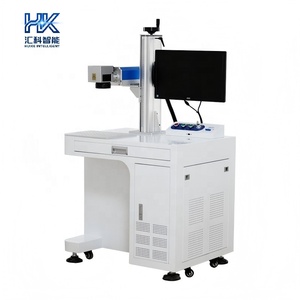
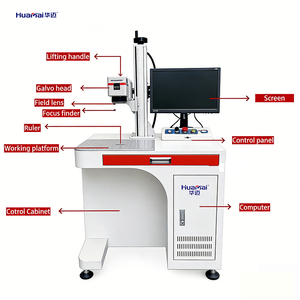
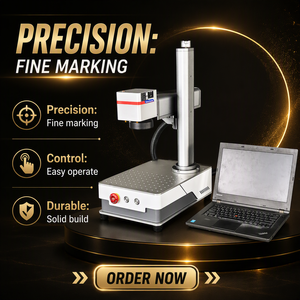
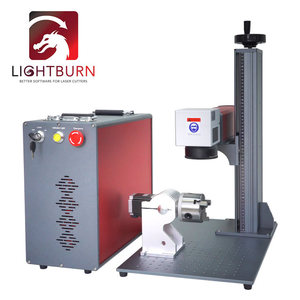
Establishing a dependable industrial laser marking framework requires more than off-the-shelf components. It demands deep photonic domain knowledge, stringent quality control, and decades of machinery engineering expertise.
Selecting an OEM laser marking factory impacts long-term operational costs, line uptime, and traceabilty compliance (ISO 9001, UID, GS1 DataMatrix standards). Established manufacturers differentiate themselves through in-house beam parameter optimization, proprietary software integration, robust galvo-scanning assemblies, and extended factory warranties (up to 3 years on specialized laser sources).
Built upon heavy-duty welded steel frames and stress-relieved gantries to mitigate thermal expansion and vibrational harmonics, ensuring sub-micron alignment across multi-shift operational cycles.
Direct partnership with leading laser engine developers (JPT MOPA, Raycus, MAX, and Coherent). Fiber laser sources deliver M² < 1.3 beam quality for razor-sharp micro-engraving.
Fully compliant with CDRH Class 1 and Class 2 safety protocols. Integrated interlocks, optical viewing windows, and automated fume extraction interfaces protect shop floor operators.
Seamless support for DXF, PLT, AI, and vector CAD files. Available K-Vision and auto-focus registration modules align preprinted workpieces dynamically without expensive mechanical jigs.
Factory-trained engineers provide remote diagnostic telemetry, rapid spare-parts deployment, and on-site operator training, minimizing mean time to repair (MTTR).
Solid-state air-cooled designs eliminate water chillers for systems up to 100W, drastically reducing kilowatt-hour power draw and ongoing maintenance downtime.
The global industrial marking landscape is transitioning from basic surface identification to ultra-precise, high-speed, structural micro-machining and traceable direct part marking (DPM).
Traditional Q-switched fiber lasers operate at fixed pulse durations (typically 100ns–120ns), limiting their ability to process heat-sensitive materials. Master Oscillator Power Amplifier (MOPA) architecture—exemplified by JPT M7 series engines—allows independent adjustment of pulse width (ranging from 2ns to 500ns) and pulse repetition frequency (1 kHz to 4000 kHz).
This flexibility enables manufacturers to achieve true high-contrast black marking on anodized aluminum, vivid color oxide marking on stainless steel, and damage-free etching on sensitive ABS, nylon, and polycarbonate polymers without structural melting or burring.
As medical device manufacturing, cosmetic packaging, and micro-electronics require finer mark resolution without thermal degradation, Ultraviolet (UV) laser markers are replacing thermal infrared systems. Operating at a 355nm wavelength, UV lasers utilize a "photochemical" process rather than a thermal one, breaking molecular bonds in the target material without generating heat-affected zones (HAZ). This allows zero-deformation marking on delicate glass, HDPE packaging, and silicon wafers.
The boundary between laser marking and laser deep engraving/cutting is blurring. High-power fiber laser platforms (100W, 200W, and 300W) equipped with high-speed galvo heads permit metal fabricators to execute deep cavity engraving into hardened tool steel, mold dies, and serial number branding on cast iron pipe networks in seconds—a process that previously required hours of CNC mill work.
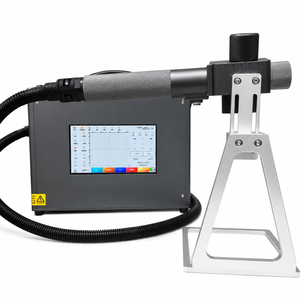
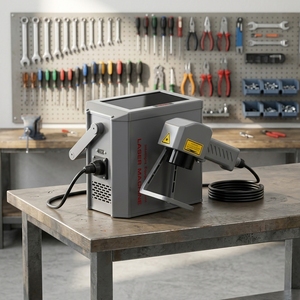
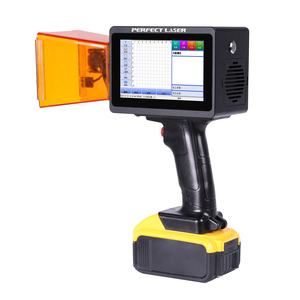
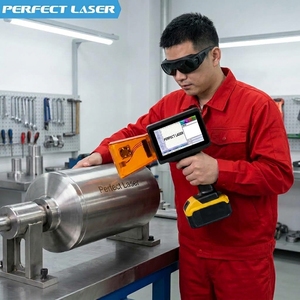
Industrial components such as large aerospace forgings, heavy vehicle chassis, and installed petroleum pipelines cannot be loaded onto traditional desktop enclosures. Ultra-compact, battery-operated handheld fiber laser markers (utilizing lithium-ion power packs and lightweight handheld scanning guns) bring industrial marking capabilities directly into shipyard docks, warehouses, and open-air construction sites.
| Laser Source Type | Wavelength | Primary Substrates | Key Advantage | Optimal Application |
|---|---|---|---|---|
| Q-Switched Fiber | 1064 nm | Metals, Opaque Plastics | Cost Efficiency & High Speed | Standard Part Numbers, Barcodes |
| MOPA Fiber (JPT M7) | 1064 nm | Anodized Al, Stainless, Plastics | Tunable Pulse (2ns-500ns) | Color Marking, Black Al Mark, No-HAZ |
| UV Laser | 355 nm | Glass, Cosmetic Resin, Cable Sheaths | Cold Processing, Zero Thermal Distortion | Medical Devices, Micro-Electronics |
| CO2 Laser | 10.6 μm | Wood, Acrylic, Leather, Glass, Paper | High Organic Absorption | Packaging, Architectural Models |
| High-Power Fiber (100W+) | 1064 nm | Steel Dies, Heavy Metal Castings | Rapid Material Removal Rate | Deep Mold Engraving, Rust Removal |
Procurement directors and factory managers are adopting holistic evaluation criteria when selecting OEM manufacturing partners. Low upfront machine costs no longer guarantee high profitability.
Procurement teams demand systems built on open architecture. Modular designs allow laser sources (e.g., swapping a 30W Raycus for a 100W JPT MOPA) or focal lenses to be upgraded in the field as production requirements evolve, extending machine capital lifecycle.
Modern production facilities require laser markers that interface via TCP/IP, Ethernet/IP, or PROFINET directly into factory Execution Systems. Automated serialization, dynamic QR code generation from ERP database queries, and remote logging are mandatory sourcing specifications.
Energy-intensive CO2 glass tubes and flashlamp-pumped systems are systematically phased out in favor of air-cooled solid-state laser diodes. Modern fiber systems yield up to 30% wall-plug electrical efficiency, drastically reducing factory carbon emissions.
Key technical and financial questions answered by industry experts to assist procurement teams in making informed capital equipment investments.
Raycus and MAX Photonics offer robust, highly cost-effective Q-switched fiber laser sources ideal for standard metal marking, steel tagging, and general barcode marking. JPT (especially the MOPA M7 series) provides premium beam stability, selectable pulse widths, and superior control for delicate plastics, high-frequency work, black marking on anodized aluminum, and color oxide marking on stainless steel.
For general surface marking, logos, 2D matrix codes, and thin metal engraving, a 20W or 30W fiber marker provides optimal balance between cost and throughput. For faster line speeds or light deep engraving, select a 50W or 70W system. For heavy metal die engraving, tool steel marking, or paint-stripping applications, 100W to 300W systems reduce cycle times by up to 70%.
Standard flat field (F-Theta) lenses require fixed focal distance. Auto-Focus systems use sensor telemetry or motorized Z-axes to find focal height automatically. 3D Dynamic Focus systems utilize a motorized expander lens synchronized with galvo mirrors to dynamically shift focal planes during scanning, enabling crisp marking across curved surfaces, spheres, stepped parts, and inclined planes without distortion.
Solid-state fiber laser markers are virtually maintenance-free with zero daily consumables. Unlike CO2 water-cooled systems or inkjets, there are no fluids, lamps, or filter belts to change routinely. Operating life for laser pump diodes exceeds 100,000 hours (over 10 years of continuous operation). Daily maintenance is restricted to keeping the protective optical lens clean from ambient dust using optical wipes.
Yes. Desktop and benchtop units can be reconfigured into split OEM modular heads. Scanning galvo heads can be mounted on automated gantry arms, index tables, or inline conveyor belts. Dedicated I/O signals allow PLC controllers to trigger marking pulses, switch templates, and read optical encoder line speeds in real time.
Industrial marking control software (such as EZCAD3 or proprietary KCAM platforms) natively reads vector graphics including DXF, PLT, AI, SVG, and DST. Raster formats such as BMP, JPG, and PNG are supported for halftone gray-scale photo etching on metals and stone substrates.
Whether you require standalone bench-top MOPA markers, handheld mobile units for field inspection, or custom high-power inline laser integration, our factory application engineers provide comprehensive sample testing, material feasibility reports, and worldwide logistics support.