Explore tier-1 fiber laser marking, cutting, and engraving systems built with Raycus, MAX, and JPT MOPA sources for precision manufacturing environments.
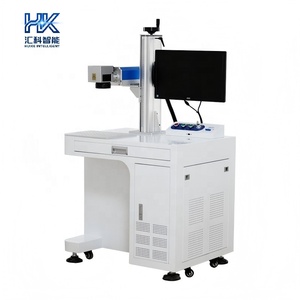
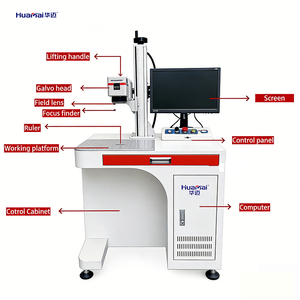
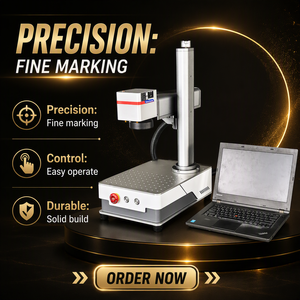
In the rapidly evolving landscape of advanced photonics and industrial automation, selecting the right partner among global fiber laser manufacturers requires looking far beyond initial capital expenditure. Modern industrial manufacturing demands rigorous beam quality standards, predictable duty-cycle stability, robust optical isolation, and seamless software integration. This whitepaper establishes a comprehensive benchmark for procurement directors, manufacturing engineers, and enterprise buyers evaluating high-performance fiber laser systems.
The foundation of any high-precision laser marking or micro-machining system lies within its oscillator design. When auditing manufacturers, evaluating their optical source engineering is critical:
Top-tier manufacturers differentiate their machinery through superior optical transfer efficiency. Key technical metrics to mandate in vendor specifications include:
Rooted in over four decades of precision mechanical engineering, US-built manufacturing standards, and rigorous ISO quality controls.
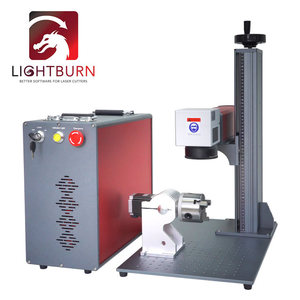
Engineered with stress-relieved steel gantry frames and precision-ground linear motion guides, preventing frame deflection and maintaining ±0.001" positional repeatability under 24/7 continuous production schedules.
Every laser machine undergoes rigorous burn-in protocols, power meter verification, and thermal lensing diagnostic testing. Direct factory engineering backup ensures rapid technical resolutions without intermediary delays.
Full international certification compliance including CE, FDA CDRH Class 1/Class 2 laser safety enclosure designs, ISO 9001 quality system adherence, and export-ready international voltage configurations (110V/220V/380V).
Understanding source performance metrics for targeted industrial applications.
| Laser Source Type | Pulse Duration | Frequency Range | Optimal Applications | Thermal Impact |
|---|---|---|---|---|
| Raycus / MAX Q-Switched | Fixed (100 - 120 ns) | 20 - 80 kHz | Metal deep engraving, tool steel coding, heavy industrial tagging | Moderate Heat Affected Zone (HAZ) |
| JPT MOPA M7 Series | Tunable (2 - 500 ns) | 1 - 4000 kHz | Color marking titanium, anodized black, delicate plastics, foil ablation | Minimal / Zero HAZ |
| Continuous Wave (CW) Fiber | Continuous Wave | 1 - 20 kHz (Modulated) | High-speed sheet metal laser cutting, heavy seam welding | Controlled Process Heat Zone |
| UV Cold Laser (355nm) | Ultra-Short (<15 ns) | 30 - 150 kHz | Cosmetic packaging, pharmaceutical glass, sensitive polymers | Zero Thermal Lensing |
As smart factories move toward Industry 4.0 standards, enterprise laser equipment procurement strategies are pivoting away from standalone machinery toward connected, intelligent photonics ecosystems. Procurement decision-makers must align equipment roadmaps with four major industry shifts over the next five years:
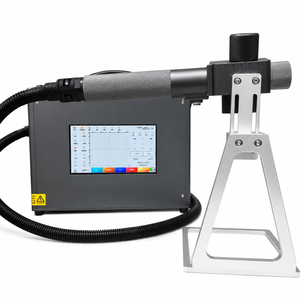
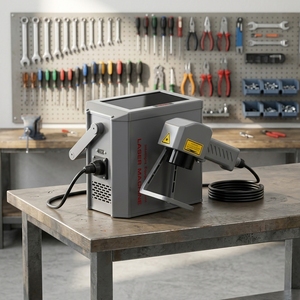
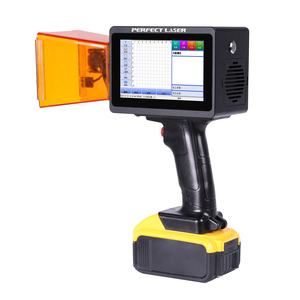
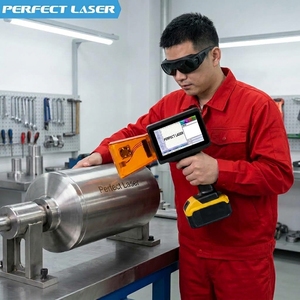
Traditional manufacturing required bringing parts to a fixed laser workstation. Emerging procurement trends show explosive growth in portable, high-power handheld fiber laser systems (20W to 50W) equipped with integrated lithium-ion power cells and ergonomic optical heads. These units empower aerospace repair teams, heavy machinery fabricators, and structural steel builders to perform permanent serial coding and VIN marking directly on massive assemblies in field environments.
Manual component alignment is a significant bottleneck in high-throughput production lines. Future-proof purchasing strategies require integrated machine vision cameras (such as K-Vision positioning systems). By capturing registration marks and edge profiles in real time, intelligent software automatically compensates for part distortion, rotational skew, and thermal expansion—ensuring 100% mark accuracy without custom mechanical clamping jigs.
While nanosecond fiber lasers dominate standard marking and heavy cutting, high-end electronics, medical device manufacturing, and semiconductor packaging are rapidly adopting picosecond and femtosecond fiber lasers. Delivering pulse durations in the ultra-short domain results in "cold ablation"—vaporizing material instantly before heat can transfer to surrounding structures, achieving sub-micron precision.
Enterprise sustainability mandates are forcing plant operations to evaluate electrical-to-optical wall-plug efficiency. Modern fiber laser architectures exceed 30% wall-plug efficiency—drastically reducing power consumption compared to legacy CO2 or YAG lasers. Furthermore, with solid-state diode lifetimes exceeding 100,000 hours without gas consumables or mirror alignments, long-term total cost of ownership (TCO) drops significantly.
Clear technical and commercial guidance for purchasing officers, engineers, and international importers.
Higher wattage translates directly to greater laser peak power density and faster processing speeds. A 20W or 30W fiber laser is ideal for surface marking, barcoding, and light engraving on metals and plastics. A 50W laser offers optimal balance for fast production marking and shallow metal cutting (0.2mm to 0.5mm brass/aluminum). A 100W MOPA laser delivers high-speed deep engraving, fast material ablation, and thin sheet metal cutting while drastically reducing cycle times in industrial lines.
Pulsed fiber laser markers (20W–100W) can cut thin metallic foils, shim stock, and thin sheet metals (typically up to 0.5mm–1.0mm) using multi-pass vector software strategies. However, for continuous heavy sheet metal fabrication (stainless steel, mild steel, aluminum above 1mm), dedicated Continuous Wave (CW) high-power FiberCELL laser cutting systems ranging from 1kW to 3kW are required.
JPT MOPA sources feature independently adjustable pulse width (2ns to 500ns) and frequency ranges up to 4000 kHz. This capability allows operators to perform damage-free black marking on anodized aluminum, vibrant color marking on titanium, and precise processing of delicate medical polymers. Standard Raycus and MAX Q-switched sources operate with a fixed pulse width (~100ns), making them cost-effective powerhouses for standard metal marking, but less adaptable for heat-sensitive materials.
Fiber laser systems are virtually maintenance-free solid-state devices with zero gas, dye, or lamp consumables. The laser diode source features an operational lifetime of up to 100,000 hours. The primary routine maintenance involves keeping the F-Theta field lens clean using optical wipe solution and maintaining adequate room temperature cooling for internal air-cooled heat sinks.
All exporter machinery is shipped in ISPM-15 compliant export-certified reinforced wooden crates with anti-vibration padding and moisture barrier vacuum sealing. Global technical support is delivered directly by certified engineers via remote desktop diagnostics, video commissioning support, full English CAD/CAM software documentation (KCAM compatibility), and rapid express dispatch of spare optical components.
Yes. We specialize in OEM/ODM collaborative manufacturing. We can configure specialized fiber laser heads with flying optical galvanometers, custom PLC I/O triggers, RS232/Ethernet TCP/IP communication protocols, and custom chassis enclosures tailored for automated conveyor systems and private-label distribution.
Connect with our senior application engineers to discuss material test cuts, receive tailored system configurations, or request an official international export quotation.