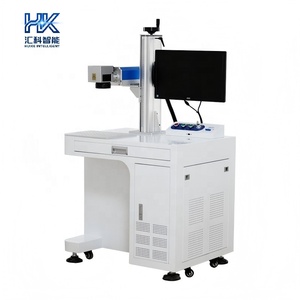
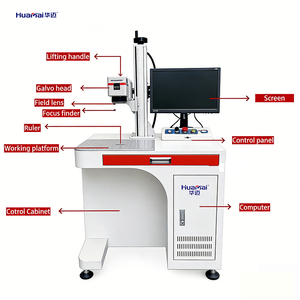
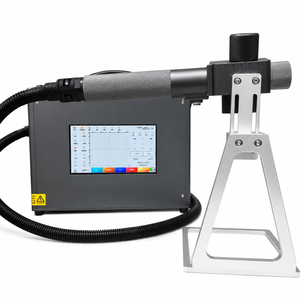
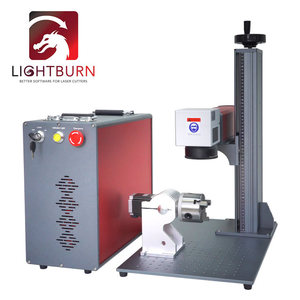
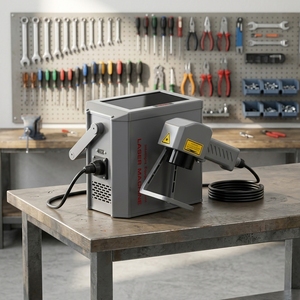
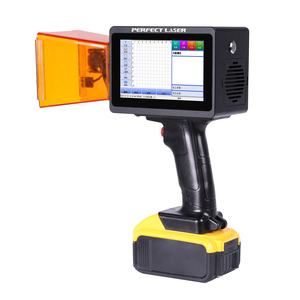
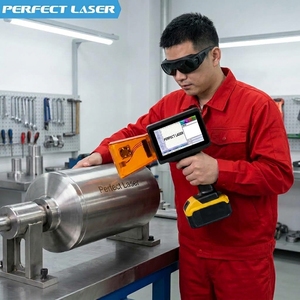
Explore our export-ready laser systems featuring ultra-precise beam optics, high-speed digital galvo scanners, and robust industrial enclosures built for round-the-clock factory floor performance.
As a leading Chinese manufacturer and global exporter of industrial UV laser machinery, we bridge the gap between cutting-edge optoelectronic R&D and cost-efficient scalable production.
By manufacturing laser frames, integrating tier-1 crystal oscillators (ND:YAG / ND:YVO4 third-harmonic generation), and assembling optical galvo heads in-house, we reduce production costs by 30% to 45% compared to Western integrators without compromising precision.
UV lasers are sensitive to optical contamination. All DPSS (Diode-Pumped Solid-State) UV cavity sealing, frequency tripling, and alignment take place inside certified Class 10,000 cleanrooms, preventing optical degradation and burnout.
Every system shipped out of China holds full CE, FDA Accession Numbers, and ISO9001 certifications. Machinery features interlocked safety enclosures, dual-channel safety relays, and active temperature chillers to ensure 24/7 continuous industrial operation.
Why UV lasers outperform Fiber and CO2 lasers when dealing with delicate polymers, glass, silicon wafers, and high-density PCBs.
Industrial laser processing is broadly split into two physical mechanisms: photothermal processing (used by IR Fiber and CO2 lasers) and photochemical processing (achieved by short-wavelength 355nm UV lasers). While thermal lasers melt, vaporize, or burn material to create marks or cuts, UV lasers utilize extremely high photon energy to directly break the chemical molecular bonds inside the material.
This photochemical reaction is known as Photolysis or "Cold Processing". Because the thermal energy transfer is virtually zero, the Heat-Affected Zone (HAZ) surrounding the laser spot is micro-thin. This eliminates peripheral charring, yellowing, material deformation, micro-cracking, and mechanical stress.
| Laser Source Wavelength | Primary Processing Method | Heat-Affected Zone (HAZ) | Focal Spot Size | Best Suited Materials |
|---|---|---|---|---|
| 355nm UV Laser (DPSS) | Photochemical Bond Breaking ("Cold") | Negligible (< 5 µm) | Ultra-Fine (~15–20 µm) | Plastics, HDPE, Glass, PCB/FPC, Ceramics, Silicon |
| 1064nm Fiber Laser | Photothermal Melting & Vaporization | Moderate (30–100 µm) | Standard (~30–50 µm) | Metals (Steel, Aluminum, Brass), Opaque Plastics |
| 10.6µm CO2 Laser | Thermal Surface Burning / Melting | High (> 150 µm) | Large (~100–150 µm) | Wood, Acrylic, Leather, Organic Packaging, Glass |
Key technological shifts global buyers must analyze before investing in next-generation marking, engraving, and micro-machining production lines.
Historically, 355nm UV lasers required bulky, external water chillers with fluid lines that introduced vibration and high electrical consumption. The industry is rapidly shifting toward high-efficiency air-cooled UV laser generators (ranging from 3W to 10W). These lower operational electricity footprint, shrink machine physical dimensions, and drastically drop shipping freight costs.
While 3W and 5W UV lasers remain the standard for cosmetic packaging marking and serial coding, procurement trends show a massive spike in demand for 15W, 20W, and 30W DPSS UV lasers. High power allows factory lines to achieve high-speed FPC (Flexible Printed Circuit) depanelization, wafer scribing, and sapphire glass cutting without thermal stress.
Modern automated factories no longer rely on manual jig positioning. Next-generation UV export models feature integrated coaxial or offset CCD camera systems (Smart K-Vision alignment) that automatically calculate material offset, rotative skew, and stretch—enabling micron-level automated marking on small components like medical catheters, IC chips, and micro-relays.
Direct technical clarity on international warranty, crystal maintenance, material compatibility, and export shipping procedures.
Top-tier Chinese UV lasers utilize premium pump diodes rated for up to 20,000 to 30,000 operating hours. However, the critical component in a UV laser is the LBO/BBO non-linear third-harmonic generation (THG) crystal, which converts 1064nm light to 355nm. Premium laser sources include auto-crystal shift technology, which periodically moves the beam to a fresh crystal spot, extending the optical head lifespans beyond 4 to 5 years under 24/7 production conditions.
Yes. UV lasers are extremely versatile. While Fiber lasers are optimized for metal engraving and CO2 for organic materials, a 355nm UV laser can mark virtually all engineering plastics (ABS, PVC, PE, HDPE, PTFE, Polycarbonate), glass, ceramics, silicon, and precious metals with ultra-high contrast without micro-cracks or melting.
Routine preventive maintenance is minimal: keep the external field lens clean using optical-grade wipes and isopropyl alcohol, ensure ambient room temperatures stay between 18°C and 26°C, replace water in liquid chillers every 3 months (using distilled water only), and clean air dust filters monthly.
Leading Chinese OEM factories supply modular "plug-and-play" spare parts. All systems undergo a 72-hour continuous stress test before packing in international ISPM-15 compliant wooden cases. Remote diagnostic support via TeamViewer/Zoom, full software parameter libraries (EZCAD3 / KCAM), and express air-freight spare part replacements guarantee uninterrupted factory uptime.
Choose Air-Cooled UV systems for portable setups, compact desktop marking, and lower wattage applications (3W–5W) where space and mobility are priorities. Choose Water-Cooled UV systems for high-wattage (10W+), continuous 24/7 industrial production lines, or hot ambient factory floor environments where thermal stability is essential for maintaining ±1% laser power consistency.
Connect with our senior laser application engineers today. Request technical datasheets, material test samples, OEM white-label pricing, and customized export quotes tailored to your business needs.
Get Catalog