Explore our flagship lineup of industrial-grade laser marking and engraving platforms engineered in top-tier Chinese manufacturing hubs. Every system integrates premium optical components, high-speed digital galvos, and advanced control software tailored for high-duty cycle factory environments.
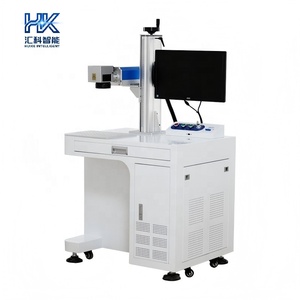
Industrial high-power fiber laser system supporting JPT, Raycus, and MAX sources. Built for deep metal engraving, fast annealing, and high-speed production line integration.
Get Catalog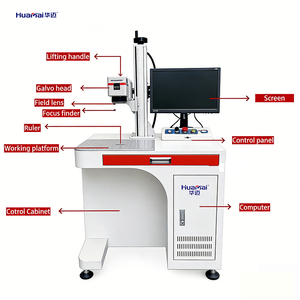
Precision pulse-width adjustable MOPA technology enabling vibrant stainless steel color marking, dark anodized aluminum engraving, and delicate plastic coding.
Get Catalog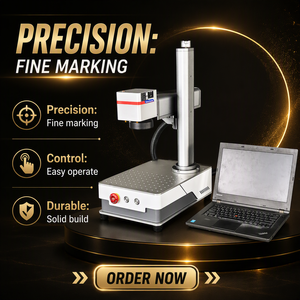
Space-saving, ultra-lightweight workstation designed for jewelry, surgical instruments, custom hardware, and small electronics manufacturing facilities.
Get Catalog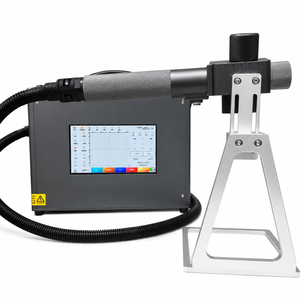
Ergonomic handheld scan head designed for direct part marking (DPM) on heavy machinery, large castings, pipes, and immovable industrial components.
Get Catalog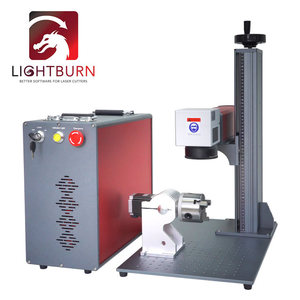
High-end master oscillator power amplifier configuration featuring air cooling, wide field F-theta lens, and rotary axis attachment for cylindrical workpieces.
Get Catalog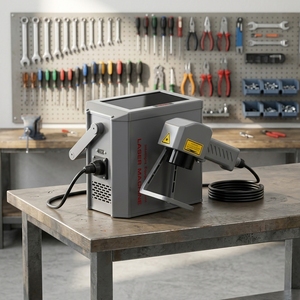
Ultraviolet cold-light laser marker ideal for heat-sensitive plastics, glass micro-engraving, medical vials, and luxury cosmetic container serialization.
Get Catalog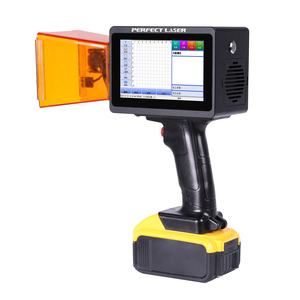
Self-powered portable laser marking gun engineered for outdoor steel yards, pipeline installation sites, transport hubs, and field operations.
Get Catalog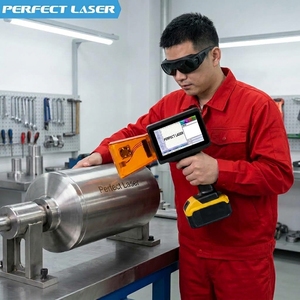
All-in-one industrial coding engine tailored for marking logos, 2D matrix codes, and serial numbers across wood, leather, polymers, and alloy surfaces.
Get CatalogAs global manufacturing shifts toward automated direct part marking (DPM), traceabilty compliance (ISO 9001, UDI regulations), and micro-machining, China has evolved into the world's primary ecosystem for industrial laser equipment engineering. However, navigating the vendor landscape in industrial clusters such as Wuhan (Optical Valley), Shenzhen (Guangdong), and Jinan (Shandong) requires strict procurement criteria based on optical precision, mechanical stability, and component validation.
The true cost of ownership (TCO) of a laser marking system is determined by optical loss factor, galvo drift specs over 24-hour continuous operation, and source degradation rates—not merely the initial CIF quote. Top tier OEM suppliers integrate double-shielded fiber armoring and high-speed digital galvos with thermal compensation algorithms.
Utilizing ytterbium-doped optical fibers pumped by semiconductor diodes (1064nm wavelength). Outstanding beam quality ($M^2 < 1.3$), zero optical maintenance, and 100,000-hour MTBF. Ideal for all metallic substrates and high-density engineering polymers.
Master Oscillator Power Amplifier technology allows independent tuning of pulse width (1ns to 500ns) and frequency (1kHz to 4000kHz). Crucial for high-contrast plastic marking without burning and oxide-layer color engraving on titanium and stainless steel.
Frequency-tripled ultraviolet lasers deliver short wavelength energy that directly breaks molecular bonds rather than relying on thermal melting. Essential for ultra-clean glass micro-cracking, pharmaceutical blister packs, and flame-retardant resins.
When selecting a laser engraver factory, procurement engineers must evaluate the core optical architecture based on substrate physics and throughput parameters. Below is a whitepaper-level matrix detailing the primary engine variants:
| Technology Variant | Wavelength | Pulse Duration | Primary Substrates | Thermal Impact Zone | Optimal Industrial Use |
|---|---|---|---|---|---|
| Q-Switched Fiber | 1064 nm | 100 - 120 ns (Fixed) | Steel, Aluminum, Brass, Hard Plastics | Moderate Thermal Effect | High-speed barcode, serial numbers, tool etching |
| JPT MOPA (M7/E2) | 1064 nm | 2 - 500 ns (Adjustable) | Stainless, Anodized Al, Sensitive ABS/PC | Micro-Controlled / Negligible | Color marking, black anodized marking, peel-foil |
| UV DPSS Cold Laser | 355 nm | < 15 ns | Glass, Quartz, Silicon, HDPE, PE, Ceramics | Near Zero (Photo-Ablation) | Medical packaging, semiconductor wafers, cosmetics |
| RF Metal CO2 Tube | 10.6 µm / 9.3 µm | Continuous / Modulated | Wood, Acrylic, Leather, Organic Textiles, Glass | Substrate-Dependent | Large format non-metal cutting, leather etching |
The landscape of laser equipment procurement from China is undergoing a massive paradigm shift. Buyers are no longer purchasing standalone hardware; they are integrating turnkey cyber-physical production modules. Key market developments include:
Elimination of bulky water chillers in favor of advanced heat-pipe air-cooling systems. New 100W to 200W air-cooled fiber engines reduce system footprint by 40% and power consumption by 35%, cutting operational overhead for continuous production facilities.
Integration of 4K coaxial vision cameras directly into the scan head assembly. Machine learning algorithms automatically identify part geometry, orientation, and surface curvature, adjusting focal height (3D dynamic focus) in under 10 milliseconds without mechanical jigs.
High-density lithium-iron-phosphate (LiFePO4) battery packs combined with lightweight 1.2kg handheld galvo heads. Enables field operators in aerospace, shipbuilding, and infrastructure to apply permanent codes on-site without trailing power lines.
To ensure long-term ROI and prevent supply chain disruption, international buyers must perform rigorous due diligence before finalizing purchase contracts with Chinese suppliers. Our engineering team recommends evaluating prospective OEM partners against four key audit pillars:
1. Optical Cleanroom Assembly: Verify if galvo heads and beam expanders are mounted within Class 10,000 dust-free cleanrooms to prevent particulate contamination on lens coatings.
2. Continuous Burn-In Protocols: Premier factories subject every laser source to a 72-hour continuous power-loop aging test and galvo drift monitoring across varying ambient temperatures (15°C to 40°C).
3. Electromagnetic Compatibility (EMC): Ensure drive electronics are equipped with industrial-grade EMI filtering to prevent high-frequency noise interference from adjacent CNC machinery or welding equipment.
4. Direct Software Architecture: Confirm native compatibility with international industry-standard control suites including LightBurn, EZCAD3 (64-bit), and automated PLC protocol stacks (Modbus, TCP/IP, EtherCAT).
By partnering directly with verified OEM manufacturers rather than intermediary trading firms, buyers gain direct access to customized optical focal lengths (F-theta lenses from 63mm to 420mm), tailored enclosure IP ratings (IP54 to IP65), and direct engineer-to-engineer technical support protocols.
Clear technical insights addressing essential operational, logistical, and maintenance questions raised by industrial purchasing managers.
Raycus and MAX are premier domestic manufacturers of robust Q-switched and continuous wave (CW) fiber lasers known for high wall-plug efficiency, high pulse energy, and exceptional durability in general metal marking. JPT specializes in premium MOPA architecture (M7 series), providing fine-tuned pulse width control (2ns-500ns) required for dark aluminum anodizing, color marking on stainless steel, and zero-burn processing of sensitive polymers.
Air-cooled systems utilize internal high-CFM heatsink fans and solid-state cooling channels. They are ideal for laser powers up to 100W (fiber) or 5W (UV), offering zero water maintenance, lower electricity consumption, and compact footprints. Water-cooled systems (chillers) are mandatory for ultra-high-power fiber systems (>200W) or high-wattage CO2 glass/metal tubes operating continuous 24/7 heavy duty shifts in extreme ambient temperatures.
Industrial laser equipment imported into North America or Europe must comply with strict optical safety standards. Essential requirements include CE Mark (EMC Directive 2014/30/EU and Low Voltage Directive 2014/35/EU), FDA CDRH Accession Numbers for laser devices entering the United States, and IEC 60825-1 classification. Fully enclosed systems with interlock switches achieve Class 1 safety, whereas open-bed galvo systems operate under Class 4 protocols requiring safety eyewear.
Yes. Modern Chinese laser markers feature robust I/O extension ports, RS232/RS485 serial communication, and TCP/IP Ethernet networking. They can be triggered by external photoelectric sensors on conveyor belts, communicate with robotic arms (Fanuc, KUKA, ABB), and sync real-time serial numbers directly from factory ERP/MES databases.
In solid-state fiber laser systems, optical components have no inherent wear limit. The F-theta protective window glass should be cleaned weekly using optical-grade isopropyl alcohol and lens paper. With proper dust extraction and clean air blowers, protective windows typically last 12 to 24 months, while the core galvo mirrors and main F-theta lens can operate indefinitely without performance loss.
Get full technical datasheets, optical beam profile reports, factory audit documentation, and wholesale FOB/CIF pricing directly from our engineering team.