Engineered for Global Manufacturing Standards: High Precision, Extended MTBF Diode Lifespan & Rapid ROI
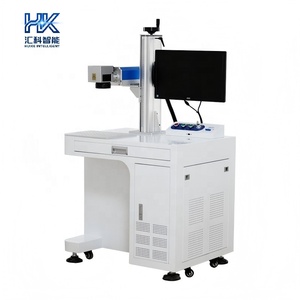
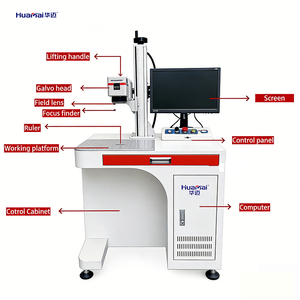
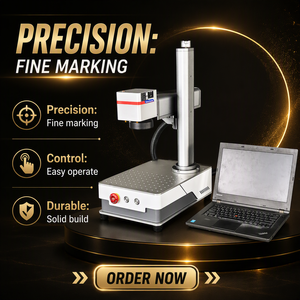
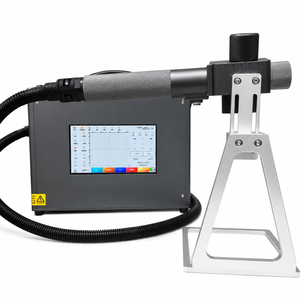
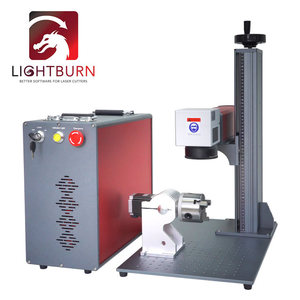
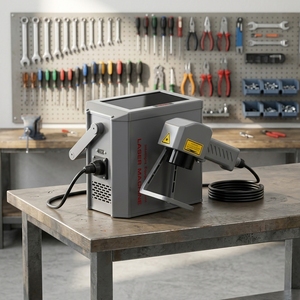
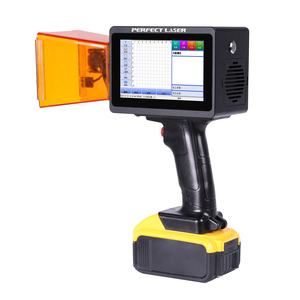
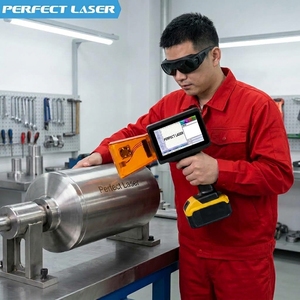
As modern global manufacturing demands tighter tolerances, shorter production cycles, and seamless automated integration, selecting a premier CNC laser manufacturer in China requires rigorous evaluation beyond baseline equipment pricing. Top-tier Chinese CNC laser exporters have evolved from assembly-focused operations into fully vertically integrated optical and mechanical engineering centers. Grounded in principles seen across top global machine builders—such as heavy-gauge stress-relieved welded frames, precision optical alignment, and direct factory technical support—leading exporters deliver reliable, continuous 24/7 manufacturing equipment to worldwide markets.
Our manufacturing philosophy integrates strict quality assurance protocols at every stage of the fabrication cycle. Frame construction begins with high-tensile structural steel beds that undergo high-temperature annealing at 600°C to eliminate internal mechanical stress. This ensures long-term structural stability and prevents bed deformation over decades of high-speed acceleration. Precision dynamic balance tests, combined with laser interferometer positioning measurement, guarantee linear accuracy within ±0.001 mm across extended work envelopes.
Every system leaving the manufacturing facility undergoes a mandatory 72-hour continuous burn-in test alongside full optical beam diagnostic profiling.
Utilizing high-precision optical alignment tools, beam divergence is constrained to $M^2 < 1.3$, ensuring maximum power density and minimal heat-affected zones (HAZ).
Equipped with globally compliant electrical systems (CE / UL / FDA standard wiring), Schneider electronics, and genuine Raycus, MAX, or JPT fiber laser engines.
Fully enclosed laser processing platforms featuring interlocked safety glass, OD6+ protective windows, and integrated multi-point fume extraction ports.
Factory-certified engineers provide direct remote desktop optical diagnostics, parameter file optimization, and overseas spare parts dispatch within 24 hours.
The global procurement landscape for industrial CNC laser machinery is shifting rapidly from pure hardware acquisition toward evaluating holistic Total Cost of Ownership (TCO), flexible multi-wavelength integration, and smart automated factory compatibility. Modern procurement directors must look beyond static equipment costs to analyze operating efficiency, wall-plug electrical efficiency, assist gas consumption, and software ecosystem compatibility.
Industrial users are shifting from traditional Q-switched fiber lasers to Master Oscillator Power Amplifier (MOPA) systems. MOPA technology grants independent pulse duration (ranging from 2 ns to 500 ns) and frequency control, allowing precise color marking on stainless steel, dark marking on anodized aluminum, and zero-burn processing on sensitive polymers.
Manual material registration is being replaced by integrated CCD machine vision systems (such as K-Vision alignment technologies). High-resolution cameras capture fiducial marks on preprinted substrates or complex cast components, auto-correcting gantry offsets, rotation, and linear stretching in milliseconds without requiring manual mechanical jigs.
Modern job shops prefer dual-source systems (combining CO2 and Fiber optics on a single movement gantry) or automated exchange tables. This setup permits immediate transitions between sheet metal brackets, acrylic panels, wooden housings, and foam packaging without changing machine platforms.
To assist procurement specialists in selecting the exact optical laser engine for their operational requirements, the technical comparison table below details baseline material responses and operational metrics:
| Laser Source Type | Typical Wavelength | Primary Target Substrates | Edge Quality & Thermal Impact | Maintenance & Diode Lifespan |
|---|---|---|---|---|
| Standard Continuous Fiber | 1064 nm | Carbon Steel, Stainless, Brass, Aluminum | High speed; narrow kerf; localized heat zone | 100,000 Hours; Zero optical maintenance |
| MOPA Fiber (Adjustable Pulse) | 1064 nm | Stainless, Anodized Al, ABS, Medical Polymers | Zero surface degradation; high contrast marking | 100,000 Hours; Air-cooled stability |
| UV Cold Laser Engine | 355 nm | Glass, Cosmetic Packaging, Flame-Resistant Resin | Photochemical "cold" processing; zero HAZ | 20,000 - 30,000 Hours; Precision sealed optics |
| Super-Pulsed CO2 Source | 10,600 nm | Acrylic, Hardwood, Leather, PE/PU Foam, Textiles | Flame-polished acrylic edges; clean wood kerf | 15,000 - 20,000 Hours; Re-gasable tube design |
Over the coming decade, CNC laser engineering will be defined by five core technological advancements: ultra-high-power density sources, AI-assisted real-time kerf monitoring, dynamic 3D galvo scanhead expansion, green manufacturing energy efficiency, and digital-twin automation integration.
While 1kW to 3kW fiber platforms dominated sheet metal processing over the last decade, advancements in optical fiber coupling have pushed industrial cutting platforms into the 12kW to 60kW realm. In high-power marking and surface texturing, single-mode lasers with peak powers exceeding 500W enable high-speed surface functionalization, hydrophobic micro-structuring, and paint removal on automated marine and aerospace assembly lines.
Next-generation Chinese CNC laser systems incorporate real-time optical sensors inside the cutting head and galvo block. Infrared thermal sensors monitor protective mirror temperatures, automatically pausing operation before thermal lens distortion occurs. Simultaneously, AI-driven process controllers analyze plasma plume luminosity to auto-adjust feed rates, assist gas pressure (Nitrogen vs. Oxygen), and laser pulse frequency during real-time cutting, eliminating dross formation on variable-thickness metal sheets.
Flat 2D surface laser processing is rapidly being superseded by dynamic 3D galvo heads equipped with high-speed motorized focal lenses. These systems automatically adjust focal height across complex curved molds, automotive interior components, and tubular structural frames up to a vertical depth of $\pm 50\text{ mm}$ without requiring multi-axis robotic arm articulation.
Electrical-to-optical wall-plug efficiency in modern fiber laser sources now exceeds 35%-40%, significantly lower than legacy CO2 systems (which average 10%-15%). Furthermore, automated gas mixing valves and high-pressure air-assist cutting technologies reduce expensive bottled Nitrogen consumption by up to 60%, allowing factories to utilize high-pressure oil-free compressed air for clean-edge stainless steel processing up to 4 mm thickness.
Essential insights for international sourcing managers, factory automation engineers, and procurement teams evaluating Chinese CNC laser exporters.
Whether expanding a regional contract job shop, upgrading automotive marking lines, or integrating automated high-power sheet metal fiber cutters, partnering with a certified Chinese CNC laser exporter delivers world-class precision, verified engineering standards, and unmatched return on investment.