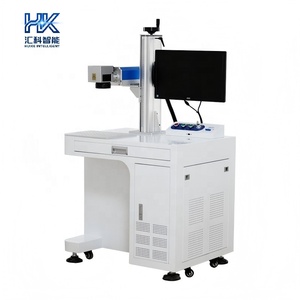
Fiber Laser Marking Machines JPT RAYCUS MAX 100w 200w 300w on Metal Plastic
- Power: 20W / 50W / 100W / 300W
- Sources: JPT / Raycus / Maxphotonics
- Substrates: Metals, Alloys, Engineered Plastics
A comprehensive analysis of dynamic focal engineering, MOPA fiber lasers, UV fine-processing systems, and OEM procurement frameworks for industrial B2B buyers.
In modern high-precision manufacturing, traditional 2D flat-bed marking is no longer sufficient for complex curved surfaces, inclined stepped molds, or multi-depth structural metal parts. Top Chinese 3D laser exporters leverage dynamic optical focus systems (combining dynamic beam expanders, 3-axis galvo scanning, and high-speed DSP processing cards) to achieve uniform spot sizes across intricate 3D geometries. This whitepaper serves as an authoritative buyer's manual for evaluating source stability, optical fidelity, thermal distortion metrics, and lifetime total cost of ownership (TCO).
Factory-direct industrial marking, engraving, and coding equipment engineered for global deployment.
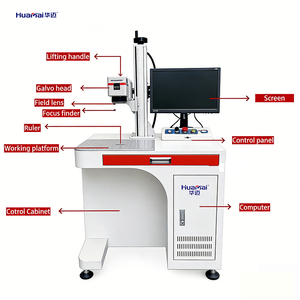
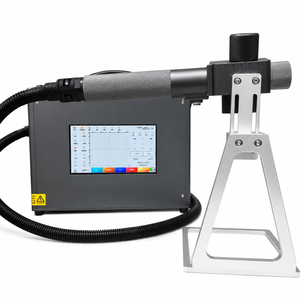
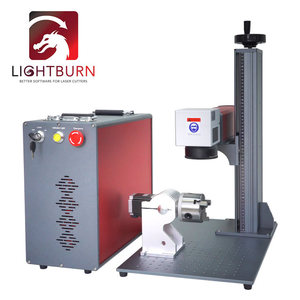
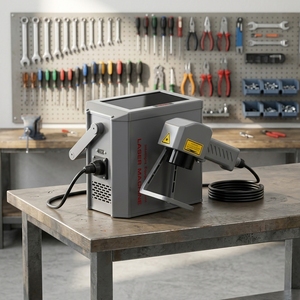
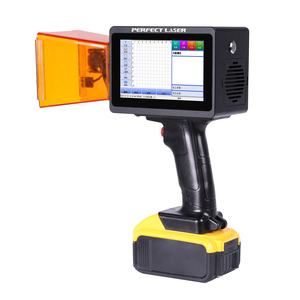
Understanding the optical physics and z-axis dynamic motor control that unlocks multi-layer relief carving, spherical engraving, and uneven surface marking.
Unlike standard F-Theta flat lenses that possess a fixed focal plane, true 3D laser systems employ a pre-focused optical optical expander powered by a linear voice coil motor. By dynamically shifting the dynamic expanding lens along the Z-axis in real-time synchronicity with X/Y galvo mirrors, the focal spot remains perfectly focused across curved surfaces up to ±60mm height differentials.
Industrial software packages (such as 3D-KCAM or specialized EzCad3D drivers) import STL, STEP, and IGES CAD files. The software converts 3D geometric meshes into mathematical slice layers, adjusting energy density, laser frequency, and scanning overlap automatically to eliminate edge optical distortion or laser energy fading on steep inclines.
By executing multi-pass ablation with dynamic layer removal, 3D fiber laser machines produce deep metal engravings in coin dies, injection molds, and embossing tools. High-power MOPA fiber sources (100W to 300W) remove micro-scale metal volumes layer-by-layer without thermal warping or tool chatter associated with CNC milling.
| Performance Dimension | Standard 2D Flat Laser | 2.5D Motorized Z-Step | True 3D Dynamic Focus Galvo |
|---|---|---|---|
| Focal Depth Range | Fixed Focal Plane (±0.5mm) | Stepped Axis (Manual Shift) | Dynamic Real-Time (±40mm to ±90mm) |
| Curved/Sloped Surface Marking | Distorted Edges / Out of Focus | Requires Flat Step Operations | Uniform Spot Size & Energy Density |
| Deep Relief Engraving Speed | Not Applicable | Slow (Mechanical Z-Movement) | High-Speed (Voice Coil Galvo Z-Axis) |
| 3D File Import Support | DXF, PLT, AI Vector Only | 2D Vectors with Z-Layering | STL, STEP, IGES 3D Mesh Surfaces |
| Spot Deformation Factor | High (>35% spot elongation at edge) | Medium (>20% at height bounds) | Minimal (<3% Constant Focus Spot) |
Key technological shifts shaping global purchasing behavior and supply chain strategies for industrial laser buyers.
The industry is rapidly shifting away from conventional Q-switched fiber lasers to Master Oscillator Power Amplifier (MOPA) architectures. With pulse durations adjustable from 2ns to 500ns, industrial buyers achieve high-contrast black marking on anodized aluminum, brilliant color marking on titanium/stainless steel, and damage-free laser coding on sensitive thermal polymers.
As consumer electronics, medical packaging, and cosmetic containers transition toward fluoropolymers and ultra-thin glass, 355nm UV lasers have become indispensable. UV photons directly break chemical molecular bonds rather than melting material via thermal radiation, delivering burr-free, zero-heat-affected zone (HAZ) markings.
Global procurement directives prioritize labor reduction. Modern 3D laser exporters integrate coaxial camera alignment (CCD vision) alongside 3D distance-sensing auto-focus sensors. The system identifies randomly positioned parts on conveyor belts, automatically calculates 3D height profiles, and executes targeted laser marking without rigid mechanical jigs.
When selecting a Chinese manufacturing partner, verify whether their laser source sourcing includes official direct tier-1 warranties from manufacturers like JPT, Raycus, or Maxphotonics. Premium exporters provide fully certified optical power report cards, beam quality (M² < 1.3) measurements, and CE/FDA compliant electrical safety enclosures with dual-channel safety interlocks.
Combining four decades of industrial machine-building heritage with state-of-the-art optical engineering, rigorous quality assurance, and direct global technician support.
Every laser source and galvo head assembly undergoes a mandatory 72-hour full-power stress test prior to dispatch. Power stability is measured using Ophir thermal power meters to guarantee laser fluctuation remains strictly under ±1% across extended multi-shift manufacturing cycles.
Whether your application requires specialized telecentric F-theta lenses for zero optical distortion, custom rotary chucks for cylindrical pipe engraving, or automated dual-table shuttles to eliminate spindle downtime, engineering teams build tailored optical workstations matching exact CAD/CAM parameters.
Overseas buyers benefit from English-native technical support, remote diagnostic software calibration, detailed video operational documentation, and stocked spare-part warehouses. Standard industrial components, labeled wiring schematics, and modular optics ensure minimal mean time to repair (MTTR).
Technical solutions and commercial answers for equipment procurement officers, process engineers, and factory managers.
Raycus and MAX are highly robust, industry-standard CW and Q-switched laser sources renowned for exceptional cost-efficiency, high peak power, and bulletproof reliability in deep metal engraving and standard marking. JPT (particularly the M7 and M8 MOPA series) offers independently adjustable pulse widths (2ns to 500ns) and pulse frequencies (up to 4000kHz). JPT MOPA is specifically engineered for high-contrast color marking on stainless steel, dark marking on anodized aluminum, and delicate non-burning plastic marking.
A 3D laser marking machine utilizes a dynamic Z-axis optical beam expansion lens placed in front of the X/Y galvo mirrors. Driven by a fast voice coil motor, the system dynamically shifts the focal length back and forth in real-time according to the 3D surface model imported into the control software. This maintains a constant focal spot diameter and power density across sloped, cylindrical, spherical, or multi-tiered surfaces up to ±60mm or ±90mm in height variation.
Our laser systems fully support industrial standard vector formats including DXF, PLT, AI, SVG, and BMP/JPG raster graphics. For 3D surface mapping and deep 3D relief carving, systems support 3D mesh files such as STL, STEP, and IGES. Software compatibility includes EzCad2, EzCad3, KCAM, and Windows-based controls with multi-language UI support.
All exported machinery is packed in export-grade, fumigation-free wooden crates featuring internal vacuum moisture-proof wrapping and anti-vibration shock absorbers. Equipment holds CE certification, FDA access registration, and ISO9001 quality system credentials. We offer flexible Incoterms including FOB, CIF, DDU, and DDP (Delivered Duty Paid) to streamline customs clearance for overseas manufacturing facilities.
Fiber lasers are solid-state lasers requiring zero optical alignment, zero consumable gases, and virtually zero routine maintenance. The primary maintenance protocol involves periodically inspecting and cleaning the outer protective optical glass of the F-Theta lens using isopropyl alcohol and lint-free optical wipes, as well as keeping the air-cooling intake filters clear of shop dust.
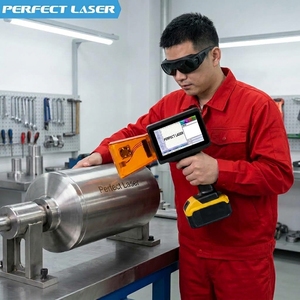
Yes. Handheld laser markers designed with high-capacity rechargeable lithium-ion battery packs and compact scan heads are engineered for field applications such as pipe marking, structural beam coding, and heavy machinery serializing. Operators must wear certified Class 4 laser safety goggles matching the wavelength (1064nm for fiber, 355nm for UV) during all outdoor operations.
Send your material samples, 3D CAD files, or production throughput targets directly to our application engineering team. Receive a comprehensive technical cut/mark report, edge quality photos, and a custom OEM price quotation within 24 hours.