High-performance laser marking, engraving, and fine cutting machinery engineered for multi-shift manufacturing reliability and sub-micron repeatability.
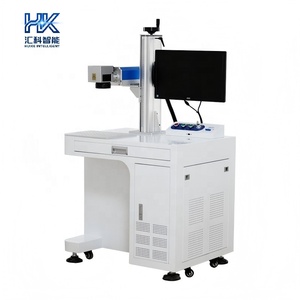
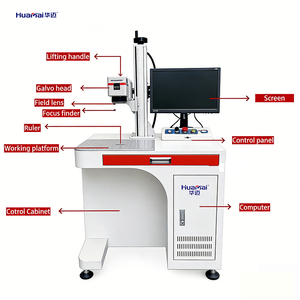
The global precision laser market has undergone a structural transformation. Industrial procurement teams no longer evaluate laser suppliers solely on nominal laser power (Watts) or upfront equipment cost. Instead, modern manufacturing systems require rigorous validation of beam quality ($M^2$), thermal expansion mitigation, galvo scanner dynamic drift, software interoperability, and long-term Total Cost of Ownership (TCO).
This whitepaper provides an objective evaluation framework for identifying the top precision laser suppliers globally. Whether procuring localized fiber marking units, ultra-fast UV cold-processing equipment, or large-format continuous CO2 laser cutting engines, industrial buyers must align system architecture with specific material interactions. Superior suppliers maintain vertical integration across motion mechanics, optical beam delivery, and machine vision alignment.
Core Procurement Metric: Evaluating information gain across supplier specifications reveals that beam stability ($\Delta P/P < 1.5\%$) and gantry rigidity are 400% more critical to part-to-part consistency than peak wattage alone in sub-millimeter precision applications.
To establish a definitive ranking of industrial laser manufacturers and component suppliers, our senior optical engineering panel assessed global suppliers against five technical metrics:
1. Optical Beam Quality and Diode Stability: Premium suppliers integrate top-tier fiber sources (JPT MOPA, Raycus, MAX Photonics, IPG) or proprietary super-pulsed CO2 engines. Lower-tier suppliers often suffer from diode power degradation exceeding 8% annually, causing inconsistent mark depth and kerf width drift.
2. Structural Frame Rigidity & Motion Control: Industrial lasers operating at accelerations of 1.5G to 3G demand stress-relieved, fully welded steel gantries. Precision ground ball screws and closed-loop digital AC servomotors ensure positioning repeatability down to $\pm 0.001''$, eliminating step loss during high-speed raster engraving or fine sheet metal cutting.
3. Vision & Software Integration (K-Vision Architecture): Automated component alignment via high-resolution camera registration systems (such as K-Vision) allows real-time compensation for thermal material expansion, pre-printed graphic skew, and angular misalignment without manual jig fixturing.
4. Environmental Safety & Enclosure Standards: Leading suppliers offer certified Class 2 fully enclosed work cells alongside open-bed Class 4 platforms equipped with interlocked safety circuits, high-volume particulate filtration systems, and laser safety glass compliant with international ANSI Z136.1 standards.
5. Comprehensive Lifecycle & Factory Warranty Support: Reliable manufacturers offer direct factory engineering support, remote desktop diagnostic capabilities, and guaranteed spare parts availability, backed by minimum 3-year warranty coverage on primary laser sources.
Selecting the optimal precision laser technology requires evaluating material absorption spectrums, pulse durations, and thermal heat-affected zones (HAZ). The matrix below illustrates the performance envelope of core industrial laser types offered by market-leading suppliers:
| Laser Source Type | Wavelength | Pulse Duration | Primary Substrates | Optimal Industrial Application |
|---|---|---|---|---|
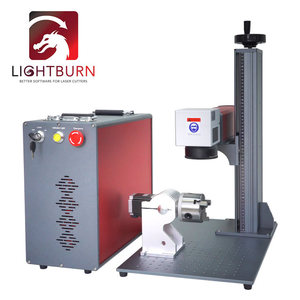
| Standard Q-Switched Fiber | 1064 nm | 100 – 120 ns | Mild Steel, Stainless, Brass, Hard Plastics | High-speed industrial serial coding, part identification, barcode marking. |
| MOPA Fiber (JPT M7 / M8) | 1064 nm | 2 – 500 ns (Tunable) | Aluminum, Stainless Steel, Titanium, ABS | Black marking on anodized aluminum, vibrant color marking, thin foil cutting. |
| UV Cold Laser | 355 nm | < 15 ns | HDPE, Silicone, Glass, Delicate Polymers | Damage-free medical device marking, cosmetic packaging, micro-electronics. |
| Super-Pulsed CO2 | 10.6 µm | CW / Pulsed | Cast Acrylic, Wood, MDF, Leather, Foams | Flame-polished acrylic edges, thick timber processing, gasket die-less cutting. |
| Hybrid Dual-Source (CO2 + Fiber) | 10.6 µm + 1064 nm | Multi-Mode | Metals, Synthetics, Composites, Sheet Goods | Single-gantry processing of mixed organic and metallic assemblies without re-fixturing. |
Industrial procurement data reveals significant operational shifts in how enterprise buyers acquire precision laser equipment:
Traditional Q-switched fiber lasers are increasingly replaced by MOPA fiber architectures (such as the JPT M7 series). By allowing independent control of pulse duration (from 2ns to 500ns) and pulse repetition rate (up to 4000 kHz), MOPA lasers eliminate thermal melting when marking sensitive electronics while enabling high-contrast black annealing on titanium and stainless steel.
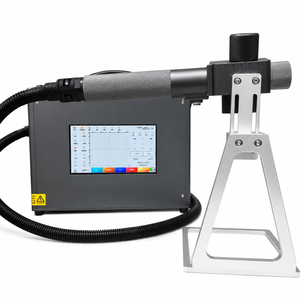
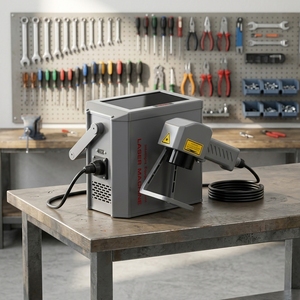
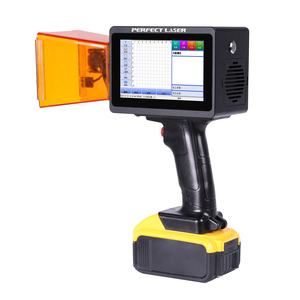
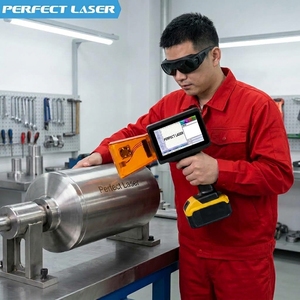
Field maintenance, aerospace structural tracking, and heavy pipe manufacturing require marking components that cannot be transported to a stationary machine bed. The introduction of 20W to 50W integrated handheld fiber laser markers with rechargeable lithium batteries has redefined on-site asset tracking, enabling permanent direct part marking (DPM) directly in warehouse environments.
To reduce spindle idle time, manufacturing facilities are adopting dual-head (OptiDual) and dual-table (OptiShuttle) laser cutting systems. While head #1 executes continuous vector cutting, head #2 performs raster engraving simultaneously on a secondary workpiece, effectively doubling plant throughput without expanding the physical machine footprint.
The precision laser industry is advancing toward total cyber-physical integration within Smart Factory (Industry 4.0) frameworks:
Artificial Intelligence & Automated Visual Inspection: Next-generation galvo marking units feature embedded AI algorithms that inspect mark contrast, matrix readability, and positioning accuracy in-line at speeds exceeding 12,000 mm/s, automatically adjusting focal offset to accommodate part thickness variations.
Ultrafast Pico- and Femtosecond Processing: Micro-machining applications are migrating toward femtosecond laser systems where pulse durations are shorter than the thermal relaxation time of the substrate. This results in true "cold ablation," creating clean micro-vias and semiconductor wafers free of thermal micro-cracks.
Green Laser (532nm) and Deep UV Expansion: Highly reflective metals like gold, pure copper, and silver reflect up to 95% of standard 1064nm fiber wavelengths. Wavelength conversion to green (532nm) and deep ultraviolet allows high-absorption micro-welding and precision marking on precious metals and solar photovoltaic cells.
When selecting a precision laser manufacturing partner, engineering lineage and domestic manufacturing rigor provide unmatched operational security. Built upon over four decades of laser innovation (originating in Minnesota, USA since 1982), our equipment engineering philosophy centers on structural durability, open architecture control, and direct factory technical assistance.
Every structural frame is heavy-duty welded steel, stress-relieved, precision machined, and run-tested to withstand round-the-clock 3-shift industrial production.
In-house designed and engineered super-pulsed laser sources come backed by an industry-leading 3-year factory warranty, keeping operating costs completely predictable.
From custom motion bed sizes (up to 5x10 ft and beyond) to specialized automated part loaders, our engineering team provides end-to-end contract manufacturing and custom development.
For processing both metals and organic materials, MOPA Fiber Lasers (such as 100W JPT M7 MOPA) or Hybrid Dual-Source Systems offer the highest versatility. MOPA lasers tune pulse widths down to 2ns to mark engineered plastics without burning, while providing sufficient peak power to deeply engrave stainless steel, brass, and aluminum. Alternatively, UV lasers offer a universal cold-marking solution across all plastics, glass, and metals without thermal degradation.
Vision camera systems like K-Vision automatically detect fiducial marks, edges, or pre-printed graphics on raw sheet goods. The software instantly recalculates the cutting path matrix to compensate for sheet rotation, stretch, or dimensional variance. This eliminates expensive custom mechanical alignment jigs, reduces operator setup time by up to 80%, and prevents costly scrap caused by manual alignment errors.
High-pressure Nitrogen ($N_2$) is recommended for stainless steel, aluminum, and brass to achieve oxide-free, bright cuts ready for welding. Oxygen ($O_2$) is utilized for thick mild steel cutting via exothermic reaction. Clean, dry compressed shop air (at 15-20 bar) offers the lowest operating cost for thin gauge sheet metals where slight edge oxidation is acceptable.
Solid-state fiber laser sources (IPG, JPT, Raycus) carry a Mean Time Between Failures (MTBF) rating of 100,000 operational hours (equivalent to over 10 years of continuous use). Routine maintenance involves inspecting protective field lenses, cleaning optical galvo mirrors, changing air filtration cartridges, and lubricating linear motion guide rails on automated gantry systems every 500 operating hours.