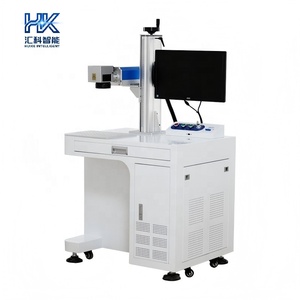
Direct factory supply featuring optimized fiber, MOPA, CO2, and air-cooled UV technologies engineered for continuous industrial manufacturing lines, high-speed coding, and high-precision marking.
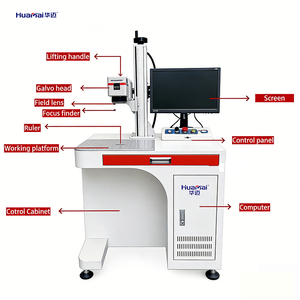
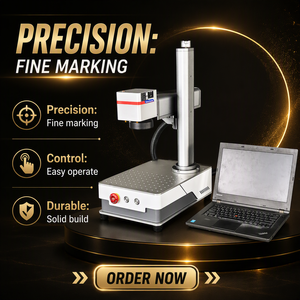
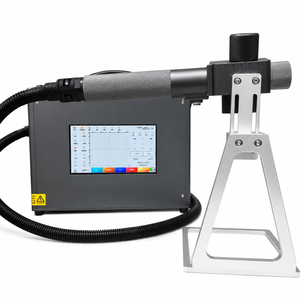
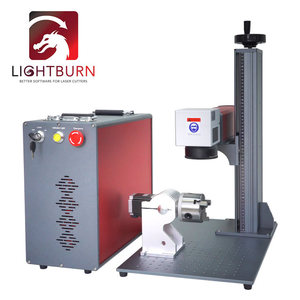
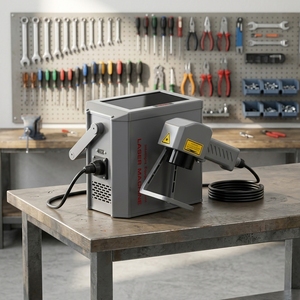
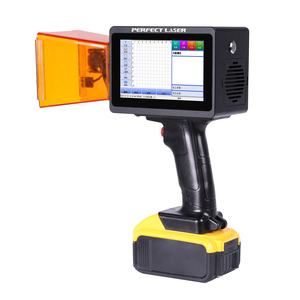
Selecting a qualified OEM/ODM supplier for industrial laser units requires rigorous technical evaluation beyond simple wattage specifications. Beam parameter product ($M^2$), pulse frequency adjustability, galvanometer scan speed, and thermal stability directly dictate production yield, total cost of ownership (TCO), and system uptime.
Top laser suppliers utilize high-grade optical isolators and single-mode laser sources (Raycus, Maxphotonics, JPT MOPA) delivering an $M^2 < 1.4$, ensuring ultra-fine micro-engraving, minimal heat-affected zones (HAZ), and crisp character resolution down to 0.15mm font size.
Unlike standard Q-switched fiber lasers with fixed pulse durations, advanced JPT M7/MOPA sources allow pulse duration tuning between 2ns and 500ns. This enables vibrant color marking on stainless steel, dark black marking on anodized aluminum, and delicate plastic coding without melting.
Leading global exporters supply systems certified to CE, FDA CDRH Class 1 or Class 4 standards, engineered with integrated interlocks, optical protection windows, dynamic red-light framing, and localized dust/fume extraction ports for cleanroom compliance.
Evaluating tier-1 global OEMs across core photonics capabilities, structural engineering standards, optical customization options, and international warranty support.
| Supplier / OEM Class | Core Laser Technology | Typical Wattage Range | Target Applications | Key Engineering Distinction |
|---|---|---|---|---|
| Kern Laser Systems (USA) | Super-Pulsed CO2 / Fiber Hybrid | 150W – 800W CO2 / 1-3kW Fiber | Large Format Metal, Acrylic, Wood | Heavy-duty USA-built frames, 3-year source warranty, hybrid multi-gantry setups |
| JPT Photonics Solutions | MOPA Fiber / UV Laser Sources | 20W – 300W MOPA / 3W-15W UV | High-Precision Marking, Color Engraving | Independently adjustable pulse width & frequency; exceptional peak power control |
| Raycus Fiber Laser Corp | Q-Switched & CW Fiber Units | 20W – 12000W Fiber | Metal Coding, Sheet Metal Cutting | High energy conversion efficiency, robust industrial durability, cost-effective scaling |
| Maxphotonics Exporters | Compact & High-Power Fiber | 30W – 3000W Fiber | Handheld Marking, Pipe & Metal Cutting | Ultra-portable integration modules, high thermal resistance, plug-and-play galvo sync |
| Han's Laser Technology | Automated Laser Marking Systems | 20W – 500W Fiber / UV / Green | Semiconductor, Electronics, Medical | Full-line robotic automation, high-speed vision camera alignment (K-Vision class) |
| Trumpf Photonics Division | Disk & High-End Fiber Lasers | 100W – 10000W Industrial | Automotive, Aerospace, Deep Metal | Industry 4.0 real-time feedback sensors, superior beam stability ($M^2 < 1.1$) |
| IPG Photonics Supply | Single-Mode Fiber Engines | 50W – 5000W Fiber | High-Speed Micro-Machining, Coding | Unrivaled wall-plug efficiency, zero maintenance design, modular optical delivery |
| Coherent Rofin Group | CO2 & Picosecond Laser Units | 30W – 1000W CO2 / USP | Glass, Organic Packaging, Polymer | Ultra-short pulse duration minimizing thermal damage on heat-sensitive materials |
| Epilog Laser Global | Desktop & Cabinet CO2/Fiber | 30W – 120W CO2 & Fiber | Custom Woodworking, Awards, Signage | User-friendly driver suites, high-speed raster engraving optics up to 165 IPS |
| Trotec Laser Systems | Dual-Source Flex Cabinets | 60W – 400W CO2 & Fiber | Multi-Material Batch Manufacturing | Inpass pass-through enclosures, automated job queueing software integration |
Procurement directors and factory managers must anticipate technical shifts when sourcing industrial laser markers, coders, and cutters to avoid rapid equipment obsolescence.
Traditional liquid chillers increase footprint, maintenance overhead, and electrical consumption. Future procurement trends favor highly efficient air-cooled fiber and UV laser marking modules (such as 100W–300W benchtop air-cooled MOPA systems), lowering operational power draw by up to 35% while maintaining duty cycles above 98%.
Manual target positioning is being phased out. Modern procurement specifies integrated camera registration modules (e.g., K-Vision software suites) paired with motorized auto-focus sensors. These systems instantly scan preprinted artwork or irregular metal contours, adjusting laser focal plane offset in milliseconds to achieve zero-defect batch processing.
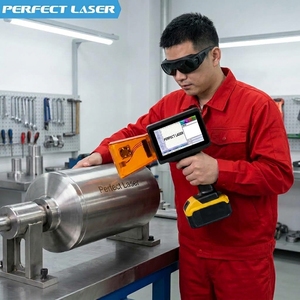
Exporters report explosive growth in battery-powered, handheld fiber laser coders for heavy equipment, oil & gas piping, structural steel, and logistics marking. Eliminating heavy stationary workstations, technicians can apply permanent, high-contrast matrix codes and serial numbers directly in field environments.
Understanding the underlying physical and digital breakthroughs shaping the next decade of industrial laser markers, multi-head gantries, and hybrid cutting units.
Manufacturing facilities often process diverse substrate mixtures—combining stainless steel hardware with acrylic covers, wood accents, or silicone gaskets. Legacy factories required dedicated separate machines. Breakthrough gantry configurations (exemplified by Kern’s OptiFlex series) now integrate both high-power CO2 laser sources and fiber laser heads onto a single gantry system. Operators switch between metal cutting and fine organic engraving dynamically within the same KCAM control program.
355nm Ultra-Violet (UV) laser markers utilize a "cold processing" mechanism. Because the short wavelength breaks molecular bonds directly rather than relying on thermal heating, UV units mark delicate cosmetic packaging, thin film polymers, glass ampoules, and medical devices without micro-fracturing, burning, or thermal degradation.
While generic suppliers assemble light-duty sheet aluminum frames, tier-1 industrial builders like Kern Laser Systems engineer heavy-duty welded steel chassis in Wadena, Minnesota, USA. Standardized industrial linear motors, closed-loop servo control drives, and in-house manufactured super-pulsed CO2 sources carry up to 3-year factory warranties—ensuring round-the-clock two- and three-shift operation for over a decade.
Contact Us for Enterprise ConsultationsExpert technical answers to common questions asked by international buyers, plant engineers, and purchasing officers when sourcing laser markers and cutters.
A standard Q-Switched fiber laser operates with fixed pulse duration (typically 100ns to 120ns), restricting its performance flexibility on varied materials. A MOPA (Master Oscillator Power Amplifier) laser allows independent control of pulse duration (from 2ns to 500ns) and frequency (up to 4000 kHz). This flexibility enables high-contrast black marking on anodized aluminum, vivid color marking on stainless steel, and damage-free marking on sensitive plastics.
Fiber Lasers (1064nm): Ideal for all metals (stainless steel, mild steel, aluminum, brass, copper, titanium) and hard engineering plastics.
CO2 Lasers (10,600nm): Ideal for organic substrates including cast/extruded acrylic, wood, plywood, MDF, leather, rubber, foam, textiles, and natural stone.
UV Lasers (355nm): Ideal for cold-marking delicate polymers, cosmetic containers, glass, silicone, electronic components, and printed circuit boards (PCBs).
Low-wattage fiber units (20W–100W) and compact UV markers utilize internal or compact air cooling, allowing operating ambient temperatures between 15°C and 35°C. High-power CO2 sources (150W–800W) and fiber cutting heads (1kW–3kW) require dual-circuit refrigerated water chillers to maintain strict operating water temperatures (typically 20°C ±1°C) for long-term power stability.
Galvanometer scanning markers use high-speed oscillating mirrors to move the laser beam over a fixed field (e.g., 110x110mm to 300x300mm) at extremely high speeds (up to 12,000 mm/s), perfect for parts, logos, and barcodes. Gantry-style systems move the entire laser optic carriage across large tables (up to 5x10 ft or larger), enabling full-sheet cutting and continuous large-area engraving.
Reputable exporters must provide CE directives compliance (Machinery Directive 2006/42/EC and Electromagnetic Compatibility EMC 2014/30/EU), FDA CDRH registration numbers for USA import, ISO9001 quality system certification, and comprehensive optical safety classification compliance (Class 1 enclosed or Class 4 open system protocols).
Premium solid-state fiber laser engines (from manufacturers such as Raycus, Maxphotonics, and JPT) possess an estimated Mean Time Between Failures (MTBF) exceeding 100,000 operating hours. This translates to over 10 years of standard continuous production with zero optical alignment maintenance required.
Connect directly with application engineers to verify cycle times, obtain cut/engrave sample testing on your specific substrates, and request custom OEM/ODM exporting pricing.