Engineered for multi-material throughput, extreme duty cycles, and micron-level repeatability across high-precision global supply chains.
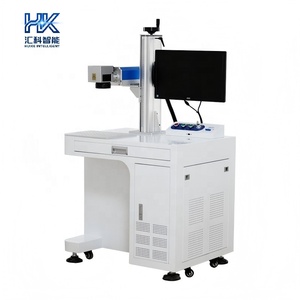
Heavy-duty industrial marking workstation for deep metal engraving, plastic annealing, and continuous inline thermal marking.
Get a Quote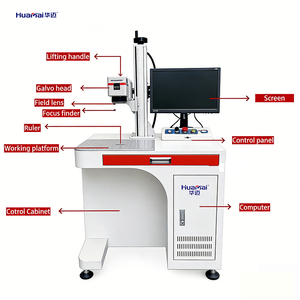
Advanced pulse control enabling high-contrast color marking on stainless steel and dark marking on anodized aluminum.
Get a Quote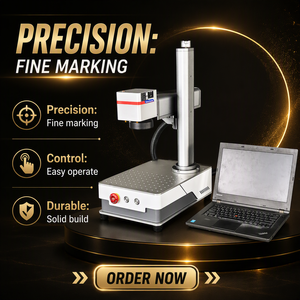
Space-saving, zero-maintenance optical marking design with high-speed digital galvo scanning head for small workshops.
Get a Quote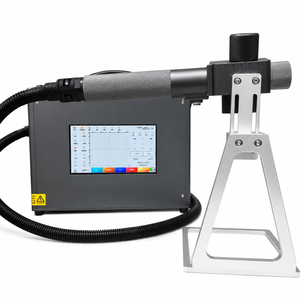
Ergonomic handheld laser head engineered for direct marking on oversized pipes, castings, and structural steel assemblies.
Get a Quote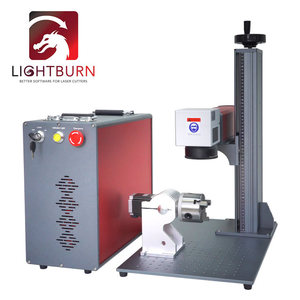
Air-cooled hybrid configuration allowing seamless processing across both organic polymers (CO2) and metallic alloys (Fiber).
Get a Quote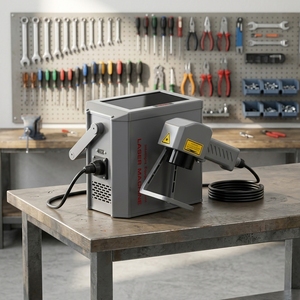
Cold laser processing technology engineered for sensitive cosmetic packaging, medical glass, and delicate polymers.
Get a Quote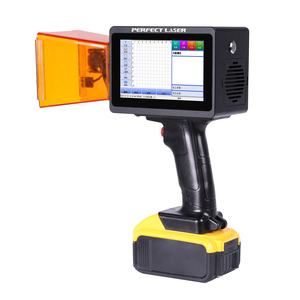
Fully tetherless industrial laser marker with integrated touchscreen controller for field asset tag identification.
Get a Quote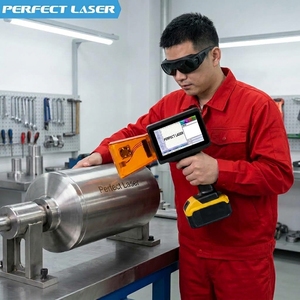
Rugged handheld vector laser coder designed for high-stress manufacturing environments requiring permanent trace codes.
Get a QuoteUnderstanding the transition from single-wavelength processing to multi-source integrated laser gantries.
In modern industrial fabrication, procurement directors and system integrators face a recurring technical trade-off: traditional CO2 lasers (10.6 µm wavelength) excel at cutting and engraving organic substrates such as acrylics, wood, textiles, and packaging foams, yet fail to process highly reflective metals efficiently. Conversely, modern Fiber lasers (1064 nm wavelength) offer unparalleled electro-optical efficiency and cutting speeds for stainless steel, mild steel, brass, and aluminum, but pass straight through clear acrylics and organic polymers without thermal absorption.
This fundamental physics gap has catalyzed the rise of top-tier OEM hybrid laser factories. By integrating dual-source optical beam delivery—combining super-pulsed CO2 RF tubes with high-brightness Ytterbium fiber sources or UV cold-laser modules on a single synchronized gantry platform—manufacturers eliminate the need for floor-space-consuming dual-machine setups. A single operator can now execute multi-material jobs on one unified processing bed without re-fixturing workpieces.
To evaluate hybrid laser exporters accurately, procurement teams must understand the core electromagnetic absorption spectra across industrial materials. The efficiency of laser cutting and engraving is governed directly by how effectively the target substrate absorbs energy at a specific wavelength:
| Laser Source Type | Primary Wavelength | Optimal Substrates | Primary Advantages | Hybrid Role |
|---|---|---|---|---|
| Super-Pulsed CO2 RF | 10.6 µm (Infrared) | Acrylic, Wood, Leather, MDF, Rubber, Glass | Flame-polished edges, high organic absorption, thick kerf control | Organic cutting & fast raster engraving |
| Ytterbium Fiber / MOPA | 1064 nm (Near-IR) | Stainless Steel, Mild Steel, Aluminum, Brass, Copper | 25%+ wall-plug efficiency, high photon density, sub-micron precision | Reflective metal cutting & color marking |
| Frequency-Tripled UV | 355 nm (Ultraviolet) | HDPE, Silicon, Glass, Sensitive Polymers, PCB | Cold photochemical processing, minimal heat-affected zone (HAZ) | Ultra-fine micro-coding & glass engraving |
| Dual-Source Hybrid Gantry | 10.6 µm + 1064 nm | All Industrial Metals + Organic Substrates | Zero re-fixturing, shared motion controller, 50% footprint reduction | Comprehensive job-shop flexibility |
As demonstrated in the comparison table, a factory equipped with dual-beam optical switching allows an enterprise to shift from trimming 25mm cast acrylic POP displays to precision-cutting 3mm stainless steel bracketry within minutes. Advanced software environments, such as KCAM software integration, manage focal offset compensations and assist-gas switching (Nitrogen, Oxygen, Compressed Air) dynamically within the same job queue.
When evaluating international exporters, raw power ratings are insufficient. Manufacturing rigor is measured in mechanical tolerances and long-term laser source stability.
Achieved through stress-relieved welded steel frames and ground linear motion guides.
Proprietary metal RF tube construction with 3-year factory warranty coverage.
High-yield continuous wave (CW) metal cutting capacity up to 1/2" steel plate.
Industrial solid-state laser pump diodes designed for multi-shift continuous operation.
Unlike light-duty aluminum extrusions that warp under dynamic acceleration, top factory builders utilize heavy-gauge structural steel frames, stress-relieved via thermal annealing prior to precision CNC machining.
Integrated overhead CCD cameras (such as K-Vision systems) compensate automatically for sheet rotation, print distortion, and material shrinkage, enabling edge-accurate vector contour cutting on preprinted graphics.
Capacitive height sensing automatically tracks non-flat sheet metals, maintaining a constant focal distance of ±0.05mm across undulating surfaces to eliminate dross formation and burred edges.
How OEM factories are adapting to strict environmental regulations, automation requirements, and smart manufacturing architectures.
Historically, fiber laser sources above 500W and CO2 sources above 150W required bulky external industrial chillers with liquid-to-air heat exchangers, increasing energy consumption and requiring periodic coolant replacement. The latest generation of MOPA fiber and compact RF CO2 sources utilize optimized heat-pipe dissipation, enabling stable operation up to 100W–300W with 100% ambient air cooling. This drastically reduces maintenance downtime and machine shipping weight for international exporters.
Leading hybrid laser manufacturers are incorporating optical sensors directly into the cutting nozzle assembly. By analyzing real-time back-reflection and plasma luminescence, the laser system’s CNC controller dynamically adjusts feed rate, laser frequency, and assist-gas pressure on the fly. If a cut micro-weld or partial penetration is detected, the system automatically slows down or re-strikes, preventing ruined raw material during unattended overnight shifts.
As international labor safety regulations tighten across North America (FDA CDRH, OSHA) and Europe (CE Machinery Directive 2006/42/EC), export vendors are moving away from open-table gantries toward fully interlocked Class 2 safety cabinets (such as LaserCELL platforms). These systems combine filtered viewing glass, automated safety curtains, and positive-pressure fume extraction ports to ensure zero operator exposure to scattered beam radiation.
High-volume manufacturing plants are shifting toward multi-head gantries (e.g., OptiDual setups). By placing two or three identical laser cutting heads on a single high-speed gantry, factory operators duplicate output without expanding total physical machine footprint. When coupled with shuttle tables (dual pallet exchangers), operator loading time is decoupled completely from machine cutting cycles.
A rigorous verification framework for B2B procurement teams evaluating overseas suppliers.
Selecting an OEM partner for industrial laser machinery requires scrutinizing more than just marketing spec sheets. Industrial laser cutting platforms operate under high dynamic forces—gantry accelerations exceeding 1.5G—demanding uncompromising structural engineering. When conducting a factory vendor audit, procurement officers should verify the following four critical pillars:
Does the exporter assemble, gas-fill, and tune their own super-pulsed CO2 RF tubes or fiber pump modules in cleanrooms, or are they merely assembling third-party components? Factories that engineer their own sources (offering 3-year transparent warranties) possess deep optical diagnosis capabilities and stock long-term replacement optics.
Request documentation on the machine frame construction. High-grade builders use heavy-wall tubular steel, stress-relieved in heat-treating ovens at over 600°C to prevent thermal memory distortion over years of operation. Precision-milled linear guide seats must be machined in a single-pass gantry milling center.
Ensure the machine runs standard DXF/PLT/NC-code vector files through open or proven proprietary CAM suites like KCAM. Proprietary, locked-down black-box controllers limit custom automation integrations and make local technician troubleshooting extremely difficult.
Top exporters maintain an application lab where buyers can send raw materials (polymers, exotic alloys, composite woods) for comprehensive cut testing. The factory should supply optical microscopic edge inspections, cut-rate benchmarks, and exact assist-gas consumption reports prior to contract execution.
Detailed answers addressing technical integration, material processing parameters, and export logistics.
The primary advantage is operational versatility paired with footprint optimization. A hybrid system combines two distinct optical wavebands (10.6 µm CO2 and 1064 nm Fiber) on a single gantry frame. This allows an enterprise to cut or mark organic materials (acrylic, wood, rubber, foam) and reflective metals (stainless steel, brass, aluminum) on the exact same bed without re-fixturing workpieces or investing in twice the shop floor area. Furthermore, training, maintenance, and software workflows are consolidated into one unified interface.
For stainless steel and aluminum processed via Fiber laser, High-Pressure Nitrogen (N2) is recommended to blow molten metal out of the kerf without oxidation, yielding a bright, weld-ready edge. For mild steel, Oxygen (O2) can be used to leverage an exothermic reaction that speeds up cutting on thicker plates. For acrylic cutting via CO2 laser, low-pressure compressed dry air is used simply to suppress flames and protect the focus lens, allowing the thermal laser beam to create a natural, flame-polished clear edge.
MOPA (Master Oscillator Power Amplifier) fiber lasers allow independent control of pulse duration (ranging from 2 ns to 500 ns) and pulse repetition rate (up to 4000 kHz), whereas traditional Q-switched fiber lasers operate with fixed, rigid pulse widths. MOPA technology provides vastly superior finesse, enabling high-contrast color marking on stainless steel, dark marking on anodized aluminum without destroying the oxide layer, and damage-free foil ablation.
Modern metal RF super-pulsed CO2 tubes require minimal day-to-day maintenance compared to legacy glass DC tubes. Key maintenance includes keeping beam delivery mirrors and focus lenses clean using optical-grade wipes and isopropyl alcohol, checking water chiller coolant levels and conductivity (if water-cooled), and inspecting air intake filters monthly. High-quality RF tubes operate reliably for 20,000 to 45,000 working hours before requiring gas re-charging.
Standard industrial bed sizes range from compact benchtop units (24" x 24" or 600 x 600 mm) up to full-sheet production platforms: 52" x 50" (1300 x 1270 mm), 52" x 100" (1300 x 2500 mm / 4 x 8 ft sheet equivalent), and 80" x 120" (2000 x 3000 mm / 5 x 10 ft sheet equivalent). Pass-through doors are often engineered into the front and rear of the chassis to allow processing of continuous roll material or infinite-length sheets.
Top OEM exporters package heavy machinery using ISPM-15 certified heat-treated vacuum-sealed wooden crates. The internal laser optics and optical gantries are mechanical locked using heavy-duty shipping brackets to prevent vibration alignment shift. Moisture-absorbing desiccant packs and heat-shrink anti-corrosion barrier film protect all machined metal surfaces from salt air and humidity during ocean freight transit.
Speak directly with our senior application engineers. Receive custom sample cuts, complete machinery ROI analyses, and competitive factory-direct export quotes.