High-Precision Fiber & UV Laser Equipment Engineered for Reflective Metals, Marking, and Micromachining
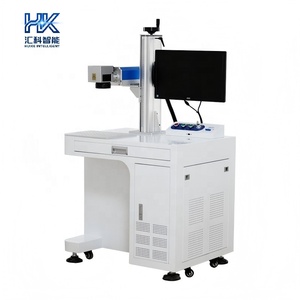
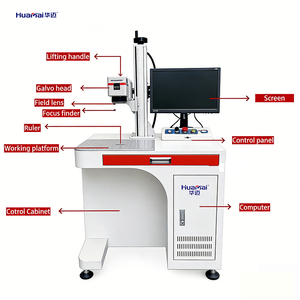
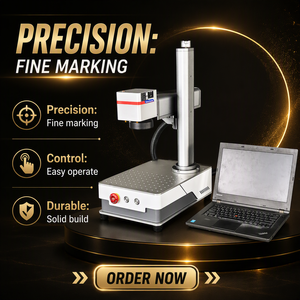
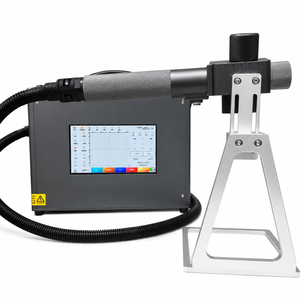
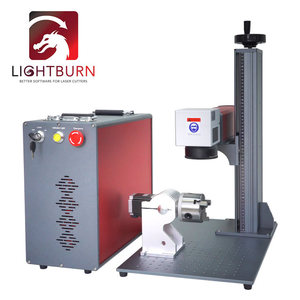
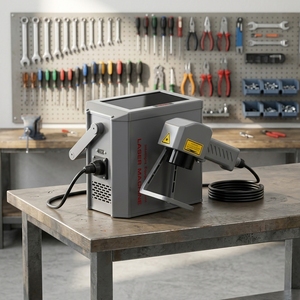
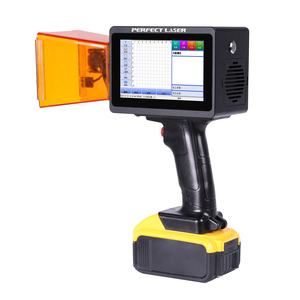
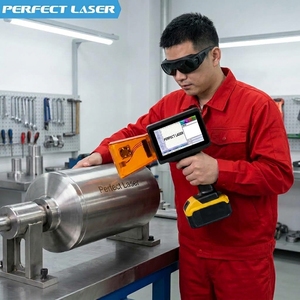
Processing aluminum alloys via industrial laser systems represents one of the most demanding disciplines in photonics engineering. As global manufacturing transitions toward lightweight automotive architectures, aerospace structural components, and high-density electronics, the demand for precision aluminum laser cutting, marking, and engraving equipment has experienced exponential growth. However, aluminum's physical properties—specifically its high optical reflectivity at standard wavelengths, high thermal conductivity (k ≈ 237 W/m·K), and propensity for oxidation—present severe operational hurdles for non-specialized laser machinery.
Uncoated aluminum reflects upwards of 91% to 95% of near-infrared (NIR) laser radiation at the traditional 1064nm wavelength during initial surface contact. Without optimized optical isolation, high peak-power density, and dynamic beam control, back-reflection can catastrophically damage fiber laser diodes and resonant cavities. Premier OEM factories and exporters have addressed this by integrating multi-stage optical isolators, adaptive pulse shaping (such as MOPA technology), and specialized assist gas dynamics (High-Pressure Nitrogen at 18–25 bar) to achieve dross-free, oxide-minimized kerf edges.
Series 1000 to 7000 Considerations: Pure aluminum (1000 series) exhibits the highest thermal dissipation rate, requiring high laser power density to establish keyhole melting. Conversely, aerospace-grade 7075 and automotive 6061 alloys contain zinc, magnesium, and silicon additives that lower the melting point but increase melt pool turbulence. Leading export-grade machines utilize closed-loop capacitive height tracking and high-speed galvo scanners to maintain precise Rayleigh length focus, preventing plasma plume shielding.
Procurement directors and factory integration engineers auditing global machinery suppliers must look beyond basic wattage ratings. True operational productivity is dictated by mechanical gantry damping, laser source longevity, back-reflection protection mechanisms, and software automation capabilities. Below are the core technical metrics evaluated when ranking the top 10 export manufacturers:
Export-tier factories integrate dual-stage Faraday isolators inside the output optical head, neutralizing back-reflected light from 5052 and 6061 aluminum before it can degrade the seed laser cavity.
High-speed cutting and marking require stress-relieved tubular steel frames annealed at 600°C. This eliminates structural thermal warping and maintains ±0.001" positioning accuracy across multi-shift operations.
Incorporating intelligent machine vision (such as K-Vision registration) automatically detects material position, compensates for sheet rotation, and adjusts kerf width dynamically based on aluminum thickness.
| Manufacturer Level | Laser Source Integration | Motion System Type | Aluminum Marking / Cutting Capacity | Global Service Infrastructure |
|---|---|---|---|---|
| Tier 1 Export OEM (Our Standard) | JPT MOPA / Raycus / IPG with Dual Faraday Isolation | Closed-Loop Panasonic / Yaskawa Servo + Linear Encoders | 0.01mm Micro-Marking up to 25mm Heavy Plate Cutting | Remote Diagnostics + Direct Factory Engineer On-Site Support |
| Tier 2 Standard Assemblers | Single-Brand CW Sources (Standard Reflection Protection) | Open-Loop Stepper or Basic AC Servos | Standard Sheet Marking & Medium Plate Cutting (up to 12mm) | Regional Distributor Third-Party Support |
| Tier 3 Low-Cost Exporters | Unbranded / Refurbished Fiber Sources | Belt-Driven / Basic Rack & Pinion Systems | Thin Foil & Surface Etching Only (Prone to Overheating) | Email-Only Parts Replacement Warranty |
Building on over four decades of precision machinery engineering, our manufacturing campus combines vertical integration with rigorous quality controls. Unlike pure trading houses or commercial white-labelers, every laser system featured in our catalog is fully welded, precision-machined, hand-wired, and burn-in tested inside our factory prior to international freighting.
Our engineering architecture is centered around high-reliability modularity. Whether supplying compact 30W desktop galvo markers for anodized aluminum consumer goods or high-wattage enclosed sheet metal cutters, our platforms feature unified CNC software (KCAM control suite) and standardized electrical schematics. This ensures that maintenance teams worldwide can easily source replacement components and execute field repairs with zero operational downtime.
Equipped with JPT M7 MOPA technology, our machines allow independent control of pulse frequency (1kHz–4000kHz) and pulse duration (2ns–500ns). This allows cool-process black marking on anodized aluminum without destroying the underlying protective oxide layer.
For factories processing both non-metal packaging and aluminum housings, our OptiFlex and OptiDual hybrid systems combine high-power CO2 laser tubes with Fiber laser heads on a single gantry, maximizing floor space utilization.
Safety compliance is paramount for European and North American buyers. Our LaserCELL and FiberCELL systems incorporate Class 2 laser safety enclosures, interlocked doors, and dual-channel safety circuit monitoring for full CE and FDA compliance.
Procurement officers evaluating long-term capital investments must align their equipment specifications with upcoming technological shifts. The industrial laser sector is undergoing significant evolution driven by green photonics, automated material handling, and artificial intelligence:
While NIR fiber lasers (1064nm) remain the workhorse of industrial marking and plate cutting, blue laser diodes (450nm) offer dramatically higher absorption rates on reflective non-ferrous metals like copper and aluminum—up to 800% higher initial energy coupling. Future-focused factories are deploying hybrid blue-fiber optical heads, combining blue lasers for spatter-free surface melting with fiber lasers for deep penetration keyhole processing.
Modern export-grade laser machinery is increasingly integrated with coaxial camera sensors and machine learning algorithms. By analyzing the thermal emission profile of the aluminum melt pool at 10,000 frames per second, the CNC controller automatically adjusts assist gas pressure and feed rates in real time, virtually eliminating bottom dross on thick alloy plates.
Labor shortages in manufacturing hubs have accelerated the demand for automated loading/unloading systems. Industrial buyers now demand fiber laser cutters with dual-table hydraulic shuttle systems (such as the OptiShuttle platform) that achieve table exchange cycle times under 15 seconds, allowing 24/7 unassisted production runs.
With high-pressure Nitrogen accounting for up to 40% of operational consumable costs during aluminum laser cutting, advanced exporters are equipping machines with ultra-high-pressure compressed air filtration systems (20 bar clean-air gas kits) and mixing units. This reduces production costs per part by up to 65% while maintaining clean edge geometry.
Technical answers to common engineering and procurement inquiries faced by international buyers during factory sourcing:
Submit your technical drawing specifications (DXF/STEP) or material marking requirements. Our photonics application engineers will run test cuts, provide edge quality microscopy reports, and issue competitive direct-factory export pricing.