Fully customizable turnkey systems engineered for architectural signmakers, OEM production lines, and high-precision commercial branding applications.
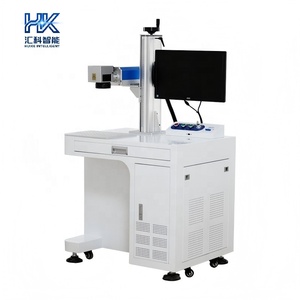
High-power fiber laser engines ideal for continuous deep engraving and high-speed marking on metal signage plates, hardware, and structural aluminum.
Get a Quote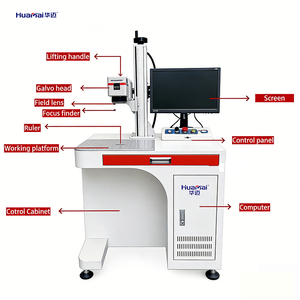
Advanced pulse-width adjustable MOPA source capable of vivid anneal color printing on stainless steel architectural plaques and dark marking plastics.
Get a Quote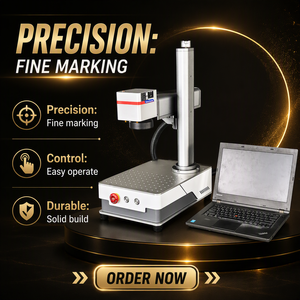
Space-saving, enclosed desktop unit engineered for fine micro-engraving on stainless steel tags, brass trim, and small hardware signage elements.
Get a Quote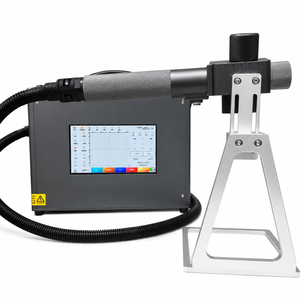
Ergonomic ultra-portable laser head designed for direct, on-site marking of large immovable architectural structures and heavy signage frames.
Get a Quote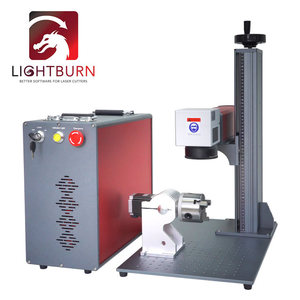
100W MOPA system configured with an air-cooled 300x300mm field lens and rotary device for cylindrical sign posts, architectural poles, and curved fixtures.
Get a Quote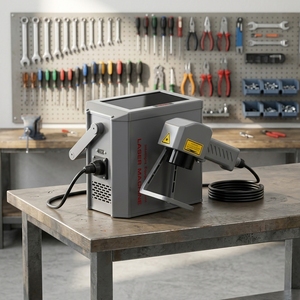
355nm ultra-violet laser delivering damage-free "cold processing" for delicate acrylic, glass paneling, and cosmetic packaging signage.
Get a Quote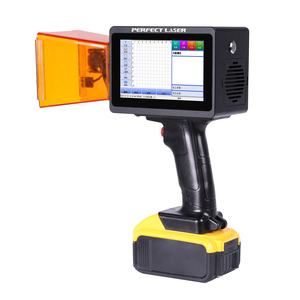
Rechargeable, industrial-grade cordless handheld marker engineered for outdoor installation teams verifying asset labels and permanent sign IDs.
Get a Quote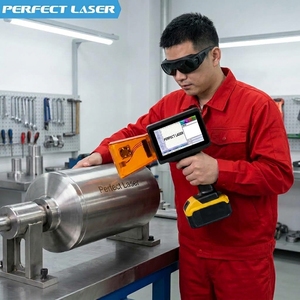
Versatile OEM platform capable of etching timber, leather accents, acrylic, and sheet metal framing for multi-texture commercial signs.
Get a QuoteAn authoritative guide to selecting, customizing, and scaling industrial laser cutting and marking infrastructure for global OEM/ODM commercial applications.
The global commercial signage industry is undergoing a seismic technical transition. Driven by architectural demands for dimensional metal lettering, flame-polished cast acrylic displays, and millisecond-level permanent asset marking, original equipment manufacturers (OEMs) and original design manufacturers (ODMs) must pivot away from conventional mechanical CNC routing toward high-frequency thermal photonics. Laser-based fabrication delivers unprecedented kerf narrowness, zero tool-wear overhead, and sub-thou repeatability essential for multi-layer channel letters and outdoor architectural installations.
As a premier OEM/ODM signage laser manufacturer, our production engineering framework incorporates state-of-the-art CO2 optical resonators, high-brightness ytterbium fiber lasers, and short-wavelength cold UV laser engines. By integrating rigid, stress-relieved steel gantries with closed-loop servo drive architecture, our systems achieve up to ±0.001" positional accuracy across large-format work envelopes exceeding 5x10 feet. This whitepaper details the core technical criteria, ROI metrics, and procurement strategies necessary for enterprise signage fabricators to dominate market share.
Selecting the optimal wavelength and photon source represents the single most critical decision in sign equipment procurement. Each laser engine possesses distinct absorption spectra profiles across common signage substrates:
| Laser Source Type | Wavelength Range | Primary Substrates | Edge Quality Characteristic | Optimal Signage Application |
|---|---|---|---|---|
| Fiber Laser (Raycus/Max/JPT) | 1064 nm | Stainless Steel, Mild Steel, Aluminum, Brass, Copper | Narrow kerf, minimal dross, zero burr on gauge metal | Dimensional metal lettering, structural sign frames, cutouts |
| MOPA Fiber (JPT M7 Series) | 1064 nm (Adjustable pulse width: 2–500 ns) | Anodized Aluminum, Stainless Steel, Engineered Plastics | Controlled thermal annealing, high-contrast oxidation color | Architectural plaques, logo color branding, anti-glare tags |
| Super-Pulsed CO2 | 10.6 µm | Cast/Extruded Acrylic, Wood, MDF, PE/PU Foam, Rubber | Flame-polished clear acrylic edges, zero edge charring on timber | POP displays, illuminated channel faces, architectural wooden signs |
| Cold UV Laser | 355 nm | Glass panels, Sensitive Polymers, Cosmetic Acrylic Packaging | Photochemical "cold" ablation, absolute zero micro-fracturing | Micro-lettering, high-end museum vitrines, luxury branding display |
For high-capacity signage workshops, a dual-source or modular gantry layout often yields the maximum operational efficiency. By combining a 1064nm fiber head alongside a 10.6µm CO2 tube on a single motion platform (such as our hybrid OptiFlex system concept), fabricators gain the capability to execute metal trim capping and clear acrylic face-cutting without material transfers between separate work cells.
Our OEM/ODM manufacturing capability rests on four engineering pillars engineered specifically to eliminate production bottlenecks in commercial signmaking:
Heavy-gauge tubular steel frames are fully annealed in high-temperature ovens to eliminate residual thermal stress, guaranteeing geometric stability and precision rail alignment across decades of continuous two-shift operation.
Integrated machine vision automatically detects pre-printed fiducial marks on vinyl overlays and UV-printed sheet goods, executing real-time vector transformation to correct for material stretch, distortion, and mis-alignment.
Our in-house engineered super-pulsed CO2 sources deliver peak instantaneous power pulses up to 3x nominal power, dramatically minimizing heat-affected zones (HAZ) and producing optical-grade crystal edges on 1-inch thick acrylic.
Fully enclosed LaserCELL designs safeguard operators against scattered reflections, featuring interlocked safety glass, high-vacuum particulate downdraft extraction, and integrated fire suppression interfaces for institutional deployment.
Optional 80mm-200mm programmable rotary chucks enable direct surface engraving on cylindrical sign posts, architectural columns, flagpoles, and complex curved hardware components with automatic focal tracking.
We tailor motion bed dimensions (up to 3000x2000mm), laser source power combinations, machine housing colors, CNC control software brandings, and localized user interfaces for international distributors and global brands.
Procurement teams seeking long-term capital protection must align machinery investments with emerging industrial trends. Over the next decade, three foundational technological shifts will redefine signage laser production lines:
Traditional single-pulse fiber lasers are rapidly giving way to Master Oscillator Power Amplifier (MOPA) systems across higher wattage thresholds (100W to 300W). MOPA technology allows independent control of pulse duration (from nanoseconds to microseconds) and pulse frequency (up to 4000 kHz). In architectural signage, this permits high-speed black annealing on stainless steel trims without localized heat distortion, as well as controlled color marking on titanium anodized surfaces—opening premium design channels for high-end hotel and commercial corporate branding.
Raw material prices for brass, copper, and specialized cast acrylic remain high. Next-generation OEM laser tables feature overhead camera arrays connected to AI-driven nesting software algorithms. These systems scan irregular material scraps remaining on the cutting bed, identify usable geometries, and instantly fit vectorized sign characters into dead spaces—slashing raw material waste by up to 22% annually.
Modern international regulations (such as EU Eco-Design directives and US EPA guidelines) require significant reductions in floor energy consumption. Transitioning from older glass CO2 tubes to high-efficiency RF metal-tube CO2 sources and solid-state fiber lasers reduces electrical draws by up to 45%. Furthermore, intelligent air-cooled chillers and eco-standby modes reduce ambient noise and facility HVAC overhead.
Combining heavy-duty mechanical engineering heritage with ultra-precise optical integration.
Rooted in four decades of rigorous industrial machinery manufacturing, our factory facility enforces a strict quality management framework across every stage of assembly. Every sign laser machine undergoes grueling testing prior to crating and export:
Direct technical guidance to support your engineering assessment and vendor selection process.
Super-pulsed CO2 laser systems (ranging from 150W to 400W metal RF tubes) are the undisputed industry standard for acrylic fabrication. Unlike mechanical CNC routers that leave tool marks requiring manual flame-polishing, a CO2 laser vaporizes acrylic instantaneously, leaving a perfectly smooth, crystal-clear flame-polished cut edge straight off the machine bed.
Yes. Our OEM hybrid laser systems (such as the OptiFlex series) can be engineered with dual optical paths—mounting both a Fiber laser cutting head (for stainless steel, mild steel, aluminum, and brass) and a CO2 laser cutting head (for acrylic, wood, and plastic) on a single gantry. Alternatively, hybrid laser heads using oxygen-assist gas can utilize high-power CO2 sources to cut thin sheet metal as well as non-metal materials.
We back our industrial laser machines with a comprehensive 3-Year Factory Warranty covering core components including optical resonators, motion linear guides, and servo systems. We maintain a complete inventory of field-replaceable units (lenses, mirrors, laser sources, power supplies) for rapid international dispatch within 24–48 hours.
Our ODM solutions cover complete custom product development. We offer full industrial design customization including custom machine sheet metal housings, tailored brand color schemes, private-label software interfaces, customized control panel layouts, and bespoke bed dimensions engineered specifically to match your regional target market demands.
All our manufacturing processes strictly comply with international safety directives. Our fully enclosed systems conform to Class 1 / Class 2 optical safety regulations, featuring redundant safety interlocks, emergency stop circuits, CE certification, FDA registration numbers, and compliance with CSA/UL electrical standards for North American deployment.
High-pressure Nitrogen (N2) is recommended for stainless steel and aluminum signage applications where clean, oxide-free edges are required for immediate welding or painting. For carbon steel structural sign frames, Oxygen (O2) assist gas is utilized to promote exothermic cutting reactions, lowering required laser power while maintaining fast feed rates.
Connect with our technical application engineers to request custom machine configurations, arrange a live sample material cut test, or receive factory-direct wholesale OEM/ODM pricing.
Get a Quote