Explore our industrial-grade optical lenses, scanning optics, and laser heads engineered for high-power fiber, CO2, and UV laser applications.
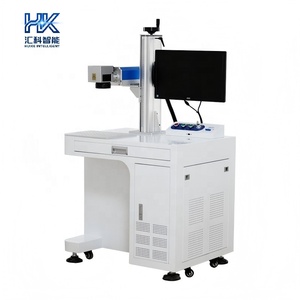
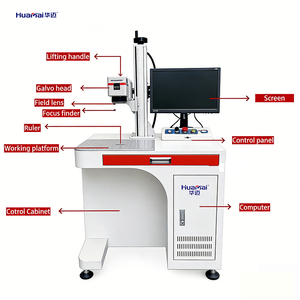
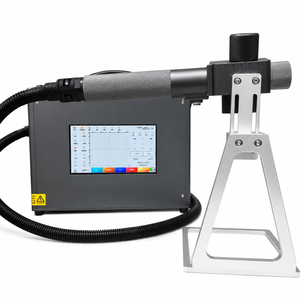
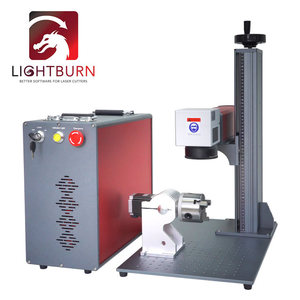
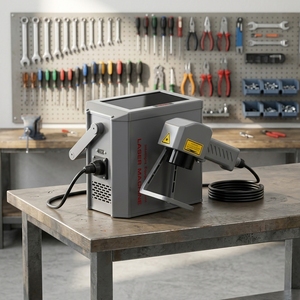
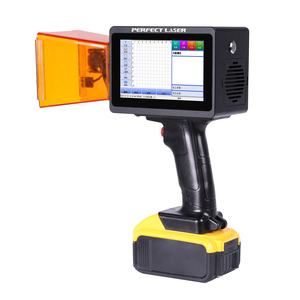
In modern industrial laser manufacturing, the laser lens is the decisive optical element that determines power density, spot size, Rayleigh length, and overall cutting or engraving throughput. As an industry-accredited OEM/ODM Laser Lens Manufacturer and Engineering Factory, our facility integrates raw optical material synthesis, ultra-precision diamond turning, thin-film dielectric vacuum deposition, and sub-micron optomechanical alignment under rigorous ISO 9001 cleanroom protocols.
Whether your application demands high-power 10.6 µm CO2 laser optics built from Chemical Vapor Deposition (CVD) Zinc Selenide (ZnSe), 1064 nm fiber laser collimators manufactured from synthetic fused silica, or 355 nm ultraviolet (UV) tripling lenses, our engineering team delivers custom optical designs optimized for extremely high Laser-Induced Damage Thresholds (LIDT).
Drawing from four decades of heavy-duty machine-building heritage—demonstrated across thousands of global installations in high-demand environments—we bridge the gap between pure optical theory and shop-floor durability.
Every OEM laser lens that leaves our cleanroom undergoes comprehensive wavefront testing via Zygo laser interferometers, spectral spectrophotometry, and thermal absorption mapping to guarantee near-zero focal shift during continuous multi-shift operation.
Sourced exclusively from premium optical glass suppliers. Ultra-low bulk absorption (<0.0005 cm⁻¹ at 10.6 µm) prevents thermal lensing and focus drift under high power.
Ion-beam assisted deposition (IAD) guarantees AR coating durability, high environmental resistance, and surface reflectance below 0.1% per surface.
Tested according to ISO 21254 specifications. Capable of enduring continuous pulsed peak power densities exceeding 15 J/cm² at 1064 nm.
Information Gain Insight: Thermal lensing in laser cutting optics causes an upward drift of the focal spot inside the material nozzle as lens temperature rises. Our custom optical designs utilize negative thermal expansion coefficient (dn/dT) matched optical coatings and water-cooled aluminum sub-assemblies to stabilize focal points within ±15 microns across 8 hours of continuous 12kW laser operations.
As industrial automation accelerates toward smart factories and multi-kilowatt fiber systems become standard in metal fabrication, procurement managers and OEM designers face evolving technical parameters. Sourcing strategies for laser lenses are shifting from commoditized replacement parts to intelligent, custom-engineered optical sub-assemblies.
The transition toward 12kW–30kW fiber laser cutters demands specialized optical glass grades with hyper-pure silica formulations. Concurrently, hybrid setups—such as system gantries operating dual CO2 and fiber laser beams on a single motion axis—require customized dual-band antireflective optical coatings that maintain high performance across vastly different spectral bands (1064 nm and 10.6 µm).
Next-generation OEM laser lens assemblies are no longer passive glass components. Modern optical housings feature embedded thermal sensors, stray-light back reflection detectors, and capacitive protective window monitoring systems. These smart assemblies communicate directly with CNC control systems (such as KCAM) to trigger preventative optical swaps before catastrophic lens failure occurs.
Our OEM manufacturing facility offers custom mechanical integration for embedded PT100 temperature sensors and digital IO interfaces tailored to your machine's controller architecture.
In electronic packaging, medical device manufacturing, and display scribing, ultra-short pulse lasers are replacing traditional thermal cutting methods. OEM requirements now prioritize telecentric F-theta scan lenses with zero geometric distortion, extremely small spot sizes (<10 µm), and flat-field uniformity to preserve delicate substrate integrity without edge charring.
Use the technical reference table below to select the optimal lens substrate, spectral range, and coating configuration for your OEM system integration:
| Optical Substrate | Wavelength Range | Bulk Absorption | Max Power Density | Primary Industrial Applications |
|---|---|---|---|---|
| CVD Zinc Selenide (ZnSe) | 10.6 µm (CO2) | <0.0005 cm⁻¹ | up to 5 kW CW | Acrylic cutting, wood engraving, CO2 metal cutting |
| Synthetic Fused Silica | 1064 nm (Fiber / YAG) | <0.0001 cm⁻¹ | up to 30 kW CW | Sheet metal cutting, laser welding, high-speed marking |
| UV Grade Quartz | 355 nm (Ultraviolet) | <0.0002 cm⁻¹ | 15 J/cm² (Pulsed) | Semiconductor scribing, cosmetic package marking |
| Optical Sapphire | 200 nm – 5.0 µm | Negligible | Extreme Hardness | High-pressure protective windows, field-portable optics |
Choosing an optical partner requires evaluating manufacturing infrastructure, supply chain reliability, and engineering support. Built upon decades of precision machinery engineering, our enterprise delivers unparalleled OEM/ODM capability.

Our in-house optical design team utilizes Zemax OpticStudio and SolidWorks to rapidly simulate laser beam propagation, thermal expansion, and mechanical stress. We take your custom focal length, clear aperture, housing footprint, and thread pitch requirements from initial optical layout to physical tested prototype in as little as 14 business days.
Partner with a certified OEM/ODM laser lens manufacturer. Consult directly with our application engineers for custom optical layouts, substrate recommendations, and factory-direct volume pricing.
Get a Quote