Direct Factory OEM/ODM Supply • Precision Optical Modules • CE & FDA CDRE Compliant Systems
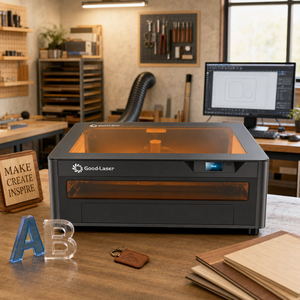
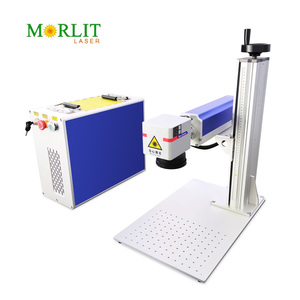
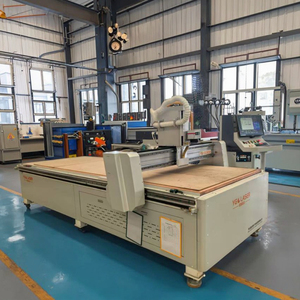
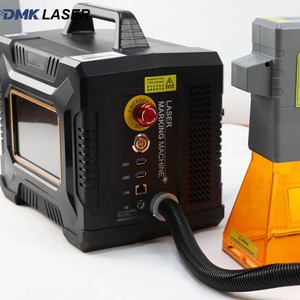
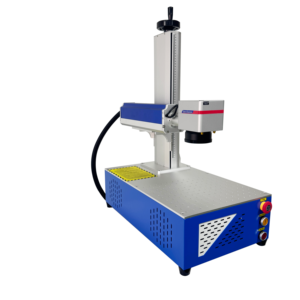
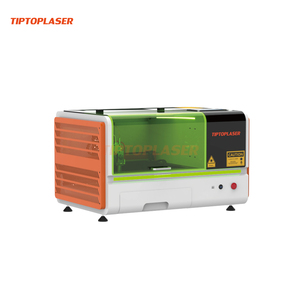
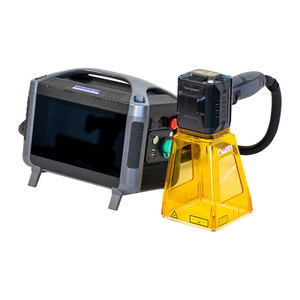
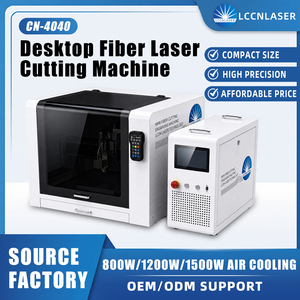
In the highly technical realm of industrial laser material processing, selecting an OEM/ODM Laser Etcher Exporter & Exporters partner requires rigorous evaluation of optical design integrity, structural motion engineering, and global export compliance. Rooted in over four decades of laser machine building traditions—establishing foundational industrial standards since 1982—our manufacturing architecture bridges high-power optical physics with flexible turnkey OEM co-development.
Every system exported from our facilities undergoes stringent quality verification. Unlike basic system integrators who assemble generic off-the-shelf components, our manufacturing enterprise controls the entire engineering lifecycle: from heavy-duty welded steel frame stress-relieving to proprietary drive-system calibration, custom optical bench alignment, and tailored KCAM software integration.
Tailoring fiber laser sources (Raycus, MAX, JPT MOPA), super-pulsed CO2 RF metal tubes (150W to 800W), and cold UV ultraviolet sources (355nm) to match exact substrate absorption spectra for metal, polymers, quartz, and stone.
Customizing working envelopes ranging from ultra-compact desktop units (24x24 inches) up to large-format dual-gantry open beds (5x10 ft and beyond), including specialized pass-through slots for continuous roll materials.
Providing re-branded control software interfaces, customized SDKs, industrial fieldbus protocols (EtherCAT, CANopen), and embedded automated nesting scripts for seamless Industry 4.0 production line integration.
Engineering Class 1 and Class 2 fully enclosed protective housings with interlocked optical viewing windows, integrated fume extraction manifolds, and specialized rotary pipe/tube fixtures.
When sourcing laser etching equipment from an international exporter, selecting the correct laser source physics is the single most critical factor determining edge quality, cycle time, and ROI. Below is our authoritative engineering matrix comparing core laser etching technologies:
| Laser Source Type | Wavelength | Optimal Substrates | Etching Mechanism | Typical Beam Quality ($M^2$) |
|---|---|---|---|---|
| CW / Q-Switched Fiber | 1064 nm | Stainless Steel, Tool Steel, Aluminum, Brass, Copper | Photothermal ablation & surface annealing | < 1.3 to 1.5 |
| MOPA Fiber (Variable Pulse) | 1064 nm | Anodized Aluminum, Black Oxide, Sensitive Plastics | Controlled pulse duration (2ns-500ns) for color etching | < 1.2 |
| Super-Pulsed CO2 RF | 10.6 μm | Acrylic, Hardwood, Glass, Ceramics, Leather, Rubber | Molecular bond vaporization & thermal sealing | < 1.1 |
| UV Cold Laser | 355 nm | Glass, Crystal, HDPE, Polycarbonate, Silicon Wafers | Photochemical cold ablation (breaks molecular bonds) | < 1.1 |
As a specialized exporter, we supply two distinct mechanical kinematics depending on the buyer's application profile:
Global manufacturing is transitioning toward intelligent, automated, and ecologically sustainable laser processing. B2B importers, factory managers, and regional distributors must align their procurement strategies with four key technological shifts reshaping the OEM/ODM laser etcher landscape:
Integrated machine vision systems (such as K-Vision) utilize high-resolution optical sensors and neural distortion-correction algorithms to auto-detect preprinted graphic marks. This compensates for material stretch, thermal shrinkage, and angular rotation in real time—eliminating physical positioning fixtures.
While nanosecond fiber lasers dominate current metal etching, ultra-short pulse lasers (ps/fs) are expanding rapidly into OEM supply chains. Delivering megawatt peak power with zero Heat-Affected Zone (HAZ), ultra-fast lasers enable micro-structuring of medical implants and semiconductor wafers.
To minimize non-productive idle time, modern export configurations incorporate automated shuttle tables (such as OptiShuttle). Operators load and unload finished parts on table A while the enclosed laser platform processes table B—increasing overall throughput by up to 85%.
Exporting precision machinery globally requires far more than international logistics; it demands a robust infrastructure of standardized manufacturing, rigorous safety certifications, and comprehensive technical support. Here is how our operational framework protects your capital investment:
All machines are built to international safety standards, carrying CE certification, FDA CDRE accessions, and ISO9001 quality audits. Export shipments are enclosed in heavy-duty, vacuum-sealed barrier foil inside ISPM-15 fumigated wooden crates to withstand cross-ocean maritime transport.
Our dedicated field application engineers provide remote desktop diagnostics, parameter library tuning, and live video support. Standardized industrial components (Schneider electricals, Hiwin linear guides, Panasonic servos) ensure quick local spare parts replacement anywhere in the world.
Technical, operational, and commercial answers for OEM buyers, distributors, and plant operators.
While often used interchangeably, these processes differ in penetration depth and material physics:
We offer turnkey white-label and co-developed ODM programs. This includes custom sheet metal chassis design, custom paint colors (RAL codes), embedded logo laser plates, customized software user interface themes, customized user manuals, and private-label spare parts packaging. Minimum Order Quantities (MOQs) for fully customized OEM chassis start as low as 5 units per production batch.
A hybrid dual-source platform (such as our OptiFlex Hybrid) combines a 1064nm Fiber laser and a 10.6μm CO2 laser on one gantry system. This allows operators to seamlessly etch metals (stainless steel, mild steel, aluminum, brass, copper) with the fiber beam, and immediately switch to organic materials (acrylic, wood, leather, glass, stone, rubber) with the CO2 beam on the exact same work bed.
Every exported shipment includes a full export documentation binder: Certificate of Origin (Form E, Form F, or standard CO), Commercial Invoice, Detailed Packing List, Bill of Lading, CE Declaration of Conformity (Machinery Directive 2006/42/EC and EMC Directive 2014/30/EU), and FDA CDRE accession numbers for Class 1/Class 4 laser registration in the USA and North American markets.
Standard model configurations ship within 14 to 21 business days after technical drawing confirmation. Custom OEM/ODM engineered builds typically ship in 30 to 45 days. All industrial laser sources carry an enterprise factory warranty of up to 3 years, backed by expedited global replacement part logistics.
Connect directly with our senior optical and mechanical engineering team. Send us your sample substrate specs, target cycle times, or OEM manufacturing requirements for a rapid technical proposal.