Engineered for high-repeatability glass coding, sub-surface crystal engraving, metal etching, and high-speed production line integration.
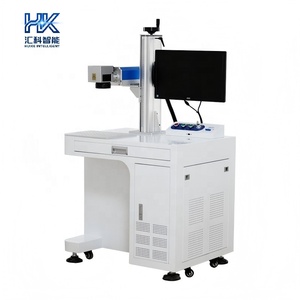
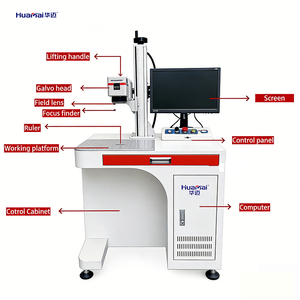
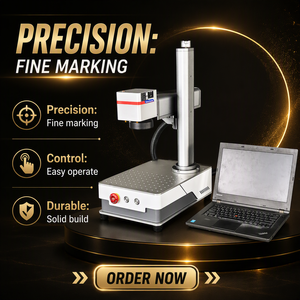
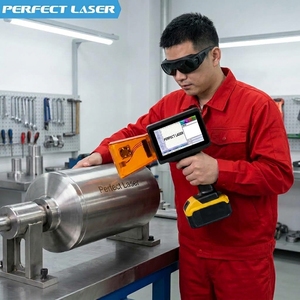
Industrial glass processing has historically presented significant engineering hurdles for OEM equipment manufacturers. Due to glass’s low thermal conductivity, high brittleness, and optical transparency at visible wavelengths, traditional mechanical processing methods—such as diamond milling, mechanical scribing, and chemical etching—suffer from high tool wear, environmental contamination, micro-fracturing, and thermal stress accumulation. As global demand escalates for ultra-thin glass (UTG) in smart devices, automotive displays, medical diagnostics, and architectural optics, OEM/ODM glass laser manufacturers have pioneered advanced photonic solutions that fundamentally transform how silica-based substrates are processed.
The core technological shift in glass laser micro-machining is the transition from photothermal melting to direct photochemical bond breaking. Standard CO2 lasers operating at 10.6 µm process glass through thermal absorption. While highly effective for deep cutting and coarse edge sealing, the extreme thermal gradients generate localized heat-affected zones (HAZ). This thermal shock frequently induces microscopic edge cracks (micro-cracks) that reduce the mechanical bend strength of tempered and soda-lime glass.
Conversely, Ultraviolet (UV) 355nm lasers and Picosecond/Femtosecond Ultra-Short Pulse (USP) lasers operate via multiphoton absorption and "cold processing." By packing peak laser energy into picosecond (10⁻¹² s) or femtosecond (10⁻¹⁵ s) pulse durations, the photon flux breaks the silicon-oxygen (Si-O) molecular bonds directly before thermal energy can diffuse into the surrounding glass matrix. This results in pristine micro-cutting, zero edge chipping, sub-surface volumetric micro-engraving, and micro-hole drilling with aspect ratios exceeding 20:1.
| Laser Source Type | Wavelength | Primary Mechanism | Optimal Glass Substrates | Edge Micro-Crack Index |
|---|---|---|---|---|
| Super-Pulsed CO2 | 10.6 µm / 9.3 µm | Thermal Absorption | Quartz, Borosilicate, Architectural Glass | Moderate (Requires Annealing) |
| Diode-Pumped UV | 355 nm | Photochemical Bond Breaking | Cosmetic Bottles, Thin Glass, Solar Cover Glass | Very Low (< 5 µm) |
| Green Laser | 532 nm | Sub-Surface Absorption | 3D Internal Crystal & Glass Engraving | Zero (Internal Focus) |
| USP Femtosecond | 1030 nm / 515 nm | Non-linear Multiphoton Plasma | Ultra-Thin Glass (UTG), Sapphire, Gorilla Glass | Negligible (< 1 µm) |
Strategic procurement directors and system integrators must align their capital equipment acquisition strategies with four major industrial procurement shifts currently reshaping the OEM market:
Leveraging decades of industrial machine manufacturing expertise, heavy-duty welded frames, and complete vertically integrated engineering.
Every system frame is stress-relieved, precision-machined, and engineered for continuous 24/7 industrial production without thermal frame deformation or accuracy drift.
Unlike third-party distributors, our in-house laser source development and assembly allow us to offer an industry-leading 3-year warranty covering CO2 and DPSS laser engines.
We provide contract manufacturing, custom bed sizes up to 5x10 ft, pass-through enclosures, rotary axis attachments, and bespoke software control interfaces tailored to customer specifications.
Technical guidance and commercial specifications for procurement managers, factory directors, and laser OEMs.
For fine surface marking, anti-counterfeiting micro-QR codes, and cosmetic glass bottle etching, 355nm UV lasers are superior due to their photochemical "cold processing" mechanism which prevents thermal cracking. For deep structural cutting of quartz or thick soda-lime glass, high-power CO2 lasers (10.6 µm) or ultra-fast femtosecond lasers are recommended depending on edge tolerance requirements.
Micro-cracking is mitigated through three primary methods: utilizing ultra-short pulse durations (nanosecond to femtosecond regime) to restrict heat diffusion, optimizing pulse energy distribution via diffractive optical elements (DOE), and employing assistant air gas management systems that rapidly cool the laser interaction zone during processing.
Standard 1064nm fiber lasers pass through clear glass because glass is optically transparent at near-infrared wavelengths. However, our MOPA fiber lasers and high-power fiber markers can mark coated glass (such as mirror backing or conductive ITO layers), dark glass with high iron content, or glass surfaces pre-treated with thermal absorption pastes.
Our factory offers complete ODM customization including automated conveyor belt integration, Class 2 laser safety enclosures, custom galvo optical focus heads, multi-head gantry configurations (such as OptiDual systems), custom-branded GUI interfaces, and localized PLC communication protocols (EtherCAT, Modbus, Profinet).
Fiber laser sources exhibit a mean time between failures (MTBF) exceeding 100,000 operational hours with minimal maintenance. DPSS UV laser sources typically offer 20,000 to 30,000 diode hours before requiring harmonic crystal optimization. All systems are backed by our comprehensive factory engineering support and fast spare-part logistics network.
Send your glass panels, acrylic stock, or metal component specifications directly to our engineering team. We will perform application sample testing, provide edge quality reports, and deliver a tailored OEM quotation.
Send an Inquiry