Explore our flagship lineup of high-precision fiber marking, MOPA color engraving, portable handheld markers, and UV cold-laser systems engineered for 24/7 OEM integration.
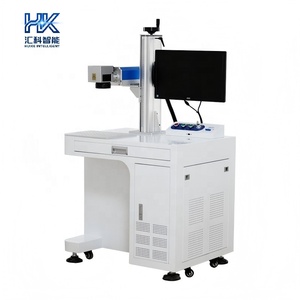
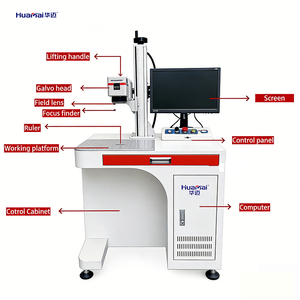
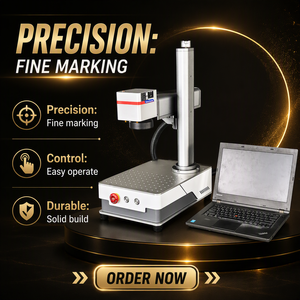
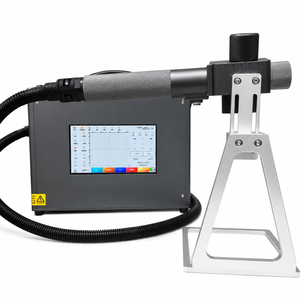
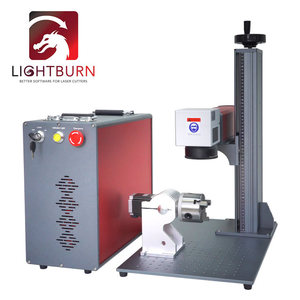
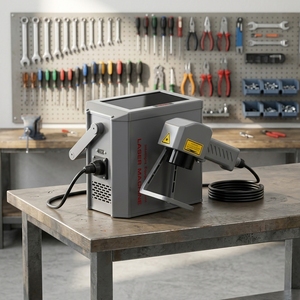
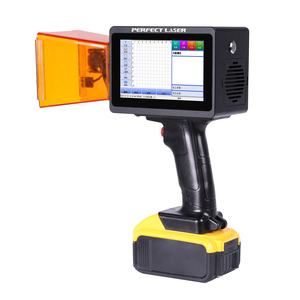
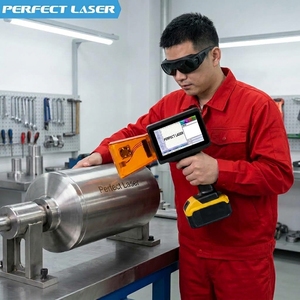
Building enterprise-grade laser hardware requires more than assembling off-the-shelf components. As a global custom OEM automated laser exporter, we engineer vertically integrated ecosystems designed for non-stop industrial production lines.
Every laser chassis, motion gantry, and control panel is welded, CNC-machined, and stress-tested in-house. Our vertical manufacturing model ensures exact dimensional tolerance control across multi-shift operations.
We co-develop and tune high-efficiency CO2 super-pulsed sources and fiber laser oscillators (JPT MOPA, Raycus, MAX, IPG) with engineered thermal dissipators to maximize diode lifespan and maintain beam quality (M² < 1.3).
Automated manufacturing demands instant visual recognition. Our KCAM laser software and K-Vision camera alignment systems automatically register pre-printed surfaces, adjust for part thermal expansion, and compensate skew in real-time.
Strategic analysis for enterprise procurement officers, plant managers, and system integrators seeking high Information Gain on future-ready laser factory investments.
Traditional fixed-pulse Q-switched fiber lasers are increasingly being replaced by MOPA (Master Oscillator Power Amplifier) fiber sources and picosecond UV lasers. Industrial buyers now demand adjustable pulse duration (2ns to 500ns) to control heat-affected zones (HAZ). This allows high-speed color annealing on stainless steel, dark marking on anodized aluminum without surface ablation, and damage-free etching on sensitive automotive electronics.
Furthermore, procurement metrics show a 40% surge in demand for ultra-high-power marking cells (100W to 300W fiber sources) that combine deep engraving capabilities with high-line-speed inline conveyor marking for metallurgy and aerospace forging operations.
Standalone laser marking boxes are rapidly transitioning into fully automated OEM processing cells. Future-proof factories require laser machinery equipped with OPC-UA communication protocols, industrial Ethernet/IP interfaces, and robotic arm loading compatibility. Smart sensors continuously transmit laser diode power output, ambient temperature, galvo mirror health, and field lens cleanliness to centralized factory control rooms.
Automated shuttle tables (such as OptiShuttle systems), continuous roll-feed conveyor attachments, and multi-axis rotary modules are now essential RFQ requirements to eliminate non-productive loading cycles.
| Laser Architecture | Optimal Materials | Pulse Width Range | Key OEM Advantage | Ideal Industrial Segment |
|---|---|---|---|---|
| MOPA Fiber (JPT M7 / MOPA) | Stainless Steel, Aluminum, Brass, ABS, Polycarbonate | 2 ns – 500 ns (Adjustable) | Zero surface corrosion, vibrant color marking, high contrast on plastics | Consumer Electronics, Medical Devices, Automotive Trims |
| High-Power CW/Pulsed Fiber (100W-300W) | Tool Steel, Cast Iron, Titanium, Dense Metals | 10 ns – 150 ns | Deep 3D engraving, rapid micro-machining, heavy rust removal | Mold Manufacturing, Aerospace Parts, Oil & Gas Pipelines |
| UV Cold Laser (355nm) | Glass, Silicon Wafers, HDPE Packaging, Ceramics | < 15 ns (Cold Processing) | Zero thermal deformation, ultra-fine spot size (<15µm) | Pharmaceutical Packaging, Cosmetic Bottles, Semiconductor |
| Super-Pulsed CO2 Systems | Acrylic, Hardwood, Leather, Textiles, Rubber, Foam | Microsecond Pulsed | Flame-polished acrylic edges, clean non-contact fabric sealing | Commercial Signage, Packaging Foam, Architectural Models |
How next-generation laser exporters are solving key manufacturing bottlenecks in modern factory environments.
Bulky water chillers add footprint, electrical overhead, and maintenance routines. Recent optical developments have allowed up to 100W MOPA and 5W UV systems to operate on ultra-quiet, high-efficiency thermo-electric air-cooling modules, reducing machine footprint by over 60%.
Why choose between CO2, Fiber, or UV? Modern OEM automated factories are pioneering dual-source and hybrid gantry heads (e.g., OptiFlex configurations). A single CNC bed can execute heavy CO2 vector cutting on synthetic substrates followed immediately by high-speed fiber laser direct-part marking.
Flat surface marking is no longer the industrial standard. Advanced 3D Galvo heads incorporate motorized dynamic focal lenses (z-axis focal tracking) that project crisp vector graphics across stepped surfaces, slanted molds, spheres, and complex organic geometric parts without mechanical height adjustment.
Detailed technical and commercial answers addressing key compliance, customization, and export logistics concerns.
Raycus and MAX are premier Q-switched fiber laser sources providing fixed pulse widths (typically 100ns to 120ns). They excel at general metal engraving, cutting thin shims, and high-contrast deep marking on steel and brass at highly economical price points.
JPT MOPA (Master Oscillator Power Amplifier) sources utilize a semiconductor laser diode seed that allows operators to independently adjust pulse frequency (1kHz to 4000kHz) and pulse duration (2ns to 500ns). This flexibility allows MOPA lasers to mark black logos on anodized aluminum without destroying the oxide layer, produce vibrant color oxide layers on stainless steel and titanium, and prevent delicate plastics from melting.
Our custom OEM engineering workflow follows a strict 5-stage qualification model:
All export-bound laser machinery complies with international safety directives. Enclosed models meet FDA CDRH Class 1 safety enclosure standards equipped with safety interlock switches, certified OD6+ laser protective viewing windows, and integrated emergency stops.
For open-bed Class 4 systems, complete safety documentation, protective eyewear, and light curtain interface options are supplied. Additionally, machines carry CE marking (Low Voltage Directive 2014/35/EU and EMC Directive 2014/30/EU), ISO9001 quality management compliance, and RoHS certified optical components.
Industrial fiber and UV lasers feature solid-state construction with zero consumable optics inside the laser generator, resulting in a MTBF (Mean Time Between Failures) exceeding 100,000 operational hours.
Routine preventive maintenance requires:
We provide direct factory technical support via remote desktop diagnostics (TeamViewer/AnyDesk), real-time video troubleshooting with senior optical engineers, and complete electrical schematic documentation accompanying every machine. Modular design principles mean key sub-assemblies (galvo heads, power supplies, control cards) can be swapped out quickly in the field. Overseas spare parts warehouses ensure express door-to-door delivery of replacement components within 48 to 72 hours globally.
Whether you require a single high-precision handheld marker or an integrated multi-head automated laser cell factory setup, our engineering team is ready to deliver tailored solutions with documented ROI.