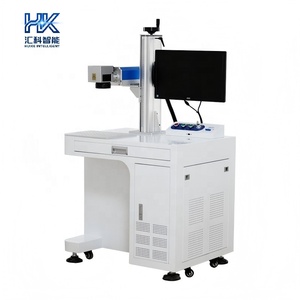
Fiber Laser Marking Machines JPT RAYCUS MAX 20W-300W High Power Marker
1064nm Wavelength
20W - 300W Optional
Metal & Hard Stone
Explore high-performance MOPA, Fiber, UV, and CO2 laser systems engineered by leading OEM/ODM manufacturers in China for ultra-precise etching on granite, marble, basalt, glass, metals, and industrial ceramics.
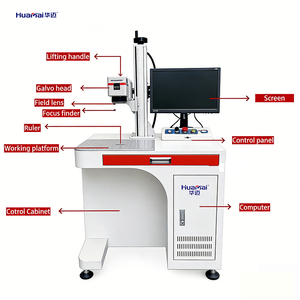
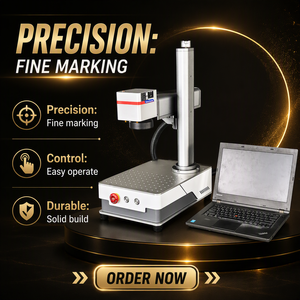
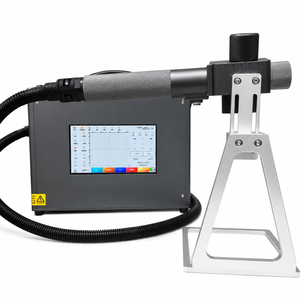
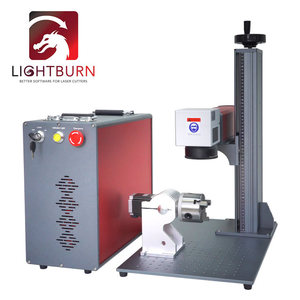
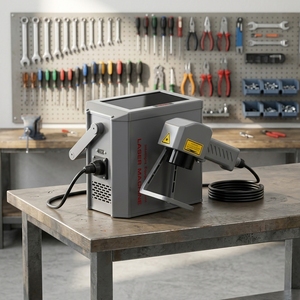
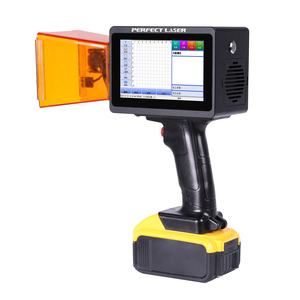
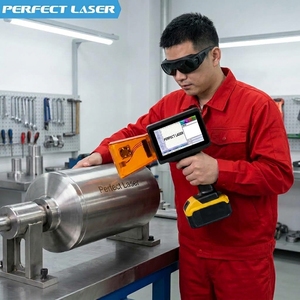
The global stone processing industry—spanning architectural masonry, memorial monuments, interior granite design, industrial ceramic marking, and decorative quartz fabrication—has experienced a structural technology shift. Traditional mechanical CNC carving and manual abrasive sandblasting are rapidly being replaced by high-power Fiber, MOPA, UV, and CO2 laser engraving systems. China has established itself as the dominant global manufacturing hub for industrial stone engravers, driven by deep supply chain integration across optics, high-rigidity CNC gantries, advanced field-programmable gate array (FPGA) control cards, and automated dust management systems.
Sourcing directly from OEM/ODM suppliers in China offers global distributors, stone fabricators, and monument manufacturers immense financial and technical advantages. Chinese OEMs consolidate tier-1 optical source components—including Raycus, JPT, Maxphotonics, and IPG Photonics—with robust mechanical engineering practices. This integration allows international buyers to acquire commercial-grade stone laser engraving machinery at capital expenditure levels 30% to 50% lower than traditional European or North American equipment resellers, without sacrificing beam precision, structural longevity, or operational safety.
Hard natural stones like black granite, basalt, and engineered quartz possess high thermal shock sensitivity and mineral heterogeneity (quartz, feldspar, mica). China's leading laser OEMs optimize beam quality (M² < 1.4) and pulse frequency matching (up to 4000 kHz in MOPA setups) to induce micro-fracturing thermal ablation without causing catastrophic structural cracking across stone slab boundaries.
As global procurement managers evaluate China wholesale suppliers for stone laser engravers, several technology trajectories are redefining factory specifications. Understanding these technical shifts ensures that capital investments remain productive and future-proof over a 10-year equipment lifecycle.
Moving beyond standard 20W/30W entry systems, industrial buyers are adopting 100W, 200W, and 300W JPT M7/MOPA fiber lasers. Higher wattage enables deep relief engraving into dense black granite and tombstone surfaces in a fraction of the time required by lower-power lasers.
3D dynamic galvanometers paired with real-time laser displacement sensors allow the laser head to map uneven, curved, or rough-hewn stone surfaces automatically. This eliminates complex manual fixturing and preserves uniform mark depth across 3D stone faces.
Next-generation machines integrate dual optical paths—combining 10.6µm CO2 gas lasers for organic/soft stone micro-smoothing with 1064nm Fiber or 355nm UV for high-contrast, crisp etching on polished slate and ceramic tiles.
With global ESG environmental regulations tightening, modern Chinese stone engravers incorporate enclosed Class 2 cabinets equipped with HEPA multi-stage industrial dust extractors and closed-loop water mist suppressors to protect optical galvo mirrors.
The table below summarizes the operational performance, substrate suitability, and cost efficiency parameters of modern laser stone processing vs. legacy mechanical systems:
| Processing Technology | Compatible Stone Substrates | Marking Speed / Precision | Tool Wear & Consumables | Environmental / Operator Safety |
|---|---|---|---|---|
| High-Power MOPA Fiber Laser | Black Granite, Basalt, Slate, Engineered Quartz | Ultra-Fast (Up to 12,000 mm/s), ±0.001mm | Zero Consumables (100khr diode rating) | High (Enclosed exhaust, non-contact) |
| 355nm UV Cold Laser | Polished Glass, Jade, Fine Marble, Ceramic Tiles | High Precision, Zero Micro-Fissures | Zero Consumables (Air-cooled options) | Ultra-Clean (Zero thermal haze) |
| CO2 Galvo Laser (10.6μm) | Sandstone, Limestone, Travertine, Wood-Stone | Fast Rastering, Smooth Surface Micro-Melt | Gas tube replacement after 15k-20k hours | Requires Fume Extraction System |
| CNC Diamond Milling Router | Soft Marble, Limestone, Soft Composites | Slow Linear Speed, Limited to Tool Radius | High (Diamond bits wear out rapidly) | Requires Continuous Slurry/Water Flush |
| Sandblasting (Abrasive) | All Stone Substrates (Depth Etching) | Labor Intensive (Stencil setup required) | Very High (Stencils, Abrasive Grit) | Dust Hazard (Requires Silicosis Protection) |
Selecting a direct manufacturer in China requires verifying engineering credentials, optical assembly standards, quality management certifications, and post-sale technical support infrastructure. Our manufacturing facilities adhere to strict industrial quality controls designed for high-uptime enterprise production.
Every laser system is manufactured under ISO 9001 quality management standards and carries full CE, FDA (CDRH accessions), and RoHS compliance documentation for frictionless international customs clearance.
Prior to crating and export shipping, optical laser sources undergo a rigorous 100-hour continuous power stability test to verify beam mode stability, thermal dissipation, and galvo drift limits under maximum duty cycle.
We offer modular platform engineering: custom gantry stroke sizes (up to 3000x2000mm bed capacity), integration of dual-head gantries, rotary axis indexers, and automated inline conveyor systems for high-volume stone tile manufacturing.
Our dedicated field support engineers provide 24/7 online video assistance, remote software setup (EzCad, LightBurn, KCAM), replacement spare parts dispatch within 48 hours, and comprehensive operator training modules.
To maximize Return on Investment (ROI) and prevent procurement delays, international buyers should follow this standardized sourcing checklist when negotiating with wholesale suppliers:
Send sample stone slabs (Granite, Marble, Quartz) to our application laboratory for complimentary material testing. We provide high-resolution optical microscopic reports and benchmark speed parameters before order placement.
Ensure your supplier explicitly specifies brand names for critical optical path components: JPT/Raycus/MAX laser sources, Sino-Galvo scan heads, and F-Theta field lenses (Opex or Cloudray optical quartz coatings).
Verify that the structural chassis utilizes heavy-duty welded tubular steel or cast iron frames. High galvo speeds (up to 12,000mm/s) produce micro-vibrations; lightweight aluminum frames cause ghosting on stone portrait engravings.
Industrial machinery must be sealed in vacuum moisture-proof foil bags and enclosed within fumigation-free solid wooden crates equipped with shock-absorption mounting pads to withstand long ocean container transport.
Technical, logistical, and operational answers curated by senior optical engineers to streamline your procurement decision:
For high-contrast photographic portrait etching on polished black granite (such as Shanxi Black), a JPT MOPA Fiber Laser (1064nm wavelength) with variable pulse width controls (1ns to 500ns) is the gold standard. The adjustable pulse duration allows fine control over micro-chipping depth, producing distinct grayscale tones without burning or dulling adjacent stone pixels.
Yes. By equipping our machines with a 3D Dynamic Galvanometer Scanning System and an auto-focus z-axis displacement sensor, the focal point dynamically adjusts within a focal depth range of up to ±40mm to ±80mm. This enables seamless engraving over curved headstones, chamfered edges, and uneven stone reliefs without manual focal height adjustments.
Fiber laser technology is exceptionally energy efficient, converting over 30% of wall-plug electricity into optical laser power. A typical 100W fiber laser machine consumes less than 1.5 kW to 2.2 kW of total electrical power per hour (including the water chiller and control PC). The overall operating cost is generally under $0.50 to $1.20 USD per hour, excluding operator labor.
Stone dust contains highly abrasive silica particles. Our industrial engravers feature positive air-pressure blowers around the F-Theta protective window to keep dust away from the glass element. Daily maintenance requires inspecting the protective optical lens and wiping it with high-purity isopropyl alcohol using lint-free optical swabs.
Standard desktop and portable laser units ship within 7 to 10 working days. Customized large-format or multi-head laser gantries require 15 to 25 days production lead time. We offer EXW, FOB, CIF, DDP, and DAP terms. All machines include a 2-year to 3-year factory warranty covering the laser source, galvo head, and main motherboard with direct module replacement.
Partner directly with China's leading wholesale laser stone machine manufacturer. Send us your substrate specifications, target production speed, or artwork files for a comprehensive technical proposal within 24 hours.