The global metal processing, structural fabrication, and precision manufacturing sectors are undergoing a rapid technological migration toward high-efficiency, automated industrial steel cutters. As international OEMs, structural steel fabricators, toolmaking facilities, and OEM supply chains look to scale throughput while reducing unit processing costs, China has emerged as the global epicenter for industrial steel cutting machinery development and volume manufacturing. However, sourcing heavy industrial capital equipment demands far more than basic price comparisons. It requires a rigorous evaluation of machine kinematics, laser beam quality factors (M² metrics), structural dynamic rigidity, heat-affected zone (HAZ) management, and factory quality assurance standards.
This technical white paper serves as an authoritative procurement guide for B2B buyer organizations, process engineers, enterprise procurement executives, and factory workshop directors. By combining empirical performance data, core engineering principles, and supply chain insights, this paper highlights how top-tier Chinese industrial machinery manufacturers engineer industrial fiber laser cutters, heavy sheet-metal processing gantries, hybrid CO2 systems, and high-speed laser marking systems to meet stringent international standards including CE, FDA, and ISO9001 compliance.
Information Gain Insight: Beyond Machine Power
In modern industrial metal cutting, high wattage alone does not equate to productivity. Real-world throughput is governed by dynamic acceleration limits (G-force acceleration rates up to 2.0G), servo-loop response frequencies, and thermal stress relief during frame stress-annealing processes. Leading manufacturers implement heavy-duty stress-relieved welded frames paired with closed-loop linear motion packages to maintain sub-thousandth-inch accuracy over decade-long duty cycles.
Core Machine Architectures: Fiber vs. Hybrid CO2 vs. Precision Marking Systems
Selecting the optimal steel cutter configuration requires matching material physics with optical laser characteristics. Modern Chinese OEM manufacturing facilities specialize in four distinct equipment categories designed for structural steel, precision sheet metal, tube cutting, and industrial component marking.
High-Power Fiber Steel Cutters
Engineered for carbon steel, stainless steel, structural I-beams, aluminum, brass, and copper. Utilizing solid-state laser generators (Raycus, JPT, Maxphotonics, IPG) operating at 1.06 µm wavelength, these platforms deliver up to 30% electrical-to-optical conversion efficiency.
Power Capabilities: 1,000W up to 60,000W (60kW)
Kinematics: Dual servo rack-and-pinion gantries
Assist Gas Tuning: High-pressure N2, O2, or compressed air
Hybrid & Large-Format CO2 Systems
Designed for multi-material environments where manufacturers cut thick acrylics, dense wood composites, rubber gaskets, and thin metal alloys on a single machine bed. Features super-pulsed optical sources backed by 3-year factory warranties.
Power Range: 150W up to 800W super-pulsed source
Optical Advantage: Superior edge polish on non-metals
Flexibility: Combined CO2 and Fiber gantry integration
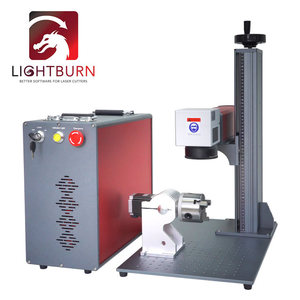
MOPA & Ultra-Fast Laser Markers
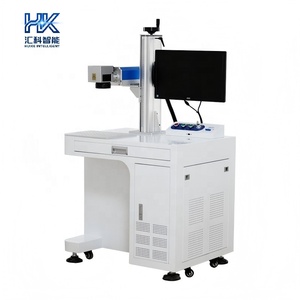
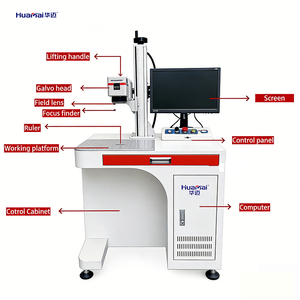
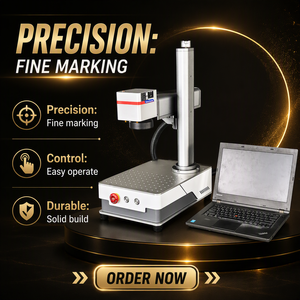
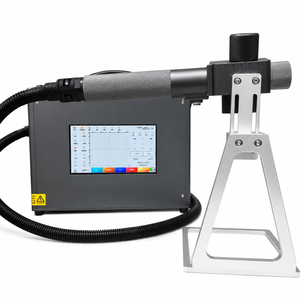
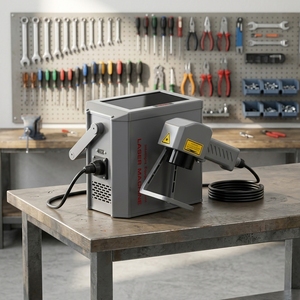
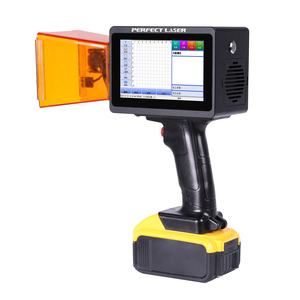
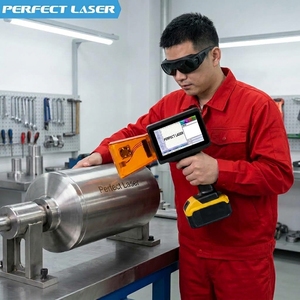
Compact desktop, handheld, and inline marking stations featuring adjustable pulse durations (2ns to 500ns). Capable of high-contrast black marking on anodized aluminum, color marking on titanium, and serializing hardened steel tooling.
Laser Sources: JPT M7 MOPA, Raycus, UV, CO2
Mobility: Integrated battery & portable options
Features: Auto-focusing & 3D dynamic surface tracking
The operational lifespan and cutting fidelity of an industrial steel cutter depend upon structural engineering. Premier Chinese machinery builders follow rigid machine-tool engineering standards, replacing lightweight aluminum tube frames with heavy-plate welded steel beds that are thermally stress-relieved in high-temperature annealing furnaces to eliminate internal stresses before high-precision CNC surface milling.
1. Heavy-Duty Stress-Relieved Welded Frames
To resist dynamic distortion during high-acceleration directional changes, machine beds are constructed from thick structural plate steel. Furnace annealing at temperatures exceeding 600°C releases residual welding stresses. This process ensures the machine bed retains its dimensional geometry across decade-long multi-shift production environments, maintaining flat motion reference surfaces within ±0.02 mm across a 5x10 foot cutting bed.
2. Precision Closed-Loop Servo Drives & Linear Motion
Precision dynamic motion requires seamless integration of dual-drive Y-axis gantries equipped with absolute encoders, high-torque AC servo motors, and ground helical gear racks. By replacing open-loop step systems with closed-loop servo feedback loops, machine controllers monitor positional errors every 10 microseconds, delivering positioning accuracy within ±0.001" (0.025 mm) and repeatability under ±0.0008" (0.02 mm).
3. K-Vision Camera Registration & Software Intelligence
Advanced vision registration software represents a major technical advancement in sheet material processing. Utilizing high-resolution CCD cameras mounted adjacent to the optical cutting head, smart vision software automatically detects optical fiducials, pre-printed artwork boundaries, or raw sheet edge skews. The integrated CAD/CAM software (such as KCAM suite) dynamically shifts, rotates, and scales the cut vectors in real-time, eliminating manual fixturing setup times and reducing material scrap rates by up to 18%.
Future Procurement Trends in Industrial Steel Cutting Equipment (2026–2030)
Strategic B2B procurement leaders must anticipate upcoming industry shifts to ensure long-term equipment viability and continuous operational efficiency. Analysis of global machinery purchasing patterns reveals four dominant technological trends shaping the industrial steel cutting market:
Ultra-High Wattage Fiber Scaling (30kW to 60kW):
While 6kW to 12kW fiber lasers remain industry standards for general sheet metal fabrication, heavy structural steel fabricators are transitioning toward 30kW+ fiber platforms. These ultra-high-power units allow thick stainless steel (up to 50mm) and carbon steel structural plates to be cut using high-pressure air assist, reducing per-part gas costs by up to 70% compared to liquid oxygen assist gas setups.
Integration of AI-Powered Nesting & CAD/CAM Algorithms:
Modern automated nesting engines leverage machine-learning algorithms to optimize part layout configurations, common-line cutting paths, and thermal distortion avoidance strategies. Real-time sensor feedback embedded inside smart cutting heads measures nozzle distance, cover-slide temperature, and back-reflection levels to prevent machine downtime.
Automated Material Handling & Shuttle Table Loading:
To eliminate spindle downtime during manual loading and unloading operations, dual-table automatic shuttle systems (OptiShuttle systems) and automated tower storage units are rapidly becoming baseline requirements for high-volume manufacturing facilities worldwide.
Environmentally Enclosed Class 2 Laser Safety:
International safety compliance standards are accelerating the adoption of fully enclosed Class 2 safety cabinets across university workshops, shared manufacturing spaces, and modern factory floors. High-volume air filtration and exhaust interlocks protect machine operators from airborne particulate matter and reflected laser energy.
China Wholesale Manufacturing & Global OEM Supply Chain Advantages
Partnering directly with established Chinese wholesale steel cutter manufacturers offers distinct strategic advantages for overseas equipment distributors, machinery OEMs, and end-user manufacturing enterprises:
Unmatched Cost-to-Performance Ratios: Complete supply-chain integration in major industrial clusters (Jinan, Shenzhen, Wuhan) allows manufacturers to offer enterprise-grade machinery featuring premium components (HIWIN linear guides, Schneider electricals, Yaskawa servos, Raycus/JPT laser sources) at direct-factory pricing.
Comprehensive OEM & ODM Customization: Factory engineering teams support custom gantry widths (up to 12-meter beds), specialized tube-cutting rotary chuck setups, multi-head gantry configurations (OptiDual series), and private-label exterior housing styling.
Stringent Quality Assurance Architecture: Every unit undergoes rigorous 48-hour continuous laser burn-in testing, laser interferometer pitch accuracy calibration, squareness alignment testing, and dynamic vibration analysis before final seaworthy packaging.
Global Engineering Support & Warranty Coverage: Top-tier manufacturers back their core optical sources with industry-leading 3-year warranties, supported by 24/7 remote desktop diagnostics, worldwide spare-parts logistics networks, and on-site technician deployment options.
Industrial Buyer Procurement FAQ
What key specifications dictate the cutting capability of a steel cutter?
Primary cutting capability is governed by three main metrics: laser source wattage (determines maximum sheet thickness and line speed), optical beam parameter product (BPP/M² factor which dictates laser energy concentration), and mechanical gantry acceleration (G-force rating). Additionally, assist gas selection (Nitrogen for clean burr-free edges, Oxygen for exothermic carbon steel cutting, Compressed Air for economy) directly impacts edge quality and continuous processing speeds.
How do fiber laser cutters compare to traditional CO2 laser platforms for metal processing?
Fiber lasers operate at a 1.06 µm wavelength, which is absorbed up to 5 times more efficiently by metals compared to a CO2 laser's 10.6 µm wavelength. This results in 3x faster cutting speeds on thin-to-medium metal sheets, zero internal mirror maintenance, and significantly lower electrical power consumption. However, high-power super-pulsed CO2 lasers remain superior for cutting thick non-metallic organic materials like heavy cast acrylics, wood products, and dense foam inserts.
What is the typical operational lifespan and maintenance cycle for industrial laser sources?
Premium solid-state fiber laser generators (such as Raycus, JPT, and IPG) feature an expected diode lifespan exceeding 100,000 operational hours (equivalent to over 10 years of 2-shift daily operation). Routine maintenance is minimal, primarily involving weekly cleaning of protective optical cover slides, monthly inspection of assist gas line filters, and routine lubrication of linear guide rails and drive pinions.
How are international shipping, machine installation, and technical support handled?
Industrial machinery is packaged inside heavy-duty moisture-proof wooden crates reinforced with steel framing for ocean freight transit. Upon delivery, factories provide comprehensive installation documentation, video training suites, and step-by-step commissioning assistance. Factory technical support engineers provide real-time diagnostic support via remote software links, video calls, and global distributor networks to ensure minimal setup lead times.
Request Factory-Direct Quotations & Material Sample Cuts
Work directly with our application engineering team. Send us your sheet metal specifications, CAD drawings, or raw material samples for custom cut-quality testing and ROI analysis.