Industrial B2B Sourcing & Technical Whitepaper

China Wholesale Rotary Laser Manufacturers & Suppliers

Engineering Whitepaper on High-Precision Fiber, MOPA, CO2 & UV Laser Engraving Systems with Integrated Rotary Axis Drive Modules for Global Distributors and OEM Procurement.

Featured Wholesale Rotary Laser Equipment Lineup

Direct-from-factory laser marking & engraving systems optimized for 360-degree cylindrical marking, circumferential barcoding, and deep metal micro-engraving.
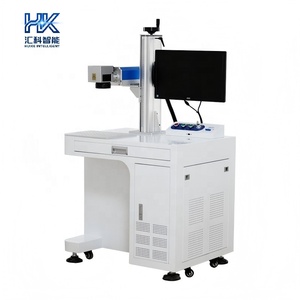
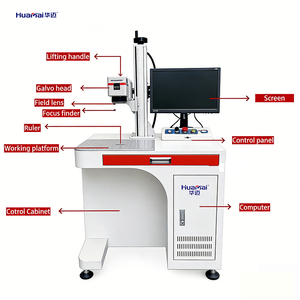
Fiber Laser Marking Machines 100W 200W 300W
Fiber Laser Marking Machines JPT RAYCUS MAX 20W-300W Metal Plastic Marker
  • Laser Source: JPT / Raycus / MAX
  • Power Range: 20W, 30W, 50W, 100W, 300W
  • Application: Deep Engraving & Fast Cutting
  • Rotary Drive: Optional 80mm Chuck
Portable Auto Focus JPT MOPA Fiber Color Laser
Portable Auto Focus 20W 30W JPT MOPA Fiber Color Printing Marking Machine
  • Technology: JPT MOPA M7 (2ns-500ns)
  • Feature: Auto-Focus Sensor & Color Marking
  • Rotary Capability: Ring & Tumbler Fixtures
  • Materials: Stainless Steel, Anodized Al, Plastic
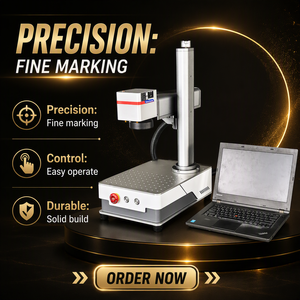
Desktop Mini Fiber Laser Marking Machine 30W
Desktop Mini Fiber Laser Marking Machine Compact 30W Stainless Steel Engraver
  • Design: Ultra-Compact Integrated Benchtop
  • Power: 30W High-Precision Raycus Fiber
  • Field Lens: 110x110mm / 175x175mm
  • Rotary Axis: Plug-and-Play Expansion Port
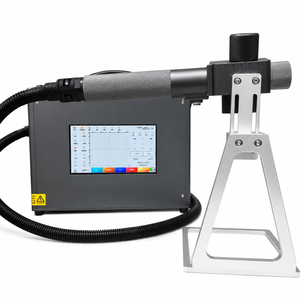
Handheld Mobile Portable Mini Fiber Laser Marking Machine
2026 Handheld Mobile Portable Mini 20W 30W 50W Fiber Laser Marker for Metal
  • Mobility: Split-Body Lightweight Design
  • Work Head: Ergonomic Handheld Scanner
  • Laser Source: Air-Cooled Sealed Fiber
  • Target Market: Heavy Machinery & On-Site Coding
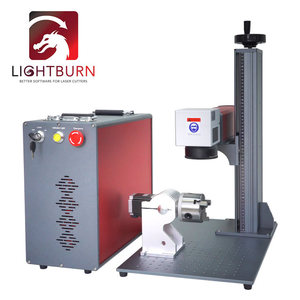
100W JPT M7 MOPA Fiber Laser with 80mm Rotary Axis
100W JPT M7 MOPA Bench-Top Laser Marker with 80mm Rotary Axis (300x300mm)
  • Rotary Unit: 80mm Precision 3-Jaw Chuck
  • Laser Power: 100W High Peak Power MOPA
  • Working Area: 300x300mm Large Scan Field
  • File Support: DXF, PLT, AI, DST, BMP, Vector
Small Desktop UV Laser Engraving Machine
Small Desktop UV Laser Engraving Machine 355nm Air Cooling Mini Laser Marker
  • Wavelength: 355nm Cold UV Light Source
  • Min Thermal Effect: Zero Heat Distortion
  • Application: Cosmetics Glass & HDPE Containers
  • Rotary Fixture: Micro Rotary for Bottles
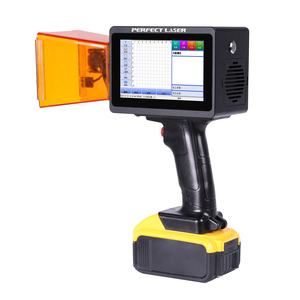
Portable Rechargeable Battery Handheld Laser Marker
Portable Laser Marker Handheld with Rechargeable Battery for On-Site Coding
  • Power Supply: Lithium Rechargeable Battery
  • Portability: Wireless Field Operation
  • Marking Range: Metals, Alloys, Hard Plastics
  • Interface: Touchscreen Embedded Controller
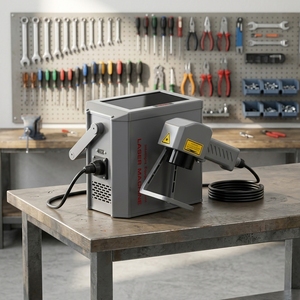
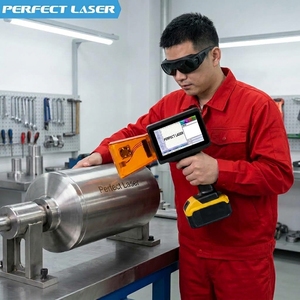
Industrial Handheld Laser Marking Machine for Metal Wood Leather
Perfect Laser Portable Handheld Laser Marking Machine for Metal Plastic Wood
  • Multi-Material: Metal, Wood, Leather, Plastic
  • Galvo Scanner: High-Speed Digital Mirror System
  • Rotary Attachment: Quick-Connect Rotary Cable
  • Enclosure: Lightweight Aircraft Aluminum

Key Manufacturing Standards & OEM Metrics

Why global machinery importers choose Chinese wholesale rotary laser manufacturing ecosystems.

100,000 hrs
Fiber Source Lifespan (MTBF)
±0.001 mm
Rotary Concentricity Accuracy
15,000 mm/s
Max Galvo Scanning Velocity
2ns - 500ns
MOPA Pulse Duration Range

Executive Whitepaper: Strategic Sourcing of Wholesale Rotary Laser Systems from China

In modern industrial manufacturing, the demand for precise, permanent trace-ability marking on cylindrical and spherical workpieces has grown exponentially. From automotive drive shafts, medical surgical drills, and aerospace hydraulic fittings to commercial stainless steel tumblers and hardware tools, traditional 2D flatbed laser marking machines fail to maintain focus and geometric uniformity along curved surfaces. This whitepaper serves as an authoritative buyer guide for enterprise procurement officers, machinery wholesalers, and OEM system integrators evaluating direct procurement of **rotary laser marking and engraving equipment from leading manufacturers in China**.

Rotary laser marking integrates high-speed galvo scanning mirrors with an electronically synchronized motor-driven rotary axis chuck (such as D80, D100, or micro-ring fixtures). By continuously rotating the workpiece in step-per-degree alignment with the laser pulse train, these systems maintain zero focal plane displacement across a complete 360-degree perimeter. Chinese OEM manufacturers have captured over 70% of the global market share in this domain by pairing robust mechanical chuck engineering with world-class fiber optic engines (JPT, Raycus, MAX Photonics) and flexible software architectures (EZCAD2/3, LightBurn, and custom KCAM controllers).

Search Intent & Market Intelligence Note
Procurement teams searching for "China Wholesale Rotary Laser Manufacturers & Suppliers" require more than low price lists. They evaluate total cost of ownership (TCO), laser pulse control fidelity, beam parameter product ($M^2$), rotary axis concentricity tolerances, and factory compliance under ISO9001, CE, and US FDA CDRH performance standards.

Core Technology Breakdown: Rotary Axis Dynamics & Laser Engine Selection

Selecting the optimal rotary laser marking machine requires a deep structural understanding of two distinct sub-systems: the mechanical rotary drive fixture and the solid-state or gas laser emitter module.

1. Rotary Axis Chuck Mechanics

Rotary attachments utilize precision 3-jaw self-centering chucks or specialized dual-roller clamping systems. Heavy-duty industrial components (D80/D100) feature zero-backlash harmonic gearboxes paired with hybrid closed-loop stepper motors. This guarantees step resolution under 0.005°, eliminating overlapping line artifacts during high-density vector hatching on curved metal pipes.

2. JPT MOPA vs Q-Switched Fiber Engines

Standard Q-switched lasers offer fixed pulse widths (~100ns) suitable for high-speed barcode etching on carbon steel. In contrast, JPT MOPA M7 laser sources allow variable pulse duration adjustment (2ns to 500ns). MOPA technology allows black annealing on medical stainless steel tubes and brilliant multi-color marking on anodized aluminum cylindrical surfaces without burning underlying substrates.

3. 355nm UV & 10.6µm CO2 Wavelengths

Non-metallic cylinders require specialized beam interactions. CO2 laser sources (10.6µm) process glass bottles, wooden rolling pins, and silicone hoses. 355nm UV "Cold Lasers" break molecular bonds directly without thermal radiation, making them essential for non-destructive marking on cosmetic containers, ampoules, and sensitive plastic pharmaceutical tubes.

Comprehensive Laser Source & Rotary Spec Matrix

Engineering comparison across standard China wholesale rotary laser configurations:

Laser Source Type Wavelength Pulse Duration Primary Materials Rotary Axis Recommended Max Engraving Speed
Raycus / MAX Fiber 1064nm 90 - 120 ns (Fixed) Stainless, Carbon Steel, Brass, Hard Plastics D80 Standard 3-Jaw Chuck 7,000 mm/s
JPT MOPA M7 Fiber 1064nm 2 - 500 ns (Adjustable) Anodized Aluminum (Color), Stainless Blackening D80 / D100 Precision Chuck 9,000 mm/s
UV Cold Laser 355nm < 15 ns Glass, HDPE, Cosmetics Packaging, Medical Polymers Micro Jewelry / Bottle Roller Fixture 5,000 mm/s
CO2 RF / Glass Tube 10.6 µm Continuous Wave / Pulsed Wood, Acrylic, Glass, Leather, Organic Tubes Heavy-Duty Dual-Roller Bed 4,000 mm/s

2026-2030 Procurement Trends: The Next Generation of Rotary Lasers

As global automation standards shift toward Industry 4.0 integration, direct B2B purchasers must anticipate technological advancements to prevent machine obsolescence. Chinese manufacturers are pioneering several critical innovations in rotary laser design:

Trend 1: 3D Dynamic Focus Scanning without Mechanical Rotary Axis

Advanced 3D galvo head technology incorporates a dynamic optical z-axis lens that rapidly changes focus in real time. For cylindrical arc angles under 90 degrees, 3D dynamic focus software compensates for surface curvature instantly, allowing high-speed marking without waiting for mechanical workpiece rotation—boosting throughput by over 300%.

Trend 2: Integrated Machine Vision & AI Auto-Alignment

High-resolution coaxial or side-mounted camera vision systems (such as K-Vision integration) automatically identify seam positions, pre-printed graphics, or angular reference points on cylindrical objects. The machine automatically offsets rotation and tilt errors, eliminating manual fixturing setup times for short-run OEM job shops.

Trend 3: High-Power MOPA Deep Engraving (100W to 300W)

Historically, deep metal rotary engraving relied on mechanical CNC milling. Modern 100W-300W high-power MOPA fiber lasers combine immense single-pulse power with fast repetition rates, ablating metal efficiently to carve deep serial numbers, tool flutes, and mold cavities in seconds with zero tool wear.

Trend 4: Plug-and-Play Smart Fieldbus Architecture

Export-oriented factories are standardizing on CANopen and EtherCAT digital communication protocols. Modern rotary attachments operate as true 4th-axis slave nodes in full CNC control loops, facilitating seamlessly integrated robotic arm loading and unloading on automated assembly lines.

Why Partner with Premier China Rotary Laser Manufacturers?

Building high-performance rotary laser systems requires harmonizing heavy machinery fabrication with microscopic optical alignment. Our partner manufacturing facilities combine four decades of machine building precision with agile laser innovation.

Rigid Welded Steel Frames

Stress-relieved, fully welded steel chassis prevent thermal distortion and operational vibration, preserving ±0.001" positional accuracy under multi-shift operation.

3-Year Factory Warranty

All in-house engineered CO2 and fiber laser sources carry comprehensive 3-year warranty coverage, backed by direct factory engineering technical support.

CE / FDA Compliance

Every machine shipped overseas complies with international laser safety standards, complete with interlocked Class 2 safety enclosures and dual-channel safety relays.

OEM & Custom Fixturing

From micro-ring expanders for jewelry to heavy 50kg hydraulic shaft chucks, our engineering team custom-designs rotary workholding to match your exact part prints.

B2B Sourcing Guide: How to Audit & Qualify Chinese Rotary Laser Suppliers

When evaluating wholesale suppliers for rotary laser machinery, international buyers should institute a rigorous multi-stage qualification checklist before issuing purchase orders:

  • 1. Verify Laser Source Authenticity & Serial Tracking Ensure the supplier provides direct manufacturer certificate documentation from Raycus, JPT, or MAX. High-tier suppliers provide direct serial optical test reports verifying output wattage and $M^2$ beam quality factor (< 1.3).
  • 2. Evaluate Rotary Axis Concentricity & Backlash Tolerances Request dial-indicator runout video tests. A premium rotary chuck must exhibit concentricity variation under 0.02mm. Excessive runout causes fuzzy focus and distorted barcode scanning along cylindrical perimeters.
  • 3. Inspect Optical Bench Thermal Management High-power fiber lasers (50W+) generate localized heat in the galvo optical head. Confirm that the optics housing incorporates active heat sinks or air/water cooling channels to prevent thermal drift during 24/7 continuous factory production.
  • 4. Software & Fieldbus Compatibility Confirm that controller cards (such as BJJCZ EZCAD3 or proprietary KCAM platforms) support 64-bit operating systems, true 3D rotary vector slicing, and dynamic pulse frequency modulation per angle segment.

Procurement FAQ: Rotary Laser Systems & Wholesale Direct Sourcing

Clear engineering answers to common technical and logistics queries raised by equipment importers.

How does a rotary laser axis function with a fiber laser marking system?
The rotary axis connects directly to the laser controller card's 4th-axis pulse and direction drive signals. As the EZCAD software executes vector artwork, it divides the cylindrical design into micro-slits. The motor rotates the workpiece by precise angular increments while the galvo scanner fires laser pulses along the linear axis, ensuring the focal point remains perfectly perpendicular to the apex of the curved surface.
What is the difference between Q-Switched and JPT MOPA fiber laser sources for rotary marking?
Q-switched fiber lasers operate with a fixed pulse duration (~100-120ns), making them ideal for high-speed deep engraving and basic marking on metals. JPT MOPA lasers allow operators to adjust the pulse width from 2ns to 500ns independently of frequency. This enables delicate heat control required for vivid color marking on titanium/anodized aluminum tumblers, damage-free marking on ABS plastic sleeves, and high-contrast black annealing on medical grade stainless steel shafts.
Which rotary chuck size should I specify for my manufacturing line (D80 vs D100 vs Roller)?
The D80 (80mm 3-jaw chuck) is the industry standard for lightweight to medium parts such as rings, drill bits, socket wrenches, and small pipes weighing under 5kg. The D100 (100mm chuck) features heavy-duty bearings for solid steel shafts and industrial hydraulic components up to 15kg. For large-diameter hollow cylinders or stainless steel insulated tumblers, a dual-roller friction bed attachment is recommended to prevent surface clamping scratches.
Can UV laser marking machines perform 360-degree rotary marking on fragile glass tubes?
Yes. 355nm UV lasers produce "cold processing" photolytic reactions that break chemical bonds without mechanical force or thermal shock. When paired with a high-precision micro-rotary fixture, UV systems mark ultra-fine 2D data matrix codes and scale graduations on thin-walled glass ampoules, cosmetic bottles, and pharmaceutical syringes without causing micro-cracks or structural failure.
What software control systems are compatible with China wholesale rotary lasers?
Most machines ship standard with genuine BJJCZ control cards compatible with EZCAD2 or 64-bit EZCAD3 (supporting 3D dynamic focus and surface wrapping). Upgraded industrial units support LightBurn software or custom proprietary KCAM interfaces capable of handling DXF, PLT, AI, SVG, and high-density bitmap file formats.
What cooling and environmental conditions are required for continuous operation?
Fiber laser systems up to 100W are 100% air-cooled and operate reliably between 15°C and 35°C ambient temperatures. High-power CO2 glass tube units and specialized high-wattage UV lasers require closed-loop industrial water chillers (CW-5000/5200 series) to maintain laser cavity thermal stability. Fume extraction units with HEPA and active carbon filtration are strongly recommended to capture airborne metallic dust and particulate vapor.
How do Chinese manufacturers guarantee concentricity and optical alignment during export transit?
Leading exporters utilize heavy-gauge extruded aluminum optical columns bolted to stress-relieved steel plates. Rotary fixtures are pinned with precision dowels to ensure repeat alignment. Prior to ocean or air freight, equipment undergoes 48-hour continuous burn-in testing and optical vibration testing, followed by vacuum-sealed moisture barrier packaging inside reinforced wooden export crates.
What safety certifications are required to import rotary lasers into North America and Europe?
Importing into Europe requires CE certification under the Machinery Directive (2006/42/EC) and Low Voltage Directive, along with EN 60825-1 laser safety compliance. Sourcing into the United States requires FDA CDRH accession number registration. Fully enclosed rotary workstations are rated Class 1 for safe operation in open shop environments, whereas open-bed systems operate under Class 4 requiring mandatory protective eyewear.
What is the expected operating lifespan and maintenance routine for a fiber rotary laser?
Solid-state fiber laser sources (JPT/Raycus) exhibit a Mean Time Between Failures (MTBF) exceeding 100,000 operational hours (equivalent to over 10 years of multi-shift industrial use). Routine maintenance is minimal: cleaning the F-Theta field lens with isopropyl alcohol, lubricating the rotary chuck scroll gears monthly, and replacing air intake dust filters periodically.
How can international procurement teams request custom OEM rotary engineering and sample testing?
Buyers can submit sample workpieces directly to our application laboratory. Our engineers perform comprehensive lens selection, pulse optimization, and rotary cycle time studies, delivering high-resolution video recordings, edge-roughness measurements, and turn-key wholesale factory quotes.

Request Wholesale Factory Pricing & OEM Technical Proposals

Connect directly with our application engineering team to analyze your sample workpieces, specify rotary chuck configurations, and receive direct factory wholesale pricing.