Direct factory wholesale supply of precision MOPA fiber, CO2, UV, and portable laser markers. Engineered for high-speed color marking, deep engraving, and fine thermal control across metals and plastics.
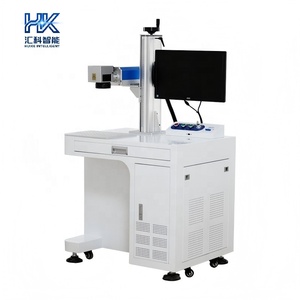
Laser Power: 100W / 200W / 300W
Source Options: JPT M7 / Raycus / MAX
Applications: Heavy Metal & Plastic Engraving
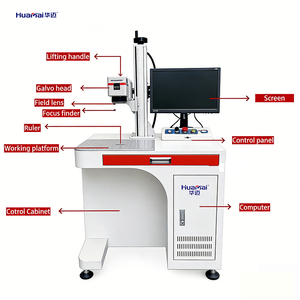
Laser Power: 20W / 30W MOPA (JPT)
Feature: Motorized Auto-Focus System
Capability: Stainless Steel Color Marking & Anodized Black
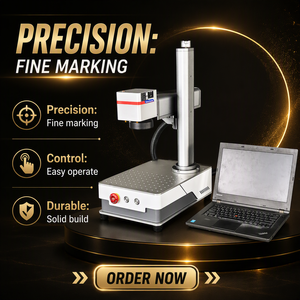
Laser Power: 30W Precision Source
Design: Lightweight Benchtop Enclosure
Target: Hardware, Tools & Small Components
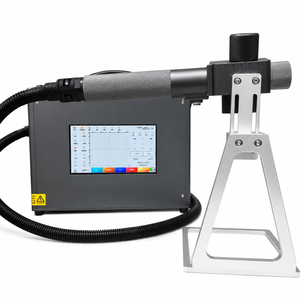
Laser Power: 20W / 30W / 50W
Mobility: Ultra-Light Scan Head for On-Site Work
Best For: Large Machinery & Heavy Metal Marking
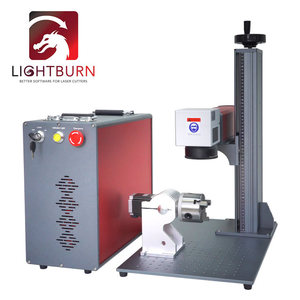
Laser Source: JPT M7 MOPA (Pulse 2-500ns)
Working Area: 300x300mm + Rotary Axis
Cooling: High-Efficiency Air Cooled System
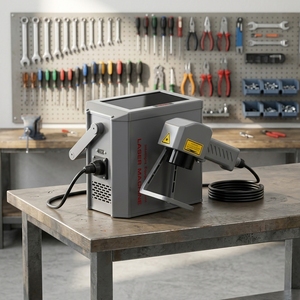
Wavelength: 355nm Cold Laser
Cooling: Integrated Compact Air Cooling
Application: Cosmetic Packaging, Glass & Sensitive Plastics
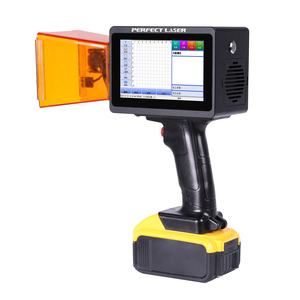
Power Supply: High-Capacity Rechargeable Lithium Battery
Operation: Standalone Touchscreen System
Use Case: Outdoor Pipe, Structure & Inventory Coding
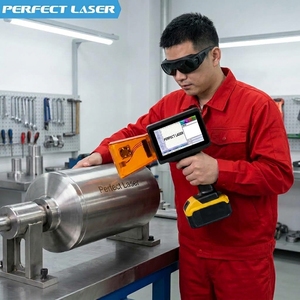
Capability: Metal, Hard Plastics, Leather, Wood
Gantry Style: Modular Handheld Ergonomic Gun
Speed: High-Speed Galvo Scan System
Direct factory benchmark specs ensuring structural integrity, pulse precision, and zero-defect global shipments.
The industrial laser processing landscape has undergone a paradigm shift over the past decade. Where standard Q-switched fiber lasers once dominated the marking and micro-machining sectors, Master Oscillator Power Amplifier (MOPA) fiber laser technology has emerged as the definitive standard for advanced manufacturing applications. As primary China wholesale MOPA laser manufacturers and direct global exporters, our engineering focus is directed toward bridging the gap between high-frequency pulse flexibility, optoelectronic stability, and economical enterprise procurement.
Information Gain Insight: Unlike conventional Q-switched fiber lasers which tie pulse width directly to repetition frequency, MOPA laser architecture allows independent regulation of pulse width (duration) and pulse repetition rate (frequency). This independent control unlocks unprecedented processing capabilities, such as non-destructive black marking on anodized aluminum, vibrant color marking on stainless steel, and damage-free processing of delicate plastic materials.
To evaluate the technical ROI of importing MOPA laser markers from China, procurement engineers must examine the underlying laser physics. Standard Q-switched laser modules utilize an optical switch inside the laser cavity to produce high-energy pulses. However, as frequency increases, individual pulse energy drops sharply, and the pulse width widens automatically—causing unwanted Heat-Affected Zones (HAZ), material melting, or micro-cracking on sensitive substrates.
Conversely, a MOPA fiber laser decouples pulse generation from amplification. A semiconductor laser diode acts as the "Master Oscillator" (seed source), generating customizable light pulses across a broad duration spectrum (typically 2ns to 500ns). These pulses are then fed into a high-gain fiber amplifier ("Power Amplifier"). This yields several core metallurgical advantages:
| Performance Parameter | Standard Q-Switched Fiber Laser | JPT M7 / Premium MOPA Laser | Operational Impact & Advantage |
|---|---|---|---|
| Pulse Duration Range | Fixed (typically 90ns – 120ns) | Adjustable (2ns – 500ns, multi-level) | Precision control over micro-thermal input |
| Repetition Frequency | Limited (20 kHz – 100 kHz) | Ultra-Wide (1 kHz – 4000 kHz) | Enables ultra-fast line scanning without overlap gaps |
| Anodized Aluminum Blackening | Poor / Causes substrate destruction | Exceptional, deep black, matte finish | Critical for consumer electronics (smartphones, laptops) |
| Stainless Steel Color Marking | Inconsistent, high heat distortion | Rich color spectrum, highly repeatable | Ideal for high-end branding and decorative hardware |
| PE/ABS/PBT Marking | High burn/charring risk | Clean foaming / precise carbonization | Essential for automotive switches & medical devices |
As an OEM/ODM manufacturing hub based in China, maintaining high E-E-A-T (Expertise, Experience, Authoritativeness, and Trustworthiness) requires stringent factory-level quality assurance protocols. Importing laser equipment requires confidence in optical component alignment, power stability, and electrical safety compliance.
Our manufacturing facility adheres to strict ISO9001:2015 production lines. Each MOPA laser marking system undergoes a rigorous 72-hour full-power burn-in test, combined with optical spectrum analyzer testing to guarantee beam quality factor ($M^2 < 1.3$). The scanning galvo heads are paired with F-Theta field lenses engineered with low thermal lensing coatings to prevent focus drift during extended continuous production shifts.
The trajectory of industrial laser manufacturing is defined by automation integration, multi-wavelength hybrid source options, and portable ergonomic hardware.
Transitioning from traditional 20W/30W modules to high-wattage 100W, 200W, and 300W MOPA architectures allows simultaneous ultra-fast deep metal engraving, continuous foil stripping, and high-volume industrial line marking.
Integration of motorized z-axis stages, dual red-light focus indicators, and 3D dynamic scanning heads enables seamless marking across curved, stepped, and complex non-planar industrial components without manual focal adjustments.
Modern B2B laser buyers require seamless integration into automated assembly lines. Our control cards support TCP/IP communication, SDK development kits for C#/Python, and direct PLC I/O triggers for automated production lines.
Breakthroughs in lithium battery power density have enabled standalone, wireless handheld laser marking units. Operators can take the laser directly to heavy castings, structural beams, and outdoor infrastructure for permanent tracking codes.
Eliminating heavy external water chillers in favor of highly efficient heat-pipe air cooling reduces benchtop footprint by 40%, lowering international air-freight costs and simplifying factory desk setup.
By standardizing cabinet dimensions, power supplies, and fiber connectors across our JPT, Raycus, and MAX product lines, distributors can minimize spare-part inventory and simplify regional field maintenance.
Sourcing industrial machinery directly from top China laser manufacturers requires a comprehensive evaluation of Total Cost of Ownership (TCO), customs compliance, and technical support frameworks. B2B procurement directors must navigate several crucial purchasing vectors:
When requesting quotations for MOPA fiber lasers, specified source models must be audited carefully. The JPT M7 Series is widely recognized as the industry benchmark for MOPA technology due to its linear waveform control and ultra-fast pulse switching (< 10ns switching delay). While standard Q-switched sources (such as entry-level Raycus or MAX modules) are economical for basic metal etching, they lack the adjustable pulse width range required for specialty plastics, thin-film stripping, and high-contrast aluminum blackening.
All industrial laser systems exported by certified OEM manufacturers must comply with destination-market safety regulations. Key compliance checkpoints include:
Solid-state MOPA fiber lasers possess an extraordinary maintenance-free operational lifespan exceeding 100,000 hours (MTBF). With no consumable flashlamps or gas refills required, operating costs are primarily limited to minimal electrical consumption (typically under 600W for a standard air-cooled 30W-100W marker). Partnering directly with a primary wholesale manufacturer ensures direct factory pricing on spare galvo mirrors, field lenses, control cards, and replacement power supplies.
Answers to common technical, commercial, and logistics questions from global distributors, importers, and plant managers.
The primary advantage of a MOPA (Master Oscillator Power Amplifier) laser is independent control over pulse width (duration) and pulse repetition frequency. Standard fiber lasers have fixed pulse durations (usually ~100ns). MOPA lasers (like the JPT M7 series) allow operators to adjust pulse widths from 2ns to 500ns. This enables delicate processing, high-contrast black marking on anodized aluminum, vivid color marking on stainless steel, and damage-free marking on sensitive plastics.
Yes. MOPA fiber lasers excel on all conductive metals (stainless steel, carbon steel, aluminum, brass, copper, titanium) as well as engineered plastics (ABS, PVC, Polycarbonate, Nylon, PBT). For organic materials like raw wood, glass, or clear acrylic, UV lasers or CO2 lasers are recommended. We also provide hybrid dual-source solutions for multi-material workshops.
For fine marking, barcodes, QR codes, stainless steel color marking, and plastic marking, 20W to 30W MOPA systems provide optimal control. If your production line requires deep metal engraving, fast mold etching, sheet metal cutting/stripping, or higher line speeds, 50W, 100W, or 200W MOPA sources are significantly more productive.
All our wholesale MOPA laser systems include a comprehensive 2 to 3-year factory warranty. We provide direct engineer-to-engineer technical support via remote desktop diagnostics, video support, complete wiring schematics, and fast international dispatch of replacement components.
Yes, we specialize in OEM/ODM wholesale manufacturing. We provide custom machine frame colors, private-label branding, customized software interfaces, custom sheet-metal enclosures, and tailored packaging to meet the market positioning of our regional distributor partners.
Get direct factory wholesale pricing, tailored technical specifications, and expert OEM consultation. Upgrade your laser marking capabilities today.