Engineered for high repeatability, sub-micron spot sizing, and 24/7 continuous industrial production lines.
In the contemporary manufacturing landscape, the demand for precision micron-level material processing has escalated exponentially. As global buyers navigate sourcing decisions, evaluating **China wholesale micro laser suppliers and exporters** requires a rigorous understanding of beam physics, optical architecture, dynamic galvanometric response, and long-term laser source stability.
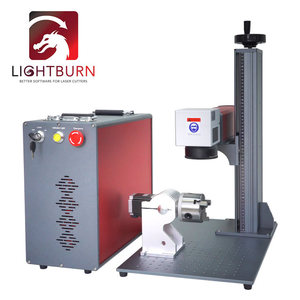
Micro laser machines represent the culmination of optoelectronic miniaturization. Unlike legacy high-power macro-cutting systems focused purely on localized thermal melting, micro laser systems emphasize extreme peak power density, ultrashort pulse durations, and micro-focused focal spots (often < 20 μm). Whether deploying **MOPA fiber lasers**, **air-cooled UV lasers**, or **nanosecond/picosecond pulse generators**, B2B buyers must evaluate systems on total cost of ownership (TCO), Mean Time Between Failures (MTBF), and spatial beam distribution (M² factor).
China has solidified its position as the world's leading manufacturing hub for micro laser systems by combining robust domestic supply chains (such as JPT, Raycus, and MAX laser engines) with high-grade optical galvanometers, intuitive EZCAD/KCAM software platforms, and rigorous international quality control standards (ISO9001, CE, FDA).
Empirical technical parameters achieved across our factory-tested micro laser platforms.
Compare core laser source technologies to select the exact system for your manufacturing application.
| Laser Source Technology | Operating Wavelength | Typical Substrates | Key Process Advantages | Primary Industrial Use Case |
|---|---|---|---|---|
| Standard Q-Switched Fiber | 1064 nm | Metals, Opaque Plastics, Carbon Steel | High energy density, economical maintenance, robust thermal stability | Industrial part identification, serial number coding, tool marking |
| MOPA Fiber (Adjustable Pulse) | 1064 nm | Stainless Steel, Anodized Aluminum, ABS, Nylon | Independent control of pulse frequency and width; zero surface burning | Black marking on anodized aluminum, vivid color marking on stainless steel |
| UV Cold Laser (Solid-State) | 355 nm | Glass, Sensitive Polymers, Medical Silicone, Cosmetics Packaging | Photothermal cold processing; minimal thermal distortion; ultra-fine spot size | Micro-drilling, semiconductor wafer scribing, pharma bottle coding |
| CO2 Sealed-Tube Micro | 10.6 μm / 9.3 μm | Wood, Acrylic, Leather, Organic Materials, Glass | High absorption rates in organics; smooth edge polishing capabilities | Architectural model engraving, luxury goods coding, packaging micro-perforation |
Key technological shifts shaping global OEM manufacturing and international wholesale supply chains.
Future micro laser systems will feature embedded Machine Vision Cameras (such as K-Vision alignment systems). By auto-locating microscopic registration marks on pre-printed or irregular parts, vision systems eliminate expensive manual fixturing and achieve sub-micron placement accuracy.
While nanosecond lasers dominate current wholesale supply chains, cold ablation picosecond and femtosecond micro lasers are rapidly scaling in volume production. These ultra-short pulse lasers eliminate heat distortion entirely, unlocking micro-machining capabilities on bio-compatible implants and micro-electronics.
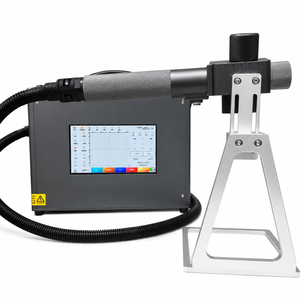
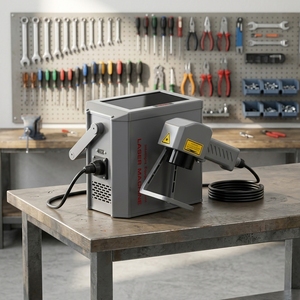
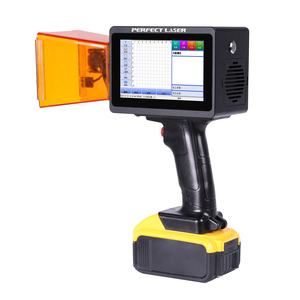
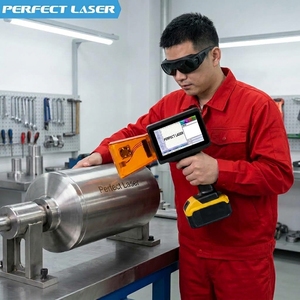
Industrial maintenance teams require field-operable coding systems. Handheld fiber laser markers equipped with lithium battery packs, lightweight galvo heads, and ergonomic triggers allow permanent marking on large structural steel, oil pipes, and aerospace components directly on site.
As a trusted manufacturer and exporter of micro laser machinery from China, we bridge advanced optical engineering with transparent enterprise sourcing.
24/7 Technical Response via Live Chat, Video Diagnostics, Remote Software Configuration, and On-Site Commissioning Support.
Get authoritative answers to technical, commercial, and operational procurement inquiries.
Standard Q-switched fiber lasers have a fixed pulse duration (typically around 100ns to 120ns), making them ideal for heavy-duty metal marking and deep engraving. In contrast, MOPA (Master Oscillator Power Amplifier) fiber lasers allow operators to adjust the pulse width dynamically from 2ns to 500ns. This versatility enables high-contrast black marking on anodized aluminum, vivid color marking on stainless steel, and damage-free processing of delicate plastics.
Air-cooled UV lasers (typically 3W to 5W power levels) offer an extremely compact, maintenance-free footprint perfect for desktop environments and standalone packaging lines. They eliminate external water chillers, reducing power consumption. Water-cooled UV systems are generally specified for higher wattages (8W, 10W, or 15W+) where continuous heavy-duty micro-machining or high-speed industrial lines generate significant thermal loads requiring strict temperature stabilization within ±0.1°C.
All exported micro laser systems comply with international safety regulations. Enclosed units achieve CDRH Class 2 safety standards, featuring interlocked protective doors and certified laser safety viewing windows. Open-bed and handheld systems carry Class 4 ratings and include safety goggles, emergency stop switches, key interlocks, and full documentation (CE certification, FDA accession numbers, RoHS compliance certificates, and ISO9001 factory test reports).
Our micro laser control systems natively support industry-standard vector and raster graphics platforms. Software such as EZCAD2, EZCAD3 (for 3D dynamic focusing), and KCAM integrate seamlessly with files exported from AutoCAD, CorelDRAW, Illustrator, and SolidWorks. Supported vector formats include DXF, PLT, AI, SVG, and STEP files, alongside high-resolution raster formats like BMP, JPG, PNG, and TIFF for photo engraving.
We provide direct factory-backed technical support. Laser sources (JPT, Raycus, IPG) carry 2 to 3-year manufacturer warranties. In the rare event of a component failure, replacement modules (such as galvo scanners, power supplies, or control cards) are dispatched via express air freight (DHL/FedEx). Our technical team delivers remote diagnostics via TeamViewer and video consultation, supported by an extensive network of global distributor partners.
We strongly encourage pre-procurement sample testing. Global buyers can send substrate samples (metals, engineered plastics, glass, micro-electronics) directly to our application engineering laboratory. We perform test runs utilizing various laser wavelengths, pulse widths, and speeds, returning a comprehensive test report including optical microscope high-resolution images, cycle times, and exact process parameters.
Consult with our senior laser application engineers today. Receive custom machine quotes, optical feasibility studies, and direct factory pricing within 12 hours.
Get a Quote