Direct from leading China manufacturing facilities: Precision fiber, CO2, and UV laser machinery equipped with enterprise control software, high-speed Galvo motion DSP, and automated vision alignment.
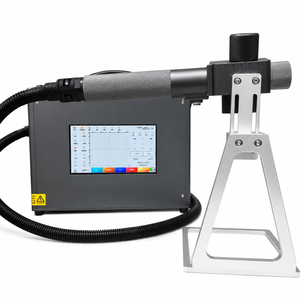
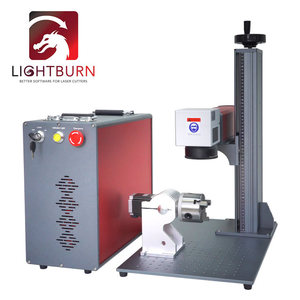
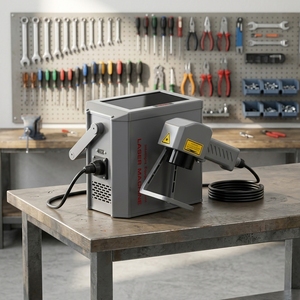
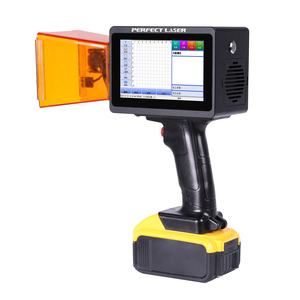
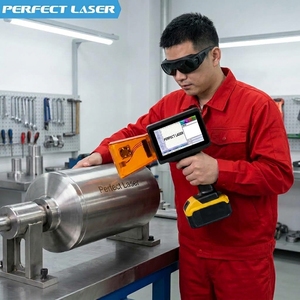
Sub-micron pulse timing control across multi-axis scan heads.
Real-time vector processing via high-speed FPGA architecture.
CE, FDA, and ISO9001 certified machinery and software suites.
Seamless API integration for C++, C#, Python, and MES software.
In the contemporary industrial laser landscape, hardware alone no longer dictates competitive advantage. While optical fibers, laser diodes, and galvanometers provide raw physical capability, the true differentiator lies in the control software, digital signal processing (DSP) algorithms, and embedded firmware architecture. As premier China wholesale laser software manufacturers & exporters, leading enterprise engineering firms bridge the gap between heavy optical machinery and intelligent Industry 4.0 automation systems.
Modern laser marking, engraving, and cutting demand precision execution down to the sub-micron scale. Achieving high-speed vector interpolation, automated dynamic focus adjustment, complex 3D surface mapping, and multi-axis synchronicity requires control software capable of handling millions of instructions per second with microsecond latency. Chinese laser software developers have evolved from localized equipment suppliers to global technology providers, developing proprietary controllers, camera-assisted machine vision modules (such as K-Vision registration), and fully customizable SDKs for industrial integrators worldwide.
Strategic Insight: The global procurement shift toward software-defined laser systems allows factory automation engineers to upgrade cutting algorithms, raster speed limits, and beam pulse shaping remotely via firmware updates without modifying capital hardware investments.
Industrial laser software operates as the central nervous system of any laser platform, whether it is a 20W portable desktop unit, a 100W MOPA pulse-tunable marker, or an enclosed multi-kilowatt sheet metal laser cell. Key technical modules engineered by leading Chinese exporters include:
Advanced raster-to-vector calculation algorithms convert complex CAD files (DXF, PLT, AI, STEP) into low-latency pulse trains, eliminating corner burn and line distortion at high marking speeds.
Interpolated multi-axis control seamlessly coordinates XY dual-galvanometer mirrors with Z-axis autofocus motors and rotary indexers for continuous 360-degree cylinder engraving.
Integrated vision registration software automatically recognizes pre-printed fiducial marks, corrects substrate angular skew, and dynamically adjusts laser offset in under 10 milliseconds.
To fully evaluate wholesale laser control software, engineering buyers must examine the multi-tier software architecture. Chinese software developers design solutions around three core operational layers:
1. User Application Layer (GUI): Modern graphical user interfaces must balance operational simplicity for floor technicians with deep parametric control for process engineers. Features include parametric material libraries (pre-configured power, frequency, speed, and line spacing profiles for stainless steel, anodized aluminum, acrylic, wood, and polymers), variable data generation (dynamic QR codes, Serialization numbers, GS1 barcodes, and micro-text), and visual layer management.
2. Motion Execution & Middleware Layer: Operating between the GUI and hardware, the middleware interprets vector graphics into hardware-level instructions. This layer executes essential optimizations such as automatic nesting (reducing raw material waste by up to 22%), sharp-corner deceleration, wobble mode modulation (for wide seam welding or heavy annealing), and frequency adjustment for MOPA pulse-width tuning.
3. Firmware & Hardware Abstraction Layer (HAL): Built directly into FPGA and ARM-based control boards, the HAL translates digital commands into precise analog voltages (-5V to +5V or XY2-100 digital protocols) for galvo scanheads and pulse-width modulation (PWM) signals for fiber laser power supplies (Raycus, MAX, IPG, JPT).
| Evaluation Parameter | Next-Gen Chinese Wholesale Software | Legacy Controller Systems | Industrial Impact |
|---|---|---|---|
| Communication Protocol | USB 3.0 / Gigabit Ethernet / Wi-Fi IoT | Legacy RS232 / USB 2.0 | 10x faster file transfer; remote monitoring |
| Galvo Signal Standard | Digital XY2-100 (16-bit resolution) | Analog +/- 5V signals | Eliminates electrical noise interference |
| 3D Surface Mapping | Dynamic Z-focus dynamic projection mesh | Manual height step adjustments | Enables uniform marking on curved parts |
| Automation SDK Support | Full C# / C++ / Python / RESTful API | Proprietary locked DLL libraries | Rapid integration into inline PLC production |
| Software License Model | Wholesale OEM Bundled / Perpetual | High annual recurring fees | Drastically lowers total cost of ownership (TCO) |
The contemporary laser machinery market thrives on global engineering integration. Leveraging deep roots in precision machine design—exemplified by standards perfected by pioneering US system builders such as Kern Laser Systems in Wadena, Minnesota—combined with the massive supply chain efficiency and scalable manufacturing power of Chinese exporters like DYC Machinery, global buyers enjoy the best of both worlds.
Our manufacturing philosophy combines heavy-duty mechanical frame construction (stress-relieved welded steel beds, ground linear guides, servo motion control) with high-volume Chinese manufacturing agility. This dual-pillar approach yields profound advantages for B2B buyers:
Every exported system undergoes 72-hour continuous laser power stability testing, optical beam quality measurement (M2 factor), and electrical safety inspection adhering to international standards.
Wholesale machinery buyers and distributors receive fully white-labeled software interfaces, custom splash screens, localized multi-language UI, and tailored parametric defaults.
Eliminate costly downtime with 24/7 remote desktop diagnostics, firmware flash updates, cloud backup of laser tuning parameters, and rapid component fulfillment.
As manufacturing moves toward total digital integration, several key technology vectors will redefine the procurement criteria for laser software and export machinery over the next decade:
Future laser software will rely heavily on embedded neural networks and edge-AI camera systems. Rather than relying on simple pattern matching, AI software will automatically detect surface micro-defects, adjust laser power real-time to match varying material oxidation levels, and inspect mark quality post-execution (pass/fail sorting) without slowing conveyor cycle times.
Wholesale enterprise software is evolving beyond individual machine control toward multi-factory cloud telemetry. Factory managers can monitor diode degradation, chiller temperature variance, power consumption, and operator cycle times across hundreds of deployed laser markers from a unified web dashboard. Predictive algorithms notify maintenance teams before laser source failure occurs, preventing unplanned production stoppages.
With the rapid adoption of UV cold lasers, picosecond, and femtosecond pulse technologies, laser control software must offer precise pulse-shaping controls. Advanced software allows operators to manipulate individual laser pulse waveforms (tuning peak power, pulse duration from 2ns to 500ns, and burst modes), enabling delicate tasks such as drilling glass without micro-cracking or color-marking titanium with surgical repetition.
When selecting a Chinese manufacturer and exporter for industrial laser software integrated machinery, technical procurement directors should execute a comprehensive evaluation framework based on the following key metrics:
A. Software-Hardware Compatibility: Ensure the software seamlessly supports industry-standard laser sources (Raycus, JPT, MAX, IPG, Synrad, Coherent) and galvo heads (Sino-Galvo, ScanLab, OV-Laser). Software lock-in to inferior hardware components can restrict future maintenance.
B. SDK & Industrial Protocol Availability: For automated manufacturing lines, verify that the supplier provides robust DLLs and REST APIs supporting TCP/IP, Modbus, Ethernet/IP, and PROFINET communications for seamless PLC handshaking.
C. Software Stability & Upgrade Policies: Confirm that the exporter provides perpetual software licensing without hidden annual activation fees, accompanied by documented version history and free firmware patch releases.
Our industrial laser software natively imports all standard CAD/vector formats including DXF, PLT, AI, SVG, DST, and BMP/JPG/PNG for raster engraving. It also features direct vectorization engines to convert bitmap images into precise paths inside the software.
Yes. The unified control software platform supports multi-wavelength setups. By configuring software control parameters (PWM frequency range, duty cycle, gate timing), the same motherboard software can manage 1064nm Fiber, 10.6µm CO2, or 355nm UV lasers.
Absolutely. For qualified distributors and machinery OEMs, we provide complete white-label customization including branded software GUIs, custom splash screens, embedded company contact information, and pre-set material parameter tables.
The software captures high-resolution images of moving components on a conveyor line via industrial CMOS cameras. It calculates spatial displacement (X, Y offset and rotational angle θ) in real time, instructing the galvo scanhead to mark accurately on the fly (Marking-on-the-Fly / MOTF).
Our software fully supports Windows 7, Windows 10, and Windows 11 (both 32-bit and 64-bit architectures). Embedded Linux versions are also available for standalone touchscreen industrial controllers.
All exported laser systems carry a comprehensive 2 to 3 year factory warranty (depending on laser source configuration). Technical support includes lifetime free software updates, remote desktop debugging, video setup guides, and fast international spare part shipping.