Precision-engineered laser machinery designed for high-throughput metal fabrication, polymer marking, and micro-engraving workflows.
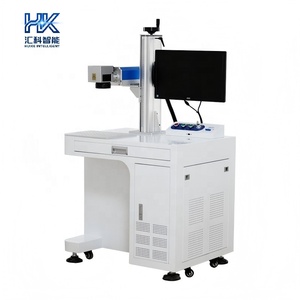
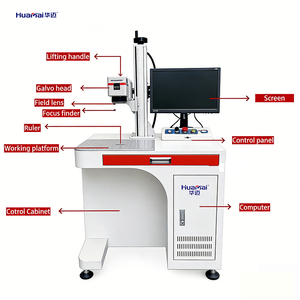
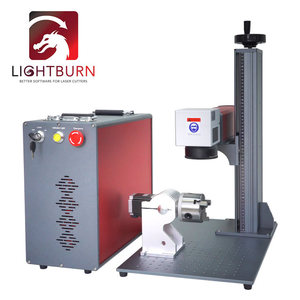
The global industrial laser processing machinery market has undergone a fundamental structural pivot over the past decade. Industrial procurement officers, sheet metal fabricators, OEM product designers, and factory automation integrators increasingly rely on direct-from-factory Chinese manufacturing partnerships. Why? Because the mature industrial ecosystem in China combines cutting-edge optical research, vertically integrated supply chains, scalable production volume, and rigorous quality control protocols that adhere to CE, FDA, and ISO 9001 standards.
When sourcing a wholesale laser cutter or precision laser marking machine from a direct manufacturer, buyers gain substantial **Information Gain**—the ability to configure custom laser optics, specify optical sources (such as Raycus, Maxphotonics, or JPT MOPA), select specialized drive mechanics (such as Japanese Yaskawa or Panasonic servo systems), and customize bed dimensions ranging from compact 24x24-inch enclosures up to full 5x10 ft open-bed gantry systems.
A reliable Chinese OEM manufacturer does not merely assemble components. Top-tier suppliers execute stress-testing protocols including 72-hour continuous laser source burn-in, interferometric laser calibration for gantry squareness, dynamic acceleration testing up to 1.5G, and beam profiling ($M^2 < 1.3$) to guarantee exact kerf predictability and long-term mechanical repeatability.
Strategic shift toward ultra-high power, energy-efficient cooling, automated loading, and intelligent optical software control.
Industrial demand is rapidly transitioning from traditional low-wattage systems toward high-wattage fiber laser cutters (6kW up to 30kW) and versatile MOPA pulse-adjustable fiber markers. MOPA technology allows independent control of pulse frequency and width, enabling high-contrast color marking on stainless steel, dark marking on anodized aluminum, and zero-burn processing on delicate polymers.
Manual jigging and template alignment are becoming obsolete. Modern industrial buyers prioritize CCD camera vision registration systems (such as K-Vision). These systems scan pre-printed graphic registration marks, calculate rotation and material stretch, and dynamically auto-correct the laser cutting path for 100% accurate contour finishing.
To maximize shop-floor ROI, factory managers prefer multi-source machines. Hybrid systems mount both a CO2 laser tube (for cutting acrylic, wood, leather, and foam) and a Fiber laser head (for carbon steel, stainless, brass, and copper) on a single gantry, eliminating the expense of purchasing two separate machines.
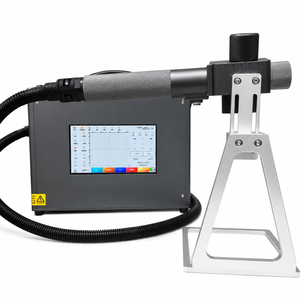
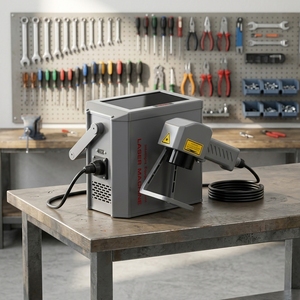
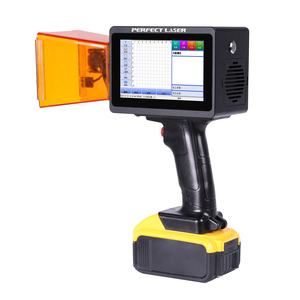
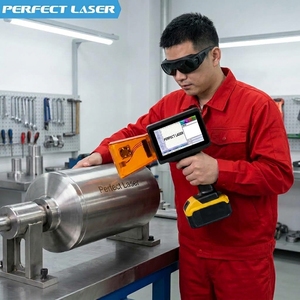
The market for portable, battery-operated, air-cooled handheld fiber laser markers is exploding. Logistics hubs, outdoor pipe fabricators, and heavy equipment maintenance teams rely on lightweight laser coding guns for permanent part tracking, serial number marking, and barcode engraving without cumbersome water chillers.
Occupational safety regulations across North America (OSHA) and Europe (CE Mark) are driving the procurement of enclosed Class 2 laser workstations. Integrated safety interlocks, fire-retardant observation windows, and built-in exhaust filtration protect operators while preserving rapid production throughput.
Minimizing spindle idle time is critical to lowering unit cost per part. Modern wholesale laser systems incorporate dual shuttle exchange tables (such as OptiShuttle), enabling operators to unload cut parts and reload raw sheets on Table A while the laser continuously processes raw stock on Table B.
Choosing the correct laser source wavelength, power output, and optical configuration is vital for achieving optimal edge quality, preventing heat-affected zone (HAZ) deformation, and maximizing production throughput.
| Laser Technology | Wavelength | Primary Target Materials | Edge Finishing Quality | Typical Lifespan |
|---|---|---|---|---|
| Fiber Laser (Raycus/Max) | 1064 nm | Stainless Steel, Carbon Steel, Aluminum, Brass, Copper | Dross-free, minimal kerf width, zero secondary grinding | 100,000 Hours |
| JPT MOPA Fiber | 1064 nm (Variable Pulse) | Anodized Aluminum, Stainless Color, ABS, PC, Polymers | Ultra-high contrast, zero thermal damage to substrates | 100,000 Hours |
| CO2 Sealed Glass/RF Tube | 10,600 nm | Acrylic, Hardwood, Plywood, MDF, Leather, PE Foam | Flame-polished acrylic edges, minimal charring on wood | 10,000 - 20,000 Hours |
| UV Cold Laser | 355 nm | Glass, Silicon, Sensitive Electronics, Cosmetic Packaging | Micro-scale precision, cold processing (no heat damage) | 30,000 Hours |
As a premier laser machinery designer and manufacturer, our production facility combines aerospace-grade structural fabrication with stringent optical calibration. We do not operate merely as an assembly plant; we are custom machine builders.
Every machine gantry undergoes high-temperature heat treating and stress relief annealing to eliminate structural tension. Precision gantry beds are CNC-milled in a single setup to maintain lifetime squareness and positional accuracy of ±0.001 inches.
We integrate world-renowned tier-1 componentry: Raycus, MAX, or JPT laser engines, Schneider electrical systems, PMI/HIWIN linear guide rails, and genuine S&A industrial water chillers to ensure uninterrupted 24/7 industrial duty cycles.
We support regional distributors, equipment resellers, and enterprise buyers with custom machine colors, private-label branding, customized KCAM/LightBurn software configurations, localized electrical voltage matching (110V/220V/380V), and remote desktop engineering diagnostics.
Detailed answers covering customs, warranties, technical support, shipping logistics, and OEM customization.
Raycus and MAX are industry-standard continuous-wave (CW) and Q-switched fiber laser sources known for robust power, exceptional reliability, and cost-efficient metal marking and cutting. JPT MOPA sources feature adjustable pulse durations, enabling ultra-precise frequency modulation. This allows JPT MOPA lasers to mark high-contrast colors on stainless steel, mark black on anodized aluminum, and engrave sensitive plastics without thermal melting.
Every laser system undergo strict export packaging: gantry motion components are mechanically locked to prevent vibration movement, optical heads are sealed with moisture barrier film, and the entire unit is encased in anti-rust oil wrap before being secured inside a custom ISPM-15 compliant fumigated plywood crate. Large gantry cutters are container-anchored using heavy-duty steel tie-downs.
We provide a 2-year to 3-year factory warranty on fiber laser sources and main frame structures, and a 1-year warranty on general electrical components. In the event of a component issue, replacement parts are dispatched via DHL/FedEx door-to-door express within 24 hours. Our senior technical support engineers offer 24/7 video troubleshooting and remote desktop diagnostics in fluent English.
Yes. Over 45% of our factory production consists of OEM/ODM custom orders. We manufacture custom bed dimensions (e.g., 1300x900mm, 1500x3000mm, 2000x4000mm, or specialized rotary attachments), integrate private-label sheet metal branding, apply custom powder-coating colors, and pre-install localized language control software for wholesale distribution partners.
Fiber laser metal cutting typically uses Nitrogen (N2) for bright, oxide-free stainless steel and aluminum cut edges; Oxygen (O2) for exothermic speed cutting on thick carbon steel; or clean high-pressure Shop Air for thin metal cost savings. CO2 laser processing of acrylic, wood, and polymers utilizes low-pressure air assist to blow away debris and prevent flame flare-ups.
Connect directly with our senior application engineers. We provide free sample testing, custom ROI calculations, complete optical spec sheets, and factory-direct wholesale FOB/CIF quotes.