 High Power Fiber
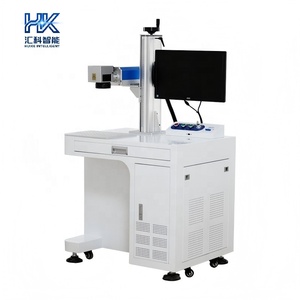
Fiber Laser Marking Machines JPT Raycus MAX 100W-300W
- Laser Power: 100W / 200W / 300W
- Beam Quality (M²): < 1.4
- Substrates: Metals, Hard Plastics
Engineered with industrial fiber, MOPA, UV, and CO2 sources featuring high-speed digital galvo heads and intelligent CCD camera positioning for zero-defect automation.
High Power Fiber
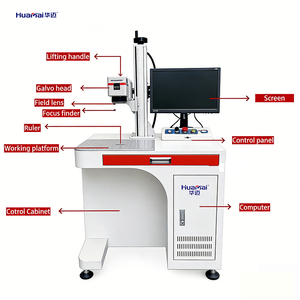 MOPA Color & Focus
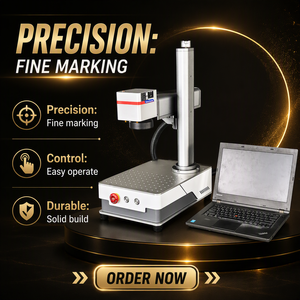 Compact Desktop
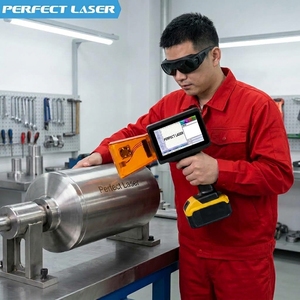
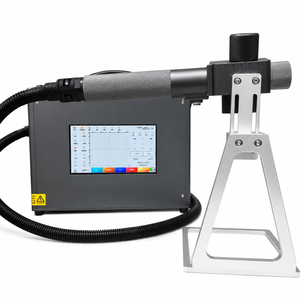 On-Site Handheld
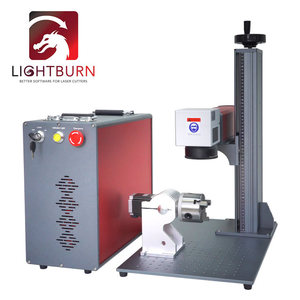 Dual Source Ready
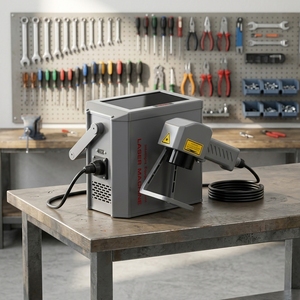 355nm UV Cold Laser
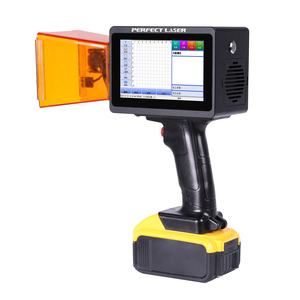 Battery Powered
 Multi-Material Coding
Over the past decade, China’s industrial optoelectronics sector has undergone a massive structural evolution, transitioning from basic component assembly to high-precision, vertically integrated laser engineering. As global manufacturing demands tighter tolerances, full material traceability (via DataMatrix, QR codes, and microscopic serials), and seamless line integration, China’s top vision laser manufacturers and exporters have stepped up to set new technical benchmarks in beam delivery, automated target acquisition, and optomechanical stability.
Modern industrial processing requires far more than firing a laser beam at a static target. Manufacturing lines for automotive electronics, semiconductor packaging, medical devices, and aerospace hardware operate at rapid cycle times where mechanical positioning errors can destroy expensive yield. By marrying high-speed Galvanometer scanners with coaxial dynamic CCD vision recognition systems and high-performance fiber/UV/MOPA laser engines, leading Chinese manufacturers provide turnkey solutions that dynamically detect part displacement, recalculate coordinate vectors in milliseconds, and execute precise ablation down to sub-micron repeatability.
Traditional non-vision marking systems require rigid mechanical jigs and manual fixture placement. In contrast, advanced vision-guided laser markers utilize high-resolution CMOS/CCD sensors combined with telecentric lighting to capture part features on the fly. The embedded pattern-matching algorithms process 360-degree arbitrary positioning, compensating for X/Y offset and angular rotation (θ) with precision up to ±0.005mm within 15 milliseconds.
Selecting the optimal wavelength and pulse duration is critical to controlling Thermal Affected Zones (HAZ) and maximizing chemical or physical surface modification.
| Laser Source Architecture | Center Wavelength | Pulse Width & Frequency | Typical Beam M² | Primary Industrial Substrates | Core Process Advantage |
|---|---|---|---|---|---|
| CW / Q-Switched Fiber Laser | 1064 nm (Near IR) | 100 ns, 20 - 80 kHz | 1.3 - 1.6 | Carbon Steel, Stainless, Brass, Aluminum | High energy density, aggressive deep engraving & high-speed coding |
| JPT MOPA Fiber (M7 Series) | 1064 nm (Near IR) | 2 ns - 500 ns (Tunable), 1 - 4000 kHz | < 1.3 | Anodized Aluminum, Titanium, ABS, Silicon | Precise control over thermal input; enables vivid color marking & soot-free blackening |
| Cold UV Solid-State Laser | 355 nm (Ultraviolet) | < 15 ns, 30 - 150 kHz | < 1.15 | Glass, Quartz, Polymers, Packaging Films, PCBs | Photochemical "cold processing"; zero micro-cracking or thermal burning on delicate substrates |
| RF Metal Tube CO2 Laser | 10.6 µm (Far IR) | Microseconds, 0 - 25 kHz | < 1.2 | Wood, Acrylic, Leather, Glass, Organic Polymers | High absorption coefficient on organic bonds; glass surface micro-fracturing |
In standard Q-switched fiber laser marking systems, pulse width remains fixed (typically around 100ns). While suitable for deep engraving on heavy industrial metals, this long pulse duration delivers excessive heat into the surrounding substrate, resulting in thermal deformation, burrs, and color discoloration on thin stainless sheets or heat-sensitive polymers. MOPA (Master Oscillator Power Amplifier) architecture solves this bottleneck by decoupling pulse frequency from pulse duration.
By adjusting pulse widths down to 2ns-5ns, operators can melt only the microscopic surface layer of titanium or stainless steel to generate precise oxide layer interference (producing vibrant color markings) without damaging the bulk corrosion resistance of the alloy. Furthermore, when marking delicate electronic components such as IC chips and SIM cards, ultra-short pulses prevent dielectric breakdown across internal silicon logic pathways.
How global supply chain leads and factory automation directors are structuring their machinery acquisitions over the next five years.
Procurement teams are moving away from standalone optical markers toward integrated AI-assisted vision systems. Future specifications demand neural-network image classification capable of automatically identifying surface defects, verifying code readability (ISO/IEC 15415 standards), and triggering automated reject arms in real-time.
Global buyers are favoring modular laser head designs that permit rapid field swappability between JPT, Raycus, and IPG sources. Standardized 19-inch rack-mount configurations allow factories to upgrade power capacity (e.g., from 30W to 100W) without re-engineering spatial mounting frames or software control drivers.
On-site equipment maintenance, pipe fabrication, and aerospace structural tagging require extreme portability. The demand for sub-10kg handheld laser markers equipped with high-density lithium batteries and encoder-wheel tracking is projected to grow at a CAGR of 18.4% through 2030, replacing messy inkjets and mechanical dot-peen markers.
As regulatory scrutiny intensifies in North America and Europe, exporters must supply Class 1 fully enclosed systems featuring certified interlock switches, laser-safety glass windows (OD6+ protection), and integrated HEPA/activated-carbon fume extraction units to mitigate toxic polymer particulate emissions.
Combining complete supply-chain density with rigorous quality control and rapid custom engineering capabilities.
China’s laser manufacturing hubs (Wuhan Optical Valley, Shenzhen, and Jinan) offer unmatched vertical integration. From optical glass coating and F-Theta field lens polishing to digital galvanometer driver assembly, 95% of components are sourced within a 50km radius, drastically cutting lead times and capital expenditure.
Premier exporters execute rigorous multi-stage testing prior to export shipment: 72-hour uninterrupted power burn-in, interferometer optical alignment check, high-temperature environmental chamber cycling, and vibration resonance testing to guarantee zero displacement during transoceanic freight.
Top manufacturing partners provide fully customized SDKs compatible with Windows, Linux, and PLC controllers. Supporting DXF, PLT, AI, and DST vector formats alongside SQL database integration, these systems enable automated data fetching for high-speed variable barcode printing.
Direct technical and commercial answers for international procurement managers, factory directors, and OEM buyers.
Fiber lasers (1064nm wavelength) are ideal for metal ablation, deep engraving, and high-contrast marking on opaque engineering plastics. UV lasers (355nm wavelength) operate via photo-chemical "cold processing", breaking molecular bonds without thermal stress. Choose UV if you are processing delicate materials such as glass, medical tubing, sensitive electronic wafers, or thin packaging films where heat deformation is unacceptable.
CCD vision systems eliminate the requirement for expensive, custom mechanical clamping fixtures. The camera captures an image of the incoming component, compares it against a pre-programmed CAD template, and dynamically calculates X/Y displacement and angular rotation. The software automatically recalculates laser firing coordinates within 15ms, maintaining marking accuracy down to ±0.005mm even if components arrive loosely on a conveyor belt.
For compliant importation into North American and European markets, laser systems must hold CE compliance (under Machinery Directive 2006/42/EC and Low Voltage Directive 2014/35/EU) and FDA Accession Registration (CDRH compliant for laser radiation products). Class 4 open systems require safety goggles matched to laser wavelength (e.g., OD6+), while Class 1 enclosed systems feature safety-interlocked doors.
JPT MOPA lasers allow independent control over pulse duration (from 2ns to 500ns) and frequency (up to 4000kHz). By using narrow pulse widths at high frequencies, heat input into stainless steel or titanium is controlled at a microscopic depth. This precise optical heating forms a transparent oxide layer on the metal surface that reflects light at specific wavelengths, creating rich, vibrant chromatic colors without chemical dyes.
Fiber and UV laser sources are solid-state and virtually maintenance-free, offering rated diode lifespans up to 100,000 hours. The primary routine maintenance involves inspecting and cleaning the protective window on the F-Theta scan lens using optical-grade lens tissue and high-purity isopropyl alcohol to prevent particulate burn-in. Fume extraction filters should also be inspected regularly to maintain proper airflow.
Standard desktop, handheld, and benchtop fiber laser markers are typically assembled, calibrated, and burn-in tested within 5 to 7 business days. Custom automated lines or enclosed vision systems take 12 to 20 days. Equipment is packed in ISPM-15 compliant fumigated wooden cases and shipped via air freight (3-7 days transit) or ocean shipping (18-35 days transit) with full export customs clearance documentation provided.
Connect directly with our senior optical engineers and export team to request a customized material sample test, optical feasibility analysis, or formal factory-direct quotation.