High-Precision Fiber, MOPA, UV, and Portable Laser Marking & Engraving Systems
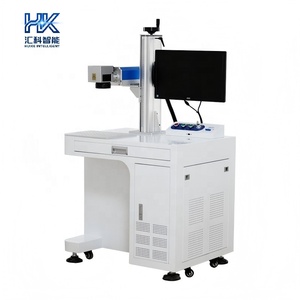
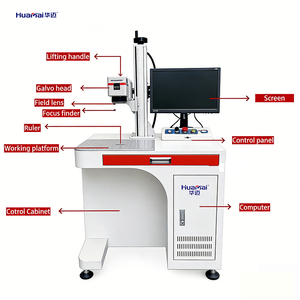
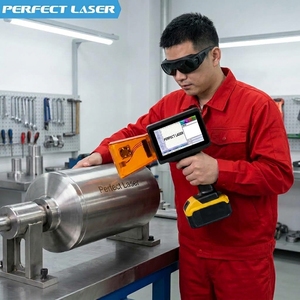
As global supply chains increasingly demand micro-level precision, non-contact thermal control, and zero-chemical permanent marking on engineered polymers, China’s industrial laser manufacturing ecosystem has evolved from high-volume assembly to frontier optical innovation. Standing at the intersection of optoelectronic engineering and polymer science, our manufacturing facilities deliver state-of-the-art laser marking, etching, and micro-machining solutions tailored specifically for thermoset and thermoplastic substrates.
Refining traditional laser methodologies through heavy R&D investments in master-oscillator power-amplifier (MOPA) fiber technology, ultraviolet (UV) 355nm cold lasers, and high-stability carbon dioxide (CO2) optical sources, our engineering architecture bridges the gap between delicate polymer processing and continuous industrial production.
Our manufacturing facility operates under strict ISO 9001:2015 quality management protocols. Every machine frame is stress-relieved, precision-milled using multi-axis CNC gantries, and paired with high-speed digital galvo scanners calibrated for thermal drift prevention. By managing optical assembly, electronic driver design, control software (KCAM integration compatibility), and chassis fabrication completely in-house, we offer unmatched total cost of ownership (TCO), robust spare-parts availability, and agile OEM/ODM customization for international partners.
Laser processing of polymers is governed by quantum absorption characteristics across distinct optical spectrums. Selecting the appropriate laser platform requires a deep understanding of three primary chemical reaction mechanisms:
| Laser Source Type | Wavelength | Primary Reaction Mechanism | Ideal Plastic Substrates | Key Industrial Application |
|---|---|---|---|---|
| MOPA Fiber (JPT M7) | 1064 nm | Adjustable pulse width (2ns–500ns) thermal foaming & carbonization | ABS, PC, Polyamide (PA), PBT, TPU | Automotive switches, high-contrast black marking on transparent PC |
| UV Cold Laser | 355 nm | Photochemical bond breaking (cold ablation with minimal HAZ) | HDPE, LDPE, Silicone, PTFE, PET, Acrylics | Cosmetic tubes, medical catheters, food-grade cap coding |
| RF CO2 Laser | 10.6 μm | Photothermal melting, vaporizing, and surface engraving | Clear Acrylic (PMMA), Wood, Polycarbonate, Rubber | Large-format cutting, deep engraving, optical display panels |
| Standard Q-Switched Fiber | 1064 nm | Fixed pulse duration thermal marking & engraving | Opaque engineering plastics with laser additives | Industrial serializing, 2D DataMatrix barcode marking |
Ultraviolet lasers deliver ultra-short photon energy capable of breaking chemical bonds directly within the polymer chain without generating macro-thermal radiation. Known as "cold processing," UV lasers eliminate thermal deformation, melting, or charring around the focal edge. This makes 355nm UV lasers essential for delicate applications such as multi-layer cosmetic packaging, sterile medical tubing, and flame-retardant electrical enclosures.
Master Oscillator Power Amplifier (MOPA) fiber laser sources (such as the JPT M7 series) represent a leap forward for plastic marking. Unlike conventional Q-switched lasers with fixed pulse durations (typically 100ns), MOPA lasers allow independent tuning of pulse frequency (up to 4000 kHz) and pulse width (from 2ns to 500ns). Ultra-short pulses minimize heat conduction into surrounding material, enabling smooth, dark carbonized marks on white ABS or foaming marks on dark polyamides without damaging structural integrity.
As global manufacturing shifts toward Smart Factories, Industry 4.0 automation, and strict environmental compliance (RoHS, REACH, and ESG mandates), B2B procurement strategies for plastic laser systems are experiencing a structural transformation. Buyers are prioritizing systems built for long-term scalability, low operational carbon footprints, and high digital connectivity.
Traditional pad printing and inkjet coding rely heavily on volatile organic compounds (VOCs), solvent inks, and expensive masterbatch laser additives. Advanced UV and MOPA laser systems achieve rich contrast on virgin resin without requiring chemical additives. Supply chain managers are actively retrofitting production lines with high-speed galvo lasers to satisfy zero-landfill goals while reducing continuous operational expenditure.
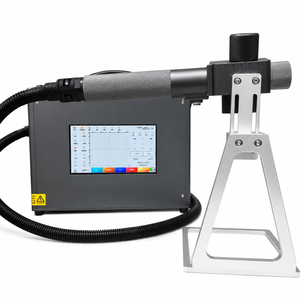
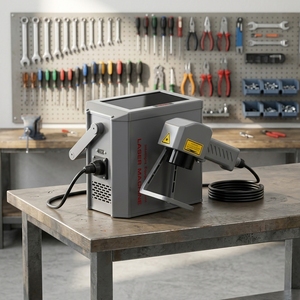
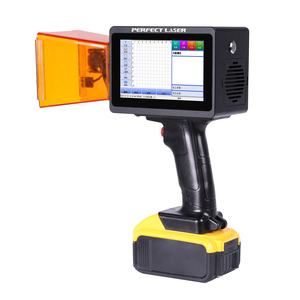
With the growth of heavy equipment manufacturing, infrastructure projects, and distributed logistics, fixed-station marking is no longer sufficient. Modern procurement is heavily favoring battery-operated, handheld fiber and laser coding units. Featuring integrated touchscreens, long-life lithium battery packs, and lightweight ergonomic heads, these units allow technicians to apply permanent 2D barcodes and serial codes directly onto bulky plastic pipes, outdoor storage tanks, and vehicle chassis on site.
Manual positioning introduces human error and slows cycle times in high-mix production. Emerging procurement standards emphasize machines integrated with high-resolution vision cameras (such as K-Vision alignment architecture) and dynamic 3D galvo autofocus. These systems automatically scan component geometry, compensate for height variances, realign rotated workpieces, and ensure flawless laser focal placement across complex curved plastic surfaces.
Collaborating with an established Chinese OEM laser manufacturer provides international distributors, system integrators, and factory managers with distinct strategic advantages:
Every optical assembly—from expanders and galvo mirrors to field lenses—is assembled in class-10,000 cleanroom environments. Beam quality ($M^2 < 1.2$), power stability ($\pm 1\%$), and optical alignment are verified using automated beam profilers before factory sign-off.
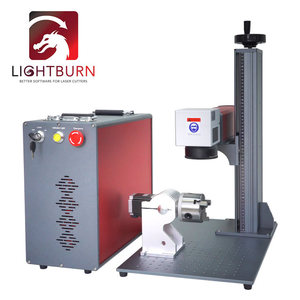
Whether your facility requires a compact benchtop air-cooled laser, a multi-head gantry system for high-volume automated lines, or a fully enclosed Class 2 safety cabinet for cleanroom operation, our engineering team delivers tailored mechanical configurations, custom I/O wiring, and software SDK access.
Accelerate your production lines, reduce operational cost per part, and secure factory-direct pricing on custom-configured laser solutions. Talk directly with our senior optical applications team today.
Get Catalog