Explore our export-grade fiber laser marking, tube processing, and precision engraving lineup engineered with heavy-duty gantry motion and advanced fiber source integration.
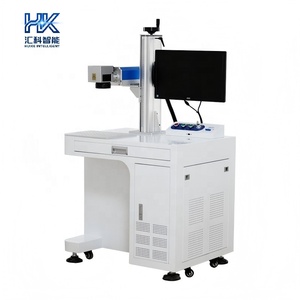
High-power MOPA/Standard Raycus fiber lasers engineered for deep engraving, surface stripping, and high-speed marking on industrial alloys.
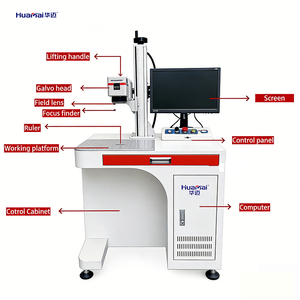
Motorized auto-focus system with MOPA pulse width adjustment, enabling vibrant color marking on stainless steel and delicate plastics.
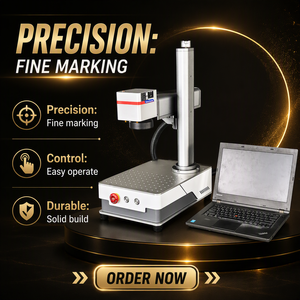
Ultra-compact desktop footprint designed for small-footprint workshops, jewelry customization, and hardware batch coding.
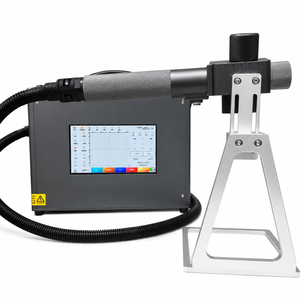
Ergonomic handheld optical head allows direct on-site permanent marking of oversized metal components, pipes, and structural beams.
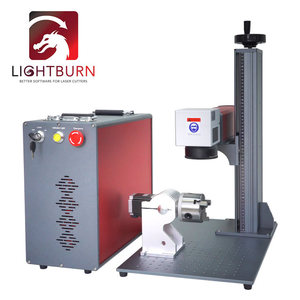
Dual-source compatibility with air-cooled 300x300mm field lens and precision 80mm rotary attachment for 360-degree pipe engraving.
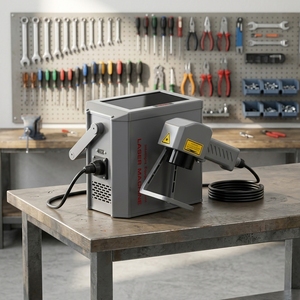
355nm cold UV laser processing prevents thermal damage on delicate polymers, cosmetic bottles, glass, and electronic housings.
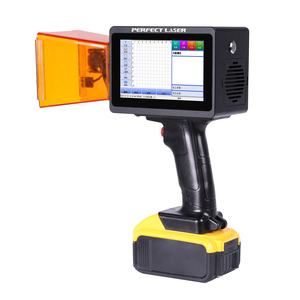
Fully wireless industrial coder powered by lithium-ion battery banks, optimized for field maintenance, metal pipes, and asset tagging.
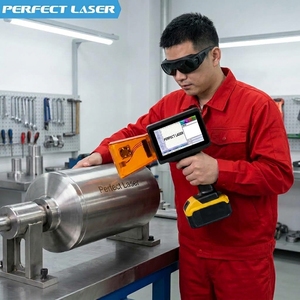
Multi-substrate versatile handheld encoder for rapid batch labeling across metals, synthetic leather, hardwoods, and composite plastics.
A comprehensive technical breakdown of fiber tube laser architectures, chuck clamping dynamics, thermal bed stabilization, and supplier qualification framework for global manufacturing enterprises.
Over the past decade, China’s industrial laser manufacturing ecosystem has evolved from basic flatbed sheet cutting machines into ultra-specialized, multi-axis tube laser processing platforms. Modern structural steel fabrication, automotive exhaust production, architectural trussing, and fitness equipment manufacturing demand strict geometric tolerances, rapid nesting turnaround, and zero-tailings material yields.
Leading Chinese tube laser exporters have bridged the gap between high-end European motion kinematics and cost-efficient scaling. By integrating solid-state fiber laser generators from global leaders like Raycus, Maxphotonics, IPG Photonics, and JPT alongside EtherCAT real-time bus controllers (such as CypTube/FSCUT systems), Chinese suppliers provide turnkey production machinery operating at a fraction of Western capital expenditures (CapEx).
Information Gain Insight: Selecting a top-tier Chinese tube laser OEM requires auditing structural bed tempering, pneumatic chuck clamping torque, capacitive height sensing response times, and assist gas dynamic fluid dynamics—not merely laser source wattage.

Figure 1.1: Industrial-grade welded machine bed frame undergoes high-temperature annealing at our assembly facility.
Understanding the critical mechanical differences between standard 2-chuck, 3-chuck zero-tailing, and 5-axis 3D beveling tube laser machines.
Modern tube laser cutters utilize dual or triple full-stroke pneumatic chucks with automatic self-centering algorithms. This ensures uniform clamping pressure on square, rectangular, oval, and special-profile tubes without manual jaw replacement.
Raw metal tubing represents significant material expenditure. Advanced 3-chuck and 4-chuck sync systems move tubing back and forth between cutting zones, enabling zero-tailings material waste on standard pipe lengths.
For heavy structural engineering, thick-wall pipes require prep beveling prior to robotic welding. 5-axis articulated laser cutting heads execute K, V, X, and Y-shaped bevel profile cuts directly on circular or square pipes.
| Machine Architecture | Chuck Configurations | Pipe Diameter Range | Target Materials | Tailing Waste Length | Primary Industry Applications |
|---|---|---|---|---|---|
| Compact Light Tube Cutter | Dual Pneumatic (2 Chucks) | Ø 10mm – 160mm | Carbon Steel, Stainless, Al | ≤ 150mm | Furniture, Medical Devices, Bicycles |
| Heavy-Duty Zero-Tailing | Triple Sync (3 Chucks) | Ø 20mm – 350mm | Structural Steel, Copper, Brass | 0mm (Zero Tailing) | Construction Trusses, Heavy Machinery |
| Ultra-Large 3D Bevel Cutter | Four-Chuck Heavy Load | Ø 50mm – 650mm+ | Thick Carbon Steel, H-Beams | ≤ 50mm | Oil & Gas Pipelines, Shipbuilding |
| Precision Micro Rotary System | High-Precision Clamp | Ø 3mm – 50mm | Stents, Precious Metals, Tubing | ≤ 20mm | Aerospace Electronics, Medical Implants |
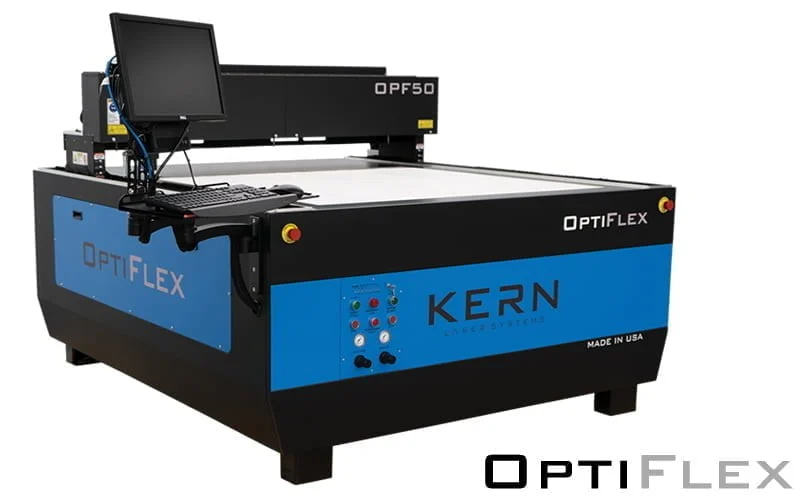
Figure 1.2: Reinforced structural gantry engineered for high dynamic motion with minimal vibration resonance.
When purchasing industrial laser cutting equipment from China, international buyers encounter wide variations in structural quality. Our manufacturing philosophy centers on vertical integration, strict material selection, and rigorous engineering protocols.
As automated smart factories expand globally, tube laser cutting machinery is undergoing transformational shifts in AI integration, material handling automation, and energy efficiency.
Manual loading of heavy 6-meter or 9-meter raw pipes creates significant downtime. Future-proof factories are standardizing on automated bundle loaders equipped with hydraulic lift arms, automatic tube measuring sensors, and robotic sorting beds.
Automated bundle feeding reduces labor overhead by up to 75% and ensures uninterrupted lights-out overnight manufacturing shifts.
Machine vision sensors integrated into cutting heads dynamically monitor plasma radiation and kerf reflection during high-speed cuts. If slag buildup or penetration loss is detected, the CNC controller automatically adjusts feed rate, focal position, and assist gas pressure in real time.
This eliminates scrap parts caused by mill scale variations or bent tubing, maximizing operational efficiency.
While 3kW and 6kW fiber lasers remain industry standards for medium wall thicknesses, 12kW+ sources are increasingly deployed to execute nitrogen air-assisted high-speed cutting on thick carbon steel tubes up to 20mm.
High wattage drastically lowers per-part gas consumption by increasing linear cutting speeds by 300% on structural tubing.
Modern tube lasers now bypass manual file conversion. 3D assemblies imported from Tekla, SolidWorks, or Autodesk Inventor are automatically unfolded, nested for minimal scrap, and routed to the machine queue via STEP/IGES bus interfaces.
Enables ERP-connected production tracking and automatic bill-of-materials (BOM) cost calculations.
Expert answers addressing tube laser specifications, import logistics, duty compliance, and operational maintenance.
Contact our factory engineering team today to receive a tailored engineering proposal, cut-sample test reports, nesting software demonstrations, and direct factory pricing.