Explore our engineered lineup of fiber laser markers, precision pipe cutting systems, MOPA engravers, and portable industrial coding solutions backed by direct factory support.
The global industrial landscape has undergone a tectonic shift in metal fabrication, structural tube processing, and precision component marking. As global original equipment manufacturers (OEMs), Tier-1 automotive suppliers, aerospace contractors, and structural engineering firms demand tighter tolerances, lower cycle times, and zero-defect traceability, China’s industrial laser manufacturing ecosystem has evolved from high-volume assembly into high-precision engineering leadership.
Selecting top-tier China pipe laser manufacturers and factories requires a sophisticated understanding of optical resonator integration, dynamic gantry damping, multi-axis motion algorithms, and automated material handling. Modern Chinese pipe laser cutting and fiber laser marking platforms now routinely combine world-class componentry—such as JPT MOPA pulse control, Raycus and Maxphotonics fiber resonators, German Precitec optical cutting heads, and Japanese Yaskawa or Panasonic servo drivers—with advanced domestic structural welding and stress-relieving frame technology.
High-end Chinese factories utilize high-tensile plate-welded or cast-iron bed frames subjected to 600°C high-temperature annealing and 72-hour natural vibration aging. This guarantees decade-long structural rigidity with zero thermal deformation during continuous multi-shift production.
Integrating tier-1 fiber power sources (Raycus, Max, JPT MOPA) yields exceptional beam quality ($M^2 < 1.3$). MOPA technology allows independent control of pulse frequency and duration, enabling thermal-free black marking on anodized aluminum and vivid color annealing on stainless steel.
Advanced tube cutting machinery utilizes self-centering dual or triple pneumatic chuck systems. With full-stroke automatic clamping, these systems eliminate manual jaw adjustments, accommodate square, round, oval, and H-beam profiles, and minimize material tailing waste.
The pipe laser cutting and component marking industry is experiencing rapid technological convergence. Procurement managers and manufacturing directors must align their capital expenditure with next-generation technological standards. The following core trends define the state-of-the-art in Chinese pipe laser factory output:
Traditional 2D pipe cutters require secondary mechanical chamfering before welding. Modern Chinese pipe laser machines feature 5-axis swivel cutting heads capable of ±45° beveling. This allows for precise saddle-shaped cuts, bevel joints, and countersunk holes directly on round and rectangular pipes. The resulting weld seams require zero secondary grinding, dramatically reducing labor costs in structural steel frame fabrication, oil & gas piping, and heavy equipment manufacturing.
Material yield is a vital metric in pipe processing economics. Standard two-chuck pipe cutting machines leave an un-cut scrap tail of 150mm to 300mm per tube. Leading Chinese factories have engineered 3-chuck and 4-chuck movable clamping systems. In a 3-chuck architecture, the middle chuck moves dynamically across the cutting zone, transferring the pipe to ensure continuous cutting up to the extreme edge, effectively achieving zero tailing waste and saving thousands of dollars annually in raw metal inventory.
High-throughput pipe processing plants are shifting away from manual single-tube feeding. Next-generation Chinese production lines integrate fully automated bundle loaders, automatic tube detection sensors, profile orientation alignment, and optical seam detection. Paired with intelligent CAD/CAM software (such as TubesT or Sigmanest), algorithms calculate optimal nesting across mixed geometries, auto-detecting weld seams to avoid cutting critical features directly over internal stress lines.
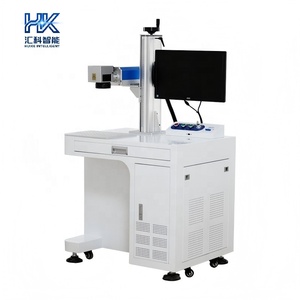
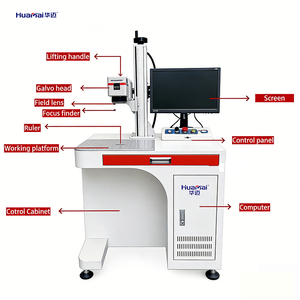
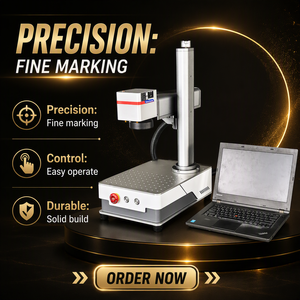
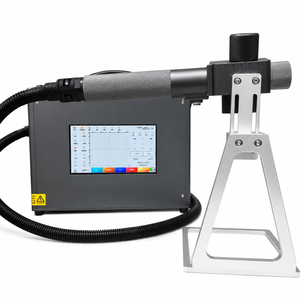
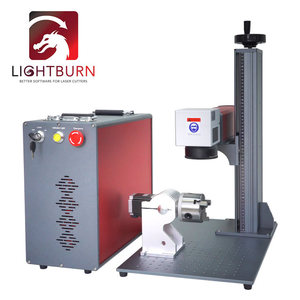
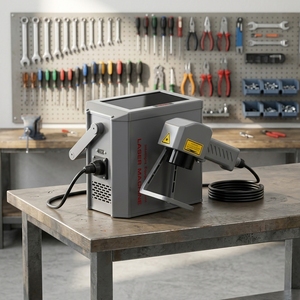
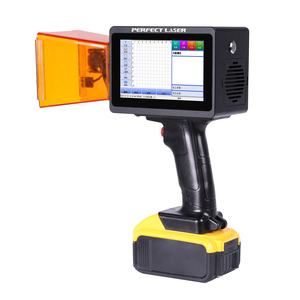
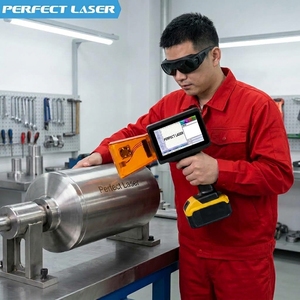
Beyond heavy section cutting, product traceability is paramount. Handheld and desktop fiber laser markers (ranging from 20W to 100W JPT MOPA devices) have replaced mechanical dot-peen and inkjet marking. Direct Part Marking (DPM) of QR codes, DataMatrix codes, and serialized identification numbers on metal pipes, fittings, and plastic assemblies ensures lifelong product tracking resistant to heat, corrosion, and wear.
| Equipment Category | Optical Source Types | Processing Scope / Capacities | Repeatability / Accuracy | Target Applications |
|---|---|---|---|---|
| Industrial Pipe Laser Cutter | 1kW – 12kW Fiber (Raycus / Max / IPG) | Tube Diameter: 15mm–350mm; Length: 6m–12m | ±0.03 mm positioning | Structural steel, automotive chassis, fitness equipment |
| High-Power Fiber Marker | 100W – 300W Raycus / JPT Fiber | Deep engraving, high-speed line marking | ±0.002 mm precision | Deep metal carving, mold tool marking, hard metals |
| MOPA Color & Fine Marker | 20W – 100W JPT M7 MOPA | Variable pulse width (1ns – 500ns) | ±0.001 mm precision | Color stainless marking, anodized aluminum blackening |
| Compact Desktop / UV Marker | 3W – 10W UV / 30W Fiber | Cold processing, minimal heat-affected zone | ±0.001 mm precision | Cosmetic packaging, glass, medical polymers, PCBs |
| Handheld Battery Laser Marker | 20W – 50W Pulsed Fiber | On-site portable coding, battery powered | ±0.01 mm precision | Heavy pipe stock marking, oilfield valves, field machinery |
Sourcing industrial machinery from international factories requires a rigorous, systematic auditing process. Price alone is a deceptive metric; total cost of ownership (TCO) encompasses initial capital expenditure, power efficiency, gas consumption, consumable wear (lenses, nozzles), maintenance downtime, and spare parts availability.
Top Chinese factories have redefined international machinery standards by bridging cutting-edge R&D with vertical integration. By manufacturing structural gantry elements, electrical cabinets, and precision rotary fixtures in-house while partnering with top global optics brands, elite suppliers deliver unmatched value:
In-house CNC machining centers finish every mounting surface for linear guide rails and gear racks, guaranteeing sub-millimeter geometric alignment across extended gantry lengths.
Prior to dispatch, every machine undergoes a mandatory 72-hour full-load burn-in test, laser interferometer pitch accuracy calibration, and dynamic load testing to ensure plug-and-play reliability.
Direct factory engineers offer 24/7 multilingual remote diagnostics, telemetry-assisted troubleshooting, and rapid spare-parts deployment to minimize downtime across international operations.
Standard Q-switched fiber lasers have a fixed pulse width (typically around 100ns to 120ns), making them ideal for high-speed metal engraving and general marking. MOPA (Master Oscillator Power Amplifier) fiber lasers allow variable pulse width control (from 1ns to 500ns). This fine pulse manipulation lets operators mark black logos on anodized aluminum without destroying the substrate, achieve color annealing on stainless steel, and mark sensitive plastics with zero heat damage.
Pneumatic chucks deliver self-centering, equalized clamping force across round, square, or custom profile tubes. They eliminate human operator error, prevent thin-walled pipe crushing through adjustable pressure regulators, and support high rotational speeds (up to 120 RPM) without loosening during dynamic cutting acceleration.
Nitrogen ($N_2$) is recommended for stainless steel, aluminum, and high-alloy steel cutting to produce an oxide-free, bright edge that is immediately ready for welding. Oxygen ($O_2$) is utilized for thick carbon/mild steel cutting because the exothermic iron-oxygen reaction adds thermal energy to the cut, reducing laser power demands. High-pressure compressed air is a cost-effective option for thin carbon and stainless steel pipe processing.
UV lasers operate at a short 355nm wavelength ("cold processing"). Because their photon energy breaks molecular bonds directly rather than melting material through thermal heat, UV lasers deliver pristine, high-contrast marks on cosmetics packaging, glass, silicon wafers, and delicate polymers without charring, melting, or micro-cracking.
Ensure the supplier provides CE compliance certification (conforming to Low Voltage Directive 2014/35/EU and Machinery Directive 2006/42/EC), FDA accession numbers for laser device importation into the US market, ISO 9001 quality management compliance, and certified Class 1 or Class 2 laser safety enclosures where workplace regulations dictate.
Premium fiber laser sources (such as JPT, Raycus, and Maxphotonics) have a rated Mean Time Between Failures (MTBF) of 100,000 operational hours. Under normal manufacturing conditions with proper ambient cooling and dust protection, this translates to over 10 years of continuous daily operation.
Standard 1064nm fiber lasers excel on metals and engineering plastics but pass through clear wood, acrylic, and glass without absorbing. Hybrid dual-source desktop systems (combining 1064nm Fiber and 10.6µm CO2 sources in a single unit) or UV laser platforms allow multi-material processing within a unified machine footprint.
Leading manufacturers provide 2 to 3 years of comprehensive warranty coverage on laser sources and core motion components. Replacement parts are dispatched via express global air freight (DHL/FedEx/UPS), while local distributor networks and factory engineers provide remote desktop access, video-guided repair support, or on-site commissioning.
Get in touch with our application engineering team for customized pipe laser cutting solutions, sample testing, ROI calculations, and complete product catalogs.