Explore top-tier optical scanning components engineered for AGV navigation, BIM digital twins, long-range logistics barcode reading, and industrial automation.
The global optoelectronics landscape has underwent a structural evolution over the past decade. China has transformed from an assembly hub into the epicentre of high-precision optical innovation, sensor integration, and Time-of-Flight (TOF) LiDAR development. As industrial automation shifts toward Industry 4.0 and autonomous operations, overseas procurement teams require not merely low-cost equipment, but uncompromising optical measurement precision, robust firmware SDK adaptability, and certified hardware reliability.
By blending state-of-the-art optical mirror calibration, automated SMD assembly, and rigorous dynamic thermal testing, leading Chinese laser scanner OEMs deliver precision instruments with high Information Gain values for global system integrators. Operating within consolidated industrial clusters in Shenzhen, Wuhan (Optics Valley), and Suzhou, manufacturers achieve unprecedented economies of scale without sacrificing optical performance.
Compliance with FDA Class 1, Class 2 laser safety standards, CE EMC directives, and IEC 60825-1 optical radiation safety limits ensures seamless international deployment.
In-house manufacturing of micro-galvanometers, collimating lenses, decoders, and custom ASIC sensor chips reduces component latency and overall unit failure rates.
Native support for ROS/ROS2 driver packages, custom C++/Python SDKs, Modbus TCP, Ethernet/IP, and tailored barcode decoding algorithms for niche industrial uses.
Building upon deep engineering legacies—such as US-built Kern Laser Systems’ rigid mechanical frames and super-pulsed optical beam delivery standards—Chinese suppliers adopt heavy-duty design philosophies. Heavy aluminum chassis, gold-coated optical elements, and dual-layer thermal dissipation chambers ensure continuous 24/7 industrial performance across extreme operating ambient temperatures (-10°C to +50°C).
Modern industrial buyer requirements span distinct physical environments and optical demands. Selecting the optimal scanning hardware requires an in-depth breakdown of sensor architectures, range metrics, and optical signal processing methodologies:
| Scanner Category | Primary Optical Technology | Effective Range / FOV | Typical Measurement Accuracy | Primary Industrial Use-Case |
|---|---|---|---|---|
| Industrial Safety TOF LiDAR | Pulse Time-of-Flight (905nm Laser Diode) | 10m – 30m Range / 270° – 360° FOV | ±10mm – ±20mm | AGV/AMR Navigation, Zone Safety & Obstacle Avoidance |
| Handheld 3D Spatial LiDAR | Multi-Line SLAM Laser Array + Color Mesh | 0.5m – 120m Range / 360° Spherical | ±1mm – ±5mm (Point Cloud) | Building Surveying, BIM Modelling, Digital Twin Creation |
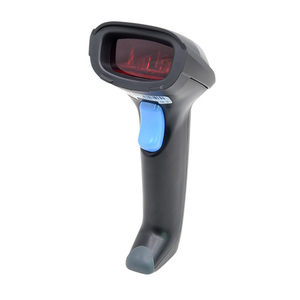
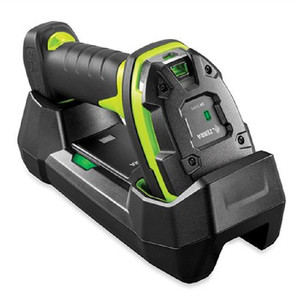
| Industrial Rugged Barcode Reader | 650nm Visible Red Laser / 2D Imager Engine | 50mm – 2000mm Scanning Depth | Up to 3.3mil High Resolution | Warehousing, High-Speed Sorting, Supply Chain Logistics |
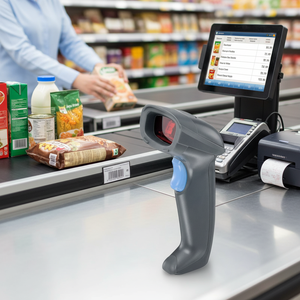
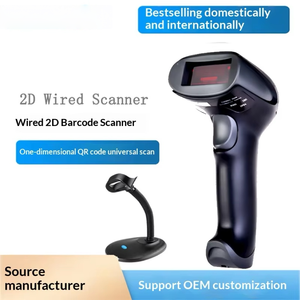
| Commercial Handheld Scanners | Linear Laser Scanner / CMOS Sensor Engine | 0mm – 350mm Scanning Distance | 5mil Resolution (300 Scans/sec) | Retail POS, Pharmacy Inventory, Office Automation |
| Laser Vision Alignment Modules | Camera Registration + Coaxial Red Laser Beam | Machining Area Specific (e.g., 5x10 ft) | ±0.001" (Positional Repeatability) | Automated CNC Cutting, Contour Laser Machining Alignment |
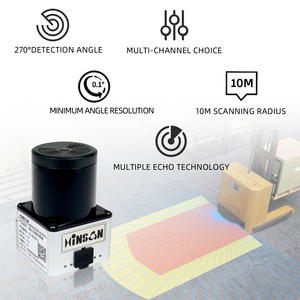
Time-of-Flight (TOF) sensors transmit modulated nanosecond laser pulses, computing target distance by measuring the precise phase shift or elapsed time of reflected photons. In automated guided vehicles (AGVs) and autonomous mobile robots (AMRs), sensors like the SE-1033F11 Hinson TOF project a wide 270° scanning plane. Featuring anti-ambient light filtering (up to 80,000 Lux), these LiDAR units maintain reliable obstacle detection even under intense direct sunlight or high-frequency factory lighting.
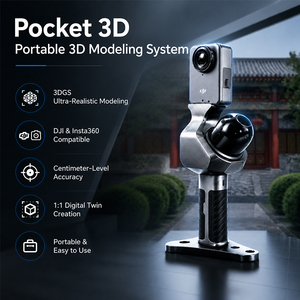
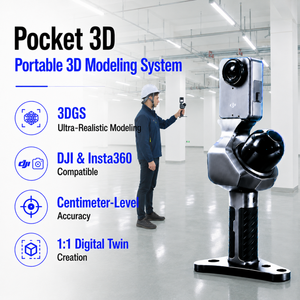
Handheld spatial scanners represent a quantum leap in civil engineering, architectural renovation, and industrial digital twin construction. Combining high-speed rotation laser mirrors with real-time Simultaneous Localization and Mapping (SLAM) algorithms, devices such as the Pocket LiDAR 3D Scanner produce millions of georeferenced spatial points per minute. This non-contact optical surveying technique removes physical templates, slashing site surveying times by up to 80% while retaining millimeter-level structural tolerances.
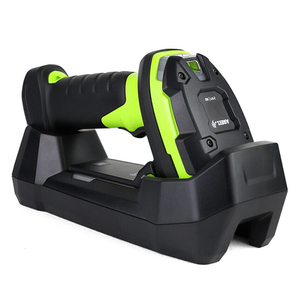
In high-throughput distribution hubs, barcode scanning speed directly impacts daily operational yield. Rugged handheld models (such as the DS3678 / DS3608 series) feature IP67 sealing, rubberized drop-absorption bumpers, and advanced decoding microprocessors capable of reading damaged, low-contrast, or direct part mark (DPM) codes on reflective metal surfaces. High-speed 300 scan/sec optical engines eliminate operator bottlenecks during heavy-volume order fulfillment.
As international buyers re-evaluate supply chain resilience and technical efficiency, several critical technical shifts dictate next-generation laser scanner procurement strategies:
Mechanical spinning LiDARs are rapidly giving way to Solid-State and MEMS mirror architectures. Containing zero wearing mechanical parts, MEMS-based laser scanners deliver exceptional mean time between failures (MTBF > 50,000 hours) while offering compact footprints for tight AGV chassis integration.
Hardware scanners are transitioning from raw signal transmitters to intelligent edge nodes. On-board neural processing units (NPUs) process raw point clouds in real-time, executing semantic object classification (distinguishing personnel from forklift pallets) directly at the sensor layer.
Future industrial platforms seamlessly unite CO2/Fiber vision alignment with 3D LiDAR surface mapping. Systems like K-Vision Camera Registration combine visual optical markers with laser line scanning to automatically rectify material skew on dynamic production beds.
Procurement teams are advised to mandate modular hardware architectures with standardized communication protocols (EtherCAT, CANopen, ROS2) during tender negotiations. This prevents vendor lock-in, streamlines lifecycle component replacements, and reduces overall total cost of ownership (TCO) over multi-year operational cycles.
Evaluating a supplier’s manufacturing capability requires looking beyond sales datasheets to inspect physical factory verification processes. Premier Chinese OEMs operate dedicated optical testing laboratories designed to guarantee long-term field stability:
By enforcing these strict manufacturing protocols, China’s top laser scanner manufacturers offer international distributors robust 3-year factory warranties, guaranteed spare-parts availability, and direct engineer-to-engineer remote diagnostic support.
Technical guidance and answers to common procurement questions regarding laser scanners, LiDAR sensors, and factory customization.
Need customized TOF LiDAR hardware, bulk barcode scanner quotes, or custom ROS driver integrations? Connect directly with our engineering team for instant OEM quotation and sample evaluations.
Inquire Now