China Best Laser Chiller Manufacturers & Suppliers

Engineering Whitepaper & Procurement Benchmark Guide for High-Precision Fiber, CO2, UV, and Ultrafast Laser Active Cooling Systems (2026 Edition)

Featured OEM Chillers & Laser Integration Modules

Top-Rated Industrial Water Chillers & Integrated Laser Systems

Explore China's leading dual-temperature industrial water cooling systems designed for fiber marking, UV micro-machining, hand-held laser welding, and high-power CO2 cutting setups.
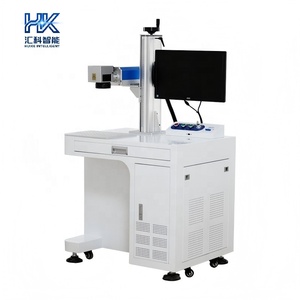
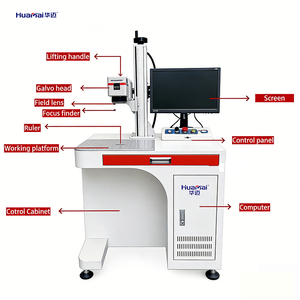
Fiber Laser Marking Chiller Integration System
Fiber Laser Marking Systems (20W-300W Raycus/JPT/MAX)
• Cooling Temp: Active PID ±0.3°C
• Applicable: 100W-300W High Power
• Dual Protection: Water Flow Alarm
Send an Inquiry
Portable Auto Focus MOPA Fiber Laser Chiller Unit
Portable Auto Focus MOPA Fiber Laser System
• Cooling Type: Compact Air/Water Cooled
• Temp Stability: ±0.1°C Precision
• Use Case: Plastic/Metal Color Marking
Send an Inquiry
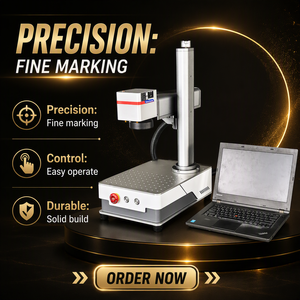
Desktop Mini Fiber Laser Marking Water Cooling Module
Desktop Mini Fiber Laser Engraving Platform 30W
• Form Factor: Rackmount / Benchtop
• Heat Dissipation: 0.6kW Capacity
• Eco Refrigerant: R-410a / R-32
Send an Inquiry
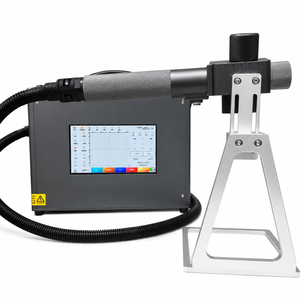
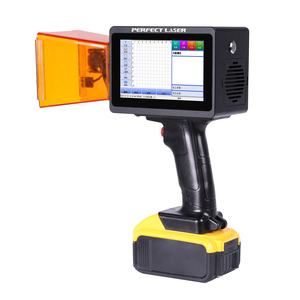
Handheld Mobile Portable Mini Fiber Laser Chiller Integration
Handheld Portable Mini 20W/30W/50W Laser Marker
• System Integration: Lightweight Module
• Ambient Adaptability: 5°C to 45°C
• Protection: Anti-Clogging Water Circuit
Send an Inquiry
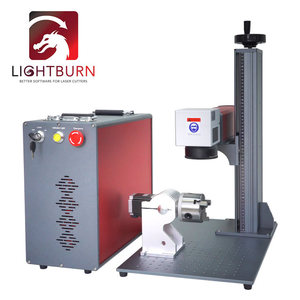
100W JPT M7 MOPA Fiber Laser with Dual Cooling Loop
100W JPT M7 MOPA CO2/Fiber Bench-Top System
• Cooling Architecture: Dual Water Circuit
• Rotary Axis Ready: Heavy Duty Pump
• Digital Interface: Modbus RS-485
Send an Inquiry
Small Desktop UV Laser Engraving Machine Water Chiller
Precision UV Laser Cooling Chiller for Packaging
• Target Source: 3W-15W UV Lasers
• Temp Precision: Ultra-Tight ±0.1°C
• Prevents Thermal Lens Effect
Send an Inquiry
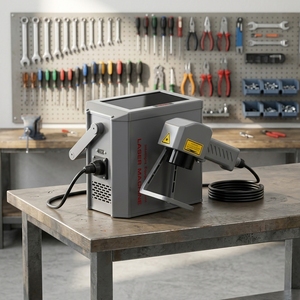
Portable Industrial On-Site Laser Chiller Coding System
Portable On-Site Permanent Coding Laser Unit
• Battery Powered / Field Operational
• Internal Thermal Barrier Protection
• Ruggedized Chassis for Industrial Duty
Send an Inquiry
Industrial Multi-Material Laser Marking Machine Chiller Integration
Industrial Grade Recirculating Water Chiller System
• Multi-Material Production Cooling
• High Flow Rate Stainless Steel Pump
• Global Voltages: 110V/220V 50/60Hz
Send an Inquiry
Engineering Deep-Dive

The Thermodynamics of Laser Thermal Management: Why Chiller Selection Defines Machine Output

In high-precision photonics applications—spanning multi-kilowatt fiber sheet metal cutting to sub-nanosecond UV glass micro-engraving—temperature stability directly dictates beam quality ($M^2$), center wavelength shifts, and laser diode lifespan. As laser processing powers increase, the heat flux density inside the resonator cavity scales exponentially. A variance of just ±1.5°C can cause thermal lensing in focusing optics, causing focal point drift, dross formation, cut edge roughness, and premature degradation of expensive optical coatings.

China has established itself as the global epicenter for industrial laser chiller manufacturing. Modern Chinese OEM suppliers have evolved far beyond basic evaporative or air-cooled fan assemblies. Today’s premier Chinese manufacturers engineer closed-loop active refrigeration chillers utilizing dual digital PID microprocessors capable of maintaining micro-fluctuations under ±0.1°C across varying thermal loads.

Dual-Circuit Active Refrigeration Architecture

Advanced fiber lasers require separate cooling channels due to contrasting dew point tolerances and operating temperatures. Leading Chinese laser chiller manufacturers incorporate a two-in-one dual temperature control loop:

  • Low-Temperature Circuit (L-Loop): Dedicated specifically to the fiber laser source (Raycus, IPG, nLIGHT, MAX, JPT) to prevent thermal degradation of the gain medium, typically maintained between 20°C to 25°C.
  • High-Temperature Circuit (H-Loop): Formulated for the cutting/marking head optics and Q-switch components, maintained slightly above ambient temperature (typically 28°C to 32°C) to completely prevent condensation on quartz protective windows and collimating lenses.
±0.1°C
Control Precision (UV/Ultrafast)
30kW+
Max Cooling Capacity
30%
Inverter Energy Savings
100k+
Units Exported Annually
Equipment Selection Matrix

Standard Industrial Laser Chiller Taxonomy & Technical Specs

When procuring from China's top water chiller manufacturers, buyers must match chiller cooling capacity ($Q_{cooling}$ measured in kW or BTU/hr) against the electrical power efficiency of the specific laser source.

Chiller Category Target Laser Power Temp Stability Cooling Capacity Range Primary Industrial Application
Rack-Mount UV Laser Chillers 3W - 15W UV / Ultrafast ±0.1°C 0.6kW - 1.4kW Semiconductor wafer dicing, cosmetic packaging marking, medical plastics.
Dual-Circuit Fiber Laser Chillers 1kW - 12kW Fiber ±0.5°C to ±1.0°C 3.0kW - 30.0kW High-speed sheet metal laser cutting, heavy plate beveling, automotive welding.
CO2 Glass/RF Tube Chillers 80W - 600W CO2 ±0.3°C 0.8kW - 3.2kW Acrylic signage cutting, textile laser cutting, wooden die-board manufacturing.
Handheld Laser Welding Chillers 1kW - 3kW All-in-One ±0.5°C 2.5kW - 8.0kW Cabinet sheet metal welding, stainless steel railing fabrication, field repair.
Market Forecasting

Future Sourcing & Technology Trends in Chinese Industrial Water Chillers

The global industrial laser market is undergoing rapid evolution. Procurement teams evaluating Chinese chiller suppliers for long-term contract manufacturing must align with these major technological shifts currently dominating Chinese R&D pipelines:

1. Transition to Eco-Friendly Low-GWP Refrigerants

Driven by strict EU F-Gas regulations and US EPA SNAP guidelines, top-tier Chinese chiller manufacturers are completely phasing out R-22 and R-410A. Next-generation production lines utilize eco-friendly refrigerants such as R-32 and R-1234yf, which reduce Global Warming Potential by up to 67% without sacrificing COP (Coefficient of Performance).

2. Modbus-485 & IoT Digital Twin Integration

Modern smart factories require real-time system visibility. Advanced Chinese chillers come standard with RS-485 Modbus communications protocols. This enables direct handshake with the host laser CNC system (such as CypCut or KCAM), allowing operators to monitor water temperature, flow rates, pressure diagnostics, and predictive maintenance alarms directly from the main operator screen.

3. Full DC Inverter Compressor Efficiency

Fixed-speed compressors are rapidly being replaced by brushless DC inverter-driven compressors and variable-speed fan motors. By dynamic matching of compressor frequency to the instantaneous laser thermal load, inverter laser chillers cut electricity consumption by 25% to 40% while suppressing startup current surges.

OEM Factory Credentials

Enterprise Sourcing Advantages: Why Global OEMs Partner with China's Top Chiller Factories

Selecting the right OEM water chiller supplier requires rigorous vetting of manufacturing capability, quality control protocols, and component supply chains. Industry-leading Chinese thermal management facilities stand out through robust vertical integration and strict compliance protocols.

Rigorous Factory Quality Assurance

Leading factories utilize automated Helium Leak Detection testing to guarantee zero refrigerant leakage. Every completed chiller undergoes 48 to 72 hours of uninterrupted continuous load testing under simulated high ambient environmental conditions (up to 50°C stress testing) prior to crate packing.

Global Compliance & Voltage Standards

To support global export markets across North America, Europe, and Asia-Pacific, top manufacturers build dual-frequency and multi-voltage units (110V 60Hz, 220V 50/60Hz, 380V 50/60Hz) certified under CE, RoHS, REACH, and UL electrical safety standards.

Grade-A Premium Component Sourcing

Reliability starts at the component level. China's premier OEMs standardize on industry-recognized core components: Panasonic/Copeland compressors, SANHUA electronic expansion valves, and Grundfos or custom stainless steel water pumps to eliminate fluid contamination.

Procurement Knowledge Base

Frequently Asked Questions (FAQ) for Global Laser Chiller Buyers

Clear, definitive technical answers to the most common queries raised by machinery integrators, procurement directors, and plant engineers.

Q1: How do I calculate the required water chiller cooling capacity for my fiber or CO2 laser?
Answer: The general rule of thumb is based on the electro-optical wall-plug efficiency of the laser source. Fiber lasers typically convert ~30% of electrical power into light, with ~70% converted to waste heat. For a 3kW fiber laser, you require approximately 7kW to 8kW of active heat dissipation. CO2 glass tubes have lower efficiency (~10-15%), meaning an 800W CO2 laser requires at least 4kW to 5kW of cooling. Always add a 20-30% safety headroom for high ambient summer conditions.
Q2: What is the difference between active refrigeration chillers and passive heat exchanger coolers?
Answer: Passive coolers (such as basic radiator/fan setups like CW-3000) do not contain a compressor. They rely solely on ambient air to dissipate heat and cannot cool water below room temperature. Active refrigeration chillers (such as CW-5000, CW-5200, CWFL-3000) utilize a compressor, condenser, and refrigerant circuit to actively pull water temperatures down to a precise setpoint (e.g., 20°C) regardless of ambient room temperature. High-power lasers (>100W) strictly require active refrigeration.
Q3: Why is distilled or deionized (DI) water required for industrial laser cooling circuits?
Answer: Standard tap water contains minerals (calcium, magnesium) that scale inside the micro-cooling channels of the laser diode stack under heat, creating thermal hotspots. Furthermore, mineralized water has higher electrical conductivity, which can lead to electrical leakage or galvanic corrosion in fiber optic connections. Deionized water with an inline resin deionizer filter maintains low electrical conductivity (<5 μS/cm) and protects optics.
Q4: What protective alarm codes should a high-quality industrial laser chiller include?
Answer: A industrial-grade chiller must feature hardware interlocks connected to the laser emission safety loop. Essential alarms include: E1 (Ultrahigh Room Temp Alarm), E2 (Ultrahigh Water Temp Alarm), E3 (Ultralow Water Temp Alarm), E4 (Room Temp Sensor Failure), E5 (Water Temp Sensor Failure), and critically, Flow Alarm (E6/Hardware Contact) which immediately shuts off laser power if water circulation drops below safe GPM levels.
Q5: How do Chinese chiller manufacturers handle global shipping and sea freight protection?
Answer: Reputable exporters package chillers in vacuum-sealed moisture barrier bags with silica desiccant, enclosed inside heavy-duty ISPM-15 compliant fumigated wooden crates or reinforced honeycomb cardboard. Nitrogen charge pre-pressurization is applied to refrigeration lines to ensure seal integrity during international ocean transit.
Q6: Can Chinese suppliers customize OEM chillers for private-label laser machine manufacturers?
Answer: Yes. Most top-tier Chinese manufacturers offer extensive OEM/ODM services including custom sheet metal cabinet dimensions, custom powder-coating colors, private-label branding, customized LCD controller firmware, and specialized pump head pressures to meet exact customer machine enclosures.

Partner with China's Premier Industrial Chiller Engineers

Whether you require a single high-precision UV chiller sample or volume OEM contract production for fiber laser cutting systems, our engineering team provides full thermal calculations, CAD integrations, and factory-direct pricing within 24 hours.

Send an Inquiry