Explore our CE-certified laser architectures, engineered for heavy-duty metal plate processing, precision hardware engraving, and high-speed industrial marking across global supply chains.
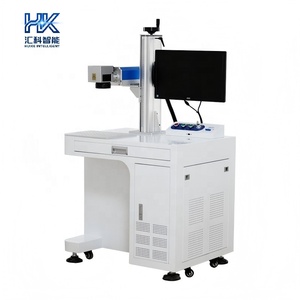
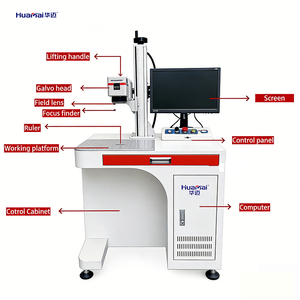
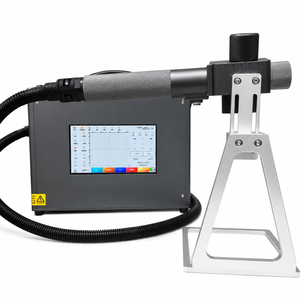
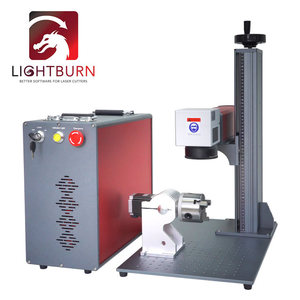
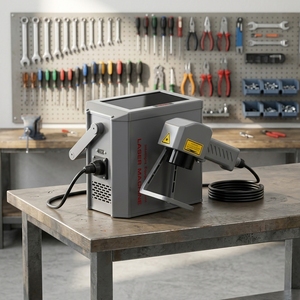
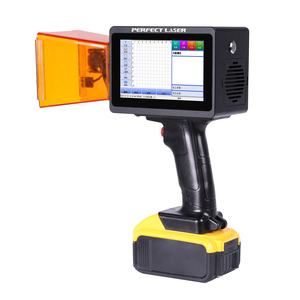
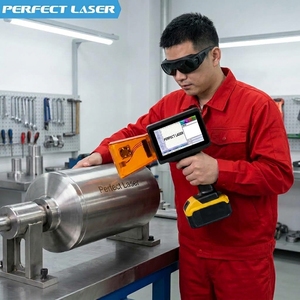
In high-duty manufacturing environments, selecting a qualified CE certified plate laser manufacturer is not simply a matter of regulatory compliance—it is the foundation of operational safety, beam trajectory precision, and long-term asset yield. Industrial laser cutting platforms and high-power galvo marking systems operate under extreme optical densities, electrical stress, and kinetic loads. Compliance with European Union Directives (Machinery Directive 2006/42/EC, Low Voltage Directive 2014/35/EU, and Electromagnetic Compatibility Directive 2014/30/EU) validates that an OEM platform has undergone rigorous third-party testing for safety interlocks, structural dampening, and radiation shielding.
Standard non-certified laser systems frequently sacrifice structural gantry mass and optical isolation, leading to harmonic vibration at speeds exceeding 800 mm/s. CE-compliant plate lasers utilize stress-relieved welded steel frames, dual-channel safety relay loops, and Class 2/Class 1 optical enclosures complying with EN 60825-1 laser safety standards to protect operators while sustaining continuous multi-shift production.
Derived from our deep manufacturing heritage (engineered with precision gantry architecture pioneered across thousands of global installations), our industrial laser machines unite high-power fiber optic generators (Raycus, MAX, JPT MOPA) and super-pulsed CO2 sources with advanced computer-controlled kinematics. Whether cutting thick carbon steel plates or executing micro-scale coding on surgical stainless steel, structural integrity determines your final cost-per-part.
Built on heavy annealed steel beds, our systems eliminate thermal distortion during continuous operation. Closed-loop AC Yaskawa/Panasonic servo motors paired with precision ground helical racks deliver sub-millimeter trajectory fidelity at high acceleration rates.
Utilizing Master Oscillator Power Amplifier (MOPA) technology, operators control pulse duration independently of repetition rate. This enables annealing of stainless plates, high-contrast black marking on anodized aluminum, and zero-burr foil processing.
Automated machine vision systems detect fiducial marks on pre-printed sheet goods or complex alloy stampings, automatically updating software coordinate matrices to eliminate manual fixturing and operator error.
Optimizing procurement efficiency requires matching the correct laser wavelength, beam quality (M²), and power density to your target material substrate. The matrix below outlines operational parameters across modern manufacturing applications:
| Laser Source Type | Wavelength | Primary Material Targets | Cutting/Marking Edge Characteristics | Operational Efficiency |
|---|---|---|---|---|
| CW Fiber Laser (1kW - 30kW) | 1064 nm | Carbon Steel Plate, Stainless Steel, Aluminum, Brass | Narrow kerf width, low dross, zero secondary grinding required | Ultra-High (>40% wall-plug efficiency) |
| JPT MOPA Fiber (20W - 100W) | 1064 nm (Adjustable Pulse) | Alloys, Plastics, Anodized Aluminum, Surgical Tools | Corrosion-free dark mark, variable pulse width (2ns - 500ns) | High (Air-Cooled stability) |
| Super-Pulsed CO2 (150W - 800W) | 10.6 μm | Cast Acrylic, Hardwood, MDF, Structural Foam, Rubber | Flame-polished acrylic edges, minimal charring on organic stock | Medium (Gas laser maintenance cycle) |
| UV Cold Laser (3W - 15W) | 355 nm | Cosmetics Packaging, Sensitive Polymers, Glass, Silicon | Photothermal cold processing, zero thermal heat-affected zone (HAZ) | High (Micro-precision focused) |
As global manufacturing shifts toward Smart Factory paradigms and Industry 4.0 integration, procurement managers must evaluate equipment purchases against a 5 to 10-year technological horizon. Modern plate laser cutting and marking machines are no longer isolated work centers; they are connected nodes within digital manufacturing ecosystems.
Industrial buyers are rapidly shifting from conventional CO2 sheet cutters to ultra-high-power continuous-wave (CW) fiber lasers. The integration of high-pressure air cutting systems (overcoming costly liquid nitrogen dependencies) has drastically reduced cost-per-meter on carbon steel and aluminum plate fabrication.
To maximize output per square foot of factory floor, multi-head platforms (such as dual gantry configurations) allow simultaneous processing of identical parts. Modern dual-source systems (combining fiber for metals and CO2 for non-metals) eliminate the need for two separate machine footprints.
Spindle downtime is the enemy of profitability. Procurement trends show a 40% increase in demand for dual-table shuttle systems, automated loading arms, and integrated part collection drawers, ensuring the laser beam fires continuously while operators prep the next sheet.
Selecting a global machinery supplier requires deep technical trust, verifiable field reliability, and comprehensive lifecycle support. Engineered with rigorous structural standards and backed by decades of machine-building heritage, our platforms offer unmatched operational security:
Every machine frame is stress-relieved, precision-machined, hand-wired, and subjected to rigorous 48-hour burn-in laser quality tests prior to global export. Our support team consists of mechanical and optical engineers who provide direct remote diagnostics, custom lens/rotary fixturing, and fast spare-parts dispatch worldwide.
Technical and logistical solutions for factory managers, purchasing agents, and OEM integration engineers.
For European importation, the equipment must feature a valid CE marking backed by a Declaration of Conformity covering the Machinery Directive (2006/42/EC), Low Voltage Directive (2014/35/EU), and EMC Directive (2014/30/EU). Standard EN 60825-1 compliance is mandatory for laser safety shielding. For North America, FDA/CDRH registration and UL/CSA electrical control panel compliance ensure hassle-free site inspections.
Standard Q-switched fiber lasers operate with fixed pulse durations (typically around 100ns). JPT MOPA (Master Oscillator Power Amplifier) lasers allow independent tuning of pulse duration (from 2ns to 500ns) and repetition frequencies (up to 4000kHz). This flexibility enables delicate thermal control necessary for color marking on stainless steel, high-contrast dark engraving on anodized aluminum, and damage-free plastic coding.
Heavy, stress-relieved steel gantry frames absorb the rapid inertia forces generated during high-speed directional changes (high deceleration/acceleration vector dynamics). Light extruded aluminum frames can flex under heavy load, causing micro-chatter marks along the cut edge. Our heavy-duty frames maintain sub-0.001 inch positional repeatability under continuous multi-shift production.
Yes. Hybrid laser platforms (such as our OptiFlex dual-source setup) combine a high-power CO2 laser source (ideal for acrylic, wood, and organic polymers) and a Fiber laser source (for stainless, mild steel, and aluminum) on a single gantry motion bed. This allows job shops to process diverse contracts without purchasing two standalone machines.
Oxygen (O2) is typically used for carbon steel plate cutting, utilizing an exothermic reaction to speed up thick plate piercing. Nitrogen (N2) is used for stainless steel and aluminum to produce clean, oxide-free edges ready for welding. High-pressure compressed air (filtered and dried) is increasingly popular for thin to medium metal sheets, dramatically reducing consumable gas expenditure.
Premium fiber laser sources (Raycus, MAX, JPT) feature a Mean Time Between Failures (MTBF) rating exceeding 100,000 operational hours (equivalent to over 10 years of standard production). Maintenance is minimal compared to CO2 optics: primarily keeping protective focal lenses clean, ensuring chiller coolant quality, and maintaining air filtration units.