Explore our CE-certified, high-speed fiber laser marking, precision engraving, and deep-etching machinery engineered for metals, engineering polymers, and composite substrates.
Technical benchmarks, compliance frameworks, and manufacturing parameters for global procurement officers and automation engineers.
In the modern smart manufacturing environment, industrial laser systems represent the backbone of direct part marking (DPM), high-speed trace identification, component serialisation, and precise micro-machining. As global industrial regulatory directives strictly enforce traceability—such as the European Union’s CE conformity markings, ISO 13485 medical device tracking protocols, and aerospace UID specifications—procurement directors must partner with validated OEMs capable of supplying robust, high-performance laser machinery.
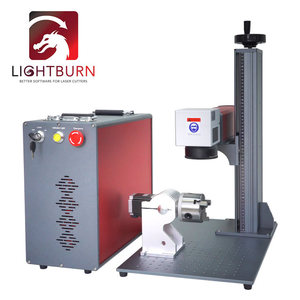
Our manufacturing architecture builds upon over four decades of precision mechanical and optical engineering heritage. Originating from advanced machine building methodologies, every CE-certified fiber, MOPA, UV, and CO2 laser system in our portfolio undergoes rigorous optical alignment testing, 72-hour continuous thermal stress loading, and full electromagnetic compatibility (EMC) verification. By engineering systems featuring heavy-duty welded steel gantries, linear closed-loop servo positioning systems, and propriety KCAM/galvanometer control environments, we deliver systems with repeatable positional accuracies down to ±0.001 inches.
Full adherence to EU Machinery Directive 2006/42/EC, Low Voltage Directive 2014/35/EU, and EN 60825-1 laser safety standards with Class 1 enclosed and Class 4 interlocked options.
Utilising premium JPT, Raycus, and MAX fiber laser sources with M² beam quality factors below 1.5, enabling micro-focus spot sizes for high-contrast, zero-burn vector etching.
Maintenance-free solid-state laser engines providing continuous industrial duty cycles with zero consumable gases, reducing Total Cost of Ownership (TCO) by up to 65%.
A comprehensive comparison for engineers selecting optical sources based on material interaction, pulse width flexibility, and thermal impact.
| Laser Source Type | Wavelength | Pulse Width Range | Optimal Materials | Key Industrial Advantages | Typical Applications |
|---|---|---|---|---|---|
| Standard Q-Switched Fiber | 1064 nm | Fixed (~90–120 ns) | Carbon Steel, Stainless Steel, Brass, Hard Plastics | High peak power, exceptional durability, low cost per part | Industrial serial numbers, barcodes, deep metal engraving |
| MOPA Fiber (JPT M7) | 1064 nm | Adjustable (2–500 ns) | Anodized Aluminum, Stainless, Titanium, Sensitive Polymers | Independent frequency/pulse width control, zero surface melt | Black marking on aluminum, rainbow color marking on SS |
| UV Cold Light Laser | 355 nm | Sub-nanosecond | Glass, Cosmetic Packaging, Flame-Retardant HDPE/ABS | Cold processing mechanism, zero heat-affected zone (HAZ) | Micro-electronics, medical device tracking, luxury cosmetic caps |
| Super-Pulsed CO2 | 10.6 µm | Pulsed / Continuous | Acrylic, Hardwood, Leather, Organic Composites, Rubber | Flame-polished optical edges, high material absorption rates | Architectural models, signage, gasket cutting, wood products |
Key technological shifts shaping industrial laser procurement strategies from 2026 through 2030.
The industry is rapidly shifting toward high-wattage (100W–300W) MOPA fiber lasers. The ability to program pulse durations between 2ns and 500ns allows high-speed deep ablation alongside non-destructive thermal annealing on delicate alloy parts.
Modern machine vision systems like K-Vision are eliminating manual fixturing. Intelligent cameras detect component distortion, automatically scale vector paths, and adjust z-axis motor stages for sub-millimeter focus on non-planar surfaces.
For sensitive electronics and medical components, UV (355nm) and ultra-fast picosecond lasers are replacing standard thermal marking to completely prevent thermal micro-cracking and material outgassing in cleanroom production environments.
Industrial machine shops increasingly favor multi-source systems combining CO2 and fiber laser gantries. This enables seamless switching between organic polymer processing and structural metal alloy coding on a single floor footprint.
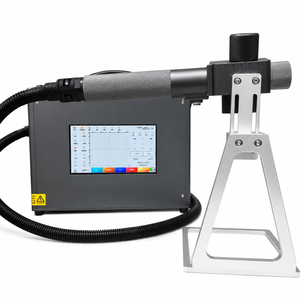
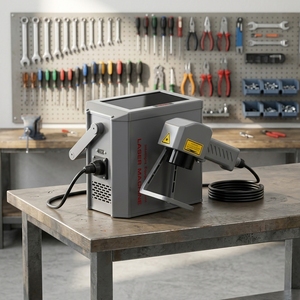
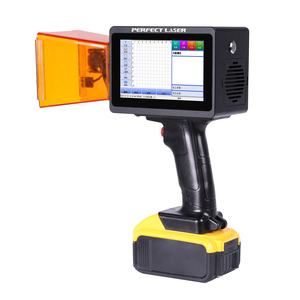
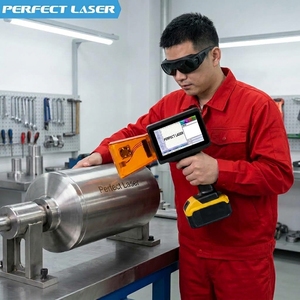
On-site heavy machinery identification is shifting from static marking stations to handheld ergonomic laser systems equipped with high-density lithium power packs, facilitating field coding on large structural steel and installed pipe infrastructure.
CE-compliant laser controllers now feature automated barcode scanning, OPC UA industrial network protocols, and real-time cloud data logging to provide complete traceability for Industry 4.0 automated production lines.
Vertical engineering integration, rigorous testing standards, and direct factory support for long-term production uptime.
Unlike assemblers who outsource critical components, our laser engines, optical path housings, and control systems are engineered and tested in-house. This guarantees component synchronization and reliable spare parts availability over a 10+ year service life.
Every CO2 laser source and fiber engine manufactured in our plant includes a standard 3-year factory warranty. Our dedicated technical team offers direct remote desktop diagnostics, parameter optimization, and overnight component dispatch.
Our production lines follow ISO 9001 certified workflows. Every machine undergoes power meter validation, beam profile analysis, and safety interlock validation before receiving CE certification documentation.
Essential answers to assist procurement specialists, factory managers, and system integrators.
CE Certification verifies that the laser machine complies with essential European Health, Safety, and Environmental Protection directives. Specifically, it certifies adherence to the Machinery Directive 2006/42/EC, Electromagnetic Compatibility (EMC) Directive 2014/30/EU, and safety standard EN 60825-1 for laser radiation safety, ensuring safe operation on factory floors worldwide.
Standard Q-switched fiber lasers (such as Raycus or MAX) are ideal for general-purpose metal marking, deep engraving, and barcode coding on carbon steel and stainless steel. MOPA fiber lasers (such as JPT M7) offer adjustable pulse widths (2–500 ns), making them superior for high-contrast black marking on anodized aluminum, vivid color marking on stainless steel, and marking delicate plastics without thermal deformation.
Compact desktop mini fiber laser machines operate on single-phase AC 110V/220V (50/60Hz) power with low energy consumption (under 600W total draw). Handheld units with integrated rechargeable lithium battery packs can operate continuously for 4 to 8 hours off-grid, making them ideal for field operations in shipyard construction, pipeline maintenance, and heavy equipment manufacturing yards.
Unlike CO2 or plasma cutting systems, standard fiber laser marking and etching systems operate without consumable assist gases. They rely on solid-state laser diodes with operational lifespans up to 100,000 hours. For specialized deep metal etching or clean ablative applications, optional compressed air or nitrogen jets can be integrated to clear debris from the focal trench.
Yes. Our KCAM software and embedded touchscreen controllers support a wide range of graphic vector formats, including DXF, PLT, AI, SVG, DST, and bitmap formats (BMP, JPG, PNG). The software features automated 1D/2D barcode generation, dynamic serial number sequencing, and seamless connection to industrial PLCs via standard Ethernet or RS232 protocols.
Standard fiber marking systems are maintained in stock and ship within 3 to 7 business days following factory testing. Custom bed dimensions, high-power setups, or specialized rotary enclosures ship in 14 to 21 days. Factory technicians provide 24/7 technical assistance, comprehensive video tutorials, and remote desktop support to ensure rapid installation and minimal setup time.
Need precise sample material testing, custom optics configuration, or direct OEM manufacturing pricing? Our application engineering team is ready to evaluate your technical requirements.
Inquire Now