CE Certified Laser System Manufacturers & Exporter

Global B2B Industrial Laser Solutions: MOPA Fiber, UV Cold Light, and CO2 Systems Engineered for Precision, Safety Compliance, and Continuous Enterprise Production

CE Certified Laser System Product Lineup

Explore our export-grade, fully compliant laser marking, engraving, and cutting systems engineered for high throughput, micron-level repeatability, and industrial reliability.
Fiber Laser Marking Machines 100W-300W

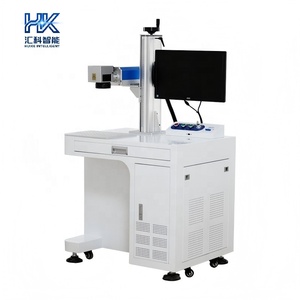
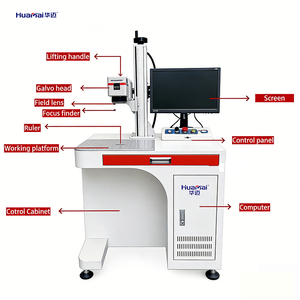
High-Power Fiber Laser Marking Machine (100W-300W JPT/Raycus/MAX)

Source: Raycus / JPT / MAX
Applications: Metal, Heavy Plastics, Deep Engraving
Get Catalog
Portable Auto Focus MOPA Fiber Laser

Portable Auto-Focus 20W/30W JPT MOPA Fiber Color Printing Marking System

Features: Pulse-width tuning, Color marking
Focus: Automated dynamic height tracking
Get Catalog
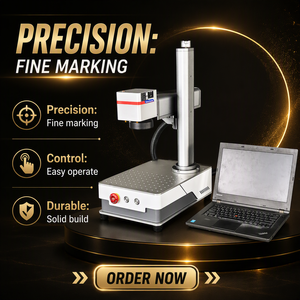
Desktop Mini Fiber Laser Marking Machine

Desktop Mini Fiber Laser Marking Machine (30W Compact Hardware)

Design: Ultra-lightweight footprint
Target: Stainless steel, hardware, jewelry
Get Catalog
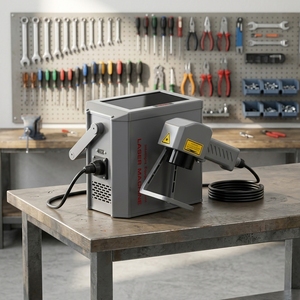
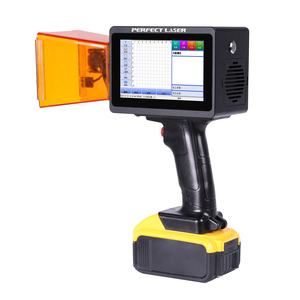
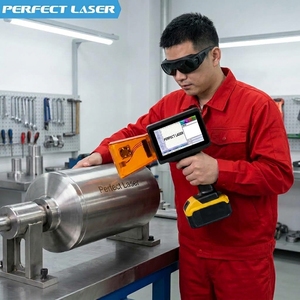
Handheld Mobile Portable Mini Laser Marker

Handheld Mobile Portable 20W/30W/50W Fiber Laser Marker for Small Business

Mobility: Flexible handheld gantry
Operation: On-site asset & code marking
Get Catalog
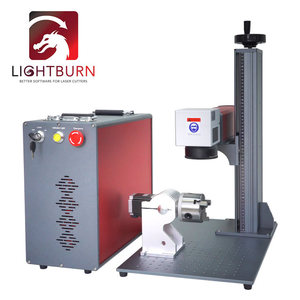
100W JPT M7 MOPA Bench-Top Laser Workstation

100W JPT M7 MOPA Bench-Top Air-Cooled Workstation with 80mm Rotary Axis

Bed Size: 300x300mm field lens
Compatibility: DXF/PLT vector pipelines
Get Catalog
Small Desktop UV Laser Engraving Machine

Small Desktop Air-Cooled UV Cold Laser Engraver for Cosmetic & Glass Packaging

Wavelength: 355nm UV cold processing
Substrates: Glass, delicate polymers, HDPE
Get Catalog
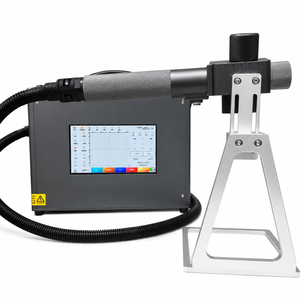
Portable Battery Handheld Industrial Laser Marker

Battery-Powered Portable Handheld Laser Marker for On-Site Industrial Use

Power: Rechargeable Lithium module
Use Case: Pipe, chassis, and heavy casting coding
Get Catalog
Ergonomic Multi-Material Handheld Laser Marker

Ergonomic Handheld Laser Marking Machine for Metal, Plastics, Wood & Leather

Versatility: Multi-wave length configuration
Ergonomics: Lightweight trigger-grip applicator
Get Catalog
100%
CE Compliant Directives
±0.001"
Positional Repeatability
100,000h
Laser Source MTBF
50+
Export Nations Served

Enterprise Manufacturing Advantage & Technical Authority

As a premier CE-certified laser system manufacturer and international exporter, our engineering ethos combines rigid structural design, ultra-precise optoelectronic alignment, and strict adherence to international safety directives.

01

Rigorous European Safety Standard Compliance (CE Framework)

Our complete machinery line adheres directly to the Machinery Directive 2006/42/EC, Low Voltage Directive 2014/35/EU, and EMC Directive 2014/30/EU. Incorporating EN 60825-1 laser safety standards, our systems feature double-circuit safety interlocks, protective optical glass enclosures, and integrated emergency-stop telemetry to ensure seamless passing of factory audits across European and North American markets.

02

High-Precision Optoelectronic & Motion Integration

By leveraging high-speed Digital Galvanometer Scanners (galvo heads) paired with premium Field-Scan Lenses (F-Theta), our machines achieve beam deviation control under 0.001 mm. Whether deploying MOPA variable pulse width technology for vibrant titanium color marking or high-energy super-pulsed CO2 sources for organic polymer cutting, our optical design ensures minimum thermal distortion and maximum edge cleanliness.

03

In-House Assembly, Testing, and 72-Hour Burn-in Protocol

Every laser system leaves our facility after completing a mandatory 72-hour continuous thermal stress test, power stability monitoring via coherent power meters, and sub-micron beam profile validation. This vertical engineering oversight drastically minimizes field failure rates, providing an industry-leading Mean Time Between Failures (MTBF) exceeding 100,000 operational hours for fiber laser modules.

04

Comprehensive Export Supply Chain & Global Direct Support

We provide full export clearance documentation, custom-tailored plywood crate packaging meeting ISPM 15 standards, and multi-voltage transformer options (110V/220V/380V). Global technical support is delivered directly by senior optical and automation engineers via remote diagnostic bridges, rapid spare-part shipping, and localized commissioning support.

Future Procurement & Technological Trends in Industrial Laser Equipment

Key strategic insights for B2B procurement managers, technical directors, and plant operators planning machinery investments over the 2026–2030 cycle.

AI-Powered Vision & Machine Alignment

Legacy mechanical jigs are rapidly being superseded by Coaxial Camera Systems (e.g., K-Vision). Integrated neural networks automatically detect workpiece location, skew, and thermal warping in real time. Procurement is shifting towards vision-native machines that eliminate manual fixture setup and reduce non-productive spindle time by up to 65%.

Dominance of MOPA & Ultra-Short UV Lasers

While standard Q-switched lasers remain workhorses for coarse metal etching, procurement trends indicate a major shift toward MOPA (Master Oscillator Power Amplifier) and 355nm UV cold-laser sources. These technologies enable precise pulse duration control (2ns to 500ns), crucial for marking heat-sensitive medical polymers, aerospace electronics, and un-foamed cosmetic packaging without charring.

Smart Factory & Industry 4.0 IoT Telemetry

Modern B2B buyers mandate seamless MES and ERP software integration. Next-generation laser systems incorporate OPC-UA, Modbus, and Ethernet/IP protocols. Real-time optical power decay tracking, galvo temperature logging, and predictive maintenance alerts allow enterprise operations to prevent unscheduled line stoppages.

Energy Efficiency & Green Manufacturing

With escalating global electricity costs and carbon compliance mandates, fiber and semiconductor laser architectures are completely replacing legacy gas-discharge lasers for metal processing. High wall-plug efficiency (>30% for fiber vs. <10% for traditional CO2) directly reduces factory operating overhead and carbon footprint.

Modular & Portable Form Factor Demand

On-site infrastructure maintenance, heavy machinery manufacturing, and large casting traceability require lasers to move to the part, rather than bringing heavy parts to the machine. Battery-operated handheld laser markers with integrated Linux controllers represent one of the fastest-growing export segments.

Stringent Multi-National Compliance Standardisation

Cross-border export verification now demands fully documented safety design. Importers prioritize original equipment manufacturers who provide audited CE technical construction files (TCF), ISO certification, safety glass optical density (OD5+) validation, and compliant exhaust/fume extraction integration.

Optical Wavelength Selection Matrix for Industrial B2B Buyers

Selecting the optimal laser emitter architecture is vital to achieving maximum edge clarity and minimizing heat-affected zones (HAZ). The matrix below highlights key industrial application boundaries:

Laser Technology Wavelength Primary Material Compatibility Key Operational Advantage
Fiber Laser (Q-Switched) 1064 nm Mild steel, Stainless steel, Brass, Aluminum, Opaque ABS High speed, extreme pulse energy, zero maintenance module.
MOPA Fiber Laser 1064 nm (Adjustable) Anodized aluminum, Stainless blacking, Thin foil, Mixed plastics Tunable pulse widths (2-500ns) prevent material deformation.
UV Cold Light Laser 355 nm Glass, Silicon, HDPE, Medical grade PVC, Flame-retardant polymers Photochemical reaction yields ultra-fine marking without heat.
RF CO2 Super-Pulsed 10.6 µm Acrylic, Wood, Leather, Fabric, Glass engraving, Paper goods High organic material absorption, flame-polished acrylic edges.

Frequently Asked Procurement & Technical Questions

Essential technical insights addressing regulatory compliance, operational safety, system maintenance, and international shipping logistics.

1. What specific testing documentation is included with your CE Certified Laser Systems?
Every export-grade machine is delivered with a complete compliance package. This includes the official CE Declaration of Conformity detailing adherence to Machinery Directive 2006/42/EC and EMC Directive 2014/30/EU, an electrical safety test report according to EN 60204-1, optical power calibration logs, and an factory quality inspection sign-off certificate.
2. How does a MOPA fiber laser differ from a standard Q-switched fiber laser during production?
Standard Q-switched fiber lasers feature fixed pulse duration (typically 100ns–120ns), making them ideal for heavy-duty metal engraving and cutting. MOPA fiber lasers allow operators to independently adjust pulse frequency and pulse duration (from 2ns to 500ns). This flexibility allows clean black marking on anodized aluminum, high-contrast marking on sensitive plastics without burning, and vivid color marking on titanium and stainless steel.
3. What laser safety class applies to your machines, and what PPE is required for plant operators?
Our fully enclosed workstations (such as the LaserCELL and FiberCELL series) qualify as Class 1 laser systems under EN 60825-1, meaning no specialized PPE is required during standard operation. Open gantry bench-top or handheld laser markers operate under Class 4 safety ratings; for these units, operators must wear certified optical safety glasses (OD5+ or higher matched to the specific emitter wavelength) and operate within designated laser safety controlled areas.
4. How are international warranty claims and technical spare parts handled for overseas buyers?
All major laser sources (Raycus, JPT, MAX, IPG) carry a 2 to 3-year international manufacturer warranty backed by global service hubs. For secondary system components (servo drivers, galvo heads, power supplies), we maintain a rapid-dispatch replacement stock shipped via express air freight (DHL/FedEx). Diagnostic support is available 24/7 through high-definition remote desktop sessions and video diagnostics.
5. What software vector files are supported, and can your laser systems integrate into automated lines?
Our systems natively support industry-standard vector and raster formats, including DXF, PLT, AI, DST, BMP, and JPG via controllers like KCAM or EzCad. For automated production lines, the system controllers feature I/O hardware ports, RS232/RS485 serial communication, and TCP/IP connectivity to accept external start signals, interface with conveyor sensors, and pull dynamic serialization data directly from SQL databases.
6. What maintenance routines are required to maintain sub-micron optical precision?
Maintenance requirements are minimal. Weekly routines involve inspecting and cleaning the protective window or F-Theta field lens using pure anhydrous alcohol and optical lens paper. Monthly routines include checking air intake filters, ensuring chillers maintain deionized water levels (for water-cooled systems), and inspecting linear motion guide rails for proper lubrication.

Ready to Upgrade Your Production Line with Certified Precision?

Contact our engineering export sales team today for detailed technical specifications, custom application testing, baseline ROI calculations, and factory-direct quotation packages.
Get Catalog