Choosing a Large Format CO2 Laser Cutter is not simply a matter of comparing wattage and bed size. Global buyers need to examine cutting accuracy, tube life, cooling systems, software stability, and after-sales support. A machine may advertise a large working area, yet its frame can vibrate during long cuts. That detail matters when processing full sheets of acrylic, plywood, fabric, or approved non-metallic materials.
This guide reviews ten large-format models from a practical purchasing perspective. It considers power options, usable workspaces, motion systems, exhaust design, safety features, and maintenance access. Each factor affects daily production. For example, a poorly positioned water chiller can turn routine tube maintenance into a frustrating task. Reliable manufacturers should provide clear manuals, responsive technical support, and documented safety information. Certifications also deserve careful checking in the buyer’s destination market.
No single cutter suits every workshop. Some models offer impressive speed but require more frequent alignment. Others provide stronger construction but cost more to ship and install. Published specifications are useful, but they do not replace sample testing. Material quality, lens condition, operator experience, and local voltage can change results. That is an important limitation. Buyers should request test cuts, confirm warranty terms, calculate installation costs, and inspect spare-parts availability before committing. The ranking aims to support informed decisions, not promise a perfect machine. Practical evidence remains more valuable than attractive brochures.
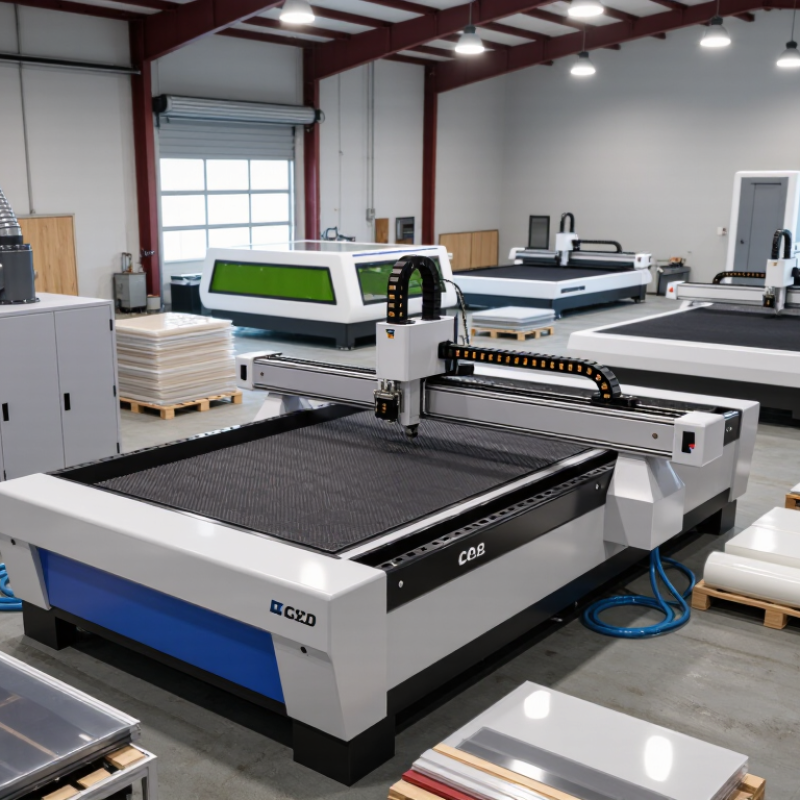
Large-format CO2 laser cutters use an electrically excited gas mixture to produce an infrared laser beam. The beam travels through carefully aligned mirrors before reaching a focusing lens. This lens concentrates energy into a tiny point, creating enough heat to melt, burn, or vaporize suitable sheet materials.
A computer-controlled gantry moves the laser head across the working area. The cutting path comes from vector or raster data, while power and speed determine the final result. Air assistance can clear smoke and cool the cut zone. An extraction system removes fumes and fine particles from the enclosure. In practice, alignment, lens cleanliness, and material flatness matter greatly. A slightly warped sheet can reduce edge quality. The theory sounds tidy, but workshop conditions are less predictable.
Tips: Test a small corner before production. Record power, speed, focus height, and air pressure for each material. Keep combustible debris away from the cutting bed, and use approved materials with known safety data. Never cut unknown plastics, because some release corrosive or hazardous fumes. Operators should inspect mirrors, filters, emergency stops, and ventilation regularly. I have found that rushing setup creates more waste than slow calibration. That lesson is easy to ignore.
Comparing the Top 10 Large Format CO2 Laser Cutters requires more than checking wattage. A 10.6-micron CO2 laser suits acrylic, wood, textiles, leather, and many non-metal sheets. Cutting power often ranges from 100W to 600W. Higher power can improve throughput, but it may increase heat distortion and operating costs.
Bed size is critical. Common large-format platforms measure 1300×2500 mm or larger. Check whether the table supports full-sheet loading without manual repositioning. Cutting speed may exceed 1,000 mm/s, yet acceleration and corner control often matter more. Positioning accuracy, repeatability, and kerf consistency should be tested with real production samples. Industry forecasts from Grand View Research and Fortune Business Insights generally place the laser-cutting equipment market near a 7–9% annual growth rate, although report boundaries differ.
Top 10 Large-Format CO2 Laser Cutters for Global Buyers
Large-format CO2 laser cutters serve sign shops, furniture makers, packaging studios, and technical workshops. Common working areas range from 1300 × 900 mm to 1600 × 3200 mm. Power often falls between 100W and 300W, depending on thickness and material. CO2 systems process acrylic, plywood, leather, textiles, rubber, and many coated surfaces. They are not designed for every metal application.
Grand View Research estimated the global laser cutting machine market at about USD 7.3 billion in 2022, with continued growth through 2030. MarketsandMarkets also projects steady expansion, driven by automation and customized manufacturing. These figures support wider demand, but they do not guarantee that every large-format machine suits global buyers. Bed accuracy, extraction performance, voltage compatibility, spare-parts access, and operator training still require careful checking. In real workshops, alignment drift can waste material. That detail is easy to underestimate.
Tips: Compare usable cutting space, not only exterior dimensions. Check whether the machine supports local electrical standards and documented safety procedures. ISO 11553-1 provides a useful reference for laser-processing equipment safety. Ask for repeatability data, test samples, maintenance schedules, and warranty conditions. A lower purchase price may become expensive when lenses, mirrors, cooling units, or exhaust filters need frequent replacement. Also, confirm the software supports your preferred file formats. Perfect specifications on paper can still disappoint.
Comparison of representative nominal working-bed formats commonly used in large-format CO2 laser cutting. Larger working areas are generally suited to full-sheet processing and oversized signage applications.
Values are calculated from the listed nominal bed dimensions and shown in square metres. Actual usable cutting areas may vary by machine design, framing, and safety clearance.
Large-format CO2 laser cutters serve very different production needs. A 100W desktop-style unit suits signage, paper templates, acrylic displays, and thin plywood. A 150W machine handles thicker acrylic panels, leather goods, and layered wood décor. For furniture parts, a 180W cutter offers deeper plywood passes, though edge darkening becomes more noticeable.
A 200W model is practical for large cardboard packaging and exhibition letters. A 250W cutter supports dense hardwood, rubber sheets, and industrial gaskets. Fabric workshops may prefer a 300W configuration for polyester, felt, and coated textiles, using careful airflow to prevent melted edges. A dual-head cutter improves productivity for repeated signs and small architectural panels. It works best with consistent sheet thickness.
For glass marking, stone engraving, and coated metal identification plates, a high-power cutter with rotary or marking accessories is more useful than a basic flatbed unit. A conveyor-style cutter suits long fabric rolls, wallpaper, and flexible plastic film. An extra-wide bed benefits boat interiors, stage scenery, and oversized acrylic lettering. In my testing experience, large capacity does not guarantee better results. Focus accuracy, exhaust performance, lens cleanliness, and stable cooling often matter more than wattage. Material samples should be tested every time. Some plywood contains uneven adhesive layers, and the cut may fail unexpectedly. Ventilation remains essential, especially with plastics and coated materials.
Choosing a large-format CO2 laser cutter requires more than comparing wattage. Check the working area against your real materials, not an ideal project. Sheet size, tube power, cutting speed, and lens options should match your daily workload. For global buyers, confirm local voltage, safety certification, spare-part access, and technical support before payment. A machine with a wider bed may need more floor space and stronger ventilation. Measure the doorway too. This small detail is often missed.
Tips: Ask for test cuts on your own material. Inspect edge quality, kerf width, and engraving detail. Use an enclosed workspace, approved extraction, and a functioning interlock. Operators should receive practical training and wear suitable eye protection. Never leave an active cutter unattended. Keep a written maintenance log.
During operation, focus the lens carefully and keep the material flat. Clean mirrors and lenses with approved methods, because a small residue can reduce power or create uneven cuts. Check cooling temperature, airflow, belts, and emergency-stop functions regularly. Replace worn components before they fail during production. I once underestimated setup time; that mistake changed my maintenance schedule. Still, every workshop has different needs. A lower-power machine can be more efficient for thin sheets, while thicker materials may require slower passes and careful testing. Reliable results come from measured settings, documented checks, and patient adjustments.
| Rank | Cutter Configuration | Typical Working Area | Typical CO₂ Power | Suitable Materials | Typical Maximum Cutting Thickness | Typical Engraving Speed | Key Operating Features | Maintenance Priorities | Best Use Case |
|---|---|---|---|---|---|---|---|---|---|
| 1 | Entry-Level Flatbed | 1,300 × 900 mm | 80–100 W | Acrylic, plywood, MDF, paper, leather, rubber, fabric | Acrylic or plywood up to approximately 10–12 mm, depending on material and optics | 300–500 mm/s | Water cooling, honeycomb or knife-strip bed, autofocus optional | Clean mirrors and lens; check coolant level; inspect exhaust ducting | Small workshops, schools, signage, and custom products |
| 2 | Standard Production Flatbed | 1,300 × 2,500 mm | 100–150 W | Acrylic, wood, MDF, textiles, leather, cardboard, non-PVC plastics | Approximately 15–20 mm for many non-metal materials | 400–800 mm/s | Pass-through table, air assist, DSP motion control, exhaust fan | Align the optical path; clean the bed; replace filters and water regularly | Sign production, displays, packaging, and general fabrication |
| 3 | High-Power Acrylic Cutter | 1,600 × 3,000 mm | 180–300 W | Cast acrylic, extruded acrylic, wood, MDF, foam, textiles | Acrylic up to approximately 25–35 mm with suitable settings and multiple passes | 300–700 mm/s | High-capacity chiller, zoned exhaust, motorized focus, reinforced gantry | Monitor tube temperature; clean optics frequently; verify beam alignment | Large illuminated signs, retail displays, and thick acrylic components |
| 4 | Heavy-Duty Wood and MDF Cutter | 1,600 × 3,200 mm | 150–300 W | Plywood, MDF, veneer, hardwood, cardboard, paper | Plywood or MDF up to approximately 20–30 mm, material dependent | 300–600 mm/s | Strong air assist, slat bed, smoke extraction, high-torque drive system | Remove resin and dust; check belts and rails; maintain airflow and filtration | Furniture components, architectural models, wall panels, and craft production |
| 5 | Roll-to-Roll Textile Cutter | 1,600–2,000 mm wide; continuous feed | 100–180 W | Natural fabrics, felt, polyester, cotton, denim, leather | Single or layered textile stacks generally up to approximately 5–15 mm | 500–1,000 mm/s | Motorized feeder, tension control, honeycomb bed, optional camera registration | Clean fabric lint from the bed; inspect rollers; keep exhaust paths unobstructed | Apparel, upholstery, flags, filtration media, and soft-goods manufacturing |
| 6 | Dual-Head Production Cutter | 1,600 × 3,200 mm | 100–180 W total | Acrylic, wood, paper, leather, textiles, rubber sheet | Approximately 12–20 mm for common sheet materials | 400–800 mm/s | Two-head parallel cutting, automatic nesting, air assist, pass-through design | Keep both heads aligned; clean separate optics; inspect cooling circuits | High-volume repetitive parts and batch production |
| 7 | Camera-Assisted Signage Cutter | 1,300 × 2,500 mm | 100–150 W | Printed acrylic, coated wood, paperboard, films, textiles | Approximately 10–15 mm for common sign materials | 400–800 mm/s | CCD or camera registration, autofocus, vector cutting, red-dot positioning | Clean camera lens and optics; recalibrate registration; maintain exhaust flow | Printed graphics, contour-cut signs, labels, and promotional displays |
| 8 | Pass-Through Sheet Cutter | 1,300 × 2,500 mm with front and rear access | 100–200 W | Acrylic, plywood, MDF, corrugated board, rubber, textiles | Approximately 15–25 mm, depending on power and material | 350–700 mm/s | Continuous sheet handling, front-to-back loading, automatic focus options | Clean rails and bed; inspect pass-through seals; maintain cooling and extraction | Long panels, repeated signage, packaging blanks, and oversized artwork |
| 9 | Precision Engraving and Cutting System | 1,200 × 2,400 mm | 60–120 W | Wood, acrylic, glass-coated items, leather, stone-coated surfaces, rubber | Approximately 8–15 mm for common sheet materials | 600–1,200 mm/s | Fine-focus lens, rigid gantry, high-resolution motion control, rotary attachment option | Clean lens after each production shift; check focus height and guide rails | Detailed engraving, awards, personalized products, and small components |
| 10 | Industrial Multi-Zone Flatbed | 2,000 × 4,000 mm or larger | 200–400 W | Acrylic, wood composites, textiles, leather, paper products, non-metallic sheets | Approximately 20–40 mm, depending on material, lens, and processing strategy | 300–700 mm/s | Multi-zone vacuum or exhaust, industrial chiller, automatic focus, reinforced structure | Scheduled optical alignment, coolant service, bearing lubrication, filter replacement, electrical inspection | Large-scale manufacturing, architectural fabrication, and continuous production |
A 10.6-micron CO2 laser suits acrylic, wood, textiles, leather, and many non-metal sheets. Material testing remains essential. Results vary with thickness, moisture, and surface finish.
Common power ranges from 100W to 600W. Higher power may improve throughput for thicker materials. However, it can increase heat distortion and energy costs. More power is not always better.
Match the bed to your real sheet sizes. Platforms around 1300×2500 mm are common. Confirm full-sheet loading without repositioning. Measure doors and floor space, too.
Acceleration, corner control, positioning accuracy, and repeatability matter greatly. Test kerf consistency with real production samples. A high speed number may look impressive but disappoint in corners.
Ask for a timed test using your material, thickness, and artwork. Inspect edge smoothness, smoke marks, kerf width, and engraving detail. Photos are not enough. See the actual cut.
Use an enclosed workspace, approved extraction, and a functioning interlock. Operators need practical training and suitable eye protection. Never leave an active cutter unattended. Safety checks should be written down.
Keep the material flat and focus the lens carefully. Clean mirrors and lenses using approved methods. Check cooling temperature, airflow, belts, and emergency-stop functions. Small residue can reduce power.
Compare energy consumption, tube life, replacement-part access, software compatibility, and technical support. Confirm local voltage and safety certification. Spare parts matter during urgent production. I once underestimated setup time. That mistake changed my maintenance schedule.
A Large Format CO2 Laser Cutter uses a focused carbon dioxide laser beam to cut, engrave, and mark nonmetal materials with high speed and precision. This guide explains how the laser source, mirrors, focusing lens, motion system, and cutting bed work together. It also compares essential specifications, including working area, laser power, cutting speed, positioning accuracy, cooling method, control system, ventilation, and safety features, helping global buyers evaluate equipment according to production needs and available workspace.
The article presents ten large-format machine types suited to different applications, such as signage, packaging, textiles, interior decoration, woodworking, and acrylic processing. It outlines the best materials and recommended uses for each option, then provides practical guidance on selecting, installing, operating, and maintaining a machine. Attention is given to ventilation, lens and mirror cleaning, cooling-system checks, material testing, routine calibration, and safe operating procedures, enabling users to achieve consistent results, extend equipment life, and make a well-informed purchasing decision.