China’s laser-cutting market has expanded rapidly, yet supplier quality varies sharply. This makes a careful review of the China Top 10 OptiFlex Laser Cutting System suppliers valuable for manufacturers, engineers, and purchasing teams. The list should examine machine stability, cutting accuracy, service coverage, software compatibility, and long-term operating costs.
Dr. John Powell, a respected laser-processing specialist and author of several technical works, has stated, “The laser is a tool, not a magic wand.” This practical warning remains relevant. A powerful source cannot compensate for poor beam alignment, unstable gas pressure, weak nesting software, or inadequate operator training. In a factory, these issues appear clearly: rough stainless-steel edges, heat marks on thin sheets, and unexpected production pauses.
This introduction does not treat “top” as a simple popularity contest. It considers manufacturing experience, documented performance, technical support, safety practices, and customer feedback. It also recognizes that one supplier may excel with carbon steel, while another performs better with aluminum or high-volume fabrication. The ranking should therefore support comparison, not replace technical audits or sample cutting tests.
There is no perfect supplier.
Readers should verify certifications, warranty terms, spare-part availability, installation response times, and actual cutting results before purchasing. Some public claims may be incomplete. That deserves reflection. A reliable OptiFlex Laser Cutting System supplier should explain limitations openly, provide measurable specifications, and demonstrate consistent results under realistic workshop conditions.
OptiFlex Laser Cutting Systems: Definition, Features, and Applications
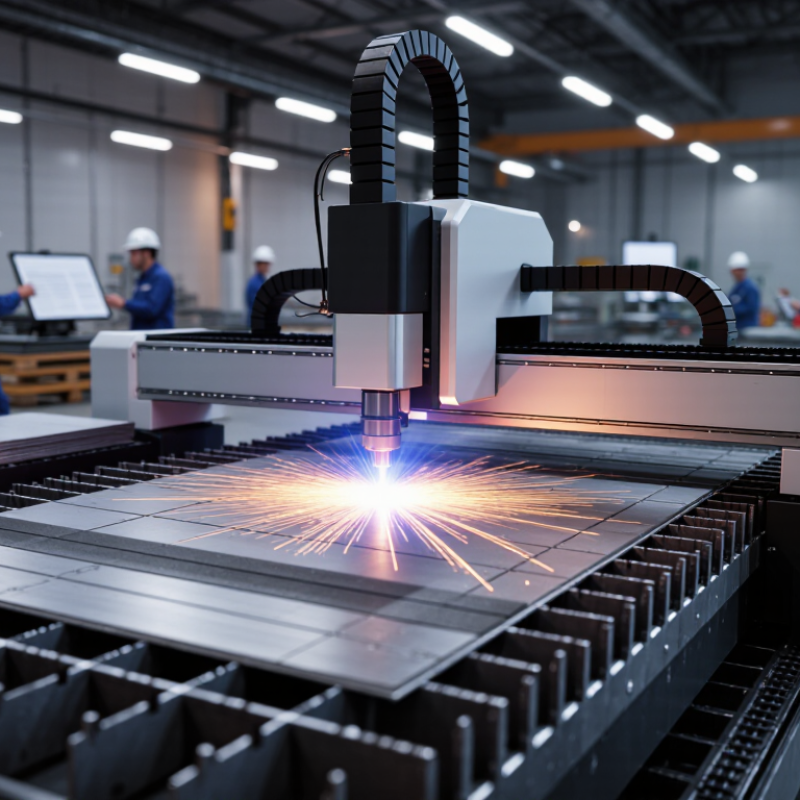
OptiFlex laser cutting systems are flexible laser platforms designed to cut metal sheets, tubes, or formed parts. They commonly combine a fiber laser source, motion-control system, cutting head, and automatic gas delivery. The word “OptiFlex” may describe a configuration rather than one universal technical standard. Buyers should verify the exact specifications.
Key features include adjustable laser power, precise beam control, nesting software, and automatic focus adjustment. These functions help reduce heat-affected zones and material waste. A stable machine can produce narrow kerfs and smooth edges at practical production speeds. However, cutting quality depends on material grade, thickness, gas purity, nozzle condition, and operator settings. A powerful laser alone cannot guarantee a clean result.
In China, suitable suppliers should provide cutting samples, maintenance records, electrical diagrams, and realistic tolerance data. Factory visits can reveal details that brochures often omit, such as cable protection, dust sealing, and table alignment. OptiFlex systems support automotive parts, kitchen equipment, metal furniture, signage, and general fabrication. Thin stainless steel may require different settings from carbon steel. Tube cutting also needs reliable chuck positioning and collision protection. Small errors matter. Operators should test long production runs, not only attractive sample pieces. Some suppliers offer strong prices but limited after-sales support, which can create downtime and training costs. A careful assessment should include spare-part availability, software updates, installation guidance, and response times.
Criteria for Ranking China’s Top 10 OptiFlex Laser Cutting Suppliers
China’s top 10 OptiFlex laser cutting suppliers should be ranked by evidence, not advertising claims. Grand View Research estimates that the global laser cutting machine market will grow at about 7.5% annually from 2024 to 2030. This growth increases supplier competition, but it also makes verification essential. Ranking teams should examine cutting accuracy, repeatability, energy use, and system stability across steel, aluminum, and reflective materials. Factory trials matter. A clean edge on one test plate proves little.
Service capability deserves equal weight. Suppliers should provide documented installation times, spare-parts availability, remote diagnostics, and trained technicians. ISO 9001 certification supports process control, while electrical safety should align with applicable IEC requirements. MarketsandMarkets reported strong demand for automated and fiber-based cutting systems, showing why software integration and production monitoring belong in the scoring model. Total cost of ownership should include maintenance, consumables, training, and expected downtime, not only the purchase price. Customer references should be checked through direct interviews and site visits. Be careful with impressive brochures. Some performance figures may reflect ideal conditions rather than daily factory work. A transparent ranking could assign 30% to technical performance, 25% to service reliability, 20% to application experience, 15% to ownership cost, and 10% to compliance and documentation. These weights are useful, but they still need adjustment for each buyer’s material mix and production volume.
Profiles of China’s Top 10 OptiFlex Laser Cutting System Suppliers
China’s top ten OptiFlex laser cutting system suppliers differ in engineering depth, machine scale, and service reach. The first profile represents a high-power specialist serving steel fabrication plants. Its systems typically combine rigid gantries, automatic focusing heads, and active cooling. Another supplier focuses on compact fiber cutters for workshops with limited floor space. That detail matters.
A third supplier is known for tube and profile cutting, using rotary chucks and calibrated three-dimensional motion. The fourth concentrates on sheet-metal automation, linking loading tables, storage towers, and cutting stations. A fifth profile covers customized machines for thick stainless steel, where heat distortion and edge quality require careful process control. The sixth supplier emphasizes entry-level systems, but buyers should inspect component quality rather than trust low prices. Cheap equipment can become expensive downtime.
The remaining profiles include a supplier developing dual-table machines for faster loading, one serving export markets with multilingual documentation, and another offering retrofit packages for older cutters. A tenth supplier focuses on software integration, including nesting, production tracking, and remote diagnostics. In factory visits, check cutting samples, maintenance records, spare-part response, and operator training. Ask to see repeatability tests, not only polished demonstrations. Some suppliers report impressive peak power, yet practical output depends on material, lens condition, gas pressure, and programming skill. Rankings are rarely permanent. A smaller manufacturer may outperform a larger one on a specific application, and this is easy to overlook.
China Top 10 OptiFlex Laser Cutting System Suppliers
The chart compares the principal laser-source wavelengths commonly used in industrial cutting systems reviewed across supplier profiles. Fiber and solid-state sources operate near 1 µm, while CO₂ systems use a much longer infrared wavelength.
Wavelength is a technical comparison dimension rather than a supplier ranking. Typical industrial values are approximately 1,030 nm for disk lasers, 1,070 nm for fiber lasers, 1,064 nm for Nd:YAG lasers, and 10,600 nm for CO₂ lasers.
Technology, Performance, and Service Comparison Among the Top Suppliers
Choosing among the top ten OptiFlex laser cutting system suppliers requires more than comparing advertised wattage. Technology should be judged through beam stability, autofocus response, thermal control, software integration, and cutting consistency. The 2024 Grand View Research analysis identifies automation and fiber-laser adoption as major market drivers. This supports evaluating remote diagnostics, automatic nozzle changing, and production data access.
Performance needs measurable evidence. Request test cuts using your actual steel, aluminum, or stainless-steel grades. Record edge roughness, piercing time, kerf width, and energy use per part. MarketsandMarkets estimated the laser cutting machine market would grow from about 6.3 billion dollars in 2023 to 10.8 billion dollars by 2028. Rapid growth can encourage exaggerated claims. A factory trial is safer than a polished brochure.
Service often separates capable suppliers from merely visible ones. Compare installation time, operator training, spare-parts availability, response hours, and local engineering coverage. Ask for maintenance records from similar production environments. ISO 230-2 provides a useful reference for checking positioning accuracy and repeatability. Yet one weakness remains: published accuracy may reflect ideal conditions. Dust, vibration, material variation, and inexperienced operators can change results. I would score service transparency alongside machine performance, then review the scores after three months of real production.
China Top 10 OptiFlex Laser Cutting System Suppliers? – Technology, Performance, and Service Comparison Among the Top Suppliers
| Rank |
Supplier Code |
Core Laser Technology |
Typical Laser Power |
Typical Working Area |
Positioning Accuracy |
Repeatability |
Automation Options |
Service Capability |
| 1 |
Supplier A |
Fiber laser |
3–20 kW |
3,000 × 1,500 to
6,000 × 2,500 mm |
Typically up to
±0.03 mm |
Typically up to
±0.02 mm |
Auto-focus head,
pallet changer, nesting software |
Global distributor network |
| 2 |
Supplier B |
Fiber laser with
high-speed motion control |
3–12 kW |
3,000 × 1,500 to
6,000 × 2,000 mm |
Typically up to
±0.03 mm |
Typically up to
±0.02 mm |
Dual pallet exchange,
shuttle table, fume extraction |
Remote diagnostics available |
| 3 |
Supplier C |
Fiber laser for
sheet and tube processing |
1.5–12 kW |
3,000 × 1,500 to
6,000 × 2,500 mm |
Typically up to
±0.04 mm |
Typically up to
±0.03 mm |
Tube rotary axis,
automatic loading and unloading |
Application engineering support |
| 4 |
Supplier D |
Fiber laser with
integrated smart controls |
3–20 kW |
4,000 × 2,000 to
6,000 × 2,500 mm |
Typically up to
±0.03 mm |
Typically up to
±0.02 mm |
Automatic sheet storage,
sorting and production monitoring |
On-site commissioning options |
| 5 |
Supplier E |
Fiber laser with
cost-efficient configuration |
1.5–8 kW |
3,000 × 1,500 to
4,000 × 2,000 mm |
Typically up to
±0.04 mm |
Typically up to
±0.03 mm |
Auto-focus cutting head,
pallet changer, CAD/CAM integration |
Standard export support |
| 6 |
Supplier F |
Fiber laser for
heavy-gauge metal |
6–30 kW |
4,000 × 2,000 to
6,000 × 3,000 mm |
Typically up to
±0.04 mm |
Typically up to
±0.03 mm |
High-capacity pallet system,
automatic nozzle changer |
Heavy-industry service support |
| 7 |
Supplier G |
Fiber laser with
compact machine architecture |
1.5–6 kW |
3,000 × 1,500 to
4,000 × 2,000 mm |
Typically up to
±0.04 mm |
Typically up to
±0.03 mm |
Compact pallet changer,
automatic nesting and diagnostics |
Fast parts replacement program |
| 8 |
Supplier H |
Fiber laser for
mixed sheet and tube work |
1.5–12 kW |
3,000 × 1,500 to
6,000 × 2,000 mm |
Typically up to
±0.05 mm |
Typically up to
±0.03 mm |
Tube attachment,
pallet exchange, barcode interface |
Multilingual technical documentation |
| 9 |
Supplier I |
Fiber laser with
production-line integration |
3–15 kW |
4,000 × 2,000 to
6,000 × 2,500 mm |
Typically up to
±0.04 mm |
Typically up to
±0.03 mm |
Robotic loading,
stacking, MES and ERP connectivity |
System integration support |
| 10 |
Supplier J |
Fiber laser for
general fabrication |
1.5–8 kW |
3,000 × 1,500 to
4,000 × 2,000 mm |
Typically up to
±0.05 mm |
Typically up to
±0.04 mm |
Auto-focus head,
pallet changer and basic automation |
Regional service coverage |
Comparison note: The specifications shown are representative ranges commonly published for Chinese fiber-laser cutting systems and are intended for preliminary supplier screening. Actual performance depends on the laser source, cutting head, machine format, material, thickness, software, and factory acceptance-test conditions. Confirm final accuracy, power, warranty, delivery time, certifications, and service terms in the supplier’s written quotation.
How to Choose the Right Chinese OptiFlex Laser Cutting Supplier
Choosing the right Chinese OptiFlex laser cutting supplier requires more than comparing prices. Grand View Research estimates that the global laser cutting machine market will expand steadily through 2030, driven by automation and advanced manufacturing. This growth attracts capable factories, but also inexperienced sellers. Ask for ISO 9001 certification, documented factory testing, and compliance with applicable electrical and laser safety standards. Request the exact laser source, cutting head, control system, and warranty terms in writing.
Test the cut.
Send your own materials, such as three-millimeter stainless steel and ten-millimeter carbon steel. Review edge smoothness, heat distortion, piercing time, and dross under a bright inspection lamp. A supplier should provide cutting parameters, sample parts, and machine accuracy records. According to the International Organization for Standardization, quality systems depend on repeatable processes, not attractive claims. Therefore, inspect assembly areas, calibration records, and final-test procedures through a video call or factory visit.
Service capability often decides production stability. Deloitte’s manufacturing research repeatedly identifies downtime and skills shortages as major operational risks. Check remote-response times, local technician coverage, spare-part inventory, software support, and operator training. Calculate total ownership cost, including lenses, nozzles, electricity, maintenance, and rejected parts. The cheapest quotation may become expensive after six months. A spreadsheet can still mislead. I would also ask for three recent customer references, although references may not reveal every weakness. A paid sample run and a clearly written acceptance test offer stronger evidence than promises.
FAQS
It cuts metal sheets, tubes, and formed parts. It usually includes a fiber laser, motion controls, cutting head, and automatic gas delivery. The name may describe a configuration, not a universal standard. Check the exact specifications.
They can process carbon steel, stainless steel, aluminum, and other metals. Typical uses include automotive parts, kitchen equipment, furniture, signage, and general fabrication. Thin stainless steel needs different settings from carbon steel. Small details matter.
Material grade and thickness strongly affect the result. Gas purity, nozzle condition, focus, and operator settings also matter. A powerful laser cannot guarantee clean edges. That assumption is easy to make.
Request cutting samples, maintenance records, electrical diagrams, and realistic tolerance data. Use your actual materials during testing. A factory visit may reveal poor cable protection or table alignment. Brochures rarely show everything.
Check chuck positioning, three-dimensional motion, and collision protection. Ask for repeatability tests with real tubes or profiles. Small positioning errors can damage parts. Short demonstrations are not enough.
Record edge roughness, piercing time, kerf width, and energy use per part. Test steel, aluminum, or stainless grades used in production. Run longer trials, not only attractive sample cuts. A polished sample can mislead.
No. Practical output depends on material, lens condition, gas pressure, and programming skill. Thermal control and beam stability also influence results. More power may increase cost without solving every problem. I would check the process first.
Compare installation time, operator training, spare-part availability, software updates, and response hours. Ask whether local engineering support is available. Review maintenance records from similar factories. Cheap equipment can create expensive downtime.
Compact systems may suit limited floor space. Check component quality, dust sealing, table alignment, and maintenance access. Do not choose only by price. That choice may age badly.
Conclusion
This article presents a practical guide to China’s top 10 OptiFlex Laser Cutting System suppliers, focusing on how these systems work, their core features, and their applications in industries such as metal fabrication, automotive manufacturing, electronics, and customized production. It explains how OptiFlex technology can support accurate cutting, efficient material use, flexible processing, and stable operation across different materials and production requirements.
To create a reliable ranking, the article evaluates suppliers according to technical capability, cutting performance, equipment quality, automation options, product customization, delivery reliability, after-sales service, and overall value. It also compares the leading suppliers in terms of precision, speed, power configuration, software integration, maintenance support, and user experience. Finally, the article offers practical advice for selecting the right Chinese supplier by matching equipment specifications, production volume, budget, service expectations, and long-term development goals.